(7% discount is applied at checkout)
Cart is empty
Your go-to destination for cutting-edge server products
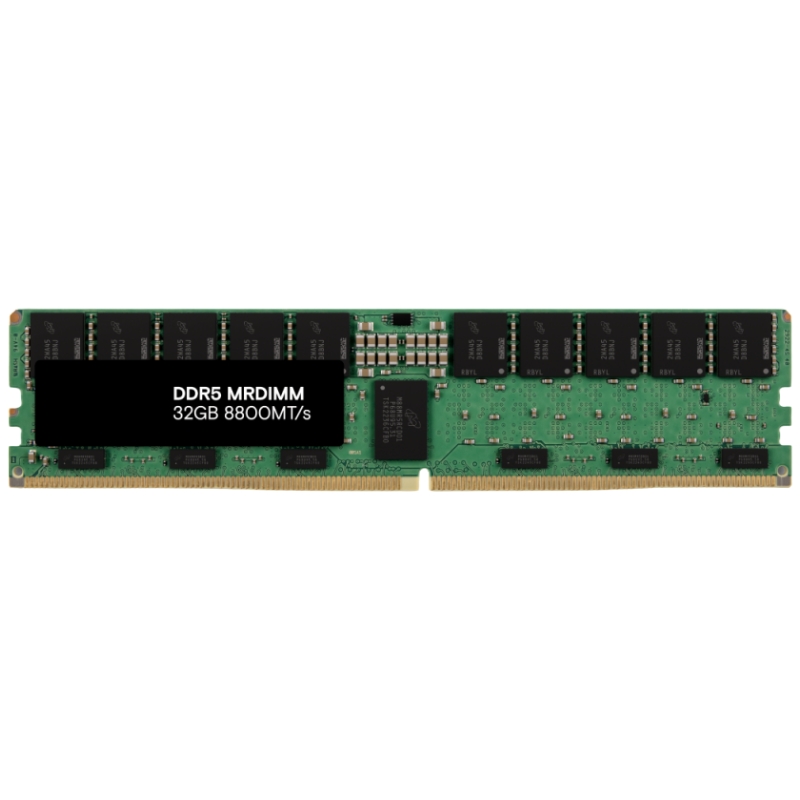


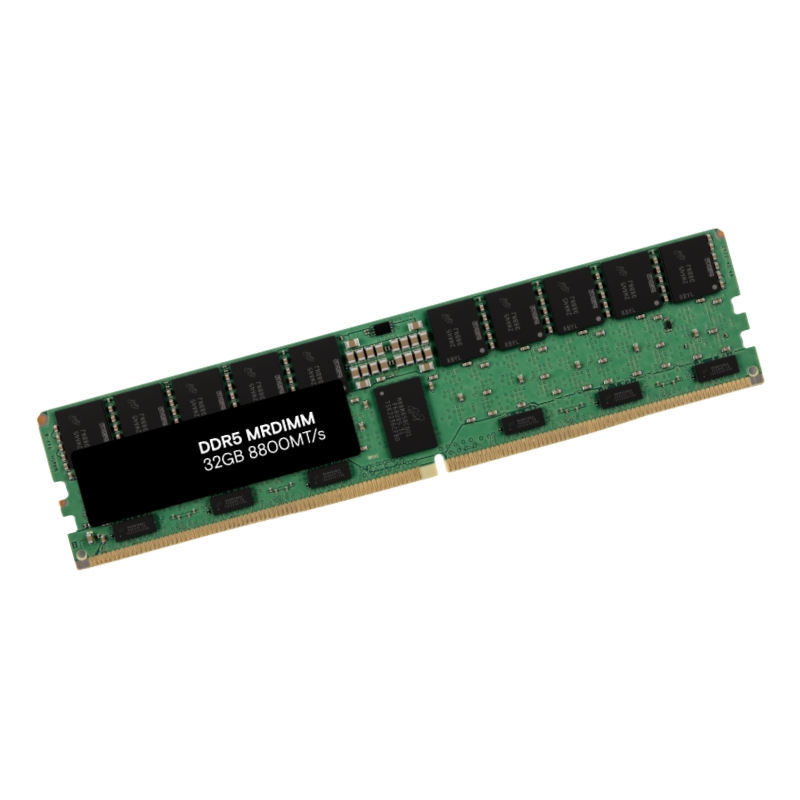
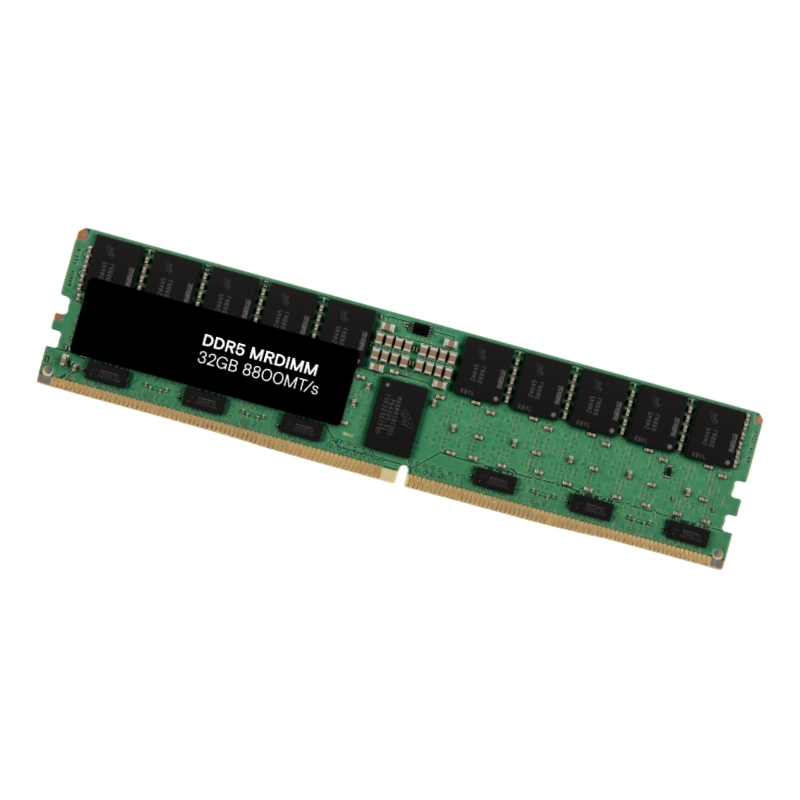
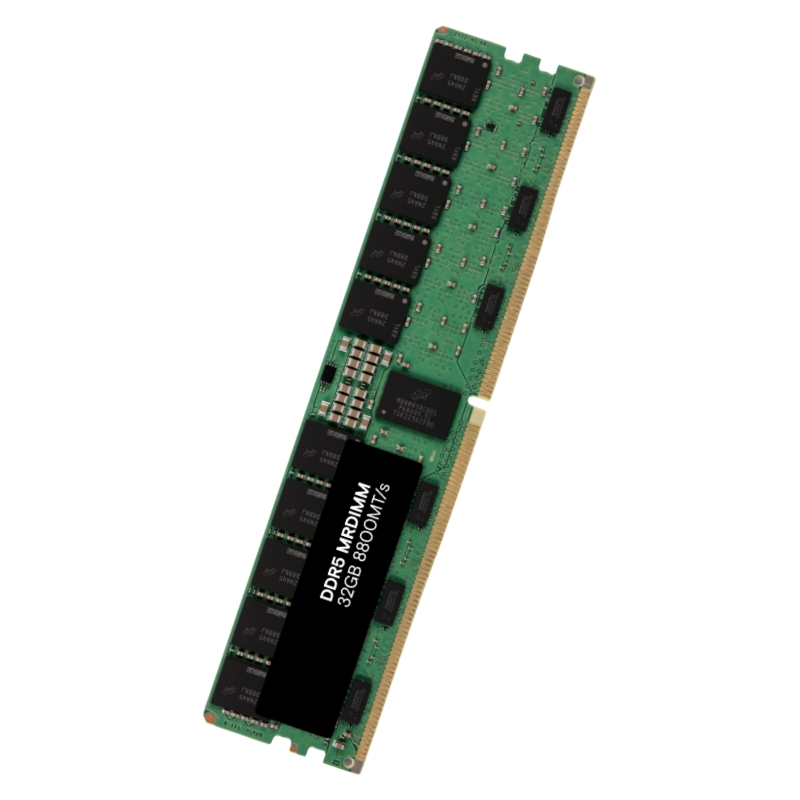
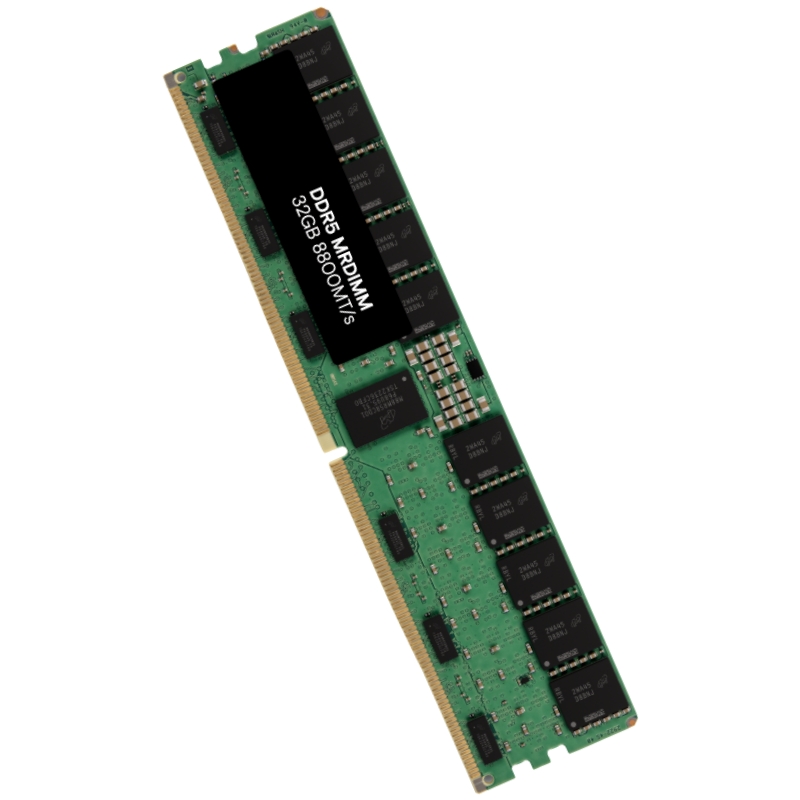
Supermicro MEM-DR532L-CL01-MR88 32GB DDR5 8800MT/s PC5-70400 SDRAM Dual Rank X8 ECC Registered Cl36 287-Pin MRDIMM Memory Module For Server. New Sealed in Box (NIB) with 3 Year Warranty - Micron Version
The Supermicro MEM-DR532L-CL01-MR88 is an ultra–high-speed DDR5 MRDIMM memory module designed for next-generation enterprise servers that require extreme bandwidth, low latency, and enterprise-grade reliability. With advanced ECC protection and registered signal processing, this module is ideal for performance-driven data center environments.
The Supermicro MEM-DR532L-CL01-MR88 32GB DDR5 8800MT/s MRDIMM belongs to a cutting-edge category of ultra-high-speed DDR5 server memory engineered for next-generation enterprise, cloud, and high-performance computing platforms. This category represents the evolution of registered server memory beyond traditional RDIMM technology, introducing MRDIMM architecture to achieve unprecedented memory bandwidth, signal integrity, and scalability. DDR5 8800MT/s memory modules are designed to operate at the forefront of server performance, enabling CPUs to fully exploit extreme core counts and parallel execution models. Within this category, memory is a primary performance driver rather than a supporting component.
DDR5 SDRAM introduced major architectural advancements over DDR4, but DDR5 8800MT/s represents an even more significant leap by pushing memory transfer rates into previously unattainable territory for server platforms. This category of DDR5 MRDIMM memory delivers extreme bandwidth levels that fundamentally change how servers handle data-intensive workloads. At 8800MT/s, memory throughput becomes a powerful accelerator for compute pipelines, reducing stalls and maximizing processor utilization. The PC5-70400 classification reflects a theoretical bandwidth of 70.4 gigabytes per second per module, making this category one of the highest-performing server memory solutions available.
High-bandwidth memory is essential for workloads that process large datasets in parallel. Applications such as AI model training, graph analytics, and in-memory databases benefit directly from the increased throughput offered by PC5-70400 memory. This category ensures that memory access does not become a limiting factor as compute performance continues to scale. Bandwidth-intensive workloads often suffer from diminishing returns when memory cannot supply data quickly enough. By deploying DDR5 8800MT/s MRDIMM memory, organizations can eliminate these bottlenecks and achieve more linear scaling as cores and threads increase.
Multiplexed Rank DIMM technology is a defining feature of this memory category, enabling ultra-high-speed operation by re-architecting how memory ranks are accessed and managed. MRDIMM modules incorporate advanced multiplexing logic that allows multiple memory ranks to share a single physical interface while maintaining high effective bandwidth. This innovation addresses the signal integrity challenges that arise at extreme data rates. Traditional RDIMM designs face electrical limitations as speeds increase, particularly when supporting multiple ranks per module. MRDIMM technology overcomes these limitations by isolating rank access and optimizing signal paths, enabling stable operation at 8800MT/s.
MRDIMM memory provides superior scalability compared to traditional RDIMM solutions, particularly in high-density and high-speed configurations. By reducing the electrical load on the memory controller, MRDIMM enables higher frequencies without sacrificing reliability. This category is specifically designed for platforms that demand both extreme performance and enterprise-grade stability. For server architects and data center operators, MRDIMM technology offers a path forward as memory speed requirements continue to rise. This category supports future processor designs that expect memory subsystems capable of delivering unprecedented bandwidth.
Error Correcting Code functionality is an essential characteristic of this DDR5 MRDIMM server memory category. ECC memory continuously monitors data integrity and corrects single-bit errors in real time, preventing silent data corruption that could compromise application accuracy or system stability. In environments where data correctness is paramount, ECC support is non-negotiable. This category of ECC registered memory is designed for continuous operation under heavy workloads, where memory cells are accessed at high frequency for extended periods. ECC ensures that transient errors caused by electrical noise, radiation, or component aging are addressed automatically, maintaining consistent system behavior.
As memory speeds increase, maintaining data integrity becomes more challenging due to tighter timing margins and increased sensitivity to noise. ECC plays a critical role in ensuring that high-speed memory remains reliable. This category integrates ECC seamlessly with MRDIMM technology, providing robust error protection even at extreme transfer rates. Enterprise workloads such as financial processing, scientific research, and healthcare systems depend on accurate data. This category supports those requirements by combining ultra-high performance with uncompromising reliability.
The dual rank x8 organization of the Supermicro MEM-DR532L-CL01-MR88 module is a key attribute of this memory category, influencing both performance and compatibility. Dual rank memory allows the memory controller to interleave operations across ranks, improving throughput and reducing idle cycles. This is particularly beneficial in multi-core server environments with high levels of concurrent memory access. X8 DRAM organization aligns with industry standards for ECC server memory, enabling efficient error correction while maintaining optimal performance characteristics. This category balances advanced architectural features with proven design principles to ensure broad platform support.
Memory interleaving is essential for maximizing effective bandwidth in server systems. Dual rank MRDIMM modules support sophisticated interleaving strategies that help distribute memory access evenly across ranks. This category ensures that high-speed operation translates into real-world performance gains. For workloads with unpredictable or bursty memory access patterns, dual rank configurations provide more consistent throughput and reduced latency variability.
Operating at CL36 latency, this DDR5 8800MT/s memory module achieves a carefully engineered balance between speed and timing stability. At extreme frequencies, latency optimization requires precise control of timing parameters and signal integrity. This category reflects advanced tuning that allows high-speed operation without compromising reliability. While absolute latency values differ from lower-speed memory, the overall system-level performance benefits of higher transfer rates often outweigh raw latency considerations. This category is optimized for workloads where bandwidth and concurrency are primary performance drivers.
High-bandwidth workloads often prioritize sustained throughput over minimal latency. In such scenarios, CL36 timing at 8800MT/s delivers superior performance by enabling rapid data movement across memory channels. This category supports applications that process large data blocks in parallel. Latency consistency is also important for maintaining predictable performance. This category emphasizes stable timing behavior under continuous load.
The 287-pin MRDIMM form factor is a specialized physical interface designed to support the unique requirements of multiplexed rank DDR5 memory. This category adheres to precise mechanical and electrical specifications that ensure compatibility with MRDIMM-enabled server platforms. The pin configuration supports advanced signaling and power delivery necessary for ultra-high-speed operation. Mechanical precision is critical for server memory that operates at extreme frequencies. This category emphasizes robust construction and tight tolerances to maintain reliable electrical contact and signal integrity.
MRDIMM memory requires platform support at the motherboard, CPU, and firmware levels. This category is designed for next-generation server platforms that explicitly support MRDIMM technology. Compatibility validation ensures that memory modules operate as intended within supported ecosystems. For organizations deploying advanced server platforms, this category provides a clear path to leveraging MRDIMM performance capabilities.
High-density server configurations place significant thermal demands on components. DDR5 MRDIMM memory modules are designed to operate within defined thermal envelopes while maintaining performance. Efficient heat dissipation and stable electrical behavior contribute to long-term reliability. This category supports data center designs that balance extreme performance with operational efficiency.
Supermicro memory modules are validated through comprehensive testing to ensure compatibility and stability with supported server platforms. This validation process includes stress testing at rated speeds, compatibility verification with CPUs and chipsets, and firmware interaction analysis. The MEM-DR532L-CL01-MR88 module exemplifies Supermicro’s commitment to enterprise-grade quality. Within this category, validated memory simplifies deployment and reduces the risk of integration issues. Organizations benefit from predictable performance and streamlined support when using memory modules designed for their server ecosystems.
DDR5 MRDIMM memory operation depends on precise coordination between firmware, BIOS, and memory controllers. Validated modules ensure proper initialization and stable operation across supported firmware versions. This category emphasizes long-term compatibility and operational confidence. Reliable firmware integration is essential for maintaining system stability during updates and configuration changes.
This category of DDR5 8800MT/s ECC MRDIMM memory is aligned with workloads that demand the highest possible memory performance. Artificial intelligence training and inference workloads benefit from rapid data movement between memory and accelerators. High-performance computing applications leverage extreme bandwidth for simulations, modeling, and numerical analysis. Real-time analytics and large-scale data processing platforms rely on fast memory access to maintain low latency and high throughput. This category supports such workloads by delivering consistent performance under sustained demand.
Hyperscale data centers and cloud-native platforms require memory solutions that scale efficiently across thousands of nodes. DDR5 MRDIMM memory provides the bandwidth and reliability necessary for these environments. This category supports standardized deployment models that simplify scaling and maintenance. Using 32GB MRDIMM modules allows cloud architects to balance capacity, performance, and cost while maintaining flexibility.
Adopting DDR5 8800MT/s MRDIMM memory positions organizations at the forefront of server technology. This category supports future processor designs with higher core counts, advanced accelerators, and expanded memory channel architectures. Scalability is a core attribute, enabling incremental upgrades without architectural redesign. Future-ready server architecture requires memory subsystems that can keep pace with rapid advancements in compute technology. This category provides the necessary performance headroom.
Enterprise infrastructure investments are expected to deliver value over extended lifecycles. This category of DDR5 MRDIMM memory supports long-term strategies by remaining relevant as workloads and platforms evolve. Organizations can deploy with confidence, knowing that their memory infrastructure aligns with future demands. By standardizing on ultra-high-speed MRDIMM memory, enterprises reduce the frequency of disruptive upgrades and maintain competitive performance.
Reliability is a defining principle of this DDR5 MRDIMM server memory category. Modules are manufactured using high-quality components and subjected to rigorous validation to ensure consistent performance. ECC protection, registered architecture, and conservative operational margins contribute to long-term stability. This category aligns with enterprise standards that prioritize predictable behavior, minimal failure rates, and continuous operation. Memory reliability directly impacts overall system availability.
Extreme workloads place continuous demands on the memory subsystem. This category of DDR5 8800MT/s MRDIMM memory is engineered to maintain throughput and stability under sustained load conditions. Consistent performance is essential for meeting service-level objectives and maintaining user trust. By combining extreme bandwidth, robust error correction, and efficient thermal design, this category supports continuous operation in the most demanding environments.
Modern enterprise and HPC servers often feature multiple CPU sockets and integrated accelerators such as GPUs or AI processors. These architectures require memory subsystems capable of feeding data at exceptional rates. DDR5 MRDIMM memory supports these configurations by providing sufficient bandwidth and scalability. This category ensures that memory performance scales alongside compute and accelerator capabilities, avoiding bottlenecks and enabling balanced system design.


 Contact Us
 Information
 Catalog
 Solid State Drives (SSD)
 Network Switches
 Hard Disk Drives
 HBA & Controllers
 PC & Servers
 PC & Server Memory
 CPU & Processors
 Network Routers
 Power Supplies
 Tape Drives & Libraries
 Network Devices
 Computer & Network Cables