
(7% discount is applied at checkout)
Cart is empty
Your go-to destination for cutting-edge server products
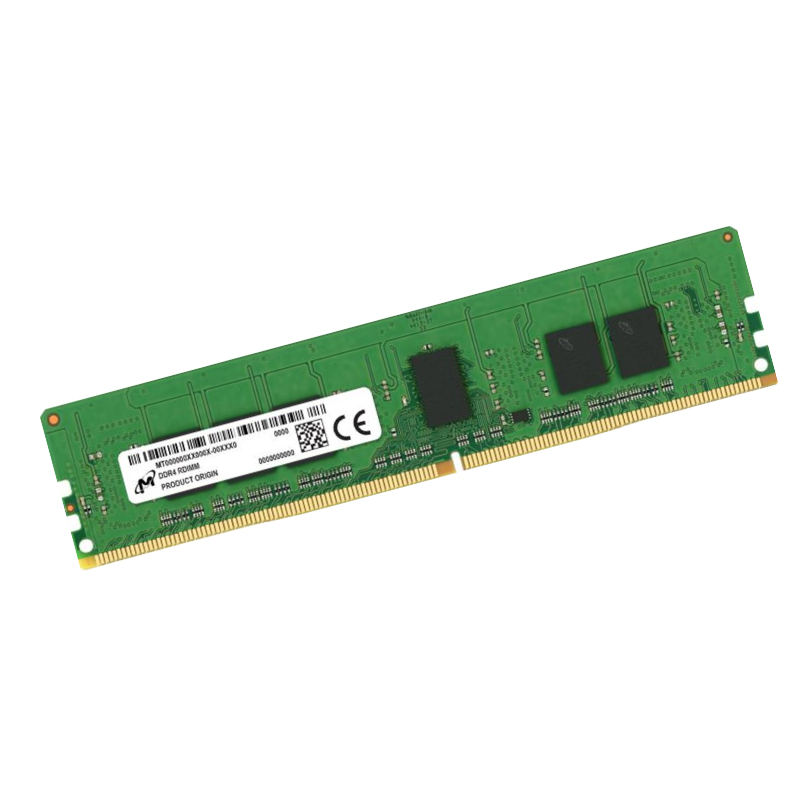
Supermicro MEM-DR548L-002 48GB 5600MT/s PC5-44800 ECC Memory. New Sealed in Box (NIB) with 3 Year Warranty - Micron Version - Call
The Supermicro MEM-DR548L-002 is a high-capacity 48GB PC5-44800 ECC memory module engineered for enterprise-grade performance. Designed with DDR5 SDRAM technology, it ensures rapid data transfer speeds, reliability, and compatibility with modern server infrastructures.
The enterprise server memory category has evolved rapidly with the introduction of DDR5 technology, delivering higher bandwidth, improved power efficiency, and enhanced scalability for modern data center workloads. Products such as the Supermicro MEM-DR548L-002 48GB 5600MT/s PC5-44800 CL46 Registered DIMM represent a new generation of server-class memory modules designed to meet the growing performance and reliability demands of cloud infrastructure, virtualization platforms, artificial intelligence workloads, enterprise databases, and mission-critical business applications. This category focuses on high-capacity, high-speed registered memory solutions optimized for continuous operation in enterprise servers and workstations.
DDR5 registered DIMMs are specifically engineered to support large memory footprints while maintaining signal integrity and stability at higher transfer rates. The 5600MT/s data rate supported by this memory class enables faster data access, reduced latency in multi-threaded applications, and improved system responsiveness under heavy workloads. As server processors continue to increase core counts and memory channels, DDR5 RDIMM modules such as this one play a crucial role in unlocking full platform performance.
Registered DIMM memory modules are an essential component in enterprise and data center environments due to their ability to handle higher capacities and improved electrical stability compared to unbuffered memory. The Supermicro MEM-DR548L-002 belongs to the DDR5 RDIMM category, which incorporates a register between the memory controller and DRAM chips. This design reduces electrical load on the memory controller, enabling support for larger memory configurations and more populated DIMM slots per channel.
This category is specifically tailored for server-grade platforms that require consistent uptime and predictable performance. Registered DDR5 memory is compatible with enterprise motherboards designed for Intel Xeon Scalable and AMD EPYC processors that support DDR5 technology. The 288-pin form factor ensures seamless integration with modern server memory slots, while compliance with JEDEC standards guarantees broad platform compatibility.
One of the defining characteristics of registered memory modules is enhanced signal integrity, which is critical at high data transfer rates such as 5600MT/s. By buffering command and address signals, DDR5 RDIMMs minimize signal noise and timing issues that can arise in densely populated memory configurations. This stability is essential for enterprise workloads that demand uninterrupted operation and accurate data processing.
The category emphasizes reliability under continuous load, making it suitable for applications where system crashes or data corruption are unacceptable. Registered DDR5 memory modules are extensively validated to operate within strict tolerances, ensuring consistent performance across varying thermal and electrical conditions.
The 48GB capacity of this memory module places it within a specialized segment of the DDR5 RDIMM category that focuses on balancing capacity, performance, and cost efficiency. Unlike traditional 32GB or 64GB modules, 48GB RDIMMs provide flexible memory scaling options that allow system architects to maximize total memory capacity without overprovisioning.
This capacity tier is particularly valuable in environments where memory density per slot is critical, such as virtualization hosts, containerized infrastructure, and in-memory databases. By enabling higher aggregate memory capacity with fewer modules, this category supports improved airflow, reduced power consumption, and simplified memory population strategies.
In virtualization and cloud computing environments, memory capacity directly impacts the number of virtual machines or containers that can be hosted on a single server. DDR5 48GB RDIMM modules allow administrators to allocate more memory per core, reducing contention and improving overall workload isolation. The high bandwidth provided by 5600MT/s memory further enhances performance in memory-intensive virtualized applications.
This category is well-suited for private clouds, hybrid cloud deployments, and software-defined data centers where scalability and efficiency are top priorities. The combination of capacity and speed helps maintain consistent performance even as workloads dynamically scale.
The transition from DDR4 to DDR5 represents a significant leap in memory performance, and the 5600MT/s data rate is a key differentiator within this category. DDR5 memory offers increased bandwidth per module, enabling faster data transfers between the processor and memory subsystem. This improvement is particularly beneficial for multi-core processors that rely on high memory throughput to keep execution units fully utilized.
PC5-44800 classification indicates a theoretical peak bandwidth of 44.8GB/s per module, which substantially improves performance in data-intensive workloads such as analytics, scientific computing, and large-scale transactional systems. This category of memory is designed to complement modern CPUs with advanced memory controllers and multiple memory channels.
CAS latency plays a critical role in determining real-world memory performance. While DDR5 operates at higher latencies compared to DDR4, the increased clock speeds and architectural enhancements offset this difference. A CL46 timing at 5600MT/s is optimized for stability and compatibility in enterprise environments, ensuring predictable access times under sustained load.
This category prioritizes reliability and consistency over aggressive overclocking, making it ideal for servers that operate continuously. The balanced timing configuration helps maintain data integrity while delivering the bandwidth necessary for demanding applications.
Enterprise memory categories place a strong emphasis on data integrity, and DDR5 RDIMM modules are no exception. Error-correcting code support is a fundamental requirement for server memory, enabling automatic detection and correction of single-bit errors. This capability significantly reduces the risk of data corruption, system crashes, and application failures.
The Supermicro MEM-DR548L-002 falls within a category designed for mission-critical environments where data accuracy is paramount. ECC functionality is seamlessly integrated into the memory architecture and works in conjunction with compatible server platforms to provide continuous protection against memory errors.
Workloads such as financial transactions, enterprise resource planning systems, and healthcare applications rely heavily on accurate and consistent data processing. The DDR5 registered memory category is engineered to support these workloads by minimizing error rates and ensuring stable operation over extended periods.
This reliability is achieved through rigorous testing, adherence to industry standards, and optimized memory layouts that reduce the likelihood of faults. As a result, organizations can deploy systems with confidence, knowing that their memory infrastructure supports long-term operational stability.
DDR5 memory introduces significant improvements in power efficiency compared to previous generations. One of the key advancements in this category is the integration of on-module power management, which allows more precise voltage regulation and reduces overall power consumption. This is particularly important in data centers where energy efficiency directly impacts operational costs.
The Supermicro MEM-DR548L-002 belongs to a category optimized for efficient thermal performance, ensuring stable operation even in densely packed server environments. Reduced power draw per gigabyte of memory helps maintain lower operating temperatures and improves overall system longevity.
As data centers continue to scale, power efficiency becomes a critical consideration. DDR5 registered memory modules operating at 5600MT/s deliver higher performance per watt, enabling organizations to achieve more computational output without proportionally increasing energy usage.
This category supports sustainable IT strategies by helping reduce cooling requirements and minimizing the environmental footprint of large-scale deployments. Improved efficiency also contributes to higher rack density and better utilization of existing infrastructure.
Memory modules in this category are specifically qualified for Supermicro server platforms, ensuring optimal compatibility and performance. Supermicro designs its memory solutions to align closely with its motherboard and system architectures, resulting in seamless integration and reduced deployment risk.
The MEM-DR548L-002 is part of a category that undergoes extensive validation to meet stringent enterprise requirements. This qualification process ensures that the memory operates reliably across a wide range of workloads and environmental conditions.
Using memory modules designed and qualified by the same manufacturer as the server platform provides tangible benefits in terms of stability and support. This category is tailored to work efficiently with Supermicro BIOS configurations, firmware updates, and thermal designs.
System administrators benefit from simplified troubleshooting and enhanced support, as the memory is validated as part of an integrated solution. This synergy is especially valuable in large deployments where consistency and predictability are essential.
The DDR5 48GB RDIMM category addresses a wide range of enterprise and high-performance computing use cases. From virtualization clusters and private clouds to AI training environments and real-time analytics platforms, this category provides the capacity and bandwidth required to support modern workloads.
High-performance computing applications benefit from the increased memory bandwidth and scalability offered by DDR5, enabling faster simulation, modeling, and data processing. Similarly, enterprise applications experience improved responsiveness and throughput due to reduced memory bottlenecks.
As software continues to evolve, memory requirements are expected to increase. The DDR5 registered memory category is designed with future scalability in mind, supporting higher capacities and faster speeds as platforms evolve. This forward-looking approach helps organizations protect their investment by enabling system upgrades without complete hardware replacement.
By adopting DDR5 RDIMM modules with balanced capacity and performance characteristics, enterprises can build flexible infrastructures that adapt to changing workload demands over time.


 Contact Us
 Information
 Catalog
 Solid State Drives (SSD)
 Network Switches
 Hard Disk Drives
 HBA & Controllers
 PC & Servers
 PC & Server Memory
 CPU & Processors
 Network Routers
 Power Supplies
 Tape Drives & Libraries
 Network Devices
 Computer & Network Cables