
(7% discount is applied at checkout)
Cart is empty
Your go-to destination for cutting-edge server products
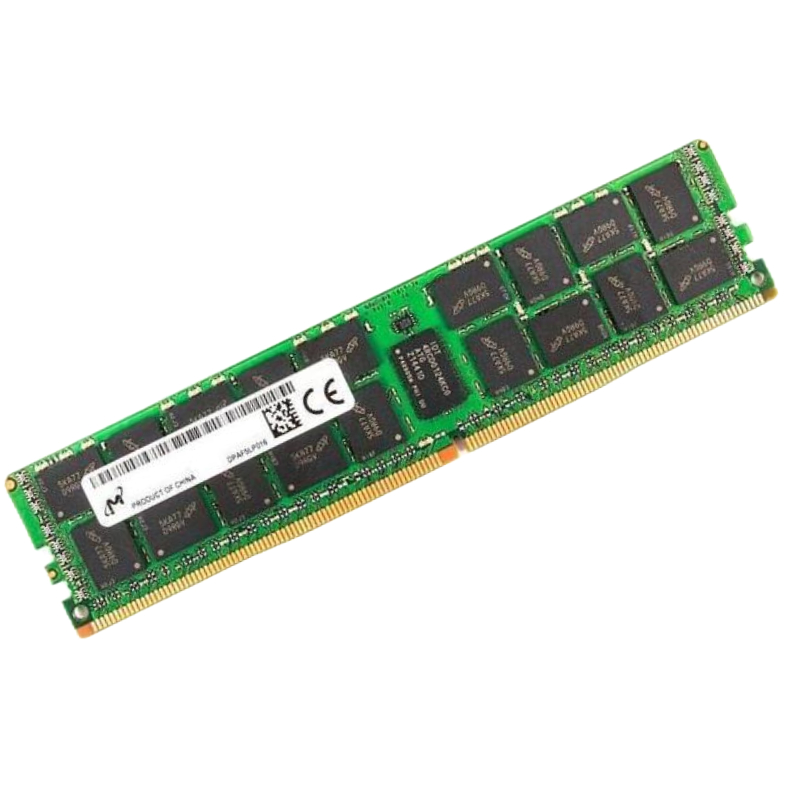
Supermicro MEM-DR564L-CL02-ER48 64GB ECC Memory Module DDR5-4800MT/s 2Rx4. New Sealed in Box (NIB) with 3 Year Warranty - Micron Version
The Supermicro MEM-DR564L-CL02-ER48 is a high-capacity 64GB DDR5-4800MT/s ECC memory module engineered for enterprise-grade performance and reliability. Designed to deliver superior speed and stability, this registered DIMM ensures seamless data processing for demanding server environments.
The Supermicro MEM-DR564L-CL02-ER48 64GB DDR5 Registered DIMM belongs to the enterprise-grade server memory category designed for modern data centers, virtualization platforms, cloud infrastructures, and mission-critical computing environments. This category focuses on high-capacity, high-bandwidth, and error-resilient memory solutions that align with the architectural demands of next-generation processors and server platforms. DDR5 Registered DIMMs represent a significant advancement over previous DDR4 technologies by delivering improved data transfer rates, higher module densities, better power efficiency, and enhanced signal integrity.
This memory category is particularly relevant for enterprises deploying scalable computing architectures where stability, uptime, and performance consistency are essential. Registered memory modules like this Supermicro offering are engineered to support multi-socket server systems, enabling higher memory capacities per channel while maintaining electrical stability across densely populated DIMM slots. The 64GB capacity positions this module within a premium segment aimed at workloads requiring large memory footprints such as virtualization clusters, in-memory databases, AI inference, analytics, and high-performance computing.
DDR5 SDRAM marks a substantial evolution in memory architecture, introducing design improvements that enhance throughput and efficiency while addressing the limitations of previous generations. Operating at 4800MT/s, this category of DDR5 memory delivers significantly higher bandwidth compared to DDR4, enabling faster data access for CPU-intensive and memory-bound applications. The increased transfer rate directly benefits workloads that rely on rapid data movement between processors and memory subsystems.
DDR5 architecture introduces independent memory channels within a single DIMM, allowing improved parallelism and reduced latency under multi-threaded workloads. This structural change enhances scalability and ensures more consistent performance under heavy memory access patterns. The Supermicro MEM-DR564L-CL02-ER48 module exemplifies this architectural advancement by supporting enterprise platforms that demand predictable memory behavior under sustained load.
Memory bandwidth plays a crucial role in overall system responsiveness and throughput. DDR5 4800MT/s memory significantly increases available bandwidth per channel, allowing modern CPUs to operate closer to their full potential. In server environments where multiple cores access shared memory resources simultaneously, higher data rates reduce contention and improve application-level performance.
This category of memory is particularly advantageous for virtualization and containerized workloads, where multiple virtual machines or services compete for memory access. By providing increased throughput, DDR5 Registered DIMMs help maintain consistent service levels even as workload density increases across the infrastructure.
DDR5 introduces on-module power management, shifting voltage regulation from the motherboard to the DIMM itself. Operating at 1.1 volts, the Supermicro MEM-DR564L-CL02-ER48 aligns with this efficiency-focused design philosophy. Lower operating voltage reduces overall power consumption, which is a critical consideration for large-scale data centers aiming to optimize energy usage and thermal output.
Enhanced power efficiency contributes to improved reliability by reducing heat generation and minimizing stress on system components. This category of DDR5 memory supports sustainable infrastructure strategies without compromising performance or capacity.
Error Correcting Code Registered memory is a cornerstone of enterprise computing, designed to maintain data integrity in environments where uptime and accuracy are non-negotiable. The ECC functionality in this category detects and corrects single-bit memory errors while identifying multi-bit errors, preventing silent data corruption that could compromise applications or system stability.
Registered DIMMs incorporate a register between the memory controller and DRAM modules, reducing electrical load and enabling higher memory densities. This design is essential for servers with multiple DIMMs per channel, ensuring signal integrity and stable operation even under maximum capacity configurations.
ECC memory is indispensable in applications such as financial systems, healthcare platforms, scientific simulations, and enterprise databases where data accuracy is critical. Memory errors, though rare, can lead to significant consequences if left uncorrected. This category of ECC Registered DDR5 memory provides an added layer of protection, ensuring system reliability and consistent performance over long operational cycles.
Supermicro memory modules are validated for compatibility and stability within enterprise server ecosystems, reinforcing confidence in their deployment across critical infrastructures.
Multi-socket server architectures place increased demands on memory subsystems due to higher core counts and expanded memory addressing. Registered DIMMs are designed to handle these demands by buffering command and address signals, allowing more memory modules to be installed without degrading signal quality.
This category of memory enables organizations to scale memory capacity efficiently, supporting growth in workload complexity and data volume without requiring frequent hardware replacements.
The 64GB capacity of the Supermicro MEM-DR564L-CL02-ER48 positions it within a high-density memory category optimized for workloads that require substantial memory allocation per node. High-capacity DIMMs reduce the total number of modules required to achieve large memory configurations, simplifying system design and improving airflow within server chassis.
High-density memory modules are particularly valuable in virtualization environments, where memory oversubscription and allocation efficiency directly impact performance and consolidation ratios. By enabling larger memory pools, this category supports higher virtual machine density and more flexible resource management.
Virtualized data centers benefit from high-capacity DDR5 Registered memory by enabling more virtual machines to run concurrently without performance degradation. The increased bandwidth and capacity allow hypervisors to allocate memory dynamically, supporting diverse workloads ranging from web services to enterprise applications.
Cloud service providers rely on memory categories like this to deliver consistent performance across multi-tenant environments, ensuring service level agreements are met while optimizing hardware utilization.
In-memory databases and real-time analytics platforms demand fast, reliable memory access to process large datasets efficiently. The 64GB DDR5 ECC Registered memory category supports these requirements by providing ample capacity and high throughput, reducing reliance on slower storage tiers.
This memory category enhances query performance, accelerates data processing, and supports advanced analytics workloads that require rapid access to large data structures.
The 2Rx4 configuration of this memory module refers to its dual-rank architecture and x4 data width per DRAM chip. This configuration is common in enterprise-grade memory, offering a balance between performance, capacity, and reliability. Dual-rank modules can provide improved performance through rank interleaving, allowing memory controllers to alternate access between ranks for better efficiency.
x4 DRAM devices are preferred in ECC memory categories due to their enhanced error detection and correction capabilities. This configuration supports robust ECC functionality, aligning with enterprise reliability standards.
Rank interleaving allows memory controllers to overlap memory operations, reducing idle cycles and improving effective bandwidth. In multi-threaded server workloads, this capability enhances throughput and minimizes latency spikes under heavy access patterns.
This category of memory leverages dual-rank architecture to deliver consistent performance across diverse workloads, from transactional databases to compute-intensive applications.
x4 DRAM devices provide finer granularity for error detection, enabling ECC mechanisms to identify and correct errors more effectively. This is particularly important in high-density memory modules, where the probability of transient errors increases with capacity.
The use of x4 devices reinforces the reliability of this memory category, making it suitable for long-term deployment in enterprise servers.
CAS latency is a critical parameter in memory performance, influencing access times and overall responsiveness. The CL40 timing of this DDR5 memory category reflects the balance between high data rates and access latency inherent in advanced memory technologies. While latency values increase numerically with higher frequencies, the overall performance benefits of DDR5 stem from increased bandwidth and improved architectural efficiency.
In enterprise environments, sustained throughput and predictable performance often take precedence over raw latency metrics. This category of memory is optimized to deliver consistent performance under load, supporting applications that prioritize stability and scalability.
Enterprise workloads typically involve complex access patterns and sustained memory utilization rather than simple, latency-sensitive operations. As such, the higher bandwidth and parallelism offered by DDR5 mitigate the impact of increased CAS latency values.
This memory category is engineered to perform reliably across a wide range of workloads, ensuring that latency characteristics align with real-world application demands.
The 288-pin DIMM form factor is standard for DDR5 server memory, ensuring compatibility with modern server motherboards and processor platforms. This physical interface supports the electrical and signaling requirements of DDR5 technology, enabling reliable communication between memory modules and memory controllers.
This category of memory is designed for use in enterprise servers from Supermicro and other compatible platforms that support DDR5 Registered DIMMs. Platform validation and compatibility testing are essential components of this category, ensuring seamless integration and stable operation.
Enterprise memory modules undergo extensive validation to ensure compatibility with server BIOS and firmware configurations. This process minimizes deployment risks and ensures that memory operates at rated specifications within supported platforms.
This category benefits organizations by reducing integration complexity and supporting predictable system behavior across hardware refresh cycles.
Thermal management is a critical consideration in high-density server environments. DDR5 memory modules are designed to operate efficiently within defined thermal envelopes, supporting stable operation even in densely populated systems. The reduced operating voltage and improved power efficiency of DDR5 contribute to lower heat output compared to previous generations.
This category of memory supports data center strategies focused on optimizing cooling efficiency and reducing operational costs while maintaining high performance.
High-capacity memory modules reduce the total number of DIMMs required, improving airflow within server chassis. Improved airflow enhances cooling efficiency and supports higher system reliability.
This category aligns with best practices for data center design, enabling scalable memory configurations without compromising thermal performance.
The Supermicro MEM-DR564L-CL02-ER48 memory category is designed to support scalable enterprise workloads that evolve over time. Its combination of high capacity, ECC reliability, DDR5 performance, and registered architecture enables organizations to deploy flexible computing resources that adapt to changing demands.
From virtualization clusters to analytics platforms and cloud-native applications, this memory category provides a foundation for stable, high-performance computing environments.


 Contact Us
 Information
 Catalog
 Solid State Drives (SSD)
 Network Switches
 Hard Disk Drives
 HBA & Controllers
 PC & Servers
 PC & Server Memory
 CPU & Processors
 Network Routers
 Power Supplies
 Tape Drives & Libraries
 Network Devices
 Computer & Network Cables