
(7% discount is applied at checkout)
Cart is empty
Your go-to destination for cutting-edge server products
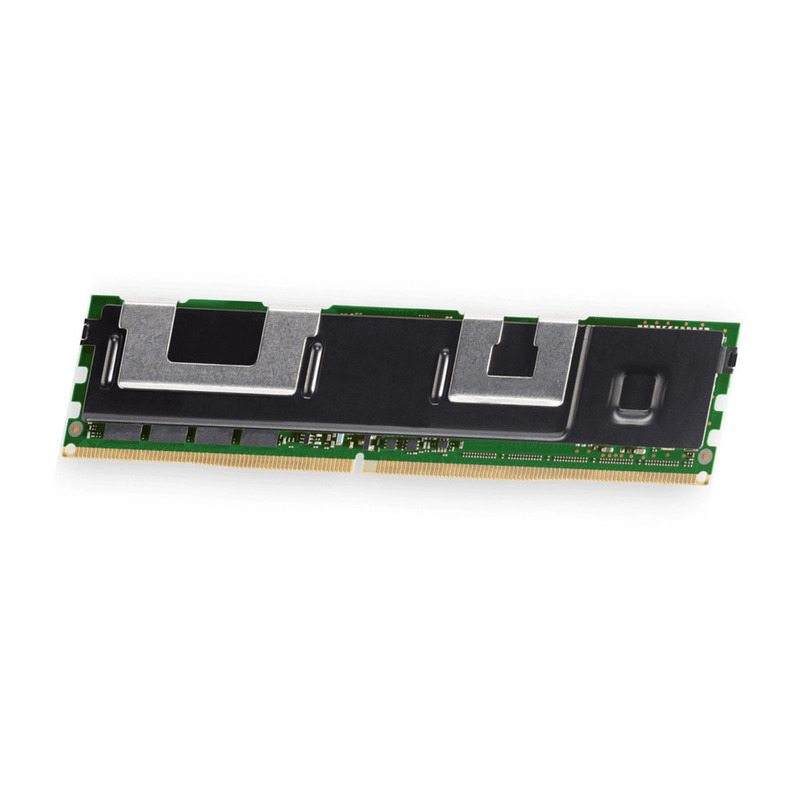
Micron MT36KSF2G72PZ-1G6P1 16GB Memory PC3-12800 DDR3 SDRAM 1600MHZ Ecc Registered. New (System) Pull with 1 year replacement warranty
The MT36KSF2G72PZ-1G6P1 Micron PC3-12800 DDR3 SDRAM 1600MHz ECC Registered 16GB memory module belongs to a specialized category of enterprise-class system memory designed for mission-critical computing environments. This category focuses on server-grade DDR3 registered DIMMs that prioritize stability, data integrity, and predictable performance under sustained workloads. Products in this classification are engineered for compatibility with workstation and server platforms that demand advanced memory control, higher capacity per module, and robust error mitigation.
DDR3 ECC Registered memory modules are distinct from consumer-grade unbuffered DIMMs due to their architectural emphasis on reliability. The inclusion of a register (also known as a buffer) between the memory controller and DRAM chips reduces electrical load, enabling support for higher module densities and larger memory configurations. This category is widely deployed in rack servers, blade systems, enterprise storage arrays, virtualization hosts, and database servers where uptime and data accuracy are critical.
DDR3 SDRAM operates using double data rate signaling, transferring data on both the rising and falling edges of the clock signal. With a base clock of 800MHz and an effective data rate of 1600MT/s, PC3-12800 memory delivers a theoretical peak bandwidth of 12.8GB/s per module. This performance profile places it in a balanced position between bandwidth efficiency and power consumption, making it suitable for enterprise systems that require consistent throughput without excessive thermal output.
The registered design of this memory category incorporates a register chip that buffers command and address signals. This architectural feature reduces signal integrity issues that arise when multiple DIMMs are installed on the same memory channel. As a result, servers can populate more memory slots per channel without compromising stability. The MT36KSF2G72PZ-1G6P1 aligns with this design philosophy, supporting scalable memory configurations commonly required in enterprise deployments.
By isolating the memory controller from direct communication with each DRAM chip, registered DIMMs significantly reduce electrical loading. This allows system designers to support higher capacity modules such as 16GB DIMMs while maintaining signal clarity. The category is therefore integral to multi-socket server platforms that rely on large aggregate memory pools.
ECC functionality is a defining characteristic of this memory category. ECC memory includes additional parity bits that enable detection and correction of single-bit memory errors in real time. In enterprise environments, even minor data corruption can lead to system crashes, corrupted databases, or incorrect computational results. ECC memory mitigates these risks by automatically correcting transient errors caused by electrical interference, cosmic radiation, or component aging.
While single-bit errors are corrected transparently, ECC memory also detects multi-bit errors and alerts the system. This capability allows system administrators to identify failing memory modules before catastrophic failures occur. The MT36KSF2G72PZ-1G6P1 and similar modules in this category are commonly monitored through system management interfaces that log ECC events for proactive maintenance.
With a capacity of 16GB per module, this category supports dense memory configurations that reduce the total number of DIMMs required in a system. Higher density modules simplify system design, improve airflow, and reduce power consumption associated with additional memory slots. This is particularly beneficial in compact server chassis and blade environments.
Enterprise servers often support multiple memory channels per CPU and multiple DIMMs per channel. The registered ECC DDR3 category enables scalable architectures where total system memory can reach hundreds of gigabytes. Such scalability is essential for virtualization hosts, in-memory databases, and large-scale analytics platforms that rely on extensive memory resources.
Operating at 1600MHz, PC3-12800 memory provides sufficient bandwidth for a wide range of enterprise workloads. This speed tier is optimized for balanced performance, ensuring that CPUs are adequately fed with data without creating excessive thermal or power demands. The category is well-suited for multi-threaded applications, transactional databases, and application servers.
While registered ECC memory may exhibit slightly higher latency compared to unbuffered consumer modules, the trade-off is justified by increased stability and capacity. In real-world enterprise workloads, consistent latency and error-free operation are often more valuable than marginal latency reductions.
This memory category is designed for compatibility with server-class processors and chipsets that support DDR3 ECC registered DIMMs. Common platforms include enterprise-grade Intel Xeon and AMD Opteron processors from generations that support DDR3 memory. Compatibility is governed by chipset specifications, BIOS support, and motherboard design.
Memory modules in this category are typically validated against a wide range of server platforms to ensure interoperability. OEMs and system integrators rely on qualified memory lists to maintain system stability. The MT36KSF2G72PZ-1G6P1 falls within a category that emphasizes rigorous testing and qualification processes.
Virtualization platforms benefit significantly from high-capacity ECC registered memory. Each virtual machine consumes a portion of system memory, and memory oversubscription can lead to performance degradation. The ability to install large amounts of reliable memory per server enables higher VM density and improved consolidation ratios.
Databases rely heavily on memory for caching, indexing, and transaction processing. ECC registered DDR3 memory ensures that cached data remains accurate and that transactions are processed reliably. This category is commonly deployed in relational and NoSQL database servers where data integrity is paramount.
High-performance computing applications such as simulations, modeling, and data analysis require large, stable memory pools. Memory errors can invalidate results and waste computational resources. ECC registered memory provides the reliability required for long-running computational tasks.
This category adheres to enterprise reliability standards that exceed those of consumer memory. Components are selected and tested for long-term operation under continuous load. Thermal cycling, voltage tolerance, and error rate metrics are carefully controlled to ensure predictable performance throughout the module’s service life.
Enterprise memory categories often prioritize long-term availability to support extended system lifecycles. Organizations running mission-critical infrastructure require consistent replacement parts over many years. DDR3 ECC registered modules remain in demand for maintaining and upgrading legacy enterprise systems.
DDR3 memory operates at lower voltages compared to earlier generations, contributing to reduced power consumption. In data center environments, even small efficiency gains per module can result in significant energy savings at scale. The registered design further enhances efficiency by stabilizing signal transmission.
Server environments are designed with controlled airflow and cooling solutions that accommodate high-density memory configurations. Memory modules in this category are engineered to operate within specified thermal envelopes, ensuring stable performance even under sustained workloads.
Modules in this category are available in various capacities, including 4GB, 8GB, and 16GB configurations. Higher capacity modules reduce the total number of DIMMs required, while lower capacity options may be suitable for systems with limited memory requirements.
DDR3 ECC registered memory is offered in multiple speed grades, such as 1333MHz and 1600MHz. Selecting the appropriate speed involves balancing performance needs with platform support and power considerations. PC3-12800 represents a widely supported and well-balanced option.
Organizations may source memory modules through OEM channels or the aftermarket, depending on budget and availability requirements. Enterprise memory categories emphasize authenticity, compatibility, and warranty support to minimize deployment risks.
When planning memory upgrades, it is important to consider existing configurations and future expansion needs. Mixing different capacities or speeds may be possible but should be validated against platform specifications to avoid compatibility issues.
Memory modules in this category are manufactured under strict quality control processes. Automated testing, burn-in procedures, and statistical analysis are employed to identify and eliminate defective components before deployment.
DDR3 ECC registered memory adheres to JEDEC standards, ensuring interoperability across compliant platforms. Compliance with industry standards provides confidence in performance, reliability, and compatibility across diverse enterprise systems.


 Contact Us
 Information
 Catalog
 Solid State Drives (SSD)
 Network Switches
 Hard Disk Drives
 HBA & Controllers
 PC & Servers
 PC & Server Memory
 CPU & Processors
 Network Routers
 Power Supplies
 Tape Drives & Libraries
 Network Devices
 Computer & Network Cables