
(7% discount is applied at checkout)
Cart is empty
Your go-to destination for cutting-edge server products
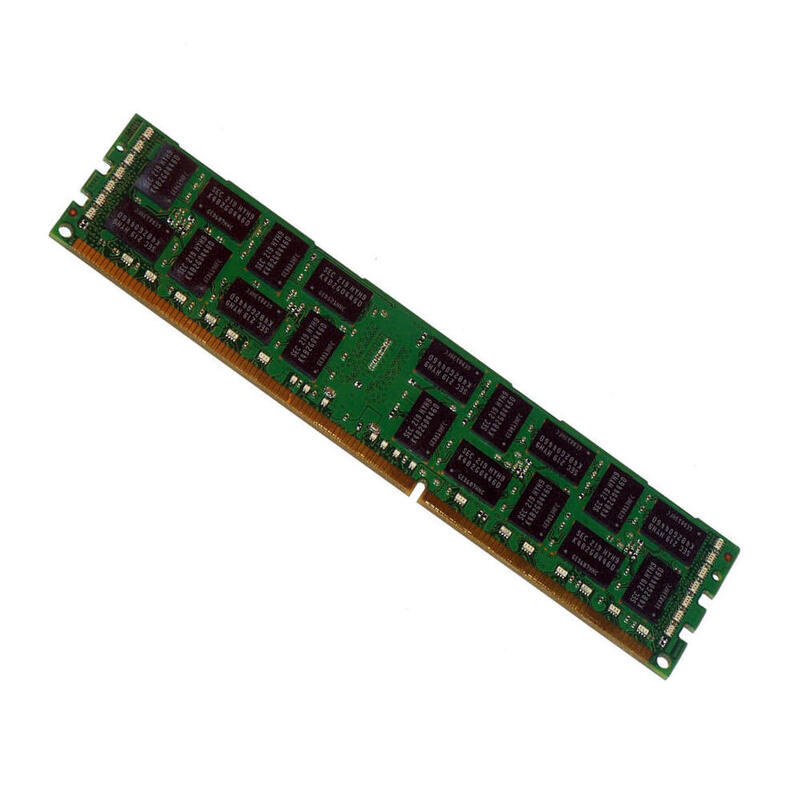
Micron MTA144ASQ16G72LSZ-2S6 128GB RAM Pc4-21300 2666mhz Cl19 ECC Registered. New (System) Pull with 1 year replacement warranty
The Micron MTA144ASQ16G72LSZ-2S6 module delivers exceptional density and dependable performance for enterprise servers, offering a refined balance of speed, stability, and efficiency. Designed for demanding workloads, this 128GB DDR4 Load-Reduced DIMM ensures smooth data handling across virtualized, cloud, and high‑capacity computing environments.
Enterprise server environments demand memory solutions that go beyond standard consumer-grade components. The category of Load Reduced (LRDIMM) memory modules, specifically those utilizing advanced octal rank architecture like the Micron MTA144ASQ16G72LSZ-2S6, represents the pinnacle of high-capacity, high-performance, and high-reliability server RAM. These modules are engineered for mission-critical servers, data centers, high-performance computing (HPC) clusters, and large-scale virtualization hosts where maximum memory capacity, data integrity, and sustained throughput are non-negotiable.
The part number itself is a detailed blueprint of the module's specifications. Breaking it down: MT signifies Micron Technology. A indicates a DDR4 module. 144 represents the pin count (288 pins are standard for DDR4 DIMMs, but this may refer to a Micron-specific designator). ASQ often denotes a server-grade, qualified product. 16G refers to the density per die. 72 indicates the module's organization and data width with ECC (72 bits: 64 data + 8 ECC). LSZ is a Micron internal code for features like rank count, speed bin, and voltage. 2S6 specifies the speed grade (PC4-21300, 2666MT/s) and potentially the revision. Understanding this nomenclature is crucial for IT professionals to ensure exact compatibility and expected performance.
This module operates at a data rate of 2666 Megatransfers per second (MT/s), commonly referred to as DDR4-2666. The "PC4-21300" designation is the module's theoretical peak bandwidth in MB/s, calculated as 2666 MT/s * 8 Bytes (64-bit data bus) = ~21,300 MB/s. This high bandwidth is essential for reducing bottlenecks in data-intensive applications, allowing CPUs to access large datasets with minimal latency.
Operating at a standard DDR4 voltage of 1.2V, this module balances performance with power efficiency, a critical factor in dense server deployments where power and cooling costs are significant. The CAS Latency (CL19) is a measure of the delay time between the memory controller requesting data and the moment the data is available. While higher speeds often come with slightly higher latencies, the immense bandwidth and capacity of this module are designed to optimize overall system throughput, making it ideal for workloads that benefit more from raw bandwidth than from ultra-low latency alone.
Error-Correcting Code (ECC) memory is a fundamental requirement for any server where data corruption is unacceptable. ECC can detect and correct single-bit memory errors on the fly, preventing silent data corruption, system crashes, and computational errors. This is paramount for financial databases, scientific simulations, and long-term storage servers.
This module is a Registered DIMM (RDIMM). It incorporates a register (or buffer) on the module itself for address and command signals. This register reduces the electrical load on the server's memory controller, allowing a single controller to support a significantly greater number of memory modules. This enables servers to be populated with vast amounts of total RAM—reaching terabytes of capacity—while maintaining signal integrity and system stability.
It's vital to distinguish between Unbuffered (UDIMM), Registered (RDIMM), and Load Reduced DIMMs (LRDIMM). UDIMMs have no buffer and are common in desktops; they offer lower latency but severely limit the number of modules per channel. RDIMMs, as described, use a register for address/command lines. LRDIMMs take this a step further by buffering the data lines as well, drastically reducing the electrical load and enabling the highest possible capacities and ranks.
The "Load Reduced" in LRDIMM is the key differentiator for ultra-high-capacity server memory. While RDIMMs buffer control signals, LRDIMMs employ a memory buffer (like a Data Buffer or IO Buffer) on the data lines. This buffer isolates the electrical load of the DRAM chips from the memory controller and the data bus.
The primary benefit is the ability to populate every memory slot in a high-core-count server (e.g., Intel Xeon Scalable or AMD EPYC platforms) with the highest-density modules without exceeding the electrical limits of the memory subsystem. This allows for the maximum total memory configuration supported by the platform. It also can enable higher operating speeds at full population compared to using dense RDIMMs, as the electrical burden on the controller is minimized.
LRDIMMs are not for every server. They are specifically designed for:
In-Memory Databases: SAP HANA, Oracle Exadata.
Big Data Analytics: Hadoop, Spark clusters requiring massive datasets in RAM.
Virtualization: Consoli-dating hundreds of virtual machines on a single host.
High-Performance Computing (HPC): Scientific modeling and simulations.
A "rank" is a set of DRAM chips that work together to fill the data width of the memory bus (72 bits for ECC modules). Traditional modules are single, dual, or quad rank. The Micron MTA144ASQ16G72LSZ-2S6 is an Octal Rank module, meaning it logically presents eight independent 72-bit-wide ranks to the memory controller.
To achieve a 128GB capacity on a single DIMM, manufacturers must use high-density DRAM chips and organize them into multiple ranks. An octal rank configuration uses advanced 3D stacking (like through-silicon vias) and dense semiconductor processes to pack an extraordinary number of memory cells into the standard DIMM form factor. This ranks-per-module configuration is managed by the advanced memory buffer on the LRDIMM.
While octal ranks provide immense density, they interact with the server's memory channel architecture. Modern CPUs have a limit on the total number of ranks they can support per memory channel. The efficiency of the LRDIMM buffer is crucial here, as it helps manage these ranks effectively. System administrators must consult their server motherboard or system manufacturer's Qualified Vendor List (QVL) to ensure specific 128GB octal rank LRDIMMs are supported and to understand the recommended population guidelines for optimal performance.
The module utilizes the standard DDR4 DIMM form factor with 288 pins. This pin count and the specific key notch position differentiate it from DDR3 (240-pin) and prevent incorrect installation. The physical design ensures robust connection within the server's memory slot, designed to withstand the vibrations and environmental conditions of a data center.
This memory module is exclusively designed for server platforms that support DDR4 LRDIMMs. This includes many generations of Intel Xeon Scalable processors (Purley, Whitley, and newer platforms) and AMD EPYC 7002/7003 series and newer platforms. Compatibility is not guaranteed across all motherboards; verification against the system's QVL is essential.
The specific combination of high capacity (128GB), high bandwidth (PC4-21300), and LRDIMM/ECC reliability makes this module category ideal for transforming server capabilities.
Enterprise Resource Planning (ERP), Customer Relationship Management (CRM), and large-scale SQL databases experience dramatically reduced query times when working datasets reside in RAM instead of on slower storage. A server equipped with multiple 128GB LRDIMMs can hold terabytes of active data in memory.
For cloud service providers and enterprises running private clouds, memory density directly translates to VM density. Higher density per module means more VMs per server, leading to better consolidation ratios, lower hardware footprints, and reduced power and cooling overhead.
In fields like computational fluid dynamics, genetic sequencing, and 3D animation rendering, problems are broken into massive datasets processed in parallel. The large, fast memory pool provided by these LRDIMMs allows researchers and artists to tackle more complex problems and render higher-resolution scenes faster.


 Contact Us
 Information
 Catalog
 Solid State Drives (SSD)
 Network Switches
 Hard Disk Drives
 HBA & Controllers
 PC & Servers
 PC & Server Memory
 CPU & Processors
 Network Routers
 Power Supplies
 Tape Drives & Libraries
 Network Devices
 Computer & Network Cables