(7% discount is applied at checkout)
Cart is empty
Your go-to destination for cutting-edge server products
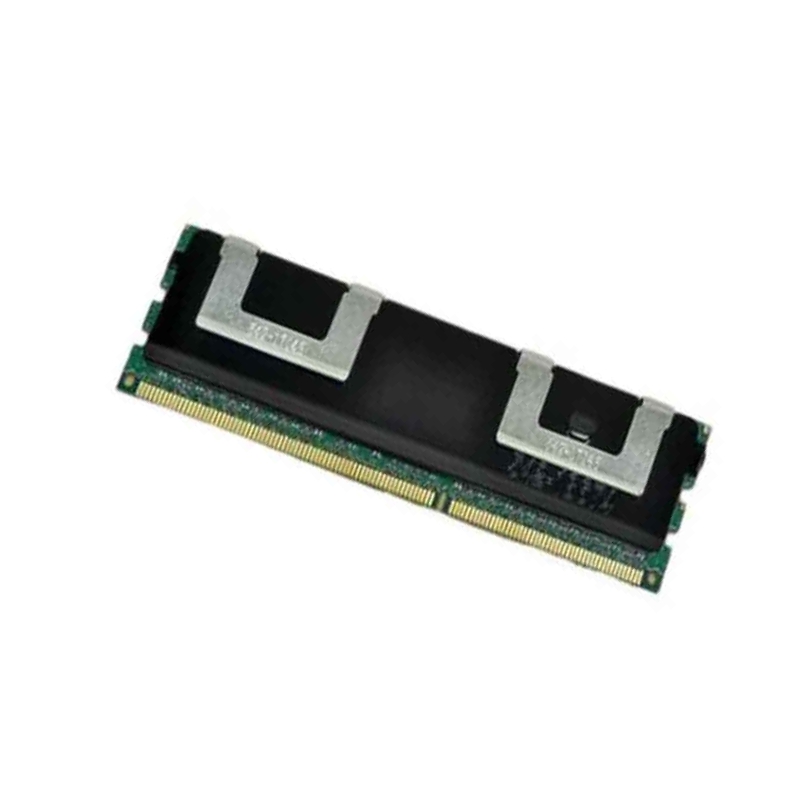


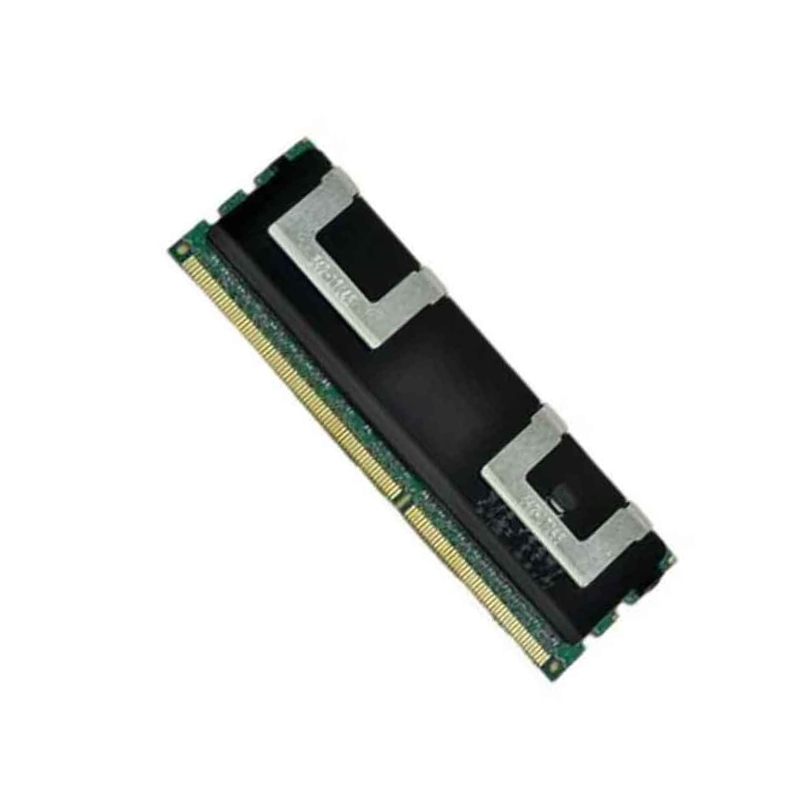
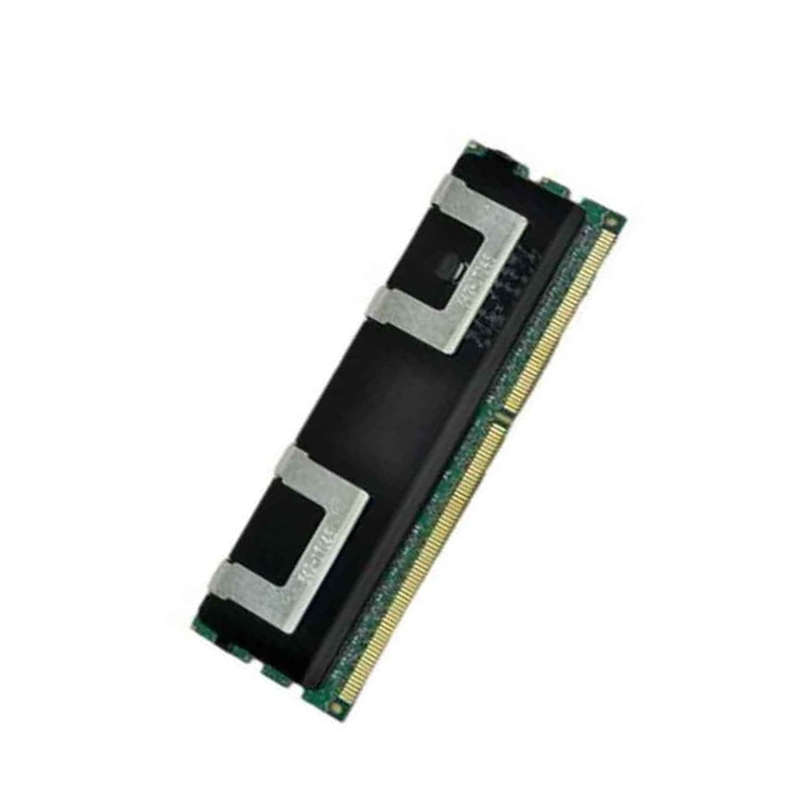
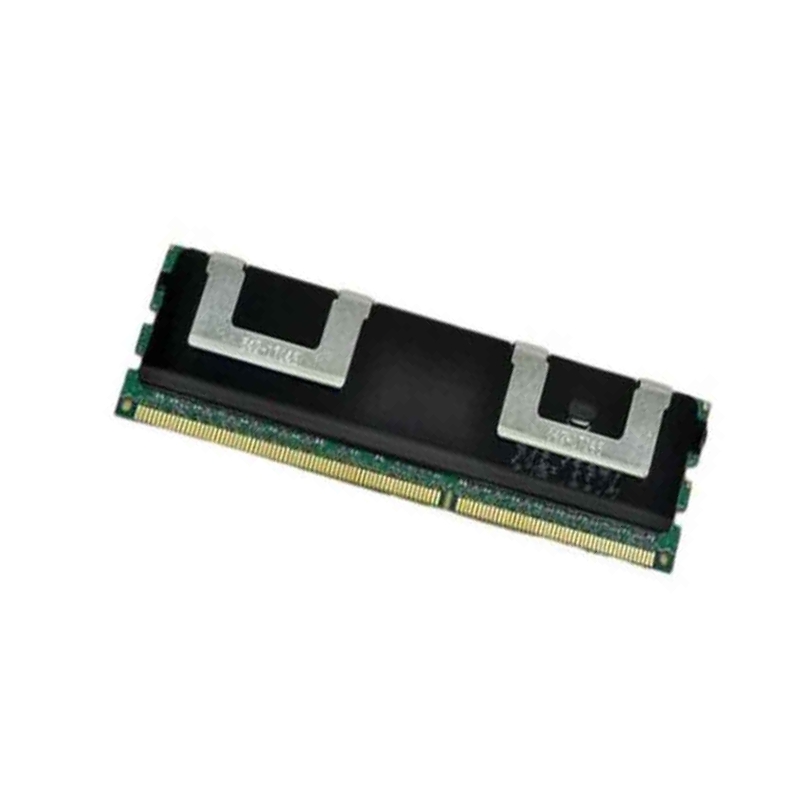
Micron MTA144ASQ16G72LSZ-2S9E1 128GB 8rx4 Pc4-23400 DDR4-2933MHz Registered Ecc Cl21 288-Pin Load Reduced Dimm 1.2v Quad Rank Memory Module. New (System) Pull with 1 year replacement warranty
| SKU/MPN | Warranty | Price | Condition | You save |
|---|---|---|---|---|
| MTA144ASQ16G72LSZ-2S9E1 | 1 Year Warranty | $1,690.00 | New (System) Pull | You save: $591.50 (26%) |
| MTA144ASQ16G72LSZ-2S9E1 | 1 Year Warranty | Contact us for a price | New Sealed in Box (NIB) |
The Micron MTA144ASQ16G72LSZ-2S9E1 Registered Ecc is a high-performance memory module that boasts an impressive capacity of 128GB. This means that it has a massive storage space, allowing users to store and access large amounts of data quickly and efficiently.
In the realm of enterprise computing and data centers, memory is not merely a component; it is the critical substrate upon which computational workloads are executed. Within this category, the Load Reduced DIMM (LRDIMM) represents a pinnacle of engineering designed to overcome the electrical limitations inherent in large-scale server deployments. Unlike standard Registered DIMMs (RDIMMs), which use a register to buffer only the command and address lines, LRDIMMs incorporate a memory buffer (or data buffer) on the module itself. This buffer isolates the electrical load of the DRAM chips from the server's memory controller. This architectural advancement is essential for enabling higher memory capacities, greater speeds, and increased module densities—such as the monumental 128GB—without overburdening the memory controller. It is the solution for servers requiring vast, scalable memory pools for applications like in-memory databases (SAP HANA, Oracle Exadata), high-performance virtualization, big data analytics, and scientific computing.
The alphanumeric string in the product name is a precise blueprint of the module's capabilities. Breaking down the Micron MTA144ASQ16G72LSZ-2S9E1 reveals its key attributes: MTA144A denotes the DDR4 LRDIMM form factor. SQ indicates the specific component revision and design. 16G72 signals the use of 16Gb (Gigabit) DRAM components organized to achieve a 72-bit wide data path (64 data bits + 8 ECC bits). L confirms Load Reduced architecture. SZ refers to the thermal sensor profile and general specifications. Finally, -2S9E1 is the speed bin designation, correlating to a guaranteed operating frequency of DDR4-2933MHz at the specified timings and voltage. This meticulous naming convention allows IT professionals to precisely identify compatibility and performance characteristics.
The module provides a massive 128GB (Gigabytes) of memory capacity. This is achieved through an Octal Rank configuration. In memory terminology, a "rank" is a set of DRAM chips that work together to fill the module's data width (72 bits in this case). An Octal Rank (8-rank) design is a complex engineering feat that stacks or interleaves memory ranks to achieve extreme densities on a single module. This allows a dual-processor server with 16 memory slots to theoretically support up to 2 Terabytes of RAM using these modules, a capability crucial for memory-intensive enterprise workloads.
This module operates at a data rate of PC4-23400. This JEDEC designation, also expressed as DDR4-2933MHz, means the module performs 2,933 million data transfers per second per pin. The "PC4" prefix denotes a DDR4 module, and the "23400" refers to the theoretical peak bandwidth in Megabytes per second (approximately 23,400 MB/s). This high bandwidth is vital for ensuring that CPUs are fed with data rapidly, reducing bottlenecks in multi-threaded, data-saturating applications.
The module's CAS Latency is specified as CL21 (CAS Latency 21). Timings are represented as a series of numbers (e.g., 21-21-21), with the first number being the most critical CL value. It measures the clock cycle delay between the memory controller requesting data and the moment the data is available. While higher speeds often correlate with slightly higher CL numbers, the overall performance is determined by the combination of speed and latency. In the server environment, consistency and stability under load are prioritized over ultra-tight timings.
Operating at a standard 1.2V, this DDR4 LRDIMM adheres to the improved power efficiency of the DDR4 generation over its DDR3 predecessors (which typically ran at 1.35V or 1.5V). The integrated memory buffer on the LRDIMM does incur a slight additional power overhead compared to an RDIMM, but this is a necessary trade-off for the ability to populate more modules at higher speeds and densities without signal integrity degradation. The power management features of DDR4 help keep overall system power consumption in check.
The module is built on the standard 288-pin DIMM layout defined for DDR4. The physical design ensures it fits into DDR4 server motherboard slots only (it is not backward compatible with DDR3). The "Load Reduced" feature is an electrical and logical specification, not a physical one, meaning the module shares the same physical footprint as other 288-pin DDR4 RDIMMs but is electronically distinct and requires explicit motherboard and CPU support.
This is an ECC (Error-Correcting Code) memory module. The "72" in the part number's "16G72" segment signifies a 72-bit data bus—64 bits for data and 8 dedicated bits for ECC. ECC is non-negotiable in enterprise environments. It enables the memory to detect and correct single-bit errors on-the-fly and detect multi-bit errors. This hardware-level data integrity protection prevents silent data corruption, system crashes, and computational errors that could be catastrophic in financial modeling, scientific research, or database transactions. The ECC functionality works in tandem with the registered and buffered architecture to ensure data fidelity.
The defining component of an LRDIMM is its memory buffer chip (from manufacturers like Renesas or Montage). This buffer sits between the memory controller and all the DRAM chips on the module. For the Micron 128GB module, it performs several vital functions:
Electrical Load Isolation: It presents only a single electrical load to the memory controller, regardless of whether the module has 72 DRAM chips or more. This is what allows servers to support the maximum number of slots at high speeds with high-density modules.
Signal Integrity Preservation: By managing the electrical interface, the buffer reduces stubs, reflections, and crosstalk on the high-speed memory bus, enabling cleaner signals and stable operation at 2933 MT/s and beyond.
Rank Multiplication: The buffer facilitates the complex addressing and management of the eight internal ranks, making them appear to the memory controller in a managed and efficient manner.
An Octal Rank (8-rank) module is the current frontier in single-module density. Constructing such a module requires advanced techniques like 3D stacking (using through-silicon vias or TSVs) or very high-density DRAM chips (like the 16Gb components used here). This architecture allows a single module to contain eight independent blocks of memory that the memory controller can access. However, managing eight ranks increases the complexity of the memory subsystem. The memory buffer is essential for managing rank selection, timing, and refresh cycles across all eight ranks, ensuring they operate in harmony without conflicting with each other or overwhelming the system's memory controller.
Deploying this Micron 128GB LRDIMM requires meticulous attention to platform compatibility. It is designed for Intel Xeon Scalable Processors (Skylake-SP, Cascade Lake-SP, Cooper Lake, and compatible generations) or AMD EPYC 7002/7003 Series platforms and beyond that explicitly support LRDIMMs. Crucially, not all servers that accept DDR4 will support LRDIMMs; the motherboard BIOS and memory controller must be designed for them. Furthermore, LRDIMMs often cannot be mixed with RDIMMs or UDIMMs in the same channel or system. Always consult the server manufacturer's Qualified Parts List (QPL) or memory compatibility tool before procurement.
Server memory channels (typically 6 or 8 per CPU on modern platforms) have specific guidelines for populating modules of different ranks and types to maintain signal integrity. High-density LRDIMMs like this 8-rank module will often have rules that limit the number of modules that can be populated per channel at maximum speed. For example, a system might support 2933MHz with one LRDIMM per channel but drop to 2666MHz with two LRDIMMs per channel. Understanding these population rules is key to optimizing both total system capacity and performance.
The PC4-23400 (2933MT/s) data rate provides substantial memory bandwidth. In a multi-channel server platform (e.g., a dual-socket system with 12 memory channels), the aggregate bandwidth can reach hundreds of GB/s. This is essential for CPU-bound applications where processors have many cores waiting on data. While the CL21 latency is numerically higher than that of a consumer DDR4-3200 CL16 module, the effective latency in nanoseconds is comparable, and the server-optimized architecture ensures consistent performance under sustained, multi-user workloads where consumer memory would fail.
Systems like SAP HANA, Microsoft SQL Server with In-Memory OLTP, or Oracle Exadata store active datasets entirely in RAM. A single 128GB module dramatically increases the feasible dataset size per server node, enabling faster transactions, real-time analytics, and complex queries on massive datasets without disk I/O bottlenecks.
Server consolidation through virtualization is limited by memory capacity. With 128GB modules, a host server can accommodate dozens more virtual machines, each with generous memory allocations, improving hardware utilization (ROI) and supporting larger private cloud deployments.
Applications like Apache Spark, Hadoop, and large-scale finite element analysis (FEA) or computational fluid dynamics (CFD) simulations work with enormous data sets in RAM. High-density LRDIMMs allow more of the working set to reside in fast memory, reducing swap times and accelerating time-to-insight or solution convergence.
While some HPC nodes prioritize raw bandwidth with lower-capacity RDIMMs, memory-capacity optimized nodes for applications in genomics, climate modeling, or financial simulation benefit immensely from the ability to fit terabytes of coherent memory in a standard rack unit form factor using modules like this.


 Contact Us
 Information
 Catalog
 Solid State Drives (SSD)
 Network Switches
 Hard Disk Drives
 HBA & Controllers
 PC & Servers
 PC & Server Memory
 CPU & Processors
 Network Routers
 Power Supplies
 Tape Drives & Libraries
 Network Devices
 Computer & Network Cables