
(7% discount is applied at checkout)
Cart is empty
Your go-to destination for cutting-edge server products
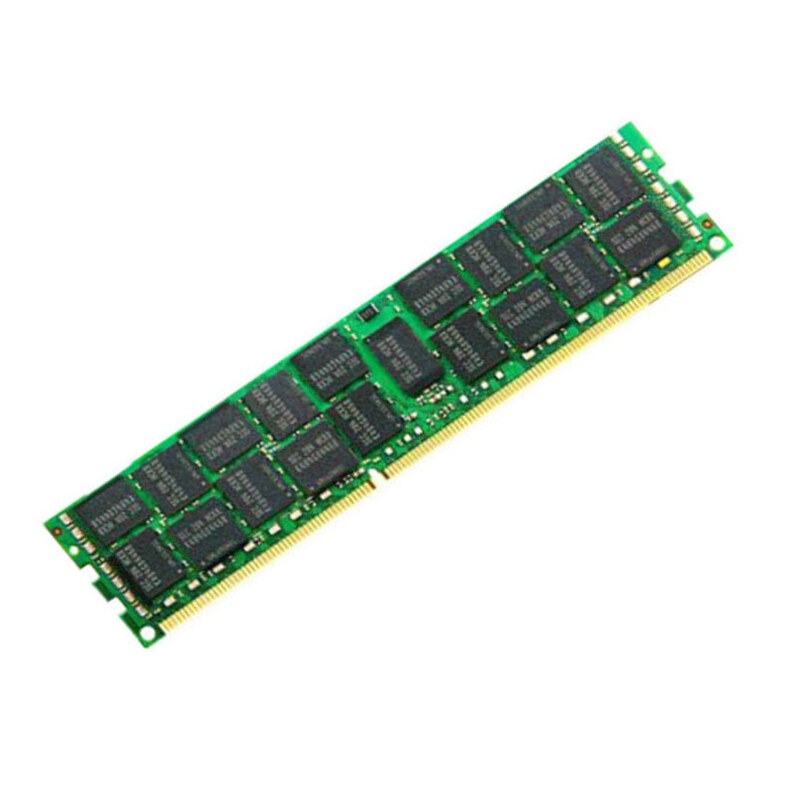
Micron MTA18ADF2G72AZ-3G2E1 16GB DDR4 SDRAM 3200Mhz PC4-25600 CL22 ECC Unbuffered Dual Rank X8 1.2v 288-pin UDIMM Memory. New Sealed in Box (NIB) with 3 Years Warranty
The Micron MTA18ADF2G72AZ-3G2E1 DDR4 SDRAM is a high-performance memory module that offers a capacity of 16GB. This ample storage space allows users to run memory-intensive applications and multitask without experiencing any slowdowns or performance issues.
In the realm of enterprise computing, data integrity and system stability are non-negotiable. This is where specialized memory modules, like the Micron MTA18ADF2G72AZ-3G2E1, come into play. Unlike standard consumer RAM, this module is engineered for servers, workstations, and high-availability systems where uptime and error-free operation are critical. Its specifications tell a story of precision engineering tailored for demanding environments, blending performance with robust error-correction and a form factor designed for optimized airflow and dense configurations.
The alphanumeric string MTA18ADF2G72AZ-3G2E1 is a detailed blueprint of the module's capabilities. Breaking it down: 'MT' signifies Micron Technology. 'A' indicates a DDR4 product. '18A' refers to the component density and organization. 'DF' designates the specific revision and features, including the Unbuffered ECC (UDIMM) type. '2G72' reveals the module's configuration as a dual-rank (2R), 72-bit wide (with ECC) module. 'AZ' points to the specific design and PCB revision. The suffix '-3G2E1' encodes the speed grade (DDR4-3200), the latency timing (CL22), and the operational voltage (1.2V). This meticulous naming convention allows IT professionals and system integrators to precisely identify compatibility and performance characteristics.
This module offers a substantial 16GB (Gigabytes) of memory capacity. This capacity is a sweet spot for many applications, balancing cost-effectiveness with the ability to handle significant workloads, from virtual machines to large in-memory databases. It operates at a data rate of PC4-25600, which translates to a transfer rate of 25,600 MB/s per module. The underlying clock speed is 3200 Megatransfers per second (MT/s), commonly referred to as DDR4-3200. This high-speed data pathway ensures rapid access to information, reducing bottlenecks and improving overall system responsiveness for CPU-intensive tasks.
This is an Unbuffered (UDIMM) module. This means the memory controller's electrical signals connect directly to the DRAM chips on the module. This results in lower latency compared to Registered (RDIMM) memory, as there is no intermediary register chip. However, the electrical load on the memory controller is higher, which typically limits the total number of modules that can be installed per channel. UDIMMs like the MTA18ADF2G72AZ-3G2E1 are ideal for single- and dual-socket workstations, entry-level servers, and high-end desktop platforms that support ECC, where capacity per channel is moderate but low latency is beneficial.
The module operates at a standard DDR4 voltage of 1.2 volts. This represents a significant power efficiency improvement over previous DDR3 generations (typically 1.5V), reducing overall power consumption and heat generation in the memory subsystem. Lower thermals contribute directly to increased system stability and longevity, a crucial factor in 24/7 operational environments like data centers. The Low Profile (VLP) design further enhances thermal management by allowing greater airflow across critical components.
The module uses DRAM chips with a x4 data width (4 data bits per chip). To build a 72-bit wide module (64 data + 8 ECC), it requires 18 chips (72 bits / 4 bits per chip = 18). This x4 organization is standard for ECC memory and is optimized for server reliability. The 8 dedicated ECC bits provide the necessary redundancy for single-bit error correction and multi-bit error detection. This chip layout also influences compatibility with certain server platforms that may require specific chip organizations.
To fully appreciate the engineering behind this module, one must understand the key technologies that define its role in professional systems. These features distinguish it from consumer-grade memory and are selected for their impact on data integrity, performance scaling, and physical deployment.
ECC is arguably the most critical feature for any mission-critical system. The 'ECC' in this module's description indicates it contains additional memory bits to detect and correct the most common types of internal data corruption. Single-bit errors are corrected on the fly without any slowdown or interruption, while multi-bit errors are detected and reported to the system. This proactive correction prevents silent data corruption, system crashes (blue screens), and application faults that could result from cosmic rays, electrical noise, or other low-probability events. For financial data, scientific computations, and server integrity, ECC is indispensable.
The Micron MTA18ADF2G72AZ-3G2E1 is an Unbuffered ECC module (ECC UDIMM). 'Unbuffered' means the memory controller communicates directly with the DRAM chips on the module without an intermediary register or buffer. This results in lower latency compared to Registered (RDIMM) memory, as there is no additional clock cycle delay for the registering process. UDIMMs are commonly used in entry-level servers, high-end workstations, and certain proprietary systems where lower latency is preferred and the maximum number of modules per channel is typically lower than in fully buffered configurations. It is essential to verify motherboard or system compatibility, as UDIMMs and RDIMMs are generally not interchangeable.
The 'Dual Rank' designation means the module's 16GB capacity is organized into two independent sets (ranks) of memory chips. Only one rank can be accessed at a time, but the memory controller can interleave operations between ranks, effectively hiding precharge and activation delays. This can lead to a tangible performance improvement over a Single Rank (1R) module of the same speed and capacity, especially in memory-intensive applications. Dual Rank modules also place less electrical load on the memory controller per module than Single Rank modules, which can be beneficial for system stability when populating multiple channels.
The Low Profile, or VLP, form factor is a key physical characteristic. These modules are shorter than standard-height DIMMs, measuring typically around 0.74 inches (18.8mm) in height. This design serves two primary purposes. First, it allows for installation in compact, space-constrained chassis, such as those used in blade servers or dense 1U rackmount systems. Second, and more importantly, the reduced height dramatically improves airflow over the module and, crucially, over adjacent components like CPU heatsinks. In densely packed servers, improved airflow translates directly into lower operating temperatures, which enhances reliability and can prevent thermal throttling, ensuring consistent performance under sustained load.
Beyond the core technologies, the module's performance is defined by its timing latency and compatibility profile. These factors determine how quickly it can respond to requests and which systems it can operate within.
The CAS Latency (CL) is the number of clock cycles between the memory controller requesting data and the first piece of data being available from the module. This module has a CAS Latency of 22 cycles at its 3200 MT/s speed (CL22). While this number is higher than some consumer DDR4 kits, it is a standard and optimized timing for server and workstation ECC memory at this data rate. The balance between high data bandwidth (3200 MT/s) and moderate latency (CL22) is designed for the sustained, multi-threaded workloads typical of enterprise environments, where overall throughput is often more critical than ultra-low latency for a single operation.
This Micron module is built to conform to the JEDEC standard specifications for DDR4-3200 operation at 1.2V. JEDEC is the industry body that defines the electrical and operational standards for memory. Compliance ensures broad compatibility with systems designed to the same standard. It's important to note that this is a standard JEDEC module and does not support enthusiast-oriented XMP (Extreme Memory Profile) overclocking profiles. Its speed and timings are set to run at the industry-standard specification, guaranteeing stability and compatibility in systems that may not support XMP, which is common in server and workstation motherboards.
The module uses a 288-pin Dual In-line Memory Module (DIMM) connector. This is the standard physical and electrical interface for DDR4 memory, distinct from the 240-pin interface used by DDR3. The increased pin count accommodates additional address lines, bank groups, and other electrical changes that enable the higher speeds and efficiencies of DDR4. The notch on the connector is in a different position than DDR3, providing a foolproof keying mechanism to prevent accidental insertion into an incompatible motherboard slot.
The specific blend of features in the Micron MTA18ADF2G72AZ-3G2E1 makes it suitable for a well-defined set of professional computing applications. It is not a gaming or standard desktop memory module.
Many small to medium business servers and high-end NAS devices from vendors like Supermicro, Asrock Rack, or those built around Intel Xeon E or certain Core i3 processors require Unbuffered ECC memory. This module is a perfect fit for such systems, providing the essential data integrity of ECC, ample 16GB capacity for file serving, virtualization, or database roles, and the VLP design for better thermal management in compact server chassis.
Workstations used for CAD/CAM, 3D rendering, scientific simulation, and 4K/8K video editing demand both high bandwidth and rock-solid stability. A motherboard based on Intel W680, some W480, or AMD WRX80 chipsets (supporting UDIMM ECC) paired with a Xeon or certain Core/Threadripper Pro processors can leverage multiple channels of this memory. The 3200 MT/s speed accelerates data-hungry applications, while ECC safeguards complex, long-duration computations from memory errors that could corrupt renders or simulations worth hours of processing time.
The reliability and standard-compliance of this Micron module make it a candidate for industrial and embedded systems. In routers, switches, medical imaging equipment, or point-of-sale systems that require continuous operation, the combination of ECC for fault tolerance and the thermal advantages of the VLP form factor contributes to the overall mean time between failures (MTBF) of the equipment. These systems often have strict compatibility lists, and a JEDEC-standard module from a top-tier manufacturer like Micron is frequently specified.


 Contact Us
 Information
 Catalog
 Solid State Drives (SSD)
 Network Switches
 Hard Disk Drives
 HBA & Controllers
 PC & Servers
 PC & Server Memory
 CPU & Processors
 Network Routers
 Power Supplies
 Tape Drives & Libraries
 Network Devices
 Computer & Network Cables