
(7% discount is applied at checkout)
Cart is empty
Your go-to destination for cutting-edge server products
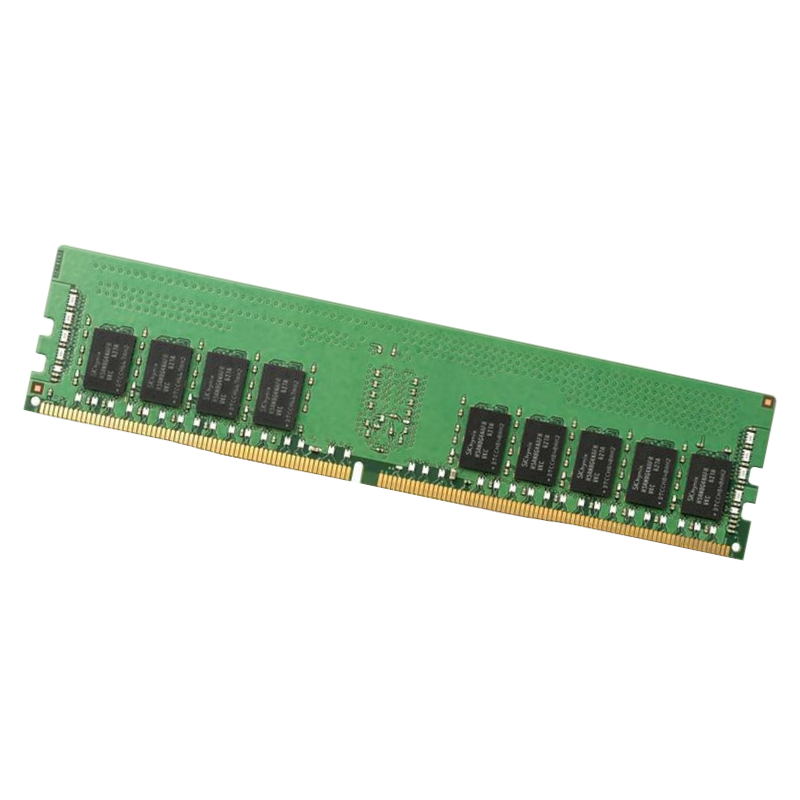
Micron MTA18ADF2G72AZ-3G2E1R 16GB PC4-25600 DDR4-3200MHz ECC CL22 288-Pin DIMM RAM Module. New Sealed in Box (NIB) with 3 Years Warranty
The Micron MTA18ADF2G72AZ-3G2E1R represents a pinnacle of reliability and performance in the realm of DDR4 server and workstation memory. Engineered for systems demanding uncompromising data integrity and stability, this 16GB module combines ECC technology with an Unbuffered, Low Profile form factor, making it an ideal solution for a wide array of professional and embedded computing environments.
In the realm of enterprise and data center computing, memory is not merely a component; it is the critical artery through which data flows, determining system stability, performance, and capability. The Micron MTA18ADF2G72AZ-3G2E1R represents a specific and vital class of memory designed for reliability and compatibility in demanding environments. This module belongs to the category of ECC Unbuffered (UDIMM) memory, a type commonly deployed in entry-level servers, sophisticated workstations, high-end networking equipment, and storage arrays where error correction is non-negotiable, but the absolute lowest latency and highest capacity of registered memory are not the primary requirements.
Micron's part numbering system is a detailed blueprint of the module's specifications. Breaking down "MTA18ADF2G72AZ-3G2E1R" provides a complete technical profile. 'MT' signifies Micron Technology. 'A' indicates a DDR4 product. '18' denotes the component density per chip. 'ADF' refers to the specific DRAM component used. '2G72' reveals the module's organization: 2 Gigabytes x 72 bits. 'AZ' points to the module type (ECC Unbuffered) and revision. The suffix '-3G2E1R' details the speed grade (DDR4-3200), the CAS Latency (CL22), and other timing and revision information. Understanding this nomenclature empowers IT professionals to verify compatibility and specifications at a glance.
This memory module is defined by a precise set of technical parameters that dictate its use case and performance envelope. It is a 16GB capacity module operating on the DDR4 standard. Its data rate is 3200 Megatransfers per second (MT/s), commonly marketed as DDR4-3200MHz. It operates at a low voltage of 1.2V, reducing power consumption and heat generation compared to previous generations. The module features Error-Correcting Code (ECC), utilizes an Unbuffered (UDIMM) design, is of Low Profile (VLP) form factor, and is configured as a Dual Rank module. These attributes collectively define its role in the server ecosystem.
The 16GB capacity offers a balance between density and cost-effectiveness for a wide range of applications. In a multi-channel memory architecture, populating multiple DIMM slots with 16GB modules allows for substantial total system memory—96GB in a typical dual-processor system with six slots per CPU, for example. This capacity is ideal for virtualization hosts running several light-to-moderate workloads, dedicated database servers for mid-sized applications, file and print servers, and network-attached storage controllers where ample memory is crucial for caching and transaction speed.
ECC is the defining feature that separates server-grade memory from standard desktop modules. In an environment where system uptime and data integrity are paramount, the ability to detect and correct single-bit memory errors on-the-fly is indispensable. The Micron MTA18ADF2G72AZ-3G2E1R incorporates dedicated ECC bits (the "x72" in its organization, versus the standard x64) to create a checksum for the data stored. When data is read, the ECC logic recalculates the checksum and compares it to the stored value. Single-bit flips, which can be caused by cosmic rays, electrical interference, or other factors, are corrected transparently without interrupting operations. Multi-bit errors are detected and reported, allowing the system to gracefully halt before data corruption propagates.
The "Unbuffered" designation is crucial for compatibility. Unlike Registered DIMMs (RDIMMs), which use a register (or buffer) on the module to reduce electrical load on the memory controller and enable higher capacities, UDIMMs have a direct electrical connection. This results in slightly lower latency, as there is no register clock cycle delay. However, it also places a greater load on the memory controller, limiting the total number of DIMMs that can be installed per channel. Systems designed for UDIMMs, such as many Intel Xeon E-series, AMD EPYC, and workstation platforms, will explicitly require this type. Attempting to install an RDIMM in a UDIMM-only slot, or vice versa, will result in a system that will not boot.
The Low Profile, or Very Low Profile (VLP), design of this module is a key mechanical feature. With a reduced height compared to standard DIMMs, VLP modules are engineered for high-density or constrained environments. This is essential in 1U and dense 2U rack servers, blade server chassis, and networking appliances where clearance above the DIMM slots is limited, often by large CPU heatsinks, elaborate cooling solutions, or the chassis roof itself. The VLP form factor ensures compatibility in these tight spaces, allowing for full memory population without mechanical interference, thereby maximizing the memory capacity of space-optimized systems.
The DDR4-3200 speed represents a significant bandwidth improvement over previous DDR4 iterations like 2133MT/s or 2666MT/s. Operating on a 3200 million transfers per second interface, the module provides a theoretical peak bandwidth of approximately 25.6 GB/s per module (3200 MT/s * 8 Bytes). In a dual-channel configuration, this doubles to 51.2 GB/s, and in quad-channel server platforms, it can reach over 100 GB/s, dramatically reducing bottlenecks for memory-intensive applications. The CAS Latency (CL) of 22 cycles is typical for DDR4-3200 ECC memory, representing the number of clock cycles between a read command and the moment data is available. While higher frequency increases bandwidth, the CAS latency influences response time; this balance is optimized for server workloads that prioritize throughput over ultra-low latency.
This module is configured as "Dual Rank." A rank is an independent set of DRAM chips that is accessed simultaneously by the memory controller. Dual Rank modules effectively present two logical banks of memory to the controller. This configuration offers a performance advantage over Single Rank modules at the same capacity because it allows for better interleaving—the controller can access one rank while the other is preparing data, improving efficiency and often resulting in higher effective bandwidth. Compared to Quad Rank modules, Dual Rank places less electrical load on the memory controller, allowing for support of higher frequencies and more DIMMs per channel in many systems.
The standard operating voltage for DDR4 is 1.2V, a reduction from DDR3's 1.5V or 1.35V. This lower voltage is a core benefit of the DDR4 standard, directly translating to lower power consumption and reduced heat output per module. For data centers operating thousands of servers, this efficiency gain aggregates into significant reductions in electricity costs and cooling requirements. The Micron MTA18ADF2G72AZ-3G2E1R adheres to this JEDEC standard voltage, ensuring broad compatibility with server platforms that are designed to supply power at this specification. It is important to note that some systems may support voltage adjustments for overclocking, but this module is engineered for stable, reliable operation at its certified 1.2V.
The module utilizes a 288-pin Dual In-line Memory Module (DIMM) connector. This physical interface is specific to DDR4 and is not backward or forward compatible with DDR3 (240-pin) or DDR5 (288-pin, but with a different key notch location). The pin layout includes connections for data, address, command, control signals, and the vital pins for the Serial Presence Detect (SPD) chip. The SPD is a small EEPROM on the module that stores all its configuration data—speed, timings, voltage, manufacturer, and part number—allowing the system's BIOS/UEFI to automatically configure the memory subsystem correctly for stable operation upon boot.
The specific combination of features—ECC, Unbuffered, VLP, DDR4-3200—makes this module compatible with a defined set of platforms. It is an ideal choice for single-socket and dual-socket servers from OEMs like Dell (PowerEdge T series, some R series), HPE (Proliant ML, DL series), Lenovo (ThinkSystem ST series), and Supermicro, as well as workstation platforms from Intel (Xeon W-series) and AMD (Ryzen Threadripper PRO, EPYC 8004 series). Its primary use cases include: building out or upgrading virtualization hosts (VMware vSphere, Microsoft Hyper-V), database servers (SQL, NoSQL), application servers, network function virtualization (NFV) appliances, and high-performance computing (HPC) clusters where ECC integrity is required.
The DDR4-3200 speed offers high peak bandwidth, beneficial for data-intensive tasks like in-memory databases, large dataset analysis, and virtualization. The CAS Latency of 22 is typical for DDR4-3200 ECC modules, balancing speed with the added overhead of ECC operations. In real-world applications, the dual-rank design can offer a performance advantage over single-rank modules at the same speed by improving the efficiency of memory access patterns.
In a virtualized server, this memory allows for hosting more virtual machines with reliable operation. For a workstation running Finite Element Analysis (FEA) software, the ECC protection ensures complex mathematical calculations are not corrupted by a soft memory error. In a NAS, it safeguards against bit flips that could corrupt stored file systems or metadata.
To achieve the advertised memory bandwidth, modules must be installed in matching pairs or sets according to the system's channel architecture. Most server platforms employ dual-channel, triple-channel, or quad-channel memory controllers. For optimal performance, modules should be installed in symmetrical slots, typically color-coded on the motherboard, to enable channel interleaving. Furthermore, server manuals provide strict population guidelines—often specifying which slots to populate first and the supported configurations for different rank types. Misconfiguration can lead to the system operating in a slower single-channel mode or failing to boot entirely.


 Contact Us
 Information
 Catalog
 Solid State Drives (SSD)
 Network Switches
 Hard Disk Drives
 HBA & Controllers
 PC & Servers
 PC & Server Memory
 CPU & Processors
 Network Routers
 Power Supplies
 Tape Drives & Libraries
 Network Devices
 Computer & Network Cables