
(7% discount is applied at checkout)
Cart is empty
Your go-to destination for cutting-edge server products
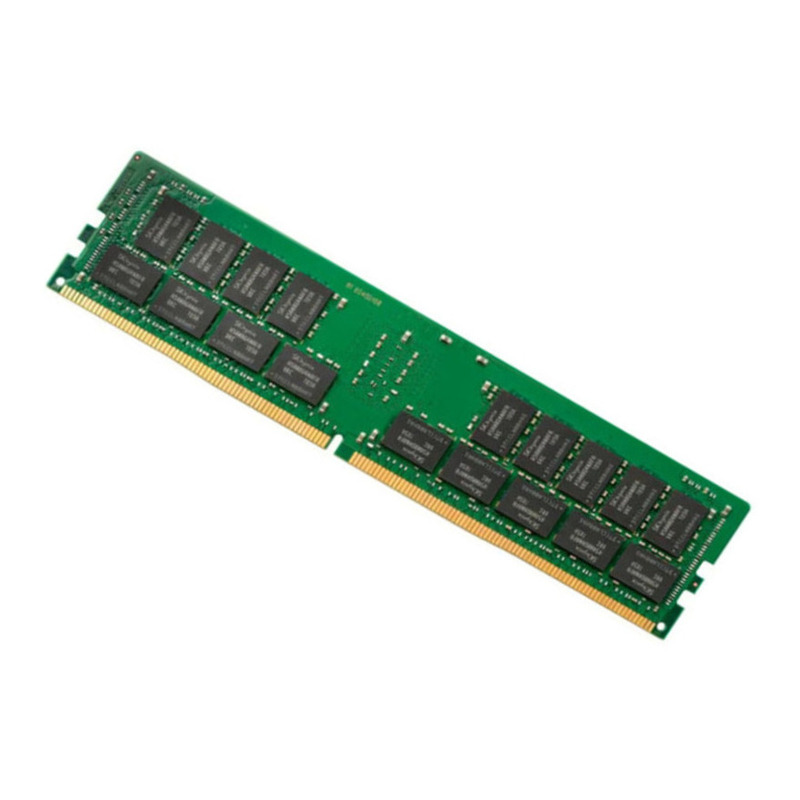
Micron MTA18ADF2G72AZ-3G2R1 16GB DDR4 SDRAM 3200Mhz PC4-25600 CL22 ECC Unbuffered Dual Rank X8 1.2v 288-pin UDIMM Memory. New Sealed in Box (NIB) with 3 Year Warranty
The Micron MTA18ADF2G72AZ-3G2R1 is a precision-engineered 16GB DDR4 memory module designed for professional and enterprise-grade systems where reliability, compatibility, and specific form factor are paramount. This module encapsulates a detailed set of technical specifications, from its speed and type to its physical profile and signal integrity features.
The Micron MTA18ADF2G72AZ-3G2R1 is a 16GB DDR4 memory module engineered for systems demanding high reliability and performance within strict physical and thermal constraints. This ECC Unbuffered VLP DIMM is a specialized component designed for specific server, workstation, and embedded computing environments where error correction, space-saving design, and signal integrity are paramount.
At its core, this module is defined by a precise set of JEDEC-standard specifications that dictate its performance, compatibility, and operational characteristics. These specifications ensure seamless integration into qualified systems.
The module provides a 16-gigabyte (16GB) capacity, offering a substantial memory footprint for handling complex applications, virtualization, and data-intensive tasks. This capacity is achieved through advanced memory chip (die) packaging and organization on the printed circuit board (PCB).
The "Dual Rank" designation indicates the module's internal organization. A rank is a set of memory chips that work together to provide the full data width (72 bits in this case, with ECC). A dual-rank module has two independent sets of these chips, allowing the memory controller to access one rank while preparing the other, improving efficiency and utilization. This offers a balance of performance and capacity density compared to single-rank (lower capacity/performance) or quad-rank (higher load on the memory controller) designs.
The module operates at a data rate of 3200 megatransfers per second (MT/s), commonly referred to as DDR4-3200. The "PC4-25600" designation is the module's theoretical peak bandwidth in megabytes per second (MB/s), calculated as (3200 MT/s * 8 bytes per transfer). This high-speed data transfer enables faster processing by reducing wait times for the CPU to access data stored in memory.
The CAS Latency (CL22) is a critical timing parameter, representing the number of clock cycles between a column address command and the availability of the first piece of data. Operating at CL22 at 3200MT/s, this module follows standard JEDEC timing profiles for this specification. Timings are carefully calibrated to balance speed with the stability required for ECC unbuffered applications.
This DDR4 module operates at a standard 1.2 volts, a significant reduction from the 1.5V or 1.35V common in DDR3 technology. This lower voltage translates directly into reduced power consumption and lower heat generation, contributing to overall system energy efficiency and thermal management.
The module uses a 288-pin Dual In-Line Memory Module (DIMM) connector. The DDR4 pin layout is mechanically and electrically distinct from DDR3, preventing accidental insertion into an incompatible slot. The pinout includes connections for data, address, command, control, and the new Vpp supply voltage for the DRAM.
The "ECC Unbuffered" feature is a cornerstone of this module's design, targeting systems that require enhanced data integrity without the latency penalty of registered/buffered modules.
ECC is an advanced data integrity mechanism. For every 64 bits of data, an additional 8 bits are used to store an error-correcting code. This allows the memory module, in conjunction with a supporting memory controller, to detect and correct single-bit errors on the fly. It can also detect, but not correct, multi-bit errors. This is crucial for preventing data corruption, silent data errors, and system crashes in financial computing, scientific research, medical systems, and long-running servers.
As an Unbuffered DIMM (UDIMM), the memory chips connect directly to the system's memory controller. This provides lower latency compared to Registered (RDIMM) or Load Reduced (LRDIMM) modules, as there is no intermediary register to buffer the address and command signals. This makes ECC UDIMMs an excellent choice for entry-level servers, high-performance workstations, and specific embedded platforms where low latency is valued and the memory channel load is typically lighter.
The "Low Profile" or Very Low Profile (VLP) designation refers to the module's reduced physical height, a critical design consideration in space-constrained environments.
Standard VLP DDR4 DIMMs are typically around 18.75mm (0.738 inches) in height, significantly shorter than standard height DIMMs (~31.25mm). This reduced stature is essential for fitting into 1U or dense 2U rack servers, blade server enclosures, and compact networking or storage appliances where clearance above the memory slots is limited by chassis structure, large CPU heatsinks, or cable routing.
The VLP form factor works in tandem with system cooling solutions. Its lower height allows for unimpeded airflow from system fans across the motherboard, improving cooling for both the memory modules and adjacent components like CPU VRMs. In systems with directed airflow or specific memory cooling baffles, VLP modules ensure proper fit and thermal performance.
The underlying DRAM components and PCB design are key to the module's reliability and performance.
As a Micron module, it utilizes Micron's own high-quality DRAM integrated circuits. These chips are manufactured under stringent quality controls. Using first-party chips ensures full traceability, optimized compatibility between the chips and the SPD programming, and adherence to Micron's performance and reliability specifications throughout the supply chain.
The 288-pin DIMM employs a multi-layer printed circuit board (PCB), often 8 or 10 layers. These additional layers provide dedicated pathways for power, ground, and data signals. This sophisticated design is crucial for maintaining signal integrity at high speeds (3200MT/s), minimizing electrical noise and crosstalk between signals, which is essential for stable operation, especially for ECC's precise data requirements.
The Serial Presence Detect (SPD) chip is a small, essential EEPROM on the module. It contains all the factory-programmed technical data about the module—its timings, voltage, density, manufacturer, and serial number. The system BIOS/UEFI reads this information during the Power-On Self-Test (POST) to automatically configure the system for stable operation with the installed memory.
This specific combination of features makes the Micron MTA18ADF2G72AZ-3G2R1 suitable for well-defined market segments.
Many entry-level and small business tower servers utilize unbuffered ECC memory to provide data integrity at a lower cost and latency than registered memory platforms. The VLP design offers flexibility in these often more compact chassis.
Workstations for engineering (CAD/CAM), content creation (3D rendering, video editing), and scientific computing benefit from ECC's stability during long, complex computations. The unbuffered architecture provides the low-latency, high-speed performance these demanding professional applications require.
Embedded computing platforms in networking routers, switches, edge computing appliances, and industrial PCs often specify VLP ECC UDIMMs. The ECC ensures reliability in 24/7 operation, the VLP form factor fits tight industrial layouts, and the unbuffered design meets the embedded platform's electrical specifications.
Network Attached Storage (NAS) and Storage Area Network (SAN) devices frequently use ECC memory to protect against data corruption in cache and during RAID calculations. The low-profile design is advantageous in dense storage server bays.
Ensuring compatibility is critical when deploying this memory module.
The module requires a motherboard with a DDR4 memory controller that explicitly supports ECC Unbuffered (UDIMM) memory. This is commonly found on server and workstation platforms powered by Intel Xeon E, Intel Core (with specific chipsets supporting ECC), AMD EPYC, and AMD Ryzen Pro processors. Support is not universal and must be verified with the system or motherboard manufacturer's qualified vendor list (QVL).
While the ECC functionality is managed transparently by the hardware (CPU and memory controller), some operating systems can report ECC error events. Windows 10/11 Pro for Workstations and most server-grade Linux distributions (e.g., Ubuntu Server, RHEL, SUSE) include drivers and utilities to log ECC corrections and errors for system monitoring.
For optimal stability, it is recommended to populate memory channels with identical modules (same part number, size, speed, and rank). Mixing this module with different sizes, speeds, or brands can lead to system instability or cause all modules to run at the speed and timings of the slowest DIMM. Consulting the system manual for population rules (slot order for dual-channel or quad-channel configurations) is essential.
Understanding the performance context of this module helps in proper system configuration.
In a multi-channel architecture (e.g., Dual-Channel, Quad-Channel), using one module per channel is standard. The dual-rank nature of this module provides a level of rank interleaving within each DIMM, which can improve performance over a single-rank module of the same capacity by allowing the memory controller to switch between ranks, hiding precharge and activation delays.
The ECC calculation and correction process adds a minimal, typically single-digit nanosecond, latency overhead to memory operations. This is generally imperceptible in real-world applications and is a negligible trade-off for the immense benefit of data integrity. The performance impact is far less than that of using registered/buffered memory.


 Contact Us
 Information
 Catalog
 Solid State Drives (SSD)
 Network Switches
 Hard Disk Drives
 HBA & Controllers
 PC & Servers
 PC & Server Memory
 CPU & Processors
 Network Routers
 Power Supplies
 Tape Drives & Libraries
 Network Devices
 Computer & Network Cables