
(7% discount is applied at checkout)
Cart is empty
Your go-to destination for cutting-edge server products
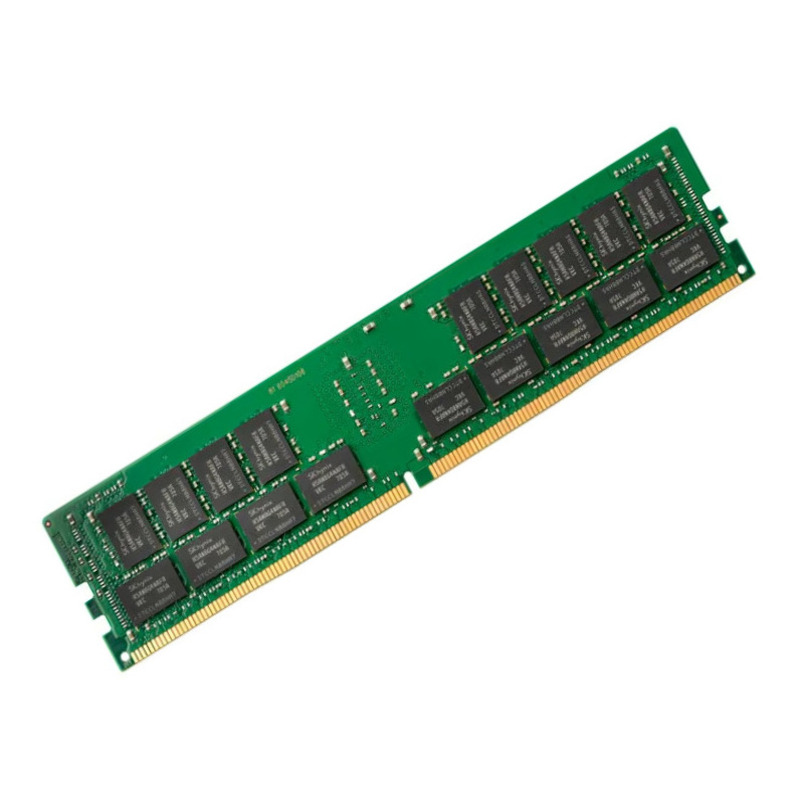
Micron MTA18ADF2G72AZ-3G2R1R 16GB 3200Mhz PC4-25600 CL22 ECC Unbuffered Dual Rank X8 1.2V DDR4 SDRAM 288-pin UDIMM Memory. New Sealed in Box (NIB) with 3 Year Warranty
In the realm of server, workstation, and high-reliability desktop computing, the Micron MTA18ADF2G72AZ-3G2R1R represents a critical class of memory module. This product belongs to the category of DDR4 ECC Unbuffered UDIMMs, a specific type of RAM engineered for systems where data integrity is paramount but the full-scale robustness and capacity of registered (RDIMM) memory are not required.
The Micron MTA18ADF2G72AZ-3G2R1R represents a specific and engineered component within the vast ecosystem of DDR4 memory. This 16GB module is designed for systems requiring reliable, error-correcting memory in an unbuffered form factor. It caters to professional workstations, entry-level servers, and high-end desktop platforms where data integrity is paramount but the full overhead of registered memory is not required. The part number itself is a detailed blueprint, encoding the module's specifications, from its density and speed to its architecture and voltage. As a critical component for system stability and performance, understanding its attributes is essential for system builders, IT professionals, and enthusiasts seeking optimal compatibility and reliability.
Micron's part numbering system provides a concise summary of the module's key technical characteristics. Breaking down MTA18ADF2G72AZ-3G2R1R offers immediate insight into its capabilities.
The prefix "MTA" indicates a DDR4 module. The "18A" denotes a specific revision and technology code for Micron's 16GB unbuffered ECC modules. This is the foundational identifier that places this product within Micron's broad portfolio.
This section details the module's organization. "DF" typically refers to the module's feature set (including ECC). "2G72" indicates a 2 Gig (x8) component organization leading to a 72-bit wide module (64 data bits + 8 ECC bits). The "AZ" suffix further specifies the component type and revision, pointing to the use of Micron's advanced DDR4 chips.
This final segment is crucial for performance and compatibility. The "-3G2" directly specifies the speed grade; here, it corresponds to a cycle time of 3.2ns (3200Mhz) with CL22 timings. The "R1R" indicates the module is a Dual Rank (2R) design. Understanding this nomenclature is the first step in ensuring the module will function correctly with your motherboard and processor.
This memory module is defined by a set of interlocking technical specifications that determine its performance envelope, power consumption, and physical interface. Each parameter plays a role in the module's operation within a memory channel, impacting overall system throughput and responsiveness.
The MTA18ADF2G72AZ-3G2R1R is engineered to meet the JEDEC standard specification for DDR4-3200, ensuring broad compatibility and stable operation at its rated speed without overclocking.
The module operates at a data rate of 3200 Megatransfers per second (MT/s), commonly referred to as 3200Mhz. This translates to a peak theoretical bandwidth of 25,600 MB/s per module, calculated as (3200 MT/s * 64-bit data bus) / 8 bits per byte. This high bandwidth is essential for feeding data-hungry CPUs in modern workstations and servers, reducing bottlenecks in memory-intensive applications like scientific computing, video editing, and virtualization.
The CAS Latency (CL) for this module is 22 clock cycles at its rated 3200Mhz speed. This timing, part of a broader set of JEDEC-approved timings (such as tRCD, tRP, and tRAS), represents the balance between speed and stable operation. While higher frequencies increase bandwidth, latencies (measured in nanoseconds) are also a critical performance factor. The CL22 timing at 3200Mhz provides a optimal blend of high throughput and reliable access latency for professional systems.
This DDR4 module operates at a standard voltage of 1.2V, a significant reduction from the 1.5V common in DDR3 technology. This lower voltage directly results in lower power consumption and reduced heat output, contributing to overall system energy efficiency and thermal management. The module supports power-saving features like Active Power-Down and Self-Refresh modes, further optimizing energy use in idle states.
The performance and reliability of the MTA18ADF2G72AZ-3G2R1R are rooted in its underlying architectural choices, from the arrangement of memory chips on the PCB to the advanced error correction capabilities. These design elements define its target market and use-case scenarios.
The "Dual Rank" designation indicates that the module's memory chips are organized into two independent sets (ranks) that share the same memory bus. The module uses x8 DRAM components, meaning each chip handles 8 bits of data. A dual-rank, x8-based 16GB module typically utilizes 18 chips (16 for data and 2 for ECC) per rank. This architecture improves memory channel utilization by allowing the memory controller to access one rank while preparing the other, hiding precharge and activation delays, which can lead to better real-world performance compared to a single-rank module at the same frequency.
A defining feature of this module is its support for ECC. This is a critical differentiator from standard non-ECC unbuffered memory.
ECC is an algorithm that detects and corrects the most common types of internal data corruption. For every 64-bit data word, the module stores an additional 8 bits of error-correcting code (hence the 72-bit physical width). As data is written to memory, the ECC bits are calculated and stored. Upon readback, the code is recalculated and compared. Single-bit errors are automatically corrected on-the-fly, while multi-bit errors are detected and reported to the system, which can then initiate a fault response. This feature is indispensable for financial calculations, database integrity, long-term computational tasks, and any application where undetected data corruption is unacceptable.
This module is an Unbuffered DIMM (UDIMM). This means the memory controller's address and command signals connect directly to the DRAM chips on the module. In contrast, Registered DIMMs (RDIMMs) use a register to buffer these signals, allowing for greater electrical load support and enabling much higher module densities per channel but at the cost of a slight increase in latency. UDIMMs with ECC, like this Micron module, offer the data integrity of ECC with the lower latency and simplicity of an unbuffered design, making them ideal for single- and dual-socket workstations and entry-level servers that support ECC unbuffered memory.
Physical specifications ensure the module mechanically and electrically interfaces with the host system. Adherence to industry-standard form factors guarantees broad compatibility with appropriate platforms.
The module utilizes the standard 288-pin layout defined by JEDEC for DDR4 UDIMMs. The connector features a single notch in a different position compared to DDR3, preventing accidental insertion into an incompatible slot. The pin count and arrangement carry all necessary signals for data, address, command, control, and power.
While the physical interface is standardized, system compatibility is determined by several key factors.
The Micron MTA18ADF2G72AZ-3G2R1R is specifically designed for platforms that support ECC unbuffered memory. This includes many workstation-class motherboards built around Intel Xeon W, Intel Core (with chipset ECC support), and AMD Ryzen Pro/Threadripper platforms, as well as certain entry-level and dedicated-server motherboards. It is critical to verify the system or motherboard's Qualified Vendor List (QVL) to ensure this specific module has been tested and validated for compatibility.
For optimal performance, modules should be installed in matching pairs (or sets) to leverage dual-channel or quad-channel memory architectures supported by the CPU. Mixing modules of different speeds, ranks, or capacities can result in the system downclocking all memory to the lowest common denominator or, in some cases, failing to boot. Consulting the system manual for recommended population sequences (e.g., which slots to fill first) is always advised.
The combination of high density, ECC support, and unbuffered architecture makes this memory module suited for specific professional and critical computing environments where reliability is non-negotiable.
For engineers, architects, video editors, and 3D animators, workstations handle large, complex datasets. The 16GB capacity per module provides substantial working memory for applications like AutoCAD, Revit, Adobe Premiere Pro, and Maya. The ECC functionality safeguards project files during long rendering sessions or simulations, preventing silent data corruption that could lead to flawed outputs or system crashes.
Small business servers, network-attached storage (NAS) devices, and firewalls that require ECC memory for data integrity but do not need the massive scalability of registered memory often utilize ECC UDIMMs. In a NAS, ECC memory helps protect against bit flips in cached data or file system metadata, which is crucial for ensuring the long-term health of stored data.


 Contact Us
 Information
 Catalog
 Solid State Drives (SSD)
 Network Switches
 Hard Disk Drives
 HBA & Controllers
 PC & Servers
 PC & Server Memory
 CPU & Processors
 Network Routers
 Power Supplies
 Tape Drives & Libraries
 Network Devices
 Computer & Network Cables