
(7% discount is applied at checkout)
Cart is empty
Your go-to destination for cutting-edge server products
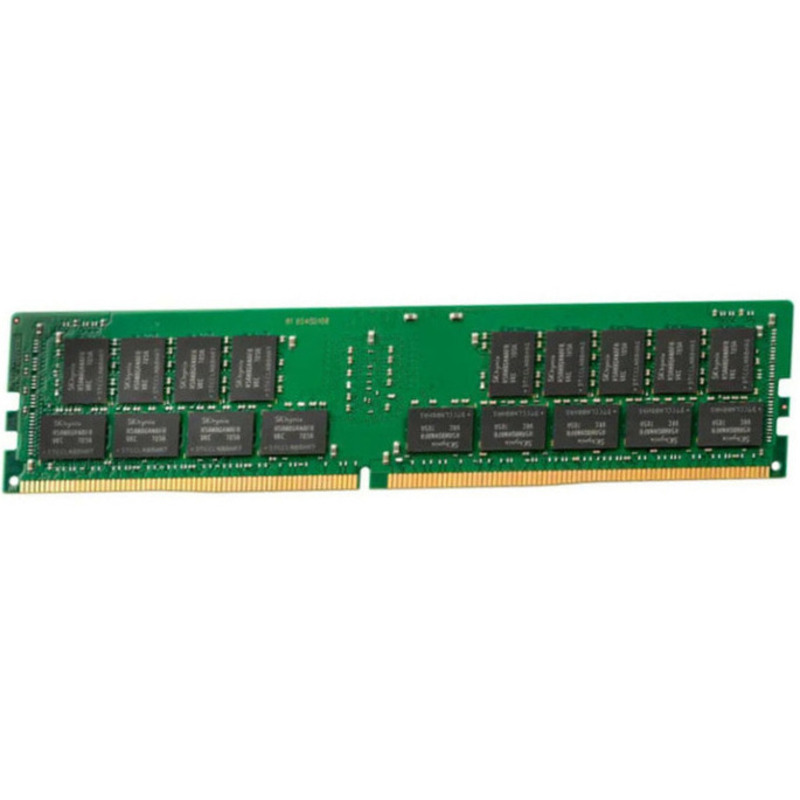
Micron MTA18ADF2G72PZ-3G2E1 16GB DDR4 3200Mhz Pc4-25600 Single Rank X4 Cl22 288-pin Ecc Registered Rdimm Smart Memory Module. Factory-Sealed New in Original Box (FSB) with 3 Years Warranty
The Micron MTA18ADF2G72PZ-3G2E1 DDR4 is a memory module with a capacity of 16GB. This feature is essential for users who require high-performance and efficient memory for their systems. With a capacity of 16GB, this memory module provides ample space to store and process data, ensuring smooth and uninterrupted performance.
The Micron MTA18ADF2G72PZ-3G2E1 represents a pinnacle of server memory engineering, designed for unwavering reliability and optimal performance in demanding data center and enterprise environments. This module is a 16GB DDR4 Registered ECC RDIMM (RDIMM) operating at a speed of 3200 megatransfers per second (MT/s), commonly referred to as 3200MHz. Its part number encodes a wealth of information for the systems engineer, indicating its adherence to the stringent standards required for 24/7 operation, advanced error correction, and robust signaling integrity.
Understanding Micron's part number scheme is key to identifying the module's precise characteristics. MTA signifies a Micron Technology module. 18A denotes the 288-pin RDIMM form factor. DF indicates the component density and width, pointing to the use of x4 DRAM components. 2G72 breaks down as 2 Gig (2 ranks) of 72 bits (64 data bits + 8 ECC bits). PZ is the revision code. The crucial suffix 3G2E1 specifies the DDR4-3200 speed grade with a CAS Latency (CL) of 22 at a nominal operating voltage of 1.2V. This detailed nomenclature ensures precise compatibility and performance expectations.
As a DDR4 (Double Data Rate 4) Synchronous Dynamic Random-Access Memory module, it represents the fourth generation of this ubiquitous technology. Key advancements over DDR3 include lower operating voltage (1.2V vs. 1.5V), reducing power consumption and heat generation—a critical factor in dense server deployments. The improved data transfer rates, up to 3200 MT/s in this case, provide higher bandwidth for CPU-to-memory communication, alleviating potential bottlenecks in memory-intensive applications such as virtualization, databases, and high-performance computing.
The module's data rate of 3200 MT/s means it performs 3.2 billion data transfers per second per pin. The industry-standard bandwidth calculation (3200 MT/s * 8 Bytes = 25,600 MB/s) yields its PC4-25600 classification. This theoretical peak bandwidth of 25.6 GB/s per module is a foundational metric for system architects calculating total memory bandwidth capacity across multi-channel memory controllers in modern server platforms.
The internal architecture of this memory module is meticulously designed to balance performance, capacity, and signal integrity. The use of specific DRAM chip configurations and rank organization directly impacts how the memory controller accesses data, influencing both latency and the maximum achievable capacity in a system.
The MTA18ADF2G72PZ-3G2E1 is configured as a Single Rank module using x4 DRAM components. A "rank" is a set of DRAM chips that work together to respond to a command from the memory controller. A single rank module presents one 72-bit wide block (64 data + 8 ECC) to the memory controller at a time. The "x4" refers to the organization of the individual DRAM chips on the module; each chip has a 4-bit wide data interface. This x4 configuration is particularly advantageous for server memory as it enhances reliability through stronger signal integrity (fewer chips sharing a data line) and enables higher-capacity modules and more efficient use of server memory slots per CPU.
Unlike dual-rank modules, which contain two independent sets of chips that the memory controller can address alternately (potentially improving performance via interleaving), a single-rank module like this one places less electrical load on the memory channel. This can allow systems to support more memory modules per channel while maintaining stable signaling at high speeds like 3200 MT/s, a critical consideration for maximizing total system memory capacity in multi-socket servers.
The single-rank, x4 design is a strategic choice for data centers aiming to maximize memory capacity within the physical and electrical constraints of a server platform. It allows system integrators to fully populate memory channels with modules without exceeding the controller's electrical load budget, which is more likely with dual-rank or x8-based modules. This leads to optimal total memory capacity—essential for memory-hungry workloads like in-memory databases (e.g., SAP HANA) and large-scale virtualization hosts.
In mission-critical environments, data integrity is non-negotiable. The Micron MTA18ADF2G72PZ-3G2E1 incorporates multiple layers of error detection and correction, going far beyond the capabilities of standard non-ECC consumer memory. These features proactively identify and correct data corruption, preventing silent data errors that could lead to application crashes, computational errors, or system instability.
This module is both an ECC (Error-Correcting Code) and a Registered RDIMM. ECC functionality involves the addition of extra bits (8 bits for every 64 bits of data) that allow the memory controller to detect and correct single-bit errors automatically, and detect (but not correct) multi-bit errors. This dramatically increases system reliability. The "Registered" aspect refers to the presence of a register, or buffer, on the module for address and command signals. This buffer reduces the electrical load on the server's memory controller, enabling the support of a larger number of memory modules per channel with greater stability and signal integrity, which is paramount in multi-CPU servers with expansive memory configurations.
Leveraging its x4 DRAM component architecture, this module typically enables advanced ECC schemes like Chipkill and SDDC (Single Device Data Correction) when used in compatible server platforms (e.g., from Dell, HPE, Lenovo, Cisco). These technologies can correct errors affecting an entire DRAM chip (which can be multiple bits), offering protection far superior to basic single-bit correction. This is a critical defense against complete chip failure and is a standard requirement for enterprise servers and cloud infrastructure.
The descriptor "Smart Memory Module" often refers to modules equipped with a dedicated, serial presence detect (SPD) hub and temperature sensors. This hub stores the module's profile—including size, speed, timing, and voltage—allowing the system BIOS to configure it automatically. More importantly, it enables support for platform-specific features like thermal monitoring, which can trigger airflow adjustments to prevent overheating, and potentially firmware-based management interfaces that provide health status and predictive failure analysis to data center management software.
Correct physical and electrical compatibility is the first step in any memory upgrade or system build. This module adheres to a universally recognized standard for server memory, ensuring it fits and functions in the designated server platforms designed to support its specific combination of type, speed, and features.
The module utilizes the standard 288-pin edge connector layout defined for DDR4 RDIMMs. This pin count and keying are physically different from DDR3 modules (240-pin) and DDR4 Unbuffered DIMMs (UDIMMs, also 288-pin but with a differently placed notch), preventing accidental insertion into an incompatible socket. The RDIMM form factor is exclusively for servers and workstations; it is not compatible with desktop motherboards, which use UDIMMs or SODIMMs for laptops.
The Micron MTA18ADF2G72PZ-3G2E1 is engineered for compatibility with a wide range of enterprise server platforms from leading OEMs such as Dell EMC (PowerEdge series), HPE (ProLiant, Synergy), Lenovo (ThinkSystem), Cisco (UCS), and Supermicro. It is crucial to verify compatibility via the server manufacturer's qualified vendor list (QVL) or memory configuration tool, as specific platforms may require firmware-enabled support for 3200MT/s speeds, single-rank x4 modules, or particular memory population rules to operate optimally.
Operating at the standard DDR4 voltage of 1.2V, this module provides a significant reduction in power consumption compared to the 1.35V or 1.5V common in DDR3 generations. Lower voltage translates directly to reduced heat output and lower total power draw at the rack level, a major consideration for data center efficiency (Power Usage Effectiveness or PUE). The module's power requirements are managed in conjunction with the server's BIOS and baseboard management controller (BMC) to ensure stable operation within thermal design limits.
While bandwidth (MT/s) is a primary performance indicator, latency—the delay between a command and data availability—is equally vital for application responsiveness. The module's timing parameters, often listed as a series of numbers (e.g., CL22), define these critical intervals in clock cycles.
The primary timing for this module is a CAS Latency (CL) of 22 at its rated speed of 3200 MT/s. CAS Latency (Column Address Strobe) is the number of clock cycles between the memory controller issuing a read command and the first piece of data being available. While a higher CL number at a given speed might suggest higher latency, the actual time in nanoseconds is a function of both clock cycles and clock period. At 3200 MT/s (cycle time ~0.625 ns), a CL22 results in a latency of approximately 13.75 nanoseconds, which is competitive for server-grade ECC RDIMMs where stability and capacity are prioritized over ultra-low latency.
Beyond CL, the module is governed by a full set of JEDEC-standard timing parameters, including tRCD (RAS to CAS Delay), tRP (RAS Precharge), and tRAS (Active to Precharge Delay). These are typically programmed into the module's SPD and automatically applied by the server BIOS. For the MTA18ADF2G72PZ-3G2E1, these timings are optimized for the 3200MT/s data rate to ensure reliable operation across the vast temperature and usage profiles encountered in data centers, rather than for extreme overclocking or benchmarking.
This module conforms to JEDEC (Joint Electron Device Engineering Council) industry standards for DDR4-3200 operation. While some consumer memory uses XMP (Extreme Memory Profile) for one-click overclocking, server memory like this RDIMM relies on solid, standardized JEDEC profiles to guarantee compatibility and stability across thousands of identical servers in a fleet.
The specific technical attributes of the Micron 16GB DDR4-3200 RDIMM make it ideally suited for particular workloads and server roles. Its balance of capacity, speed, and robust error correction addresses the needs of modern, software-defined infrastructure.
Hypervisors like VMware vSphere, Microsoft Hyper-V, and KVM require substantial, reliable memory to host multiple virtual machines (VMs). The high bandwidth (3200MT/s) supports the aggregated memory demands of numerous VMs, while ECC and Chipkill protection safeguard against data corruption that could affect multiple tenants or critical services. The single-rank x4 design allows for dense memory configurations, maximizing the number of VMs per physical host.
Platforms such as SAP HANA, Oracle Database In-Memory, and Microsoft SQL Server with In-Memory OLTP store vast datasets directly in RAM for ultra-fast processing. For these applications, total system memory capacity, bandwidth, and unwavering data integrity are paramount. This module's 16GB density contributes to large total memory pools, its 3200MT/s speed accelerates data access, and its advanced ECC features protect the valuable in-memory dataset from corruption.
In computational workloads for scientific research, financial modeling, or media rendering, clusters of servers work in parallel on complex problems. Consistent, high-performance memory across all nodes is essential to prevent slower nodes from delaying the entire job. These modules provide the needed bandwidth for compute tasks while their registered design ensures stable operation in high-compute-density environments where system uptime and result accuracy are critical.


 Contact Us
 Information
 Catalog
 Solid State Drives (SSD)
 Network Switches
 Hard Disk Drives
 HBA & Controllers
 PC & Servers
 PC & Server Memory
 CPU & Processors
 Network Routers
 Power Supplies
 Tape Drives & Libraries
 Network Devices
 Computer & Network Cables