
(7% discount is applied at checkout)
Cart is empty
Your go-to destination for cutting-edge server products
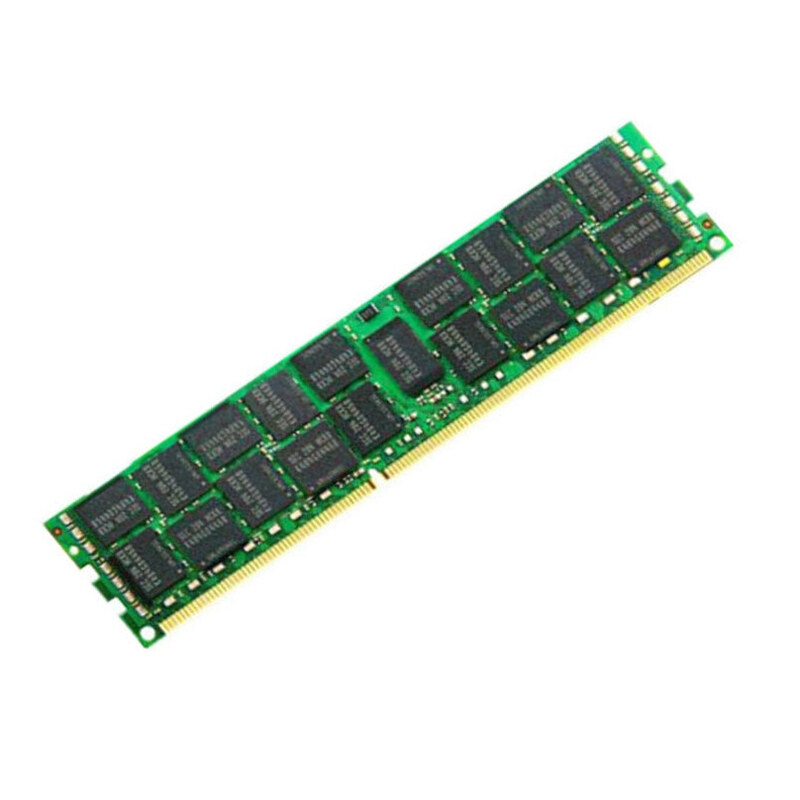
Micron MTA18ASF2G72PDZ-2G6D1 16GB RAM Pc4-21300 DDR4 SDRAM 2666MHz ECC Registered 288 Pin. New (System) Pull with 1 year replacement warranty
| SKU/MPN | Warranty | Price | Condition | You save |
|---|---|---|---|---|
| MTA18ASF2G72PDZ-2G6D1 | 1 Year Warranty | $257.00 | New Sealed in Box (NIB) | You save: $89.95 (26%) |
| MTA18ASF2G72PDZ-2G6D1 | 1 Year Warranty | $155.00 | New (System) Pull | You save: $54.25 (26%) |
Micron DDR4 Registered DIMMs (RDIMMs) offer a reliable and high-performance memory solution for demanding computing environments. Designed to meet the needs of servers, workstations, and high-performance systems, these modules provide excellent scalability and stability for various applications.
In the realm of enterprise computing and data center management, server memory is a critical component that dictates system performance, stability, and capacity for handling concurrent workloads. The category of DDR4 ECC Registered memory represents the workhorse of modern server infrastructure, balancing performance, reliability, and density to support applications ranging from virtualization and databases to high-performance computing and cloud services.
DDR4 SDRAM (Double Data Rate 4 Synchronous Dynamic Random-Access Memory) succeeded DDR3 as the industry standard, offering significant improvements in speed, efficiency, and module density. Key advancements include lower operating voltages, higher data transfer rates, and increased burst lengths. For servers, the DDR4 specification is implemented with additional features crucial for mission-critical environments, where even a single-bit error can cause system crashes or data corruption.
DDR4 modules operate at base speeds starting at 2133 MHz and scaling beyond 3200 MHz, providing substantially higher bandwidth compared to DDR3. This enables faster processing of data-intensive tasks and reduces bottlenecks in multi-core server processors.
The standard operating voltage for DDR4 is 1.2V, a reduction from DDR3's 1.5V or 1.35V. This lower voltage translates directly into lower power consumption and reduced heat output, a vital consideration for dense server rack configurations and overall data center power budgets.
The DDR4 architecture allows for larger capacity memory modules. Using 3D-stacked dies via Through-Silicon Via (TSV) technology, manufacturers can produce single modules of 16GB, 32GB, 64GB, and even higher, enabling massive amounts of RAM in a single server.
The Micron MTA18ASF2G72PDZ-2G6D1 embodies two defining technologies for server memory: Error-Correcting Code (ECC) and Registered (or Registered DIMM, RDIMM). These features are not typically found on consumer-grade memory and are essential for server stability.
ECC memory includes additional memory bits and a dedicated memory controller to detect and correct the most common types of internal data corruption. As memory cell sizes shrink, they become more susceptible to interference from cosmic rays, alpha particles, or electrical noise, which can flip a bit from a 1 to a 0 or vice versa (a single-bit error).
The ECC algorithm, typically Single Error Correction, Double Error Detection (SECDED), can automatically correct a single-bit error on the fly without any performance penalty or system interruption. It can also detect (though not correct) double-bit errors, signaling the system to prevent corrupted data from being processed. This capability is non-negotiable for financial systems, scientific research, and any application where data accuracy is paramount.
A Registered DIMM places a register (or buffer) on the module between the memory controller and the DRAM chips. This register handles the addressing and command/control signals, reducing the electrical load on the server's memory controller.
By reducing the load, the memory controller can support a greater number of memory modules per channel. This is essential for populating all the DIMM slots in a multi-socket server with high-capacity sticks without overloading the controller, enabling maximum memory configurations.
The buffering of signals leads to cleaner, more stable communication at high speeds and across large motherboards. This improves reliability, especially in systems with heavy memory loads, and allows for more consistent performance.
The use of registers is almost synonymous with high-density, dual-rank, or quad-rank modules. It is the standard design for professional server memory aiming for capacities above 8GB per module in a reliable fashion.
The part number MTA18ASF2G72PDZ-2G6D1 follows Micron's specific naming convention and encodes the module's key attributes. Breaking down this code provides immediate technical insight.
"16GB (1x16GB)" specifies a single module with a total capacity of 16 Gigabytes. This is a substantial density for a single DIMM, allowing for terabyte-scale memory configurations in servers with numerous DIMM slots.
"PC4-21300" is the module's throughput designation. PC4 denotes DDR4. The number 21300 refers to the peak transfer rate in megabytes per second (MB/s). This module can transfer approximately 21,300 MB/s. "DDR4-2666MHz" indicates the effective data rate (2666 million transfers per second) and the I/O bus clock speed (1333 MHz).
"Dual Ranked ECC Registered" confirms the module is an RDIMM with ECC. Dual-ranked means the DRAM chips are organized into two logical banks (ranks) that the memory controller can access alternately, improving efficiency compared to a single-rank module of the same capacity.
"1.2v" is the standard operating voltage. "CL19" refers to the CAS Latency, a key timing parameter (19 clock cycles in this case). "288-pin" specifies the physical interface, which is the standard pin count for all DDR4 DIMMs, though the notch key position differs from DDR3.
A rank is a set of DRAM chips that work together to provide a 64-bit (or 72-bit with ECC) data width. Dual-rank modules have two such sets on one physical DIMM. They do not double performance, but they allow the memory controller to interleave accesses between ranks, hiding precharge and activation delays and often providing a performance uplift over single-rank modules in server workloads, especially when multiple DIMMs per channel are installed.
CAS Latency (CL) is the number of clock cycles between the memory controller sending a column address and the first piece of data being available. CL19 at 2666 MHz represents a balance between speed and responsiveness. Server memory often prioritizes stability, density, and bandwidth over ultra-tight timings, making this a typical and effective latency for its speed grade.
Operating at 1.2V, this module adheres to JEDEC standard specifications for DDR4-2666. This ensures broad compatibility with server platforms and maintains the power efficiency advantages of the DDR4 generation. The module's power draw is predictable and manageable within server power and thermal design limits.
The Micron MTA18ASF2G72PDZ-2G6D1 is designed for use in servers and workstations that require ECC Registered DDR4 memory. This includes a wide range of systems from major OEMs like Dell (PowerEdge), HPE (ProLiant), Lenovo (ThinkSystem), as well as Supermicro, Cisco, and others. It is also compatible with many AMD EPYC and Intel Xeon Scalable processor platforms that support DDR4-2666 RDIMMs. It is not compatible with desktop motherboards or servers that only accept Unbuffered (UDIMM) or Load Reduced (LRDIMM) memory.
This type of memory is engineered for environments where uptime and data integrity are critical.
Hypervisors like VMware vSphere, Microsoft Hyper-V, and KVM require large pools of reliable memory to host multiple virtual machines. The 16GB density allows for efficient consolidation of workloads.
SQL databases (e.g., Microsoft SQL Server, Oracle DB, MySQL) heavily cache data in RAM for fast query performance. ECC protection is vital to ensure the integrity of cached tables and indices.
High-availability web and application servers benefit from the stability of ECC RDIMMs to maintain service continuity and handle high volumes of transactions.
Computational tasks in scientific research, financial modeling, and big data analytics (e.g., Hadoop, Spark) process massive datasets. Large, high-bandwidth memory configurations accelerate these workloads, while ECC ensures computational accuracy.


 Contact Us
 Information
 Catalog
 Solid State Drives (SSD)
 Network Switches
 Hard Disk Drives
 HBA & Controllers
 PC & Servers
 PC & Server Memory
 CPU & Processors
 Network Routers
 Power Supplies
 Tape Drives & Libraries
 Network Devices
 Computer & Network Cables