
(7% discount is applied at checkout)
Cart is empty
Your go-to destination for cutting-edge server products
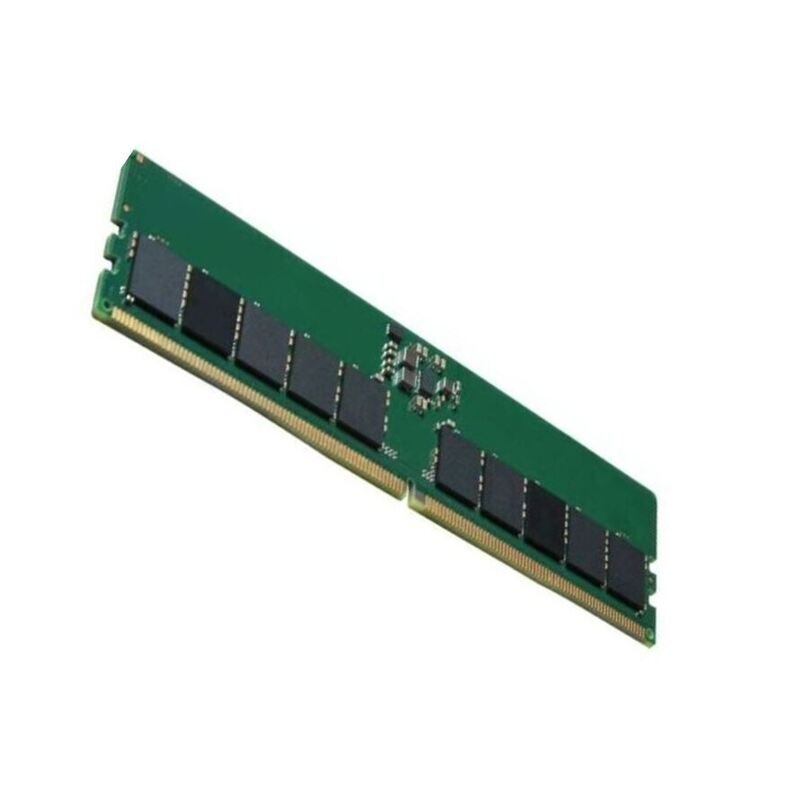
Micron MTA18ASF2G72PDZ-2G6E1 16GB RAM Pc4-21300 DDR4 2666mhz Ecc Reg 288Pin. New (System) Pull with 1 Year Replacement Warranty
| SKU/MPN | Warranty | Price | Condition | You save |
|---|---|---|---|---|
| MTA18ASF2G72PDZ-2G6E1 | 1 Year Warranty | $242.00 | New (System) Pull | You save: $84.70 (26%) |
| MTA18ASF2G72PDZ-2G6E1 | 1 Year Warranty | $339.00 | New Sealed in Box (NIB) | You save: $118.65 (26%) |
Boost server reliability and throughput with the Micron MTA18ASF2G72PDZ-2G6E1, a 16GB DDR4 SDRAM Registered DIMM engineered for consistent performance, error resilience, and efficient power usage in enterprise workloads.
At its core, the Micron MTA18ASF2G72PDZ-2G6E1 is a high-performance, enterprise-grade memory module designed for demanding server and workstation environments. This specific part number encapsulates a precise set of technical characteristics that define its compatibility and performance profile. The module is a 16GB (Gigabyte) capacity stick, configured as a single 1x16GB module. It operates on the PC4-21300 standard, which corresponds to a data transfer rate of 21300 MB/s. This speed is achieved through a DDR4 base clock speed of 2666MHz. The module incorporates advanced error-correcting code (ECC) and is of the Registered (RDIMM) type, which includes a register to buffer control signals, enabling greater stability and higher module capacities in a system. It is a Dual Rank module with an x8 DRAM organization, operates at a standard DDR4 voltage of 1.2 volts, and features a CAS Latency (CL) of 19. The physical interface is the 288-pin design standard for DDR4 modules.
Understanding Micron's part numbering system provides instant insight into the module's key attributes. In the code MTA18ASF2G72PDZ-2G6E1: 'MT' stands for Micron Technology. 'A' indicates a DDR4 product. '18' represents the component density per die in gigabits (not to be confused with the module capacity). 'ASF' denotes the specific product family and design (ASF typically refers to a 288-pin RDIMM). '2G72' indicates the module's organization and width; here, it signifies a 72-bit wide module (64 data bits + 8 ECC bits) with a specific internal configuration. 'PDZ' often refers to the revision, rank, and speed bin. Finally, the suffix '-2G6E1' breaks down further: '2G6' typically indicates a speed grade of DDR4-2666, while 'E1' often specifies features like the operating voltage (1.2V) and other timings. This systematic naming allows IT professionals to quickly identify the module's core specs.
The module offers a 16 Gigabyte capacity in a single, monolithic stick. The "1x16GB" designation is crucial for system configuration, indicating it is one physical module providing 16GB of memory. This allows for flexible server population, enabling users to start with a lower total memory footprint and scale up by adding more identical modules across the available memory channels on the motherboard. A single 16GB RDIMM is often a cost-effective building block for systems requiring 64GB, 128GB, or even higher total memory capacities, as it balances density with thermal and electrical load per channel.
While sold as an individual module, it is imperative to install such ECC RDIMMs in compatible configurations as mandated by the server or workstation manual. Most systems require modules to be installed in pairs per CPU (for dual-channel or quad-channel architectures) or in specific population sequences across memory sockets. Purchasing multiple individual MTA18ASF2G72PDZ-2G6E1 modules allows for precise scaling but requires the user to ensure they match the exact part number for optimal compatibility.
The DDR4-2666MHz speed is a significant performance parameter. The "2666" refers to the data rate in millions of transfers per second (MT/s). Each transfer operates on both the rising and falling edge of the clock cycle (Double Data Rate), hence the effective clock frequency of the I/O bus is 1333 MHz. The peak theoretical bandwidth of this module is calculated as 2666 MT/s * 64 bits (8 bytes) / 8 = 21,328 MB/s, which rounds to the PC4-21300 designation (approximately 21300 MB/s). This high bandwidth is critical for data-intensive applications, reducing bottlenecks in virtualization, database transactions, scientific computing, and high-performance computing (HPC) workloads.
While speed (bandwidth) is vital, latency is equally important. CAS Latency (CL19) is the number of clock cycles between the memory controller sending a column address to the RAM and the data being available on the module's output pins. A CL19 rating at 2666MHz represents a balance between high speed and manageable latency. In real-world terms, the absolute latency in nanoseconds can be calculated (CL / (Data Rate / 2) * 1000), which for this module is approximately 14.25 nanoseconds. This latency profile is optimized for the sustained, reliable throughput required in enterprise environments over raw, low-latency performance which is more the domain of unbuffered desktop modules.
DDR4-2666 sits in a performance tier that became widespread for Intel Xeon Scalable Processors (Purley platform and later) and compatible AMD EPYC systems. It offers a tangible performance uplift over previous generations like DDR4-2133 or DDR4-2400, particularly in memory-sensitive tasks, while remaining within standard power and thermal envelopes. It is often considered a sweet spot for general-purpose servers, offering a strong blend of performance, availability, and cost-effectiveness compared to higher-speed modules like 2933MHz or 3200MHz, which may have stricter compatibility requirements or higher latency.
The inclusion of Error-Correcting Code (ECC) and a Registered buffer are the hallmarks of server-grade memory, distinguishing it from consumer-grade unbuffered DIMMs (UDIMMs). These features are non-negotiable for systems where data integrity, system stability, and maximum capacity are paramount.
ECC is a critical reliability feature. The module dedicates an extra 8 bits per 64-bit word (making it a 72-bit module) to store an error-correcting code. This allows the memory controller to detect and correct single-bit errors on the fly, preventing data corruption that could lead to application crashes, system instability, or silent data corruption. It can also detect, but not correct, multi-bit errors, at which point the system can be halted safely to prevent further issues. In 24/7 data center operations, ECC is essential for maintaining the integrity of financial records, customer databases, scientific calculations, and virtualized environments.
Soft errors, caused by background radiation or electrical noise, can spontaneously flip a bit in memory. In a non-ECC system, this corrupted data is processed, potentially leading to incorrect results or a crash. The ECC circuitry in this Micron module continuously scans for such errors, correcting them immediately without any operating system or application involvement. This dramatically increases mean time between failures (MTBF) for the system.
The "Registered" or "RDIMM" aspect refers to the presence of a register (or buffer) on the module. This register sits between the memory controller and the DRAM chips, buffering the command, address, and clock signals. This reduces the electrical load on the memory controller, allowing a single CPU to support a much larger number of memory modules and higher total capacities—often reaching into the terabytes per server. The trade-off is a one-clock-cycle delay due to buffering, which is insignificant compared to the gains in system stability, signal integrity, and maximum achievable memory capacity in a multi-slot motherboard.
This module is configured as "Dual Rank." A rank is an independent set of DRAM chips that is accessed simultaneously by the memory controller. A dual-rank module presents two such sets on a single physical stick. It effectively allows the memory controller to interleave accesses between the two ranks, improving performance over a single-rank module of the same capacity by better utilizing the memory bus. Compared to a quad-rank module, it often allows for higher speeds and is less taxing on the memory controller, making DDR4-2666 a common speed for dual-rank 16GB modules.
The "x8" refers to the organization of the individual DRAM chips on the module, meaning each chip has an 8-bit wide data interface. A 72-bit wide module (64 data + 8 ECC) using x8 chips would require 9 chips (72 bits / 8 bits per chip) to form one rank. For a dual-rank 16GB module like this one, this typically means 18 physical DRAM chips (9 chips per rank x 2 ranks). x8 organization offers a robust balance of reliability, cost, and compatibility. It also provides better "chipkill" or SDDC (Single Device Data Correction) protection in advanced server platforms compared to x4 organization, as the failure of an entire x8 chip can be corrected by the ECC system.
The Micron MTA18ASF2G72PDZ-2G6E1 adheres to the standard form factor and operational specifications for server memory, ensuring broad compatibility with qualified systems.
The module uses the standard 288-pin Dual In-line Memory Module (DIMM) layout defined for DDR4. The key notch is in a different position compared to DDR3, preventing accidental insertion into an incompatible slot. The length (133.35mm) and height (typically around 31.25mm) conform to industry standards, though the exact height can vary with the presence of a heat spreader. This module is designed to fit into any server or workstation motherboard that supports DDR4-2666 RDIMMs.
Operating at a low 1.2 volts is a hallmark of DDR4 technology, representing a significant reduction from DDR3's 1.5V standard. This lower voltage directly translates to reduced power consumption and heat generation per module—a critical factor in dense server racks where power and cooling are major operational expenses. The module supports advanced power management features like Self-Refresh modes to further conserve energy during periods of low activity.
Determining compatibility is the most crucial step before purchasing this or any server memory module.
The Micron MTA18ASF2G72PDZ-2G6E1 is expressly designed for use in servers and high-end workstations that require ECC Registered memory. This includes a wide range of systems from major OEMs like Dell (PowerEdge), HPE (ProLiant, Apollo), Lenovo (ThinkSystem, ThinkStation), Cisco (UCS), as well as Supermicro and other white-box server motherboards. It is compatible with many Intel Xeon Scalable (e.g., Bronze, Silver, Gold, Platinum series) and AMD EPYC processor-based platforms that list support for DDR4-2666 RDIMMs.
This memory module is suited for a vast array of enterprise and professional workloads. Its reliability makes it ideal for general-purpose business servers, file and print servers, and web hosting servers. Its capacity and performance are well-suited for virtualization hosts (e.g., VMware vSphere, Microsoft Hyper-V), where multiple virtual machines demand large pools of reliable RAM. It is also a strong candidate for database servers (SQL, NoSQL), email/collaboration servers, and mid-tier application servers. In workstation form, it supports demanding applications in CAD/CAM, financial modeling, video editing, and scientific research that benefit from ECC protection and large memory capacities.


 Contact Us
 Information
 Catalog
 Solid State Drives (SSD)
 Network Switches
 Hard Disk Drives
 HBA & Controllers
 PC & Servers
 PC & Server Memory
 CPU & Processors
 Network Routers
 Power Supplies
 Tape Drives & Libraries
 Network Devices
 Computer & Network Cables