
(7% discount is applied at checkout)
Cart is empty
Your go-to destination for cutting-edge server products
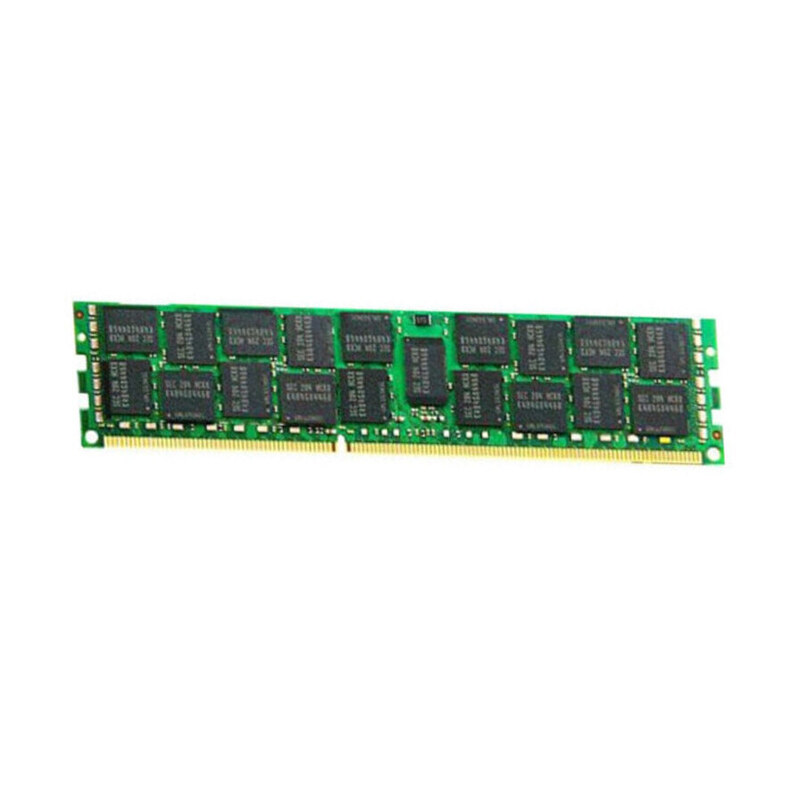
Micron MTA18ASF2G72PDZ-2G6E1R 16GB PC4-21300 DDR4 2666mhz 2rx8 Ecc Registered Cl19 288 Pin Rdimm Memory Module. New Sealed in Box (NIB) with 3 Year Warranty
Micron DDR4 Registered DIMMs (RDIMMs) offer a high-performance and dependable memory solution for various computing environments, including servers, workstations, and high-end systems. These modules are engineered to meet the evolving needs of modern applications, delivering enhanced data transfer rates and bandwidth.
In the realm of enterprise computing, data center stability, and high-performance workstations, memory is not merely an accessory; it is a foundational pillar of system integrity and performance. Among the various types of memory modules, the DDR4 ECC Registered (RDIMM) stands out for its critical role in mission-critical environments. The Micron MTA18ASF2G72PDZ-2G6E1R exemplifies this category, representing a specific configuration engineered for reliability, capacity, and signal integrity in multi-channel server platforms. This category of memory is distinctly different from consumer-grade unbuffered DIMMs (UDIMMs) or Load-Reduced DIMMs (LRDIMMs), occupying a crucial middle ground that balances performance, power, and cost for a vast array of server applications.
The part number MTA18ASF2G72PDZ-2G6E1R is a detailed blueprint of the module's capabilities. Each segment of this alphanumeric code denotes a specific attribute, allowing system integrators and IT professionals to precisely identify compatibility and performance characteristics. At its core, this is a 16-gigabyte (GB) module operating at a data rate of 2666 Megatransfers per second (MT/s), often referred to as DDR4-2666. It operates at a standard voltage of 1.2 volts, aligning with DDR4's improved power efficiency over previous generations. The module's primary function is to provide robust, error-corrected memory capacity in servers supporting Intel Xeon Scalable processors (e.g., Skylake, Cascade Lake) and compatible platforms that require Registered (RDIMM) memory.
A deep dive into the part number reveals its complete story. "MT" signifies Micron Technology. "A" indicates a 288-pin RDIMM form factor. "18" represents the component density and architecture; here, it often points to a specific die configuration. "ASF" typically details the module's organization, rank, and width. The "2G72" segment confirms the module's 2 Gig x 72-bit organization, crucial for ECC functionality. "PDZ" is Micron's internal revision and feature code. The suffix "-2G6E1R" is equally critical: "2G6" denotes the 2666 MT/s speed grade, "E" signifies ECC, and "1R" indicates a single register component, which relates to the module's rank structure and loading on the memory controller.
The internal organization of a memory module, such as 2G x 72, defines how the memory chips are logically arranged. In this configuration, the module provides 2 billion (Giga) addressable locations, each 72 bits wide. This 72-bit width is key: 64 bits are for standard data, and the extra 8 bits are dedicated to Error Correction Code (ECC). This structure allows for single-bit error correction and multi-bit error detection, a non-negotiable feature for server data integrity. This organization directly influences the module's rank classification and its compatibility with specific server memory topologies.
Error-Correcting Code (ECC) memory is the definitive feature separating commercial from consumer computing hardware. Its purpose is to detect and correct the most common types of data corruption. As memory cell sizes shrink and densities increase, the susceptibility to single-event upsets (SEUs) from background radiation or electrical noise grows. An ECC module, like the Micron MTA18ASF2G72PDZ-2G6E1R, uses the additional 8 bits per 64-bit word to create a checksum. When data is read, the checksum is recalculated and compared. A mismatch indicates an error. Single-bit errors are corrected on the fly, transparent to the system, preventing crashes and corrupted data. Double-bit errors are detected and reported, allowing the system to halt gracefully rather than continue with bad data.
Beyond ECC, the "Registered" designation is paramount. An RDIMM incorporates a register (or buffer) on the module itself, situated between the memory controller and the DRAM chips. This register buffers the command and address signals, reducing the electrical load on the memory controller. This buffering enables two major advantages: it significantly improves signal integrity, allowing for more stable operation at higher speeds and with more modules per channel, and it enables support for higher memory capacities. While introducing a minimal latency penalty (typically one clock cycle), the benefit for systems with substantial memory populations is immense stability and capacity scalability that unbuffered DIMMs cannot provide.
The Micron module is specified as a Dual Rank (2R) module. A "rank" is an independent set of DRAM chips that is accessed simultaneously by the memory controller. A dual-rank module has two such sets, effectively presenting itself as two logical memory modules on one physical stick. This architecture allows for better utilization of the memory channel's bandwidth through interleaving—the controller can access one rank while the other is preparing data. For a given capacity like 16GB, a dual-rank design often offers better performance in many server workloads compared to a single-rank (1R) design of the same capacity and speed, as it improves channel efficiency.
The performance of a memory module is not defined by its data rate alone. A combination of clock speed, timings (latencies), and channel configuration determines real-world throughput and responsiveness. The Micron MTA18ASF2G72PDZ-2G6E1R operates at a base clock frequency of 1333 MHz, which, with DDR's (Double Data Rate) nature, yields an effective data rate of 2666 MT/s. This speed is a common mainstream specification for many generations of DDR4 servers, offering an excellent balance of performance and power consumption.
The module's timing is specified as CL19. CAS Latency (Column Address Strobe Latency) is the number of clock cycles between the memory controller sending a read command and the moment the data is available. A CL19 rating at 2666 MT/s indicates a specific performance profile. It is essential to understand that latencies between different data rates are not directly comparable (e.g., CL19 at 2666 MT/s may offer similar or better real-world latency than CL15 at 2133 MT/s due to the faster clock cycle time). These JEDEC-standard timings are programmed into the module's SPD (Serial Presence Detect) chip, ensuring automatic and stable configuration within the supported platform.
The bandwidth of a single memory module can be calculated from its data rate. At 2666 MT/s, with a 64-bit (8-byte) data path, the peak transfer rate is 2666 million transfers/second * 8 bytes/transfer = 21,328 MB/s, or approximately 21.3 GB/s. This is per module in a single-channel configuration. Modern server platforms utilize multi-channel memory architectures (dual, triple, quad, hexa, or even octa-channel). When installed in a matched multi-channel configuration, the aggregate bandwidth scales linearly. For example, two of these modules in a dual-channel setup would offer ~42.6 GB/s, and four in a quad-channel setup would offer ~85.3 GB/s of peak theoretical bandwidth.
The module conforms to the standard 288-pin DDR4 RDIMM form factor. It is designed for installation into DDR4 DIMM slots exclusively, which are keyed differently from DDR3 or DDR5 slots to prevent accidental insertion. The 1.2V operating voltage is a standard for DDR4, providing a significant power savings over DDR3's 1.5V standard, which translates directly to reduced data center operating costs and thermal output. The module features a prescribed PCB height and component layout to ensure compatibility with server chassis, CPU coolers, and airflow designs.
The primary application for the Micron MTA18ASF2G72PDZ-2G6E1R is in rackmount and tower servers, storage arrays, and high-end workstations that are built on server-grade platforms. Its compatibility is tightly linked to the CPU and chipset. It is designed for systems using Intel Xeon Scalable processors (from the Purley platform onwards) and AMD EPYC processors (which also support DDR4 RDIMMs, though speed and timing compatibility should always be verified with the system manufacturer's Qualified Vendor List).
For optimal performance, servers require memory modules to be installed in a specific order and configuration. This usually involves populating an equal number of identical modules per memory channel. Most modern server platforms perform best when the total number of ranks per channel is balanced. For instance, mixing single-rank and dual-rank modules of the same capacity in the same channel can sometimes lead to the system downclocking to a lower speed to maintain stability. Therefore, it is strongly recommended to use identical part numbers (like the MTA18ASF2G72PDZ-2G6E1R) when populating a server for homogeneous performance and predictable behavior.
This 16GB DDR4-2666 RDIMM is ideally suited for applications that demand a balance of capacity, reliability, and throughput. In virtualization hosts (VMware vSphere, Microsoft Hyper-V), where multiple virtual machines contend for memory resources, ECC protection is vital to maintain host stability, and large memory capacities are necessary. Similarly, in relational database servers (Microsoft SQL Server, Oracle DB, MySQL), memory is used for caching and transaction processing, where data integrity is paramount, and the bandwidth of a multi-channel RDIMM configuration accelerates query performance.


 Contact Us
 Information
 Catalog
 Solid State Drives (SSD)
 Network Switches
 Hard Disk Drives
 HBA & Controllers
 PC & Servers
 PC & Server Memory
 CPU & Processors
 Network Routers
 Power Supplies
 Tape Drives & Libraries
 Network Devices
 Computer & Network Cables