
(7% discount is applied at checkout)
Cart is empty
Your go-to destination for cutting-edge server products
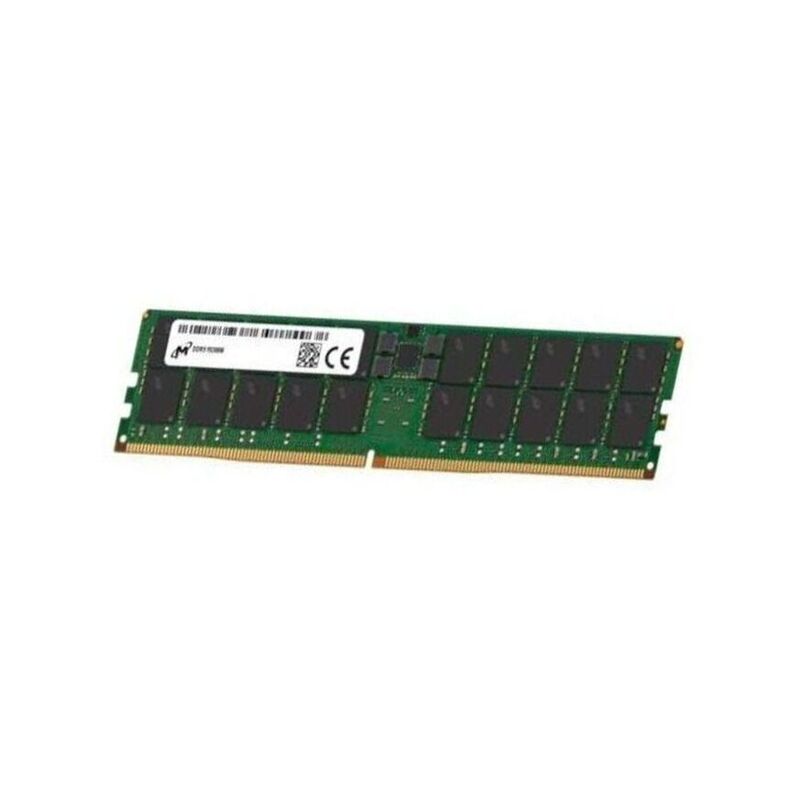
Micron MTA18ASF2G72PZ-2G9J3 16GB 2933Mhz PC4-23400 CL19 ECC Registered Single Rank X4 1.2v DDR4 SDRAM 288-pin RDIMM Memory Module. New Sealed in Box (NIB)
The Micron MTA18ASF2G72PZ-2G9J3 is a high-performance 16GB DDR4 ECC Registered (RDIMM) memory module designed for enterprise servers and professional workstations. This RAM stick is engineered to deliver outstanding reliability, fast data transfer speeds, and superior system stability for mission-critical workloads.
The Micron MTA18ASF2G72PZ-2G9J3 memory module is specifically designed for enterprise-grade servers and professional workstations that support DDR4 ECC Registered (RDIMM) memory. It is not compatible with standard desktop or laptop systems.
Micron is a trusted global brand in memory and storage technology. This 16GB DDR4 RDIMM is built to handle heavy computing loads while protecting your data with ECC technology. Whether you are running databases, virtual machines, or cloud applications, this module delivers stability, efficiency, and long-term reliability.
The Micron MTA18ASF2G72PZ-2G9J3 16GB DDR4 ECC Registered memory module belongs to a specialized category of enterprise and data-center grade memory designed for servers, workstations, and mission-critical computing platforms. This category focuses on high-stability, high-integrity memory solutions that are engineered to operate continuously under heavy computational loads. Unlike consumer desktop memory, RDIMM (Registered Dual Inline Memory Module) products are optimized for scalability, electrical stability, and data accuracy, making them essential components in professional IT infrastructures.
Memory modules in this category are built to support enterprise CPUs from Intel and AMD that rely on registered memory architectures. These platforms demand memory that can handle large memory capacities per system, support multi-channel configurations, and maintain signal quality even when multiple modules are installed. The Micron 16GB PC4-23400 RDIMM fits perfectly into this category by delivering high bandwidth, reliable data handling, and error correction support that protects data integrity in real-time.
DDR4 ECC Registered memory represents a professional-grade subcategory of DRAM that is widely used in servers, database machines, virtualization environments, cloud computing nodes, and enterprise workstations. These memory modules are built to meet the strict requirements of reliability, consistency, and uptime. They are fundamentally different from unbuffered desktop memory, offering features that allow systems to scale memory capacity while maintaining stability.
RDIMM memory modules use a register between the memory controller and the DRAM chips. This register reduces the electrical load on the memory controller, allowing more memory modules to be installed without signal degradation. This feature is essential for systems that need to support 128GB, 256GB, or even more RAM, which is common in enterprise servers and virtualization platforms.
ECC memory is a defining feature of this category. Error Correction Code allows the memory module to detect and correct single-bit memory errors automatically. In mission-critical computing, even a small memory error can result in data corruption, system crashes, or incorrect calculations. ECC protects against these risks by maintaining data accuracy at all times.
The Micron MTA18ASF2G72PZ-2G9J3 is part of this ECC RDIMM category, meaning it continuously monitors data as it is written to and read from memory. If a bit error occurs due to electrical interference, cosmic radiation, or thermal stress, the module corrects it instantly without affecting system operation. This makes ECC RDIMM memory essential for databases, financial applications, scientific simulations, and enterprise storage systems.
The registered buffer on RDIMM modules isolates the memory controller from the electrical load of the DRAM chips. This allows the system to support more memory slots and higher memory capacities without instability. In large server motherboards with 8, 12, or even 16 DIMM slots, RDIMM memory is required to ensure reliable signal transmission.
This category of memory is therefore ideal for environments where high memory density and multi-channel configurations are needed. It enables scalable architectures that grow as business or workload demands increase.
The PC4-23400 specification represents a high-performance DDR4 memory category that delivers up to 23.4GB/s of bandwidth per module. This data transfer rate is achieved through the 2933MHz operating frequency, which allows servers and workstations to handle large data sets, multiple virtual machines, and heavy computational workloads with ease.
Memory in this performance class is designed for modern server CPUs that support DDR4-2933 speeds. These CPUs rely on fast memory to keep their multiple cores fed with data. When memory bandwidth is high, CPUs can perform more calculations without waiting for data, improving overall system efficiency.
In data-center and enterprise environments, memory speed directly impacts application performance. Database queries, virtualization, analytics, and real-time processing all depend on fast access to memory. The 2933MHz DDR4 category allows for faster data throughput compared to older DDR4-2400 or DDR4-2666 memory, helping reduce bottlenecks.
This category is especially important for modern server platforms that are optimized for high-frequency memory. Using lower-speed modules can reduce system performance and limit the potential of high-core-count processors.
The Single Rank x4 design used in this memory category plays an important role in performance and reliability. “Single Rank” refers to how the memory chips are organized on the module, while “x4” refers to the data width of each memory chip. In x4 configurations, data is spread across more memory chips, which allows ECC to detect and correct errors more effectively.
Enterprise memory modules commonly use x4 DRAM chips instead of x8 chips because x4 designs provide better fault tolerance. If one memory chip fails, the ECC system can still reconstruct data using the remaining chips. This makes Single Rank x4 RDIMM memory ideal for servers that require high uptime and data accuracy.
Single Rank memory modules place less load on the memory controller compared to Dual Rank modules. This allows for higher memory speeds and improved stability when multiple modules are installed. In large server systems with many DIMM slots, Single Rank RDIMM modules help maintain optimal signal integrity and performance.
DDR4 memory operates at 1.2 volts, which is significantly lower than the 1.5 volts used by DDR3 memory. This reduction in voltage makes DDR4 RDIMM memory more energy-efficient and generates less heat. In data centers where thousands of servers run continuously, power efficiency plays a major role in reducing operational costs.
This category of memory supports green computing initiatives by lowering power consumption without sacrificing performance. Reduced heat output also improves system reliability by lowering thermal stress on components.
Lower voltage operation allows servers to run cooler, which extends the lifespan of memory modules and other system components. This makes DDR4 RDIMM memory ideal for 24/7 operation in enterprise environments.
The 288-pin RDIMM form factor is standard for DDR4 registered memory modules. This category of memory is designed to fit into server-grade and workstation-grade motherboards that support RDIMM technology. It is not compatible with consumer desktop systems, which use unbuffered DIMMs.
The physical design of 288-pin RDIMM modules ensures proper alignment, electrical connectivity, and mechanical stability in enterprise hardware. This allows systems to operate reliably even in high-vibration or high-temperature environments.
RDIMM memory is supported by enterprise-class chipsets and CPUs that are designed to work with registered memory. This includes many Intel Xeon and AMD EPYC platforms. The Micron MTA18ASF2G72PZ-2G9J3 fits into this category by offering compatibility with modern server architectures.
This category of DDR4 ECC RDIMM memory is used across a wide range of professional computing environments. It is ideal for servers running databases, virtualization platforms, and cloud services. These workloads require large amounts of reliable memory to operate efficiently and without data loss.
Virtual machines rely heavily on memory performance and stability. ECC RDIMM memory ensures that each virtual machine receives accurate data and that system crashes caused by memory errors are minimized. The PC4-23400 performance class allows for fast memory access, which improves the responsiveness of virtualized environments.
Databases store large volumes of information in memory for fast access. ECC RDIMM memory protects this data from corruption, while the high bandwidth of DDR4-2933 ensures quick query processing and data retrieval.
One of the main advantages of this memory category is its ability to scale. RDIMM technology allows servers to support large amounts of memory without sacrificing stability. Businesses can start with a few modules and add more as their workload increases.
DDR4-2933 RDIMM memory remains compatible with many modern server platforms, making it a future-proof investment for organizations that plan to expand their IT infrastructure.


 Contact Us
 Information
 Catalog
 Solid State Drives (SSD)
 Network Switches
 Hard Disk Drives
 HBA & Controllers
 PC & Servers
 PC & Server Memory
 CPU & Processors
 Network Routers
 Power Supplies
 Tape Drives & Libraries
 Network Devices
 Computer & Network Cables