(7% discount is applied at checkout)
Cart is empty
Your go-to destination for cutting-edge server products
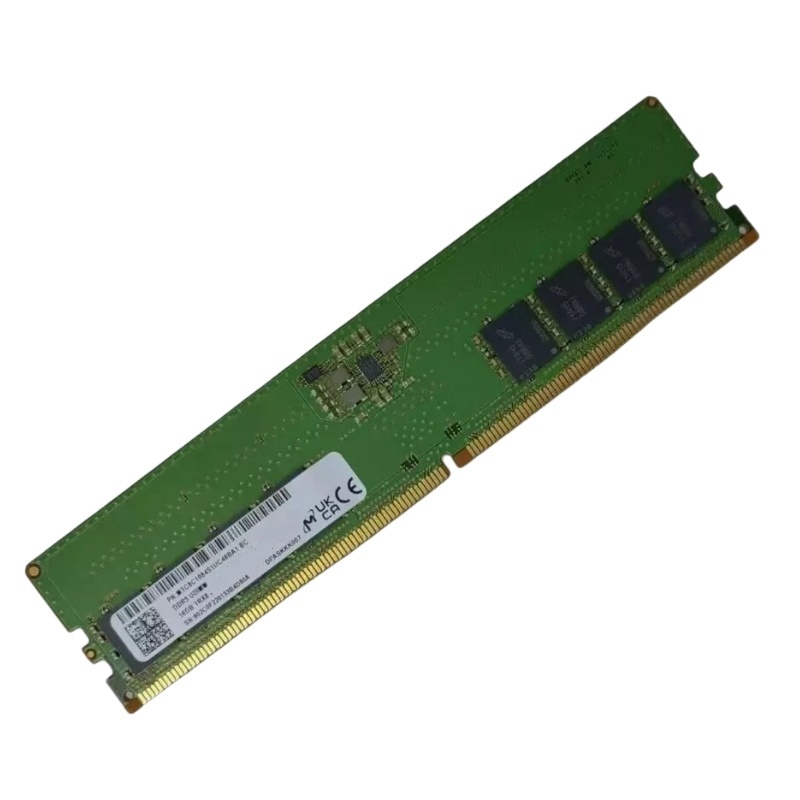


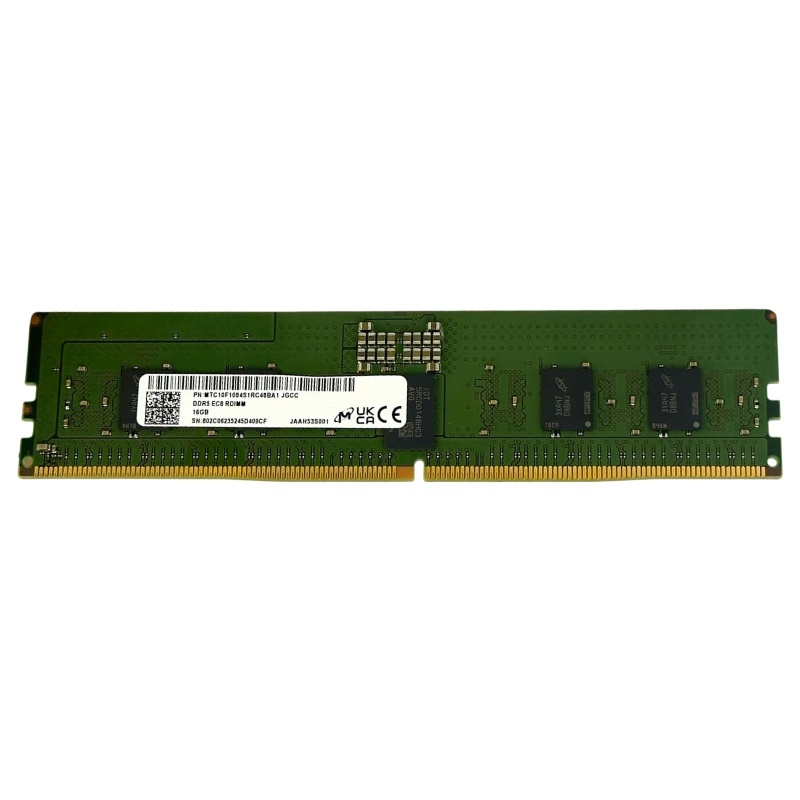
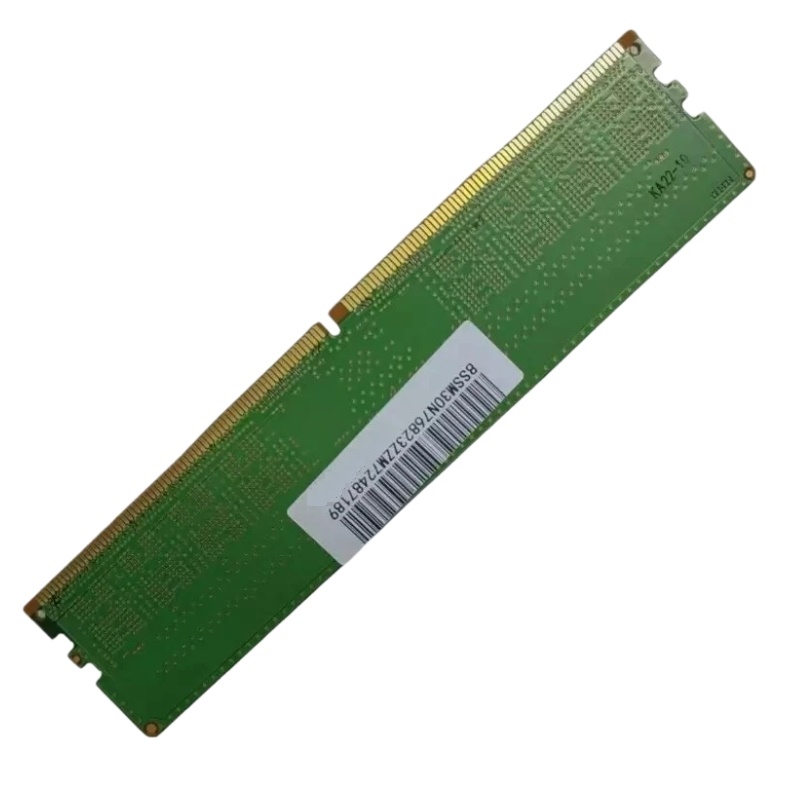
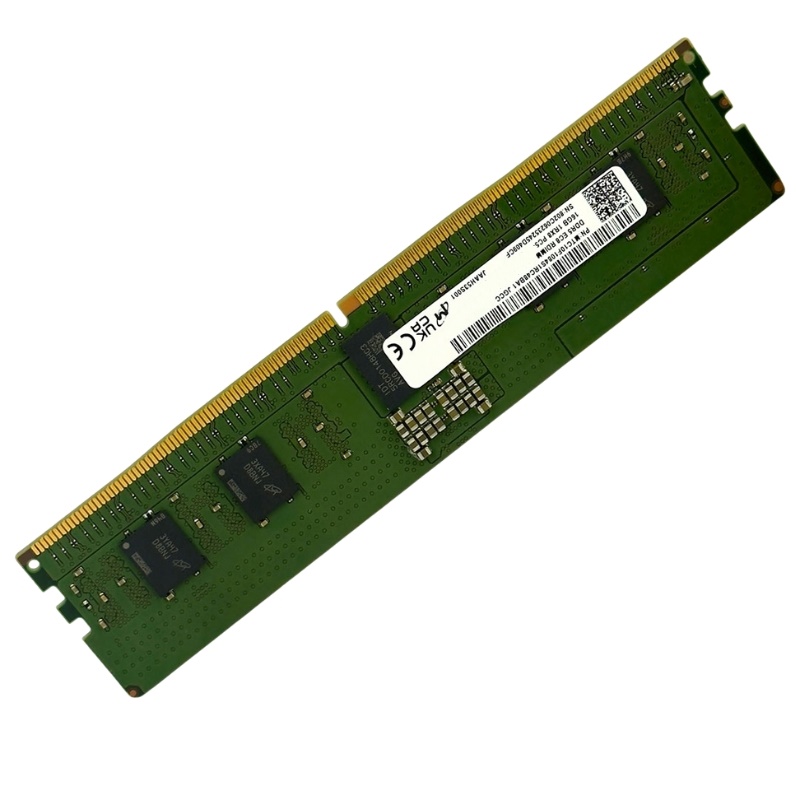
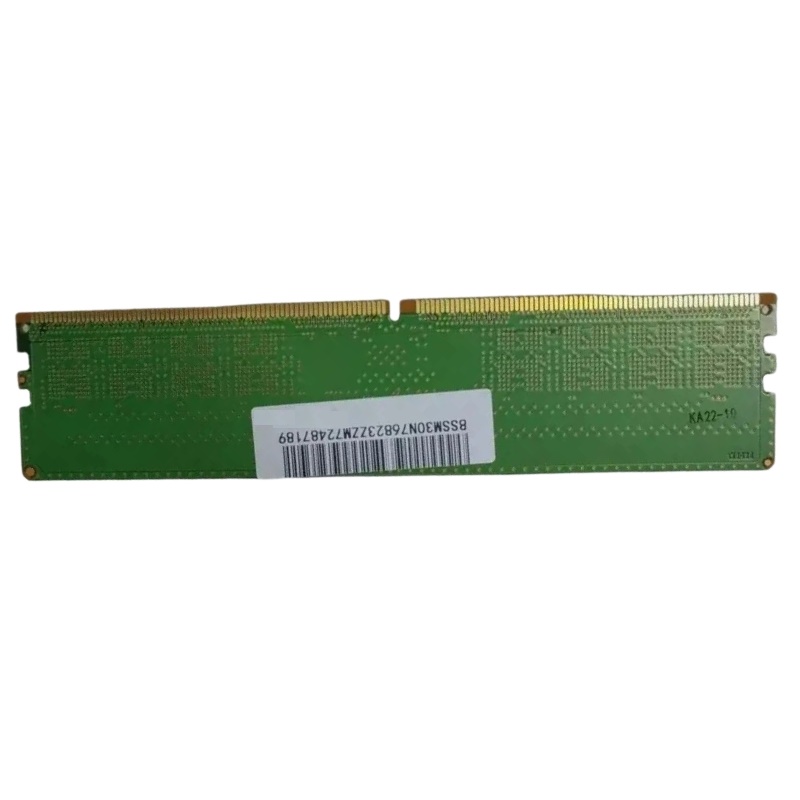
Micron MTC10C1084S1BC64B 16GB DDR5 6400MT/s PC5-51200 ECC CL52 288-Pin CUDIMM Memory Module. New Sealed in Box (NIB) with 3 Years Warranty
The Micron MTC10C1084S1BC64B represents a pinnacle of server-grade memory technology, integrating the latest advancements in DDR5 with mission-critical Error-Correcting Code (ECC) and a unique CUDIMM form factor. This 16GB module, operating at a data rate of 6400MT/s (PC5-51200), is engineered for next-generation data center servers, high-performance computing clusters, and enterprise storage systems that demand unwavering reliability, enhanced bandwidth, and improved power efficiency.
The Micron MTC10C1084S1BC64B represents a significant advancement in memory technology, engineered specifically for the demanding environments of modern data centers, high-performance computing (HPC), and critical embedded systems. This 16GB DDR5 module is not a standard desktop component; it is a CUDIMM (Custom Unbuffered DIMM) with Error-Correcting Code (ECC), designed for reliability, integrity, and sustained performance. Operating at a data rate of 6400 megatransfers per second (MT/s) under the PC5-51200 classification, this memory is built upon Micron's industry-leading DRAM fabrication process, offering a substantial leap in bandwidth, power efficiency, and error management over previous DDR4 generations.
To fully appreciate the capabilities of this module, a thorough breakdown of its nomenclature and specifications is essential. Each segment of the part number "MTC10C1084S1BC64B" and its associated ratings conveys critical information about the module's design and intended use case.
The part number is a detailed roadmap to the module's attributes. "MT" denotes Micron Technology, the manufacturer. "C10" indicates a DDR5 component. "1084S" refers to the specific component configuration and density. "1B" signifies a single-rank module. "C64" confirms the data rate of 6400 MT/s. The "B" at the end often relates to the revision or specific product line. Beyond the part number, the module is defined by its 16GB capacity, its placement in the PC5-51200 classification (denoting a peak theoretical bandwidth of approximately 51.2 GB/s per module), and a CAS Latency (CL) timing of 52. The 288-pin design is physically distinct from DDR4, preventing incorrect installation, and is formatted as a CUDIMM.
This module is configured as a 16GB single-rank (1R) memory stick. A "rank" is a set of DRAM chips that work together to respond to a memory access command from the memory controller. A single-rank design means all chips are accessed simultaneously for a full data burst. This configuration is common for this capacity and offers excellent compatibility and performance characteristics for a wide range of server and embedded platforms, often allowing for higher frequencies and lower power consumption per module compared to dual-rank designs at the same density.
The 6400MT/s speed is a core performance metric, representing the number of data transfer operations the module can perform per second on each pin. With a 64-bit data path (72-bit with ECC), this translates to a peak theoretical bandwidth of 6400 MT/s * 8 bytes = 51,200 MB/s, or 51.2 GB/s, hence the PC5-51200 designation. This substantial bandwidth is crucial for overcoming data bottlenecks in CPU-intensive applications, allowing processors to access data at unprecedented rates, thereby reducing computational idle time and accelerating overall system throughput.
CAS Latency (CL) is the number of clock cycles between the memory controller sending a read command and the moment the data is available on the module's output pins. A CL of 52 at 6400MT/s might seem high compared to DDR4 values, but it is a characteristic of the higher base clock speeds of DDR5. Actual latency in nanoseconds (ns) is a more meaningful comparison. The formula is (CL / Clock Speed) * 2000. For this module: (52 / 3200 MHz) * 2000 = 32.5 nanoseconds. This absolute latency is competitive with or better than many DDR4-3200 CL22 modules (~27.5 ns) when considering the architectural improvements of DDR5, such as dual 32-bit sub-channels.
Error-Correcting Code (ECC) is not an optional feature for this memory category; it is a foundational requirement. The Micron MTC10C1084S1BC64B incorporates on-die ECC (ODECC) alongside traditional side-band ECC, providing a multi-layered defense against data corruption.
DDR5 introduces a revolutionary architecture by integrating ECC directly onto the DRAM die itself. On-die ECC operates transparently, detecting and correcting bit errors that occur within the DRAM chip before data is sent to the memory controller. This handles common internal errors like single-bit upsets caused by alpha particles or electrical noise. Side-band ECC, which uses the additional 8 bits per 64-bit word (making it a 72-bit module), continues to protect data while it is in transit across the memory channel between the module and the CPU. This dual-ECC approach dramatically improves reliability and reduces the silent data corruption (SDC) rate, a paramount concern in financial, scientific, and medical computing.
The implementation of robust ECC directly correlates to system Mean Time Between Failures (MTBF). By continuously scanning for and correcting single-bit errors (SEC) and detecting multi-bit errors (DED), this memory module prevents application crashes, data corruption, and system reboots that can result from uncorrected memory errors. For enterprises operating large server fleets or cloud infrastructure, this translates to significantly higher service availability, reduced maintenance costs, and protection against catastrophic data loss, ensuring business continuity and compliance with data integrity regulations.
The CUDIMM (Custom Unbuffered DIMM) form factor is central to this module's application profile. It is distinct from standard Unbuffered DIMMs (UDIMMs) used in desktops and from Registered DIMMs (RDIMMs) or Load Reduced DIMMs (LRDIMMs) used in high-capacity servers.
A CUDIMM is a custom or specialized unbuffered module, often optimized for specific OEM platforms, particularly in the embedded and networking space. Like a UDIMM, it does not have a register or data buffer between the memory controller and the DRAM chips, which results in lower latency. However, it may feature customized circuitry, specific component placement, or firmware (SPD) programming tailored for a target system's unique voltage, timing, or thermal requirements. This makes it a preferred choice for original design manufacturers (ODMs) building purpose-driven hardware like networking appliances, storage servers, or edge computing devices.
Beyond the raw specifications, the DDR5 standard embodies several architectural shifts that this Micron module leverages to deliver real-world performance benefits.
A key innovation of DDR5 is the migration of the voltage regulation from the motherboard to the memory module itself, via an onboard PMIC. This provides several advantages for the MTC10C1084S1BC64B module: improved power integrity with cleaner, more stable voltage delivery to the DRAM chips; better granularity in power management; and enhanced signal quality, which contributes to achieving and maintaining the high 6400MT/s data rate. It also simplifies motherboard design and allows for more precise system-level power monitoring.
While a DDR4 DIMM operated as a single 64-bit data channel, each DDR5 DIMM is divided into two independent 32-bit sub-channels. This Micron 16GB module utilizes this architecture to allow two simultaneous memory access commands to be served per clock cycle. This dramatically increases memory access parallelism and efficiency, reducing command contention and effectively lowering latency for the memory controller. This is particularly beneficial in multi-core processor environments where numerous threads are requesting data simultaneously.
The specific combination of features in the Micron MTC10C1084S1BC64B makes it ideal for several high-stakes computing environments.
In modern micro-data centers and edge servers, space, power, and reliability are constrained. This module's 16GB density offers a balance of capacity and performance for scale-out nodes handling tasks like real-time analytics, IoT aggregation, and content delivery. The ECC functionality is non-negotiable in these often-unattended locations to ensure continuous, correct operation without physical intervention. The power efficiency of DDR5 also contributes to lower Total Cost of Ownership (TCO) and reduced thermal load in dense server racks.
For HPC clusters and AI inference servers, memory bandwidth is frequently the limiting factor. The 51.2 GB/s bandwidth of this module, when installed in multi-channel configurations (dual-channel, quad-channel), provides the necessary data feed for complex computational models, finite element analysis, and machine learning algorithms. The ECC ensures the mathematical integrity of billion-dollar simulations and training processes, where a single flipped bit could invalidate days of computation.
In telecommunications, industrial automation, and aerospace/defense systems, memory must operate flawlessly under extended temperature ranges and in the presence of vibration or electromagnetic interference. The CUDIMM format, coupled with Micron's rigorous component screening and validation, makes this module suitable for such embedded applications. The ECC protects against soft errors induced by environmental factors, guaranteeing the deterministic operation required for control systems and network packet processing.
Positioning this module within the broader memory landscape clarifies its value proposition.
Compared to a DDR4-3200 ECC UDIMM, this DDR5-6400 module offers nearly double the bandwidth. It operates at a lower voltage (typically 1.1V vs. DDR4's 1.2V), reducing power consumption. The introduction of on-die ECC, PMIC, and dual sub-channels are transformative architectural changes that improve reliability, signal integrity, and concurrency beyond what DDR4 could achieve. For new system builds, DDR5 is the forward-looking choice, offering a performance and efficiency pathway for future CPU generations.
The primary differentiator from a standard non-ECC desktop UDIMM is, unequivocally, data integrity. Non-ECC memory has no mechanism to correct errors, making it unsuitable for any professional or critical workload. Compared to an RDIMM, this CUDIMM offers lower latency (no register delay) but does not support the same maximum number of modules per channel. RDIMMs are for scale-up servers needing terabytes of RAM; this ECC CUDIMM is for performance and reliability-focused systems where latency and bandwidth per module are prioritized over maximum total capacity.


 Contact Us
 Information
 Catalog
 Solid State Drives (SSD)
 Network Switches
 Hard Disk Drives
 HBA & Controllers
 PC & Servers
 PC & Server Memory
 CPU & Processors
 Network Routers
 Power Supplies
 Tape Drives & Libraries
 Network Devices
 Computer & Network Cables