(7% discount is applied at checkout)
Cart is empty
Your go-to destination for cutting-edge server products
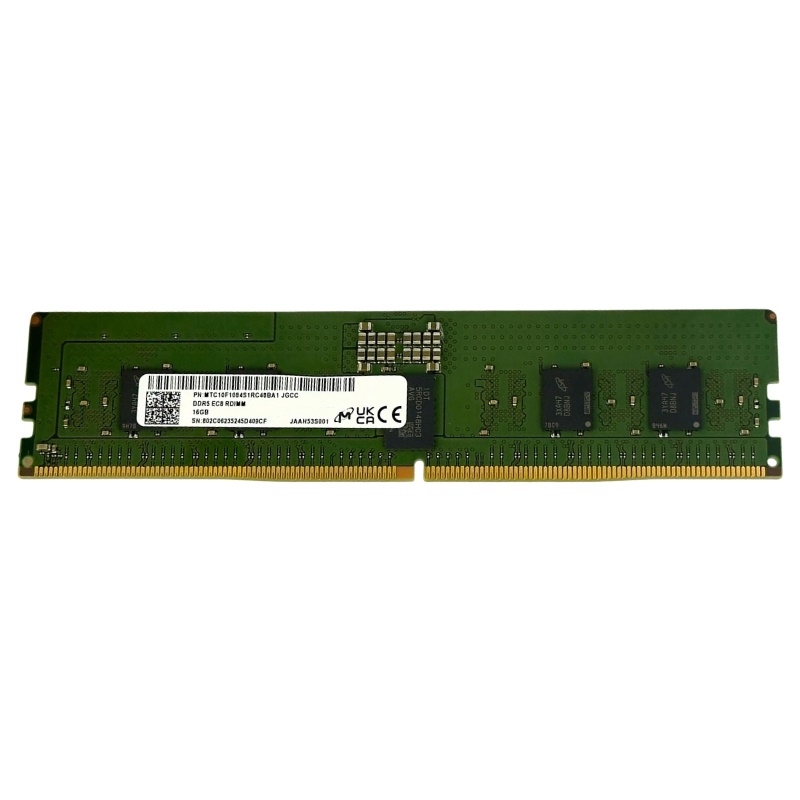


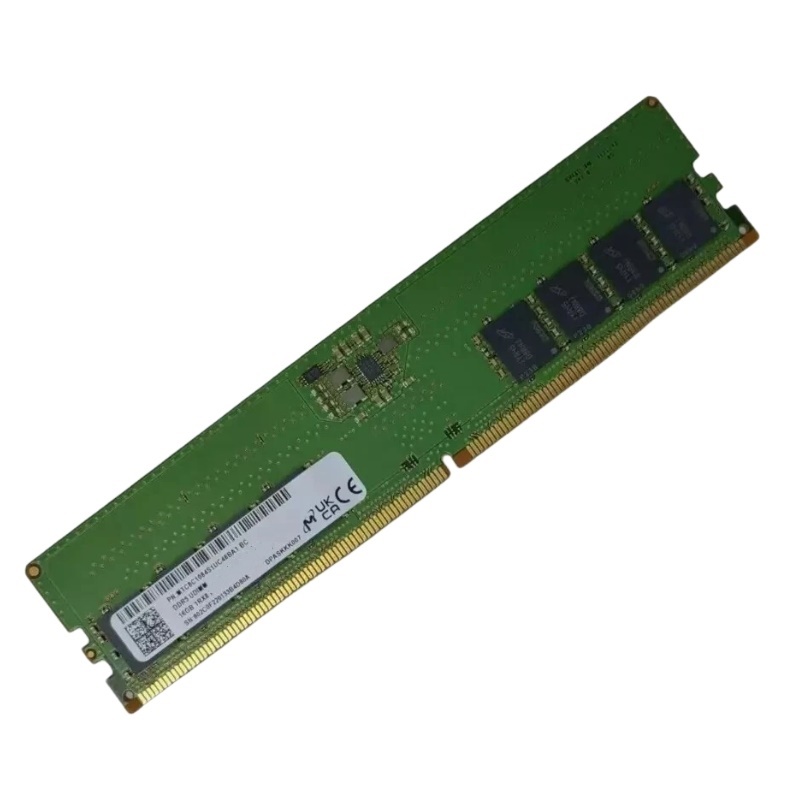
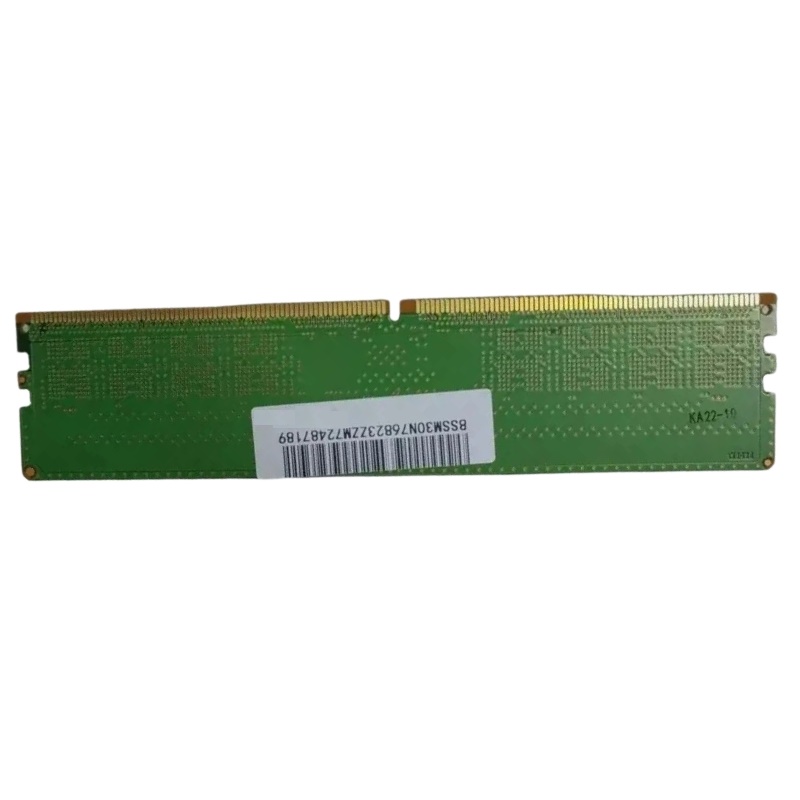
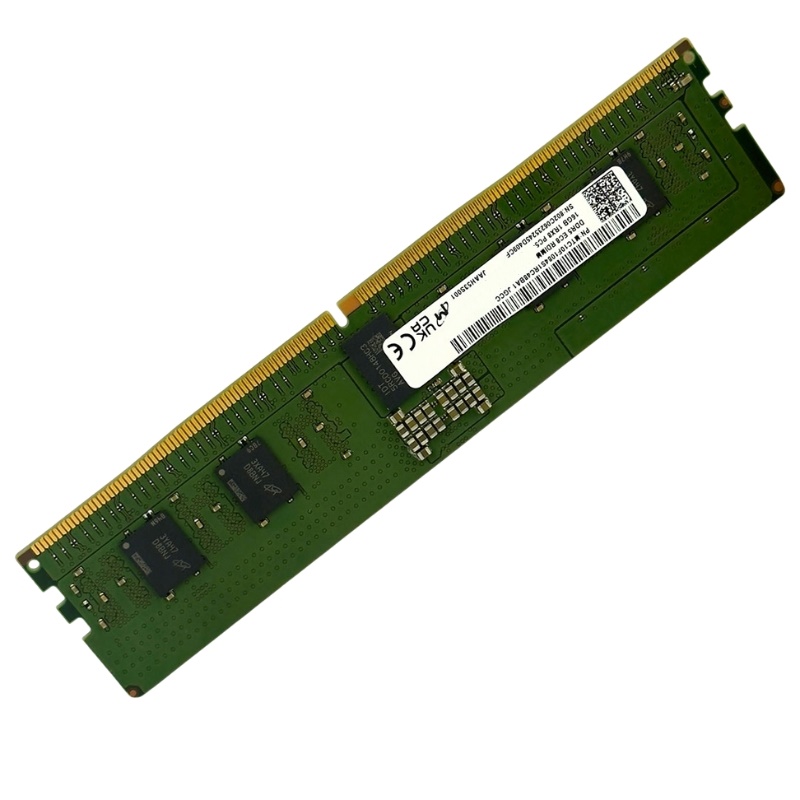
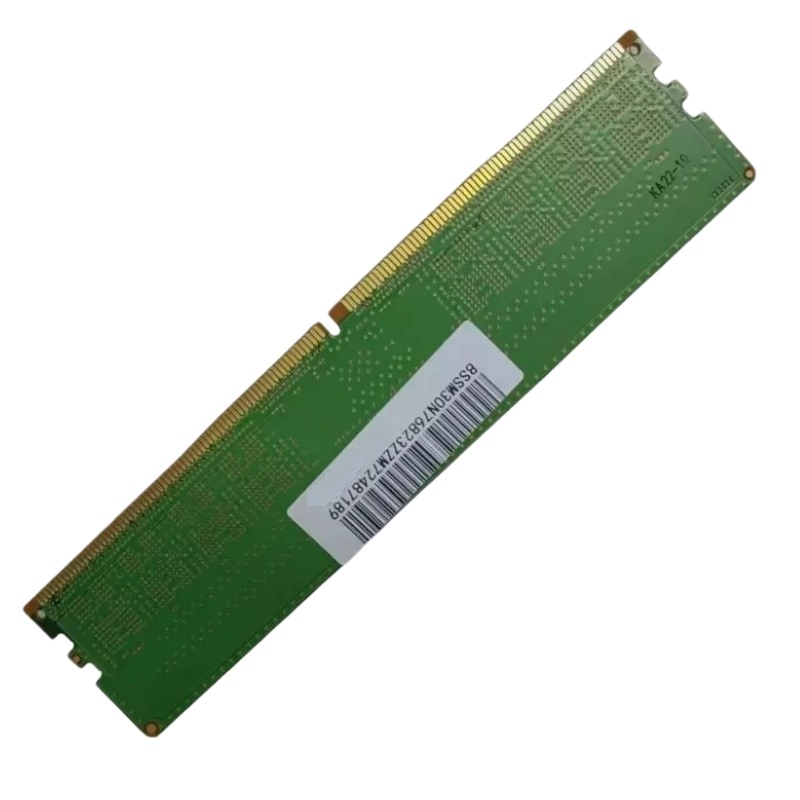
The Micron MTC10C1084S1BC64BR represents a significant leap forward in server memory technology, embodying the latest advancements in DDR5 architecture specifically engineered for data center reliability and performance. This 16GB module operates at a base speed of 6400MT/s (Megatransfers per second), classified under the PC5-51200 standard, and integrates Error-Correcting Code (ECC) within a CUDIMM form factor.
The Micron MTC10C1084S1BC64BR is a high-performance 16GB DDR5 memory module engineered for modern data center and enterprise server platforms. This module is part of Micron's premier server memory lineup, designed to deliver enhanced bandwidth, improved power efficiency, and robust reliability for critical workloads.
The transition to DDR5 architecture brings several foundational improvements crucial for scaling server performance. At its core, DDR5 doubles the burst length and bank groups compared to DDR4, enabling more efficient data transfer cycles. Furthermore, DDR5 modules feature a novel architecture where the power management integrated circuit (PMIC) is moved from the motherboard to the memory module itself. This allows for more refined voltage regulation, improved signal integrity, and enhanced power delivery efficiency—a vital consideration for dense server racks where power and thermal budgets are tightly constrained.
Beyond higher speeds, DDR5 introduces Decision Feedback Equalization (DFE) on the data bus, enabling higher data rates with robust signal integrity. The adoption of two independent 32-bit sub-channels for each 64-bit DIMM improves concurrency and reduces latency for smaller, random access workloads common in server applications. These technological strides collectively empower next-generation servers handling artificial intelligence, in-memory databases, virtualization, and high-performance computing workloads.
The Micron MTC10C1084S1BC64BR is a precision-engineered component designed for compatibility and reliability in professional server platforms. This kit represents a specific configuration within Micron's broad server memory portfolio, balancing performance, capacity, and advanced error correction.
This memory kit is defined by a comprehensive set of technical parameters that dictate its performance envelope and compatibility. Understanding each specification is essential for system integrators and IT professionals to ensure optimal deployment.
The kit provides a total of 16 gigabytes (GB) of DDR5 SDRAM. In server configurations, memory is typically populated across multiple channels (commonly 8 or 12 channels per CPU) to maximize bandwidth. This 16GB capacity per module is a mainstream choice for workloads that benefit from a balance of density and cost-effectiveness, allowing systems to reach substantial total memory capacities (e.g., 256GB or 512GB per server) when all slots are populated.
The module operates at a data rate of 6400 Megatransfers per second (MT/s). This signifies the number of data transfer operations the module can perform per second on each pin. This speed is a key determinant of peak memory bandwidth, directly impacting application performance for data-intensive tasks.
The "PC5-51200" classification is derived from the module's peak bandwidth. Calculating as (6400 MT/s * 8 bytes per transfer) / 8 bits per byte = 51200 MB/s, or approximately 51.2 GB/s of theoretical peak bandwidth per module. This bandwidth is a substantial increase over common DDR4 server modules, feeding CPUs with data at a much faster rate.
The Column Address Strobe (CAS) Latency, denoted as CL52, is a critical timing parameter. It represents the number of clock cycles between the memory controller sending a request for data and the initial data being available from the memory column. While the raw CL number is higher than typical DDR4 modules, the significantly shorter clock cycle time of DDR5 (due to the higher frequency) means absolute latency in nanoseconds often remains competitive or improves, while providing vastly superior bandwidth. The CL52 timing at 6400 MT/s is a standard and optimized latency for this DDR5 speed bin.
The module uses a 288-pin physical connector, which is standard for DDR5. However, the key differentiator is the "CUDIMM" designation. CUDIMM stands for "Custom DIMM," a form factor commonly associated with server and workstation platforms from manufacturers like Dell, HPE, and Lenovo. These modules often include vendor-specific firmware, thermal sensors, and physical notches or sideband signals (such as the Alert_n signal for reliability features) that are required for full functionality and management within those proprietary systems. They are not typically interchangeable with standard unbuffered or registered ECC DIMMs used in generic server motherboards.
Beyond the baseline specifications, this Micron module incorporates several advanced technologies that are paramount for server deployment.
This is an ECC memory module. It uses additional DRAM chips to store error-correcting code bits. The most common implementation is Single Error Correction, Double Error Detection (SECDED). This means the module can automatically detect and correct a single-bit error within a data word, and detect (but not correct) a double-bit error, logging the event for system administrators. This hardware-level data protection is transparent to the operating system and applications but is vital for maintaining data integrity over years of continuous operation.
A distinct feature of DDR5 architecture is On-Die ECC. Each individual DDR5 DRAM chip includes a dedicated ECC engine that corrects bit errors internally before data leaves the chip. This layer of correction works in conjunction with the traditional module-level ECC to provide a multi-tiered defense against soft errors caused by background radiation or electrical noise, dramatically improving chip-level reliability and yield.
The module supports essential DDR5 server features including Post-Package Repair (PPR), which can remap and repair faulty memory cells in the field, and improved Built-In Self-Test (BIST) capabilities. The integrated PMIC ensures stable voltage supply and supports advanced power states for improved energy efficiency during periods of low utilization.
Selecting the correct server memory requires meticulous attention to compatibility. The Micron MTC10C1084S1BC64BR is engineered for specific server ecosystems.
This CUDIMM is designed for integration into proprietary server platforms that utilize the custom DIMM form factor. It is commonly found in servers from major OEMs (Original Equipment Manufacturers) such as Dell EMC PowerEdge series, HPE ProLiant Gen10+ and Gen11, and Lenovo ThinkSystem platforms powered by Intel Xeon Scalable processors (typically 4th Gen Sapphire Rapids and newer) or comparable AMD EPYC platforms that support DDR5 and the custom connector specification.
The deployment of 16GB 6400MT/s DDR5 ECC memory serves as a workhorse for a wide array of enterprise and cloud workloads.
In virtualized environments, memory is a key constrained resource that directly dictates virtual machine (VM) density. Higher memory bandwidth from DDR5 allows VMs to access their allocated memory faster, reducing I/O wait times and improving overall host performance. The ECC protection is non-negotiable in these multi-tenant environments to ensure the integrity of one VM does not affect others.
Platforms like SAP HANA, Oracle Database In-Memory, and various real-time analytics engines reside almost entirely in RAM. The bandwidth of PC5-51200 modules significantly accelerates data ingestion, query processing, and transaction times. The large capacities achievable with multiple modules allow for sizable in-memory datasets.
Scientific computing, simulation, and machine learning training often involve operations on massive matrices. These workloads are frequently bottlenecked by memory bandwidth. The upgrade to DDR5 from previous generations provides a substantial uplift in data feed to the CPUs, accelerating time-to-solution for complex computational problems.


 Contact Us
 Information
 Catalog
 Solid State Drives (SSD)
 Network Switches
 Hard Disk Drives
 HBA & Controllers
 PC & Servers
 PC & Server Memory
 CPU & Processors
 Network Routers
 Power Supplies
 Tape Drives & Libraries
 Network Devices
 Computer & Network Cables