
(7% discount is applied at checkout)
Cart is empty
Your go-to destination for cutting-edge server products
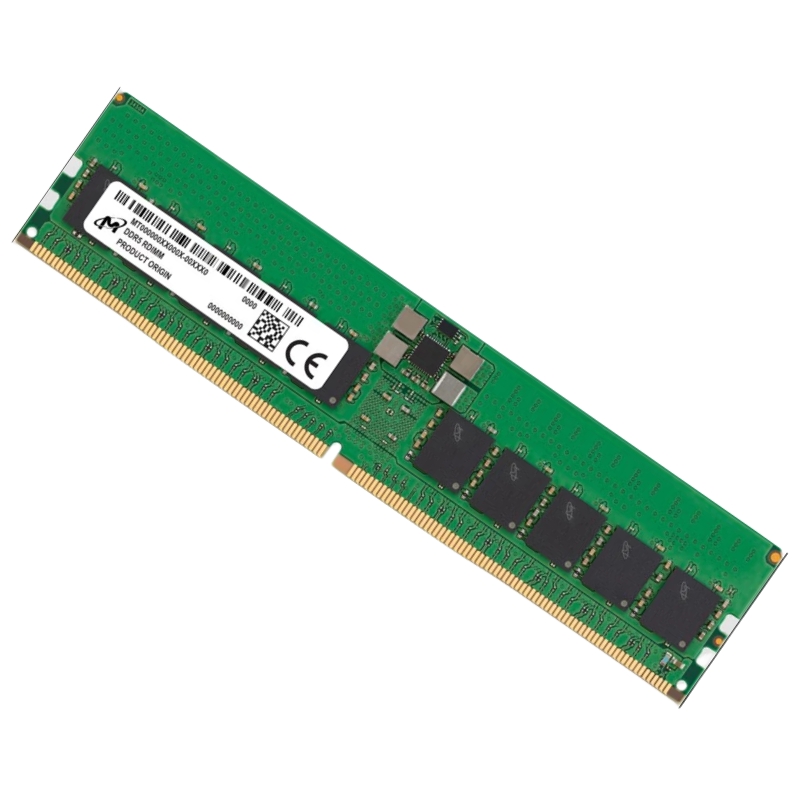
Micron MTC20F1045S1RC64BD1R 32GB PC5-51200 DDR5 6400MHz ECC Registered 1RX4 CL52 288-Pin 1.1V SDRAM Dimm High-Speed Ideal for Server Upgrades Data Centers & High-Performance Memory Module. New Sealed in Box (NIB) with 3 Year Warranty
The Micron MTC20F1045S1RC64BD1R is a high-performance 32GB DDR5-6400 ECC RDIMM memory module designed for enterprise-grade reliability and speed. This advanced module ensures seamless multitasking, improved bandwidth, and robust error correction for mission-critical systems.
The category encompassing enterprise-grade DDR5 ECC RDIMM memory modules represents a foundational component of contemporary data center, cloud, and mission-critical computing environments. Products such as the Micron MTC20F1045S1RC64BD1R 32GB DDR5-6400 ECC RDIMM are engineered to address the increasing demands placed on memory subsystems by modern processors, virtualization platforms, artificial intelligence workloads, and high-throughput transactional systems. This category is defined by its focus on reliability, scalability, bandwidth density, and long-term operational stability rather than consumer-oriented performance metrics alone.
DDR5 ECC RDIMM modules are purpose-built for registered memory channels, enabling servers to populate higher memory capacities while maintaining signal integrity at elevated data rates. The transition from DDR4 to DDR5 introduces architectural enhancements that significantly impact system memory behavior, including increased bank groups, higher burst lengths, and improved power management integration. Within this category, 32GB capacity modules serve as a balanced choice for scalable systems that require both density and frequency without compromising compatibility across multi-socket platforms.
DDR5 memory architecture introduces a range of technical refinements that define the performance characteristics of this category. DDR5-6400 memory modules, such as those aligned with Micron’s server memory portfolio, deliver substantially higher theoretical bandwidth compared to previous DDR4 generations. This increase directly supports modern CPUs that feature a higher number of cores and threads, each competing for memory access. By delivering faster data transfer rates per channel, DDR5 RDIMM modules help reduce bottlenecks in memory-intensive applications.
The internal structure of DDR5 memory includes doubled bank groups and expanded prefetch operations, allowing simultaneous data access patterns that benefit parallel workloads. Enterprise environments that rely on in-memory databases, real-time analytics, and virtualization stacks gain measurable efficiency from this architectural evolution. Within this category, DDR5-6400 frequency represents an optimal balance between achievable performance and widespread platform support in current-generation server chipsets.
ECC functionality is a defining characteristic of this memory category, ensuring data integrity in environments where memory errors can have cascading consequences. ECC RDIMM modules implement advanced error detection and correction mechanisms capable of identifying and correcting single-bit memory errors while detecting multi-bit faults. This capability is essential in servers that operate continuously under heavy workloads, where even minor data corruption could lead to system instability or compromised results.
ECC memory plays a vital role in maintaining uptime, especially in industries such as finance, healthcare, telecommunications, and scientific research. The inclusion of ECC in DDR5 RDIMM modules supports regulatory compliance, data consistency, and predictable system behavior. This category emphasizes reliability metrics that extend beyond raw speed, recognizing that sustained accuracy is a core requirement for enterprise computing.
Registered DIMM technology distinguishes this category from unbuffered memory solutions. RDIMM modules incorporate a register between the memory controller and the DRAM chips, reducing electrical load and improving signal quality. This design enables servers to support higher memory capacities across more populated DIMM slots without sacrificing stability. The Micron MTC20F1045S1RC64BD1R aligns with this architectural principle, supporting complex memory topologies found in dual-socket and multi-socket servers.
Signal integrity becomes increasingly critical as memory frequencies rise, particularly at DDR5-6400 data rates. Registered memory mitigates timing issues and ensures consistent performance across varying thermal and electrical conditions. This category is therefore well suited to dense server configurations, blade systems, and modular data center deployments where memory reliability must be maintained across extended operational lifecycles.
The 1Rx4 configuration common within this category reflects a specific arrangement of memory ranks and chip organization. A single-rank, x4-based design optimizes data access patterns and enhances error correction capabilities by distributing data across multiple DRAM devices. This structure aligns well with server memory controllers that are optimized for x4 devices, offering improved fault isolation compared to x8 configurations.
1Rx4 memory modules are frequently selected for enterprise systems where redundancy and resilience are prioritized. The configuration supports advanced ECC schemes and improves the system’s ability to recover from memory faults without interrupting workloads. As part of this category, such modules contribute to predictable performance behavior in environments that demand consistent throughput under variable load conditions.
Latency specifications, such as CAS Latency 52, define the timing behavior of DDR5-6400 RDIMM modules within this category. While absolute latency values may appear higher compared to earlier memory generations, the effective performance must be evaluated in conjunction with increased bandwidth and architectural efficiencies. CL52 timing is characteristic of high-frequency DDR5 server memory, where throughput gains outweigh the nominal increase in clock cycles.
In enterprise workloads, memory latency is often mitigated by advanced caching mechanisms, parallel processing, and optimized memory access patterns. As a result, DDR5-6400 ECC RDIMM modules deliver net performance improvements in real-world scenarios, particularly for workloads that scale across multiple cores and threads. This category emphasizes balanced memory characteristics rather than focusing solely on isolated timing metrics.
Power management is an integral aspect of the DDR5 memory category, with on-module voltage regulation contributing to improved efficiency and thermal control. DDR5 RDIMM modules integrate a Power Management Integrated Circuit that regulates voltage locally, reducing power noise and improving stability. This design supports more efficient power delivery across densely populated memory channels.
Thermal characteristics are especially important in high-density server environments where airflow and cooling resources are shared. DDR5 modules are engineered to operate within defined thermal envelopes, ensuring reliable performance over prolonged periods. This category supports energy-efficient data center strategies by reducing overall power consumption per gigabyte of memory while maintaining high throughput capabilities.
The 288-pin DIMM form factor defines physical compatibility across DDR5 server platforms. Memory modules within this category are designed to integrate seamlessly with modern server motherboards that support DDR5 RDIMM specifications. The standardized pin layout ensures consistent electrical connections while supporting the enhanced signaling requirements of DDR5 technology.
Platform compatibility is a critical consideration for enterprise deployments, particularly when planning system upgrades or expansions. DDR5 ECC RDIMM modules are validated across a wide range of server platforms from leading CPU manufacturers, ensuring interoperability and predictable behavior. This category supports long-term deployment strategies by aligning with industry standards and roadmap-driven platform evolution.
Scalability is a defining attribute of this memory category, enabling servers to expand memory capacity as workload demands grow. 32GB DDR5 ECC RDIMM modules serve as a modular building block that can be deployed incrementally across available memory channels. In multi-socket systems, registered memory ensures that signal integrity is preserved even as total memory capacity scales into the terabyte range.
This scalability supports a wide range of enterprise use cases, from virtualization clusters to high-performance computing environments. The ability to populate multiple DIMM slots without compromising stability allows organizations to optimize memory configurations for specific workload profiles. This category is therefore aligned with flexible infrastructure strategies that prioritize adaptability and long-term investment protection.
DDR5 ECC RDIMM memory modules play a central role in supporting virtualization and cloud-native workloads. Virtual machines and containers rely heavily on memory bandwidth and capacity to deliver consistent performance across shared resources. High-frequency DDR5 memory reduces contention and improves response times for memory-intensive applications running in virtualized environments.
Error correction capabilities further enhance the suitability of this category for cloud infrastructure, where memory reliability directly impacts service availability. By minimizing the risk of memory-related faults, ECC RDIMM modules contribute to stable multi-tenant environments and predictable service-level performance.
Data-intensive applications such as analytics platforms, machine learning frameworks, and in-memory databases place significant demands on system memory. The DDR5-6400 data rate characteristic of this category delivers the bandwidth necessary to process large datasets efficiently. High throughput enables faster data ingestion, processing, and retrieval, directly influencing application performance.
This category supports workloads that benefit from parallel memory access patterns, including real-time analytics and scientific simulations. By providing ample bandwidth and reliable operation, DDR5 ECC RDIMM modules form a critical component of data-driven computing architectures.


 Contact Us
 Information
 Catalog
 Solid State Drives (SSD)
 Network Switches
 Hard Disk Drives
 HBA & Controllers
 PC & Servers
 PC & Server Memory
 CPU & Processors
 Network Routers
 Power Supplies
 Tape Drives & Libraries
 Network Devices
 Computer & Network Cables