(7% discount is applied at checkout)
Cart is empty
Your go-to destination for cutting-edge server products
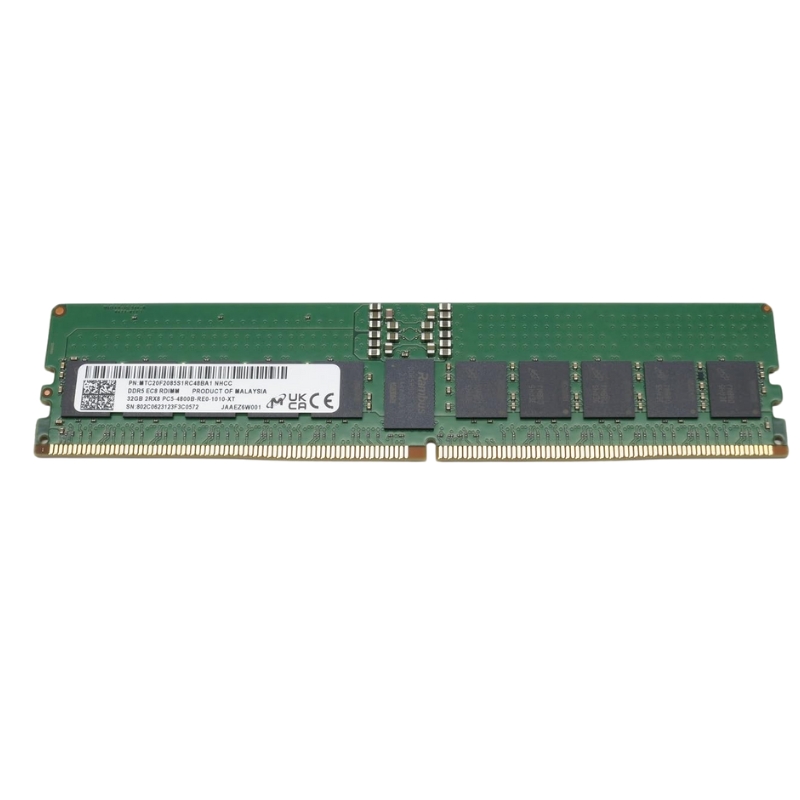


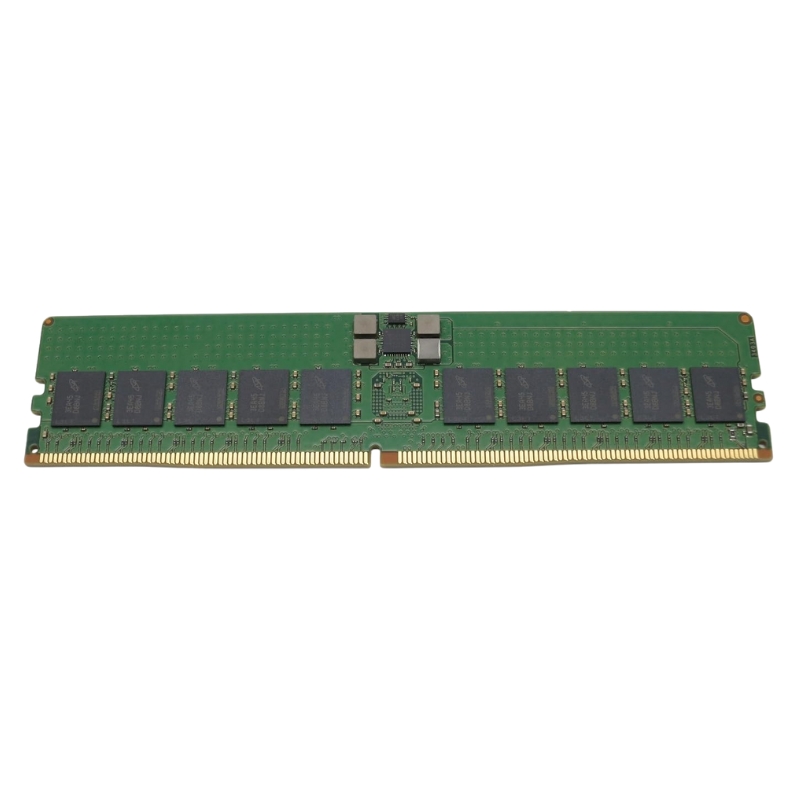
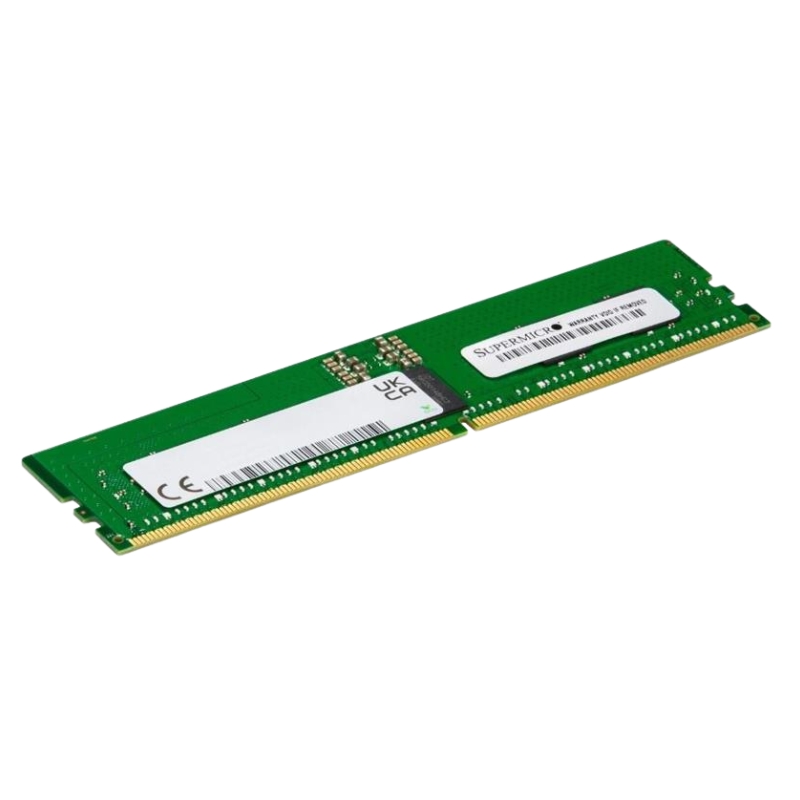
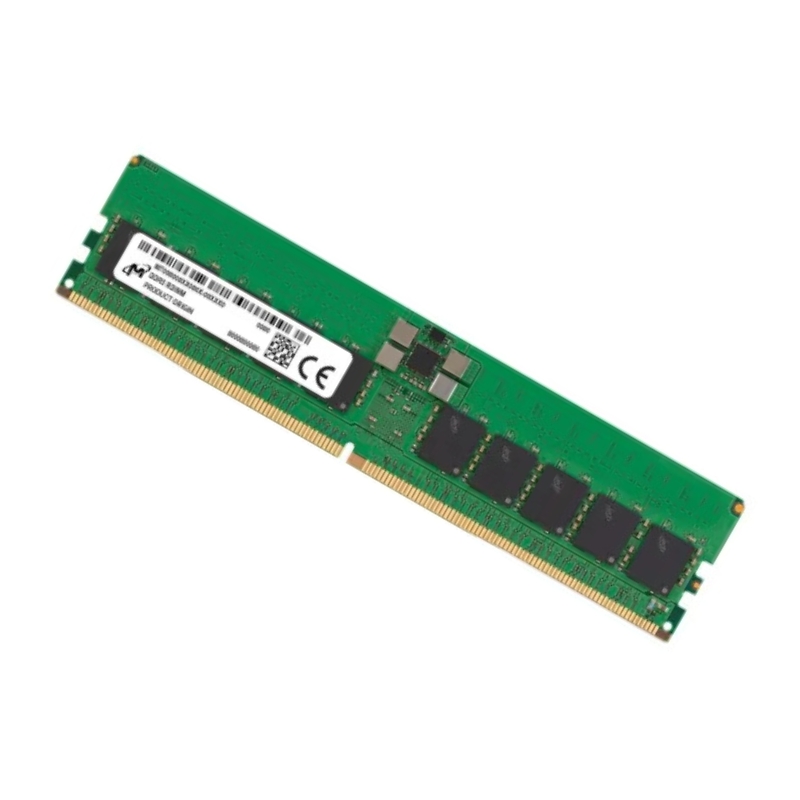
Micron MTC20F2085S1RC64BH1R 32GB Dual Rank X8 ECC Cl52 Ddr5 Sdram 288 Pin Rdimm Memory Module. New Sealed in Box (NIB) with 3 Years Warranty
This memory module follows the 288-pin RDIMM standard, making it compatible with most new-generation server and workstation motherboards designed to accept DDR5 registered memory. Its compact dimensions simplify installation even in dense rack-mounted server chassis.
Optimized for enterprise-grade platforms, this Micron DDR5 RDIMM module ensures consistent performance across virtualized workloads, cloud applications, and database servers. Its ECC technology guarantees mission-critical uptime by minimizing memory-related system failures.
Scientific research, simulations, and analytics demand extreme memory bandwidth. With DDR5-6400 speeds and robust error correction, this module fits perfectly in high-performance computing clusters.
For creative professionals, large-scale render jobs and 3D modeling benefit from improved bandwidth and multitasking. Memory-intensive applications like CAD software, video editing, and AI training pipelines run smoother and faster.
The dual-rank structure means the module presents two logical ranks of DRAM to the memory controller. Each rank comprises x8 devices — a common enterprise arrangement that balances addressability and manufacturability. Dual-rank modules can offer higher effective capacity per channel and in many server platforms deliver improved throughput under certain mixed-load scenarios compared to single-rank modules. For architects planning high-memory configurations, dual-rank modules are often preferred when maximizing capacity per socket without increasing module count.
As an RDIMM, the Micron MTC20F2085S1RC64BH1R includes a register (also called an RCD or register chip) that buffers and re-drives address and command signals. This buffering reduces electrical loading on the memory controller and enables stable operation at higher speeds and with more modules per channel. Combined with on-module ECC, the design provides single-bit error correction and multi-bit error detection — a fundamental requirement for server environments that prioritize data integrity. These features make RDIMM modules the standard choice for mission-critical deployments.
DDR5-6400 offers substantial raw bandwidth improvements over earlier DDR4 generations. The MTC20F2085S1RC64BH1R at 6400 MT/s is optimized to deliver high sustained throughput (PC5-51200), which benefits memory-bound workloads such as large in-memory databases, analytics, and vectorized computations in AI inference. However, the higher transfer rate typically comes with increased CAS latency numbers (CL52 in this family). For many server workloads the net effect is positive — higher bandwidth compensates for higher latency — but for extremely latency-sensitive, single-threaded applications, designers should test real-world performance when migrating from lower-latency DDR4 configurations.
DDR5 modules operate at a nominal 1.1 V, reducing per-bit energy compared with legacy DDR variants. Still, at higher speeds and densities, heat dissipation can become meaningful — especially in multi-DIMM per channel server boards or densely packed multi-socket systems. The Micron 32GB RDIMM is manufactured with industry-standard PCB and DRAM package technologies; many server vendors provide validated thermal profiles and recommended airflow requirements when populating high-speed DDR5 modules. It’s good practice to follow OEM guidance for airflow and to enable system thermal management features to preserve module longevity.
When integrating DDR5 modules into a server build, ensure the motherboard/BIOS supports DDR5 voltage rails and VRM tolerances at the intended operating speed (e.g., 6400 MT/s). Many enterprise boards implement automatic memory training and voltage regulation, but explicit platform validation helps avoid boot-time training failures or speed down-grades.
The module follows the standard 288-pin RDIMM mechanical outline used by DDR5 server memory. Exact module length and notch placement match ECC RDIMM sockets on compatible server motherboards. Micron lists dimensional and mechanical drawings in their part catalog and data resources for system integrators who need exact clearances for heatsinks, caddies, or multi-module DIMM risers. For most installers, the module will fit in any standard DDR5 RDIMM slot designed to JEDEC specifications, but always check platform compatibility lists for best results.
While this Micron module generally ships as a bare RDIMM (green PCB with DRAM packages and register components), some OEM partners or system integrators may bundle modules with low-profile heatsinks or place them in shuttles for specific server models. If your server uses DIMM retainers, caddies, or airflow ducts, confirm physical clearance before large-scale deployment.
Compatibility depends primarily on server platform support for DDR5 RDIMMs and validated memory speed/voltage combinations. Modern Intel and AMD server platforms that advertise DDR5 support will typically list validated DIMM part numbers or compatible memory types in their HCL (Hardware Compatibility List) or memory population guides. Enterprise vendors such as Dell EMC, HPE, Lenovo, and popular server motherboard OEMs publish validated modules and population rules; always consult supplier documentation or Micron’s part catalog for platform-specific notes before purchase.
System performance and stability are sensitive to how many DIMMs are populated per channel and per CPU socket. RDIMMs are often used to maximize module counts without exceeding electrical loading limits, but each platform has a specific maximum recommended configuration (e.g., two DIMMs per channel, or specific slot order). Consult your server’s memory population guide when planning upgrades to preserve maximum bandwidth and enable symmetric channel population for predictable performance.
DDR5 introduces advanced memory training and on-module features. When adding Micron RDIMMs, ensure BIOS versions include the latest memory training firmware from the server vendor. Updated firmware often improves compatibility with newer DIMM densities and higher speeds, reduces initialization time, and prevents down-clocking to lower speeds due to compatibility mismatches. If you encounter POST failures or speed drops, check for firmware updates from the platform vendor before concluding a hardware fault.
On-DIMM ECC implements single-bit error correction and multi-bit error detection at the module level. In combination with system-level error handling (such as machine check architecture and event logging), ECC substantially reduces the likelihood of silent data corruption. For workloads that cannot tolerate bit errors (financial records, database storage, scientific computing), ECC is mandatory. RDIMMs with integrated ECC and registered buffers are the de-facto standard in server deployments.
Enable system event logging and memory health monitoring where available. Many server vendors expose DIMM error counts and ECC correction statistics through BMCs (Baseboard Management Controllers) and monitoring tools. Tracking corrected ECC events can help diagnose failing DIMMs or marginal electrical conditions before uncorrectable errors occur. Micron modules are designed to integrate with these monitoring frameworks.
32GB RDIMMs are an excellent fit for hypervisor hosts where each VM requires several gigabytes of memory. The combination of dual-rank density and ECC reliability enables high consolidation ratios while preserving uptime for tenant workloads. Bandwidth improvements from DDR5-6400 help with memory-intensive VM migrations and in-memory caching layers.
In database servers and in-memory analytics clusters, high sustained bandwidth reduces data access latency for large working sets and accelerates complex queries. ECC and registered buffering ensure data correctness even under high transactional loads. When architecting database nodes, pair fast DDR5 modules with appropriate CPU and storage tiers to minimize other bottlenecks.
While AI training is predominantly GPU-bound, inference servers that rely on CPU memory for large embedding tables or feature stores can benefit from DDR5-class bandwidth improvements. 32GB RDIMMs allow sizable model caches to reside in main memory, boosting latency-sensitive inference pipelines. Test performance with representative workloads to measure bandwidth vs latency impact.
Record baseline numbers before upgrades so you can quantify gains or regressions. If a module fails validation, cross-test in a second compatible platform to determine whether the issue is module or platform related.
If the server fails to POST or the memory runs at a downgraded speed after installing new RDIMMs, try the following sequence:
These steps usually resolve compatibility or training issues. If failures persist, open an RMA with the vendor.
A small number of corrected ECC events is normal; however, rising or clustered corrected errors can indicate marginal signal integrity, thermal stress, or failing components. Investigate airflow, DIMM seating, and motherboard power delivery; if errors persist, swap modules and run extended memory validation.
Closely related subcategories include:
When selecting within the subcategory, consider the server’s validated speed list and reserve a margin for future expansion (e.g., matching speeds across installed modules to avoid mixed-speed operation). Distributor pages and Micron’s part catalog can help map part number suffixes to speed and timing variants.


 Contact Us
 Information
 Catalog
 Solid State Drives (SSD)
 Network Switches
 Hard Disk Drives
 HBA & Controllers
 PC & Servers
 PC & Server Memory
 CPU & Processors
 Network Routers
 Power Supplies
 Tape Drives & Libraries
 Network Devices
 Computer & Network Cables