(7% discount is applied at checkout)
Cart is empty
Your go-to destination for cutting-edge server products
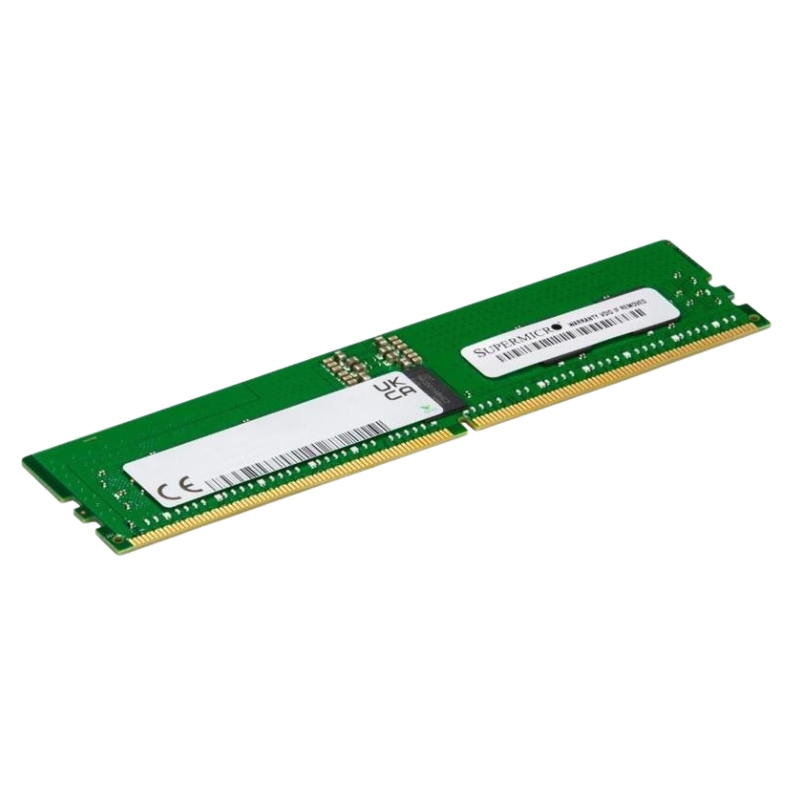


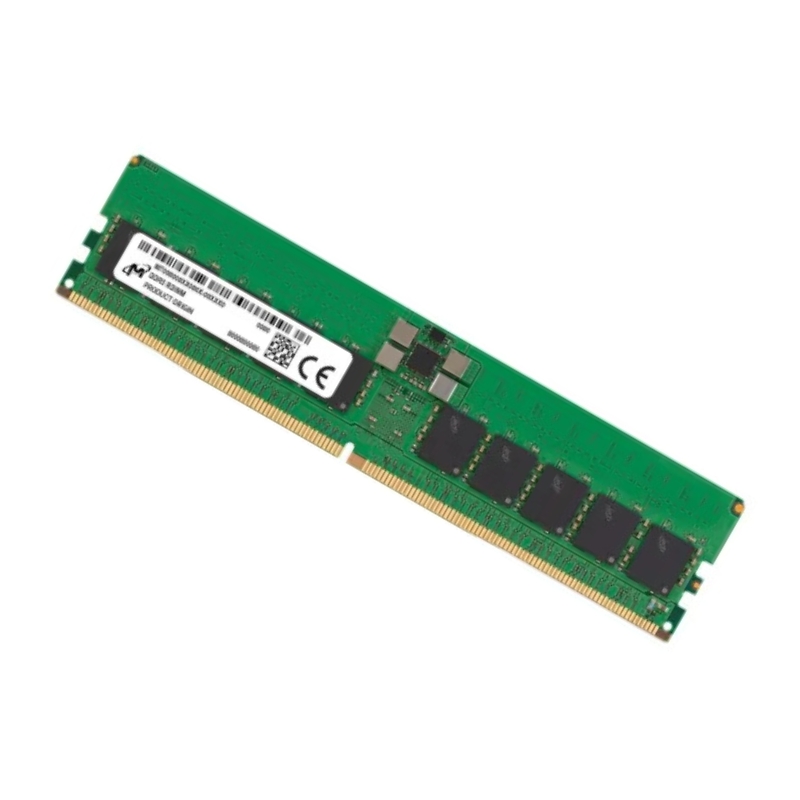
Micron MTC40F2046S1RC64B 64GB DDR5 6400 Mhz PC5-51200 ECC Cl52 288 Pin Memory Module. New Sealed in Box (NIB) with 3 Year Warranty
| SKU/MPN | Warranty | Price | Condition | You save |
|---|---|---|---|---|
| MTC40F2046S1RC64B | 1 Year Warranty | $2,592.00 | New (System) Pull | You save: $907.20 (26%) |
| MTC40F2046S1RC64B | 1 Year Warranty | $3,450.00 | New Sealed in Box (NIB) | You save: $1,207.50 (26%) |
The Micron MTC40F2046S1RC64B is a high-performance 64GB DDR5 SDRAM Registered DIMM designed to deliver exceptional speed, reliability, and scalability for enterprise-grade applications. Built with advanced ECC (Error-Correcting Code) technology and optimized for data-intensive environments, this memory module ensures stability and consistent performance for demanding workloads.
The Micron MTC40F2046S1RC64B 64GB DDR5 6400 MHz ECC CL52 288-Pin Memory Module belongs to a specialized category of high-capacity, high-bandwidth system memory engineered for enterprise servers, data centers, and advanced workstation environments. This category encompasses DDR5 ECC Registered (RDIMM) memory solutions that are purpose-built to meet the demands of modern compute-intensive workloads, including virtualization, cloud infrastructure, artificial intelligence, real-time analytics, and mission-critical database systems.
DDR5 ECC memory represents a significant architectural evolution compared to previous DDR generations. Modules in this category deliver substantially increased memory bandwidth, improved power efficiency, higher module densities, and advanced reliability features. These characteristics make them essential components in platforms that require continuous uptime, predictable performance, and data integrity under sustained load.
DDR5 memory modules such as the Micron MTC40F2046S1RC64B are designed around a fundamentally improved architecture that doubles the number of memory banks and introduces dual independent 32-bit subchannels per module. This structural advancement allows for more efficient data access and reduced latency in multi-threaded and parallel processing environments.
Operating at an effective data rate of 6400 MHz, DDR5 memory modules in this category provide significantly higher throughput compared to DDR4 solutions. The increased frequency enables faster read and write operations, directly benefiting workloads such as large-scale simulations, virtualization clusters, and high-performance computing applications that rely on rapid memory access.
The 6400 MHz speed tier is particularly relevant for next-generation server processors designed to scale with higher memory bandwidth. Systems equipped with DDR5-6400 ECC memory can better feed multi-core CPUs, minimizing memory bottlenecks and improving overall system responsiveness.
With a CAS latency rating of CL52, this category of memory balances high frequency operation with stable timing parameters. While higher frequencies inherently involve increased latency values, the overall performance gain achieved through bandwidth expansion outweighs the impact of timing increases, especially in enterprise workloads that are throughput-oriented rather than latency-sensitive.
DDR5 ECC RDIMM modules are validated to maintain stable timing behavior under sustained operational stress. This consistency is critical in environments where memory performance must remain predictable during peak usage, such as financial transaction systems or large-scale virtualization platforms.
A defining feature of this memory category is the integration of Error Correction Code (ECC) technology. ECC memory is engineered to detect and correct single-bit memory errors and detect multi-bit errors, significantly reducing the risk of data corruption and system crashes.
DDR5 memory introduces on-die error correction mechanisms in addition to traditional external ECC. While on-die ECC enhances internal chip reliability, external ECC at the module level remains essential for system-wide data protection. The Micron MTC40F2046S1RC64B incorporates full ECC functionality compatible with enterprise-grade processors and chipsets.
ECC memory modules are indispensable in applications where data accuracy and uptime are paramount. This includes enterprise databases, healthcare systems, financial modeling, and cloud infrastructure, where even minor data errors can lead to significant operational or financial consequences.
The Micron MTC40F2046S1RC64B belongs to the Registered DIMM (RDIMM) subcategory, which incorporates a register between the memory controller and the DRAM chips. This register buffers command and address signals, improving signal integrity and allowing for greater memory scalability.
RDIMM architecture enables systems to support a higher number of memory modules per channel without compromising stability. This is particularly important in enterprise servers that require large memory footprints, often exceeding hundreds of gigabytes or several terabytes per system.
With a capacity of 64GB per module, this category supports high-density memory configurations that reduce the total number of DIMM slots required. Fewer modules simplify system design, improve airflow, and can contribute to better thermal management within server chassis.
DDR5 memory modules utilize a 288-pin form factor that is physically similar to DDR4 but electrically and mechanically distinct. The pin layout and keying are specifically designed to prevent incorrect installation and ensure compatibility only with DDR5-enabled motherboards.
This category of memory is intended for use with modern server processors and chipsets that support DDR5 ECC RDIMM configurations. Compatibility typically includes enterprise-grade CPUs designed for data center workloads, ensuring seamless integration into certified hardware platforms.
Enterprise DDR5 ECC memory modules undergo rigorous validation processes to meet platform qualification requirements. This ensures reliable operation across a wide range of operating conditions and workloads, reducing deployment risks in production environments.
DDR5 memory introduces improved power efficiency compared to previous generations, operating at a nominal voltage of approximately 1.1V. Additionally, power management circuitry has been moved onto the module itself, allowing for more precise voltage regulation.
The inclusion of an onboard PMIC enables finer-grained control over power delivery to the memory chips. This results in improved power stability, reduced electrical noise, and enhanced overall efficiency, which is especially beneficial in large-scale data centers focused on energy optimization.
Memory modules in this category are designed to operate reliably under continuous load conditions. Advanced PCB layouts, high-quality components, and adherence to strict thermal specifications help ensure stable performance even in densely populated server environments.
The Micron MTC40F2046S1RC64B 64GB DDR5 ECC memory module category is optimized for a wide range of enterprise and professional workloads. These memory solutions are selected for systems where performance, reliability, and scalability are equally critical.
High-capacity DDR5 ECC RDIMM modules enable virtualization platforms to host more virtual machines per server while maintaining performance isolation. Increased memory bandwidth and capacity directly translate into higher VM density and improved resource utilization.
AI training, inference, and large-scale analytics workloads benefit from the high throughput and reliability of DDR5 ECC memory. Rapid access to large datasets in memory accelerates model training and real-time data processing tasks.
In-memory databases and transactional systems rely heavily on fast, reliable memory access. DDR5 ECC RDIMM modules provide the necessary performance and data integrity guarantees required for these mission-critical applications.
Micron is a globally recognized manufacturer of memory solutions, known for stringent quality control, advanced fabrication processes, and long-term product availability. Memory modules in this category are produced to meet enterprise lifecycle requirements, ensuring consistent supply and support over extended deployment periods.
DDR5 ECC RDIMM modules adhere to JEDEC standards, ensuring interoperability across compliant platforms. This standardization simplifies procurement, deployment, and maintenance in heterogeneous data center environments.
Compared to DDR4 ECC memory, DDR5 ECC RDIMM modules offer substantial improvements in bandwidth, efficiency, and scalability. These advantages position this category as a foundational component for next-generation enterprise infrastructure.
The increased data rates available with DDR5 reduce the need for additional memory channels to achieve desired performance levels. This can simplify system architecture and lower overall platform complexity.
Architectural enhancements such as dual subchannels and registered buffering contribute to cleaner signal transmission and improved reliability, especially in high-density configurations.


 Contact Us
 Information
 Catalog
 Solid State Drives (SSD)
 Network Switches
 Hard Disk Drives
 HBA & Controllers
 PC & Servers
 PC & Server Memory
 CPU & Processors
 Network Routers
 Power Supplies
 Tape Drives & Libraries
 Network Devices
 Computer & Network Cables