(7% discount is applied at checkout)
Cart is empty
Your go-to destination for cutting-edge server products
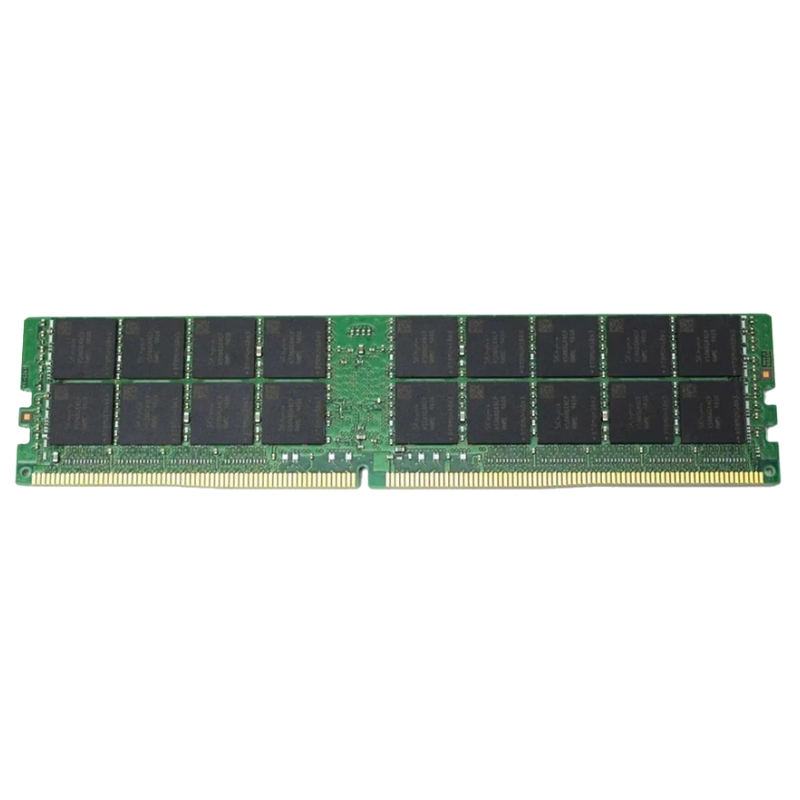


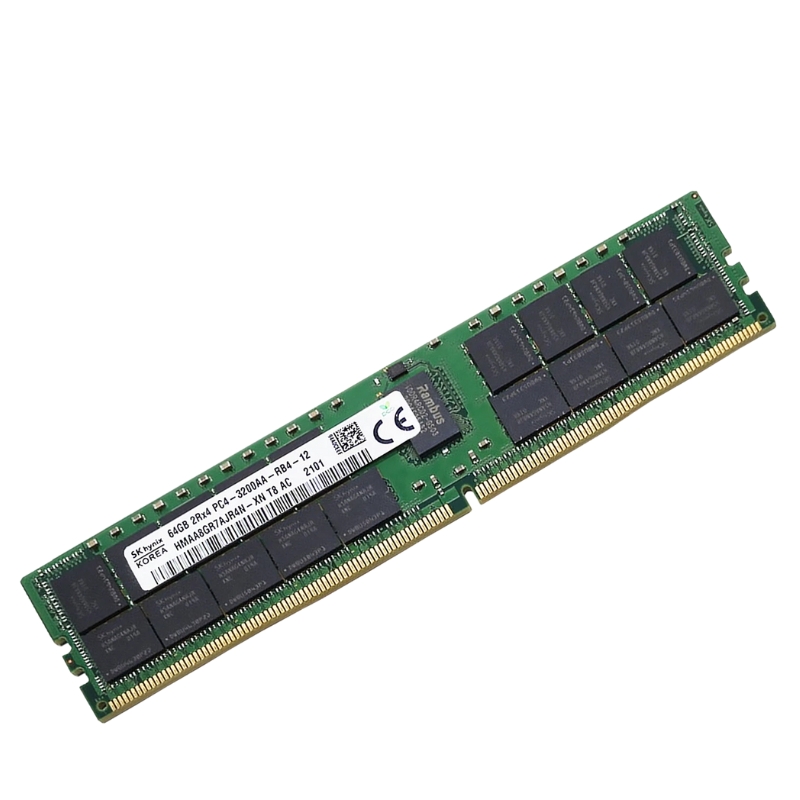
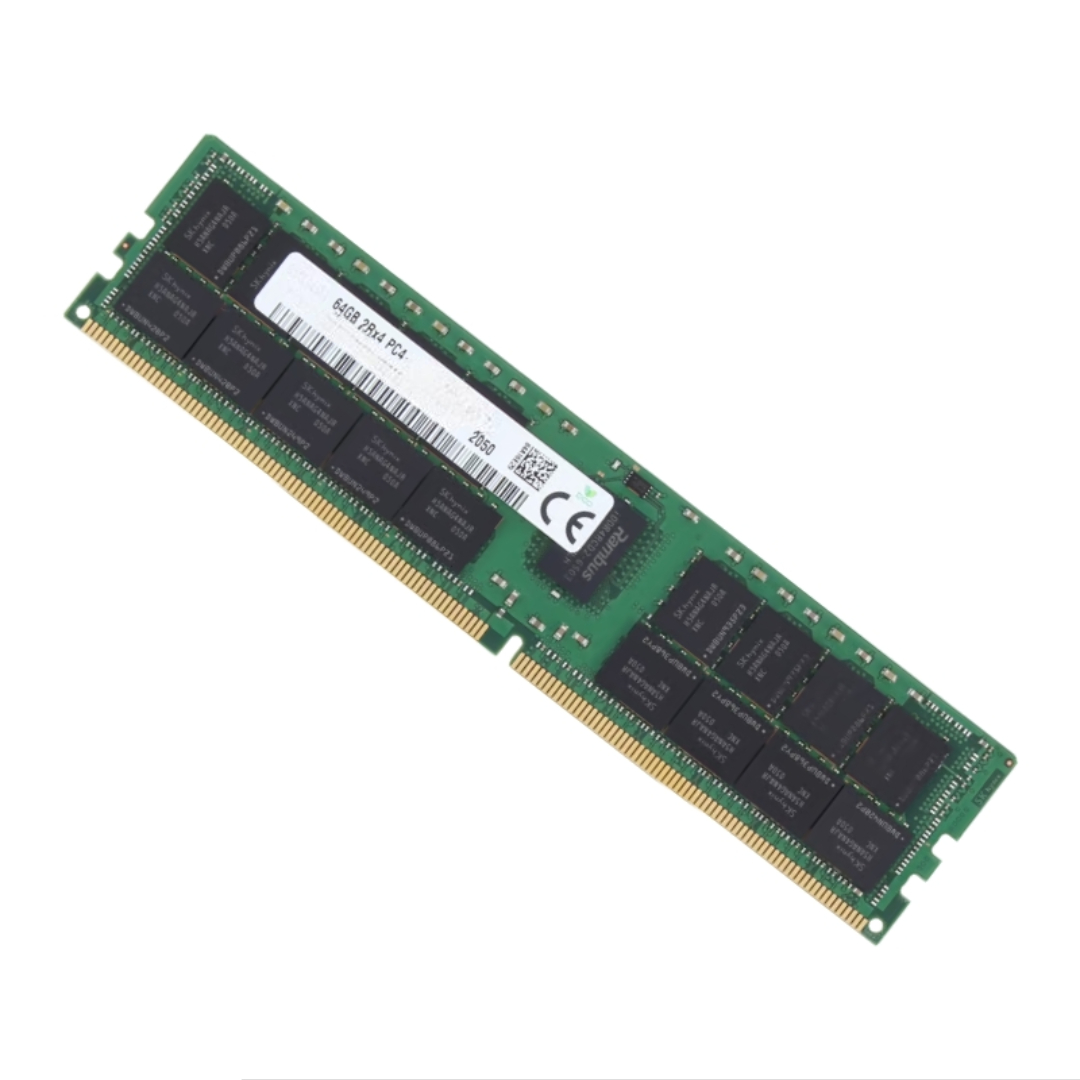
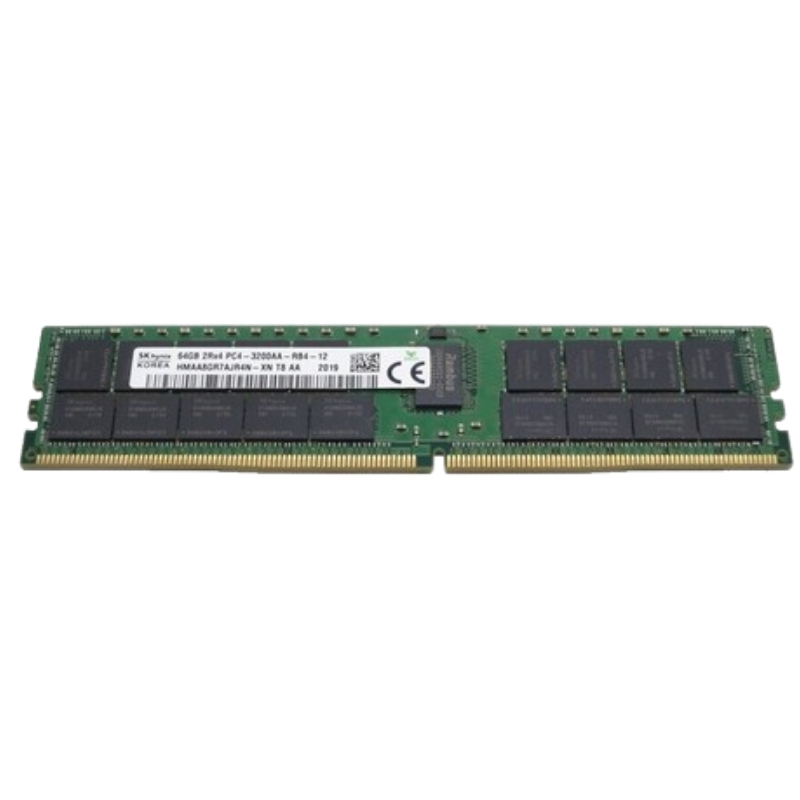
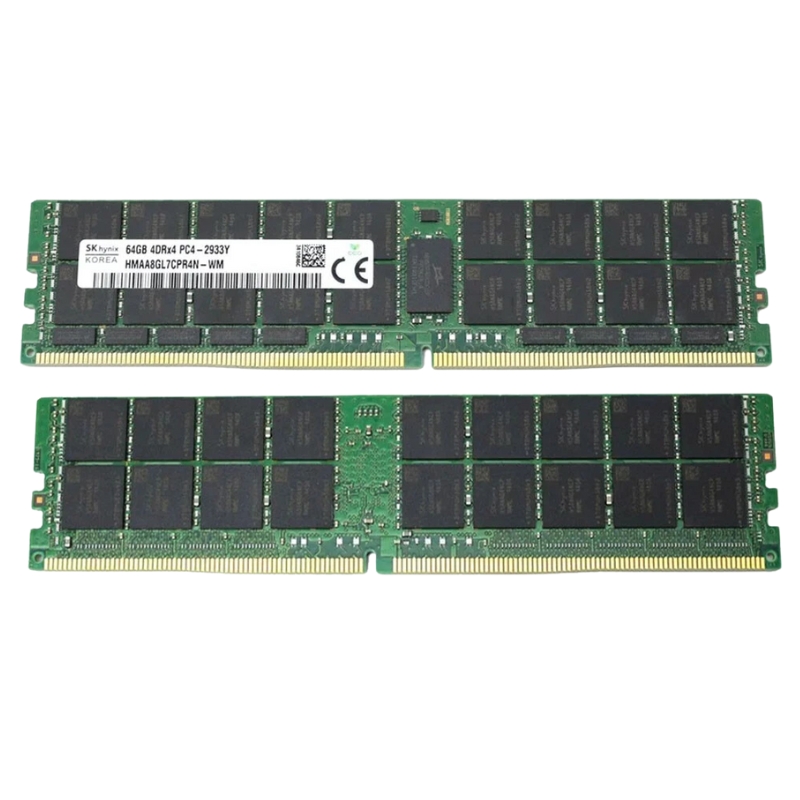
Micron MTC40F2046S1RC64BDY 64GB DDR5 6400 Mhz PC5-51200 ECC Cl52 288-Pin Rdimm Memory Module. New Sealed in Box (NIB) with 3 Year Warranty
The Micron MTC40F2046S1RC64BDY 64GB DDR5 SDRAM memory module delivers next-level speed and stability for demanding computing environments. Designed with advanced error correction and registered architecture, this high-performance DIMM ensures reliable data integrity while offering exceptional bandwidth at 6400 MHz.
DDR5 Registered DIMM (RDIMM) memory modules occupy a central role in modern enterprise computing, especially within data centers, virtualization clusters, high-performance computing platforms, and advanced workstation environments. The MTC40F2046S1RC64BDY Micron 64GB DDR5 6400 MHz PC5-51200 ECC CL52 288-Pin RDIMM memory module exemplifies this category by aligning high density, bandwidth, reliability, and electrical stability into a single server-class solution. This category of memory is specifically engineered for systems that demand sustained throughput, deterministic latency behavior, and uncompromising data integrity.
DDR5 RDIMM memory differs fundamentally from consumer-oriented UDIMM or SODIMM modules. Registered DIMMs incorporate a register (or clock driver) that buffers the address and command signals before they reach the DRAM chips. This buffering reduces the electrical load on the memory controller, enabling the use of higher-capacity modules, greater module counts per channel, and improved signal integrity at elevated frequencies such as 6400 MHz. As server and workstation platforms continue to scale core counts and memory channels, RDIMM memory remains the preferred category for predictable performance and platform stability.
The DDR5 generation represents a substantial architectural evolution over DDR4 RDIMM memory. Memory modules in this category, including 64GB DDR5 RDIMMs, are designed around increased burst lengths, dual independent 32-bit subchannels, and higher per-pin data rates. These changes directly translate into higher effective bandwidth, which is critical for modern workloads such as in-memory databases, virtualization hosts, AI preprocessing, and scientific simulations.
DDR5 RDIMM memory introduces on-die ECC (Error Correction Code) at the DRAM chip level, complementing traditional system-level ECC. While on-die ECC primarily improves manufacturing yield and internal reliability, system-level ECC on RDIMM modules ensures end-to-end data protection between the CPU memory controller and the memory module. This layered approach to error correction makes DDR5 RDIMM memory particularly well-suited for enterprise environments where silent data corruption is unacceptable.
At 6400 MHz, PC5-51200 DDR5 RDIMM modules deliver a significant increase in theoretical peak bandwidth compared to earlier generations. In multi-channel server architectures, this higher per-module throughput allows systems to feed data-hungry CPUs more efficiently, reducing memory bottlenecks that can otherwise limit application scalability. High-density 64GB modules further improve memory capacity per socket, enabling large memory footprints without exhausting available DIMM slots.
This category of memory is commonly deployed in database servers, virtualization platforms, cloud infrastructure, and high-end professional workstations. Applications that rely on fast memory access patterns—such as real-time analytics, large-scale simulations, and content creation pipelines—benefit directly from the increased bandwidth and reduced contention offered by DDR5 RDIMM technology. By consolidating capacity and performance into fewer modules, system architects gain flexibility in thermal design, power distribution, and future expansion planning.
Reliability is a defining characteristic of ECC RDIMM memory modules, and it remains a primary reason enterprises select this category for production systems. The MTC40F2046S1RC64BDY Micron 64GB DDR5 6400 MHz RDIMM belongs to a class of memory engineered to maintain data integrity under continuous, high-load operation. ECC functionality enables the detection and correction of single-bit memory errors and the detection of multi-bit errors, significantly reducing the risk of data corruption, system crashes, or incorrect computational results.
In enterprise environments, memory errors can have cascading consequences, from application instability to corrupted datasets and service downtime. ECC RDIMM memory mitigates these risks by working in conjunction with server-grade CPUs and chipsets that support ECC operation. This synergy between memory module and platform is essential for workloads where accuracy, consistency, and uptime are non-negotiable requirements.
Registered DIMMs incorporate a dedicated register that buffers address and control signals, improving electrical stability across the memory bus. This buffering is especially important at higher frequencies like 6400 MHz, where signal integrity becomes increasingly challenging due to tighter timing margins. By isolating the memory controller from the electrical load of multiple DRAM chips, RDIMM modules allow systems to scale memory capacity without compromising reliability.
This category of memory is optimized for multi-DIMM-per-channel configurations, which are common in dual-socket and quad-socket servers. Buffered signaling enables consistent performance even when all memory slots are populated, a scenario that would otherwise strain unbuffered memory designs. As a result, DDR5 RDIMM memory supports predictable behavior across a wide range of system configurations.
DDR5 RDIMM modules incorporate advanced power management features, including an onboard Power Management Integrated Circuit (PMIC). The PMIC regulates voltage locally on the module, improving power delivery efficiency and reducing electrical noise. This localized regulation is particularly beneficial in dense server environments, where stable power delivery contributes directly to long-term reliability.
Thermal performance is another critical factor in this category. High-density 64GB modules operating at 6400 MHz are designed to function within enterprise thermal envelopes, often featuring optimized PCB layouts and component placement to ensure effective heat dissipation. These design choices allow DDR5 RDIMM memory to maintain consistent performance under sustained workloads without throttling or degradation.
Enterprise memory modules are validated for continuous 24/7 operation, making them suitable for mission-critical deployments. Extensive testing and qualification processes ensure compatibility with leading server platforms and chipsets. This level of validation distinguishes ECC RDIMM memory from consumer-grade alternatives and underscores its role in long-term infrastructure investments.
Performance within the DDR5 RDIMM category is defined by a combination of frequency, latency, capacity, and architectural enhancements. The 64GB DDR5 6400 MHz PC5-51200 specification represents a high-performance tier within this category, offering a balance of throughput and scalability tailored to modern enterprise workloads. While raw frequency contributes to bandwidth, the overall performance profile also depends on memory timing, subchannel architecture, and CPU memory controller efficiency.
CL52 latency, typical for high-frequency DDR5 modules, reflects the trade-offs inherent in pushing data rates to new levels. In real-world server applications, increased bandwidth often outweighs marginal increases in latency, particularly for parallelized workloads and streaming data access patterns. This makes high-speed DDR5 RDIMM memory especially effective in environments where multiple cores and threads simultaneously access large datasets.
As CPU core counts continue to rise, memory subsystems must scale accordingly to prevent bottlenecks. High-capacity DDR5 RDIMM modules enable system architects to provision ample memory per core, ensuring balanced performance across compute resources. In multi-socket servers, uniform memory access and sufficient bandwidth per socket are essential for maintaining linear performance scaling.
The dual 32-bit subchannel design of DDR5 improves command efficiency and reduces contention, allowing memory controllers to interleave operations more effectively. This architectural enhancement is particularly beneficial in virtualized environments, where multiple virtual machines generate concurrent memory requests.
This category of memory is optimized for workloads that demand both capacity and speed. Examples include virtualization hosts running numerous guest operating systems, in-memory databases that rely on rapid data retrieval, and analytics platforms processing large datasets in real time. High-density 64GB modules reduce the need for excessive DIMM counts, simplifying system layouts while maintaining performance.
Investing in DDR5 RDIMM memory positions systems to take advantage of future CPU and chipset advancements. As platforms evolve to support higher memory speeds and capacities, modules in this category provide a foundation for incremental upgrades without requiring complete system overhauls. This forward compatibility is a key consideration for enterprises planning multi-year infrastructure lifecycles.
Compatibility is a cornerstone of the DDR5 RDIMM memory category, particularly in enterprise and professional environments where hardware interoperability is critical. The MTC40F2046S1RC64BDY Micron 64GB DDR5 6400 MHz RDIMM memory module aligns with industry standards for 288-pin DDR5 RDIMM form factors, ensuring broad compatibility with supported server and workstation platforms. This adherence to JEDEC specifications simplifies procurement, deployment, and maintenance across heterogeneous environments.
Server platforms from leading CPU vendors are designed to leverage the advantages of DDR5 RDIMM memory, including higher bandwidth, increased capacity, and enhanced reliability features. Proper platform support, including BIOS and firmware compatibility, is essential for realizing the full benefits of ECC RDIMM memory. Enterprise integrators and IT teams typically validate memory configurations against qualified vendor lists to ensure optimal performance and stability.
Virtualization platforms benefit significantly from high-capacity DDR5 RDIMM memory. By allocating more memory per host, organizations can increase virtual machine density while maintaining performance isolation. ECC protection further enhances reliability, reducing the likelihood of memory-related faults affecting multiple workloads simultaneously.
In cloud and private infrastructure deployments, standardized memory modules streamline scaling and replacement processes. Using consistent 64GB DDR5 RDIMM modules across nodes simplifies inventory management and ensures predictable performance characteristics throughout the cluster.
Beyond traditional servers, DDR5 RDIMM memory is increasingly used in high-end professional workstations for tasks such as 3D rendering, simulation, and large-scale media production. These systems benefit from server-grade memory reliability while delivering workstation-class performance. High-speed 6400 MHz operation supports data-intensive applications that rely on rapid memory access to minimize processing delays.


 Contact Us
 Information
 Catalog
 Solid State Drives (SSD)
 Network Switches
 Hard Disk Drives
 HBA & Controllers
 PC & Servers
 PC & Server Memory
 CPU & Processors
 Network Routers
 Power Supplies
 Tape Drives & Libraries
 Network Devices
 Computer & Network Cables