(7% discount is applied at checkout)
Cart is empty
Your go-to destination for cutting-edge server products
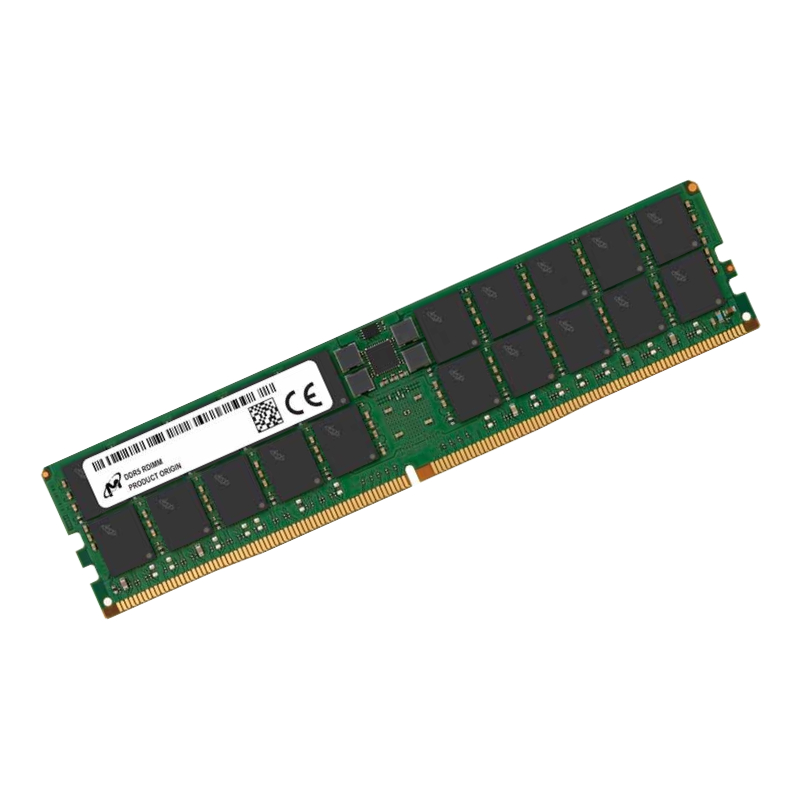


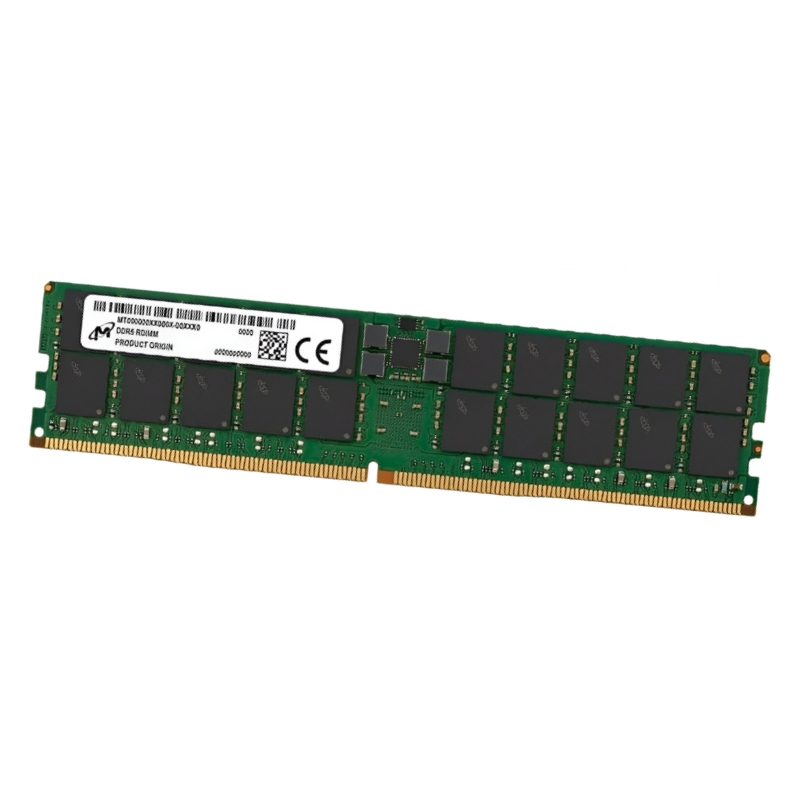
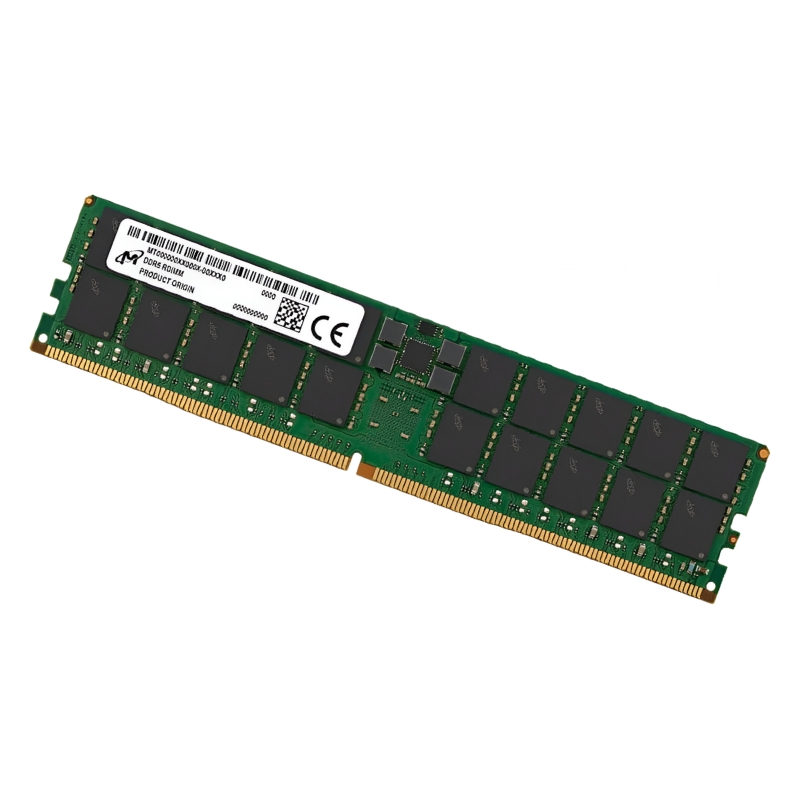
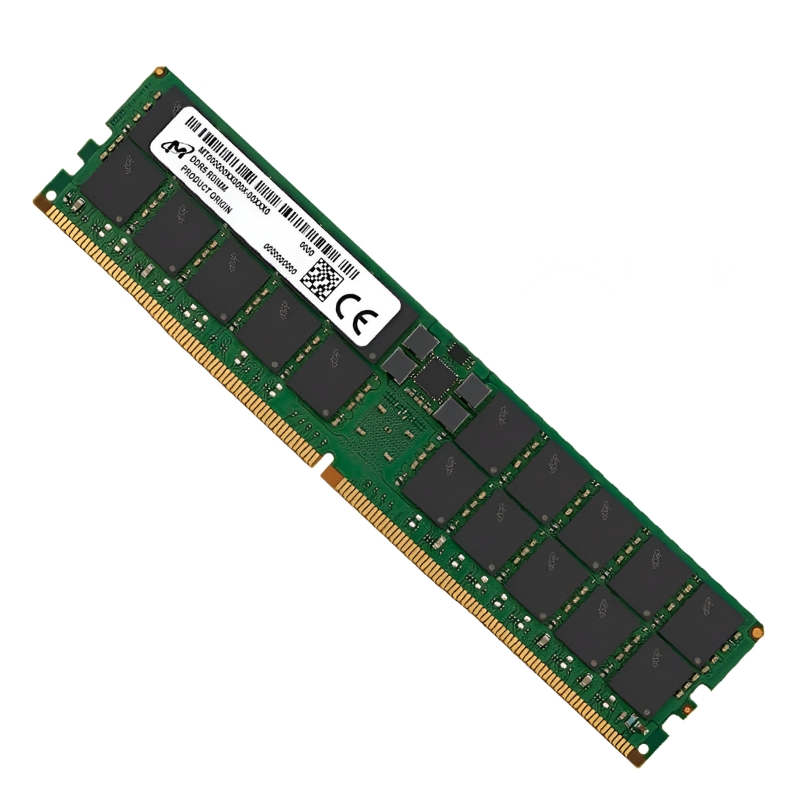
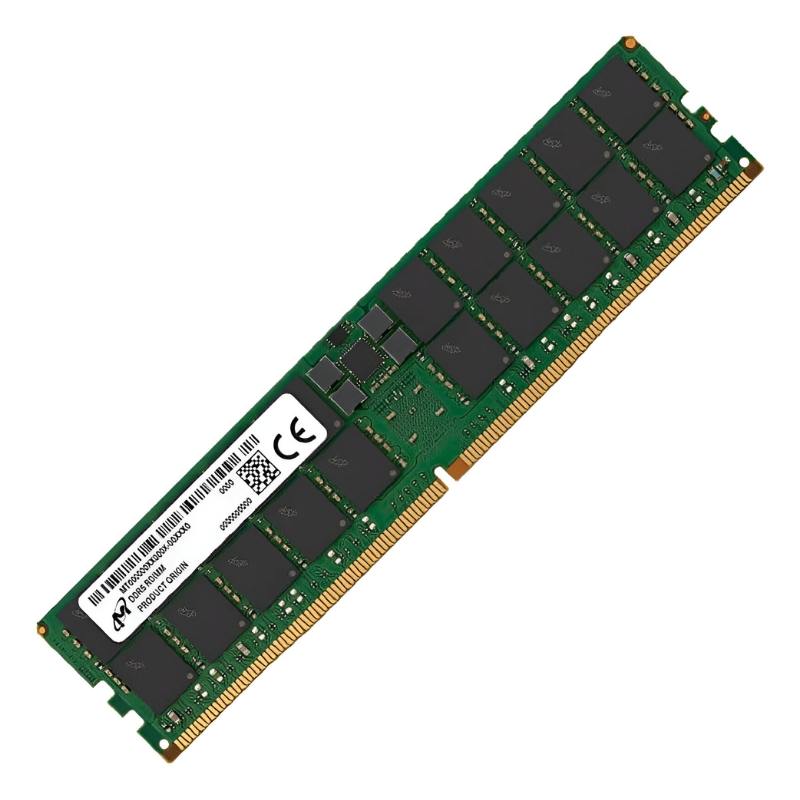
Micron MTC40F204WS1RC56BB1R 96GB DDR5 Module PC5-44800 288-pin DIMM. New Sealed in Box (NIB) with 3 Years Warranty
The Micron MTC40F204WS1RC56BB1R is a high-capacity DDR5 memory module designed to meet the performance and scalability demands of modern server and workstation environments. With a fast 5600MT/s transfer rate and registered architecture, this DIMM delivers dependable operation for data-intensive workloads.
The Micron MTC40F204WS1RC56BB1R 96GB DDR5 5600MT/s PC5-44800 288-Pin DIMM CL46 Memory Module belongs to the category of enterprise-grade DDR5 server memory engineered for modern data centers, cloud infrastructure, and compute-intensive enterprise environments. This memory class is designed to support high-capacity requirements while maintaining exceptional data transfer speeds, stability, and electrical efficiency. As organizations continue to adopt applications that demand massive in-memory datasets, high concurrency, and real-time responsiveness, high-density DDR5 memory modules form the backbone of scalable server architectures.
DDR5 memory is purpose-built to meet the demands of modern enterprise workloads that exceed the capabilities of DDR4-based systems. By doubling the burst length and improving internal bank structures, DDR5 enables more efficient data movement within the memory subsystem. This allows servers to handle parallel workloads with greater consistency and reduced latency. The Micron MTC40F204WS1RC56BB1R leverages these DDR5 advancements to deliver sustained performance in environments where memory throughput is a critical determinant of overall system efficiency. One of the defining characteristics of DDR5 is its enhanced channel architecture, which increases the number of independent memory channels per module.
Operating at 5600MT/s, this memory module offers a PC5-44800 bandwidth classification, enabling up to 44.8GB/s of theoretical throughput per module. High bandwidth is essential for memory-intensive workloads such as large-scale virtualization, in-memory analytics, and scientific computing. Faster memory access reduces the time processors spend waiting for data, improving overall application responsiveness and system throughput. High-speed memory plays a particularly important role in multi-core server environments. As processor core counts continue to increase, memory subsystems must keep pace to avoid becoming a performance bottleneck.
The CL46 latency specification of this Micron DDR5 memory module reflects a balance between high frequency operation and stable data access timing. While higher frequency memory typically incurs higher latency values, the overall system performance benefits from increased bandwidth and improved architectural efficiency. In enterprise environments, consistent and predictable memory behavior is often more important than raw latency figures alone. Latency optimization at the system level depends on factors such as memory controller efficiency, workload characteristics, and overall platform design. When deployed in compatible server platforms, CL46 DDR5 memory delivers reliable performance that supports demanding workloads without introducing instability or unpredictable response times.
The 96GB capacity of the Micron MTC40F204WS1RC56BB1R places it firmly within the high-density server memory category. High-capacity memory modules allow organizations to maximize memory per socket, reducing the number of DIMMs required to reach target memory configurations. This approach simplifies system design, improves airflow within server chassis, and can contribute to lower power consumption and improved thermal efficiency. Memory-intensive workloads such as in-memory databases, real-time analytics engines, and enterprise resource planning systems benefit directly from increased memory capacity. Larger memory pools enable applications to retain more data in RAM, minimizing reliance on slower storage tiers and reducing I/O latency. This leads to faster transaction processing, improved query performance, and enhanced user experiences.
Virtualized environments rely heavily on available memory resources to support multiple virtual machines concurrently. With 96GB DDR5 memory modules, servers can host a greater number of virtual instances while maintaining adequate memory allocation for each workload. This enables higher consolidation ratios, allowing organizations to reduce hardware footprint and operational costs without sacrificing performance. High-capacity memory also supports advanced virtualization features such as live migration, memory ballooning, and dynamic resource allocation. These capabilities are critical for maintaining service continuity and optimizing resource utilization in enterprise and cloud environments.
In-memory databases are designed to store entire datasets in RAM to achieve ultra-low latency access. Applications such as SAP HANA, Redis, and other real-time analytics platforms depend on large, fast memory pools to function effectively. The Micron 96GB DDR5 module provides the capacity and speed required to support these platforms, enabling rapid data retrieval and real-time processing. Analytics workloads that involve scanning and aggregating large datasets benefit from the increased bandwidth and capacity of DDR5 memory. By reducing the need to access disk storage, systems can perform complex analytical queries more efficiently, accelerating insights and decision-making processes.
The 288-pin DIMM form factor is the standardized physical interface for DDR5 memory modules in modern server platforms. This design ensures mechanical and electrical compatibility with DDR5-enabled server motherboards and processors. The Micron MTC40F204WS1RC56BB1R adheres to these standards, allowing seamless integration into enterprise servers from leading. Standardized form factors simplify system assembly, maintenance, and future upgrades. IT teams can deploy this memory module across multiple server models without extensive customization, streamlining procurement and inventory management. Compatibility with a wide range of platforms also ensures flexibility when scaling infrastructure or transitioning to new server architectures.
Multi-socket server systems are commonly used in enterprise environments to deliver higher processing power and increased memory capacity. In such systems, memory must be evenly distributed across processors to ensure balanced performance. High-capacity DDR5 modules like this Micron offering enable efficient memory population strategies, supporting uniform memory access across all sockets. Balanced memory configurations are essential for applications that rely on consistent performance across multiple CPU cores. By providing high bandwidth and capacity per DIMM, this memory module supports optimal memory interleaving and reduces the risk of uneven performance distribution.
Modern server platforms include firmware and BIOS features that allow administrators to fine-tune memory performance and reliability. These settings may include memory frequency selection, power management policies, and error detection mechanisms. The Micron DDR5 memory module is designed to operate within these frameworks, ensuring compatibility with platform-level optimization tools. Proper configuration of memory settings helps ensure that the module operates at its rated speed and capacity while maintaining system stability. This is particularly important in enterprise environments where uptime and predictable behavior are critical.
High-density memory deployments can generate substantial heat if not properly managed. The Micron MTC40F204WS1RC56BB1R is engineered to maintain thermal stability under sustained workloads, supporting continuous operation in enterprise environments. Improved thermal characteristics contribute to longer component lifespan and reduced risk of performance throttling. Stable thermal performance is especially important in blade servers and densely packed rack configurations where airflow may be limited. Efficient DDR5 memory helps maintain consistent performance even in challenging thermal conditions.
Micron is recognized globally for its expertise in memory manufacturing and its commitment to enterprise reliability standards. The MTC40F204WS1RC56BB1R memory module undergoes extensive testing and validation to ensure consistent performance, compatibility, and durability. These quality assurance processes are designed to identify and eliminate potential issues before deployment, reducing the risk of field failures. Enterprise memory modules are expected to operate continuously for extended periods without degradation. Micron’s rigorous manufacturing standards ensure that this DDR5 memory module meets the demands of mission-critical applications, where even minor disruptions can have significant consequences.
Enterprise IT environments often require consistent hardware configurations over long periods to simplify management and compliance. Micron supports long product lifecycles for its server memory offerings, allowing organizations to maintain uniform memory configurations across deployments. This consistency simplifies system maintenance, reduces compatibility risks, and supports long-term infrastructure planning. Long-term availability is particularly valuable for large data centers and regulated industries that require predictable hardware sourcing and minimal variation in system components.
The Micron 96GB DDR5 5600MT/s memory module is well-suited for a wide range of enterprise and data center applications. These include cloud computing platforms, virtualization clusters, high-performance computing environments, enterprise databases, and real-time analytics systems. Each of these use cases benefits from the module’s combination of high capacity, bandwidth, and efficiency. In cloud environments, high-capacity memory enables service providers to offer larger instance sizes and improved performance guarantees. In enterprise data centers, memory-intensive applications achieve better responsiveness and reliability. High-performance computing workloads benefit from improved data throughput and reduced memory access latency, accelerating simulation and modeling tasks.
Cloud service providers prioritize scalability, reliability, and performance when selecting memory components. High-density DDR5 memory modules allow providers to maximize resource utilization while maintaining service quality. The Micron DDR5 module supports rapid scaling of cloud environments, enabling providers to adapt to changing demand without extensive hardware reconfiguration. Reliable memory performance is essential for maintaining service level agreements and minimizing downtime. By deploying enterprise-grade DDR5 memory, cloud providers can deliver consistent performance across diverse workloads and customer environments.
Machine learning workloads are highly memory-intensive, particularly during training phases that involve processing large datasets. High bandwidth and capacity memory reduce data transfer bottlenecks, enabling faster model training and more efficient inference operations. The Micron DDR5 5600MT/s module supports these workloads by delivering rapid access to training data and model parameters. As AI applications become more complex and data volumes continue to grow, memory scalability and performance will remain critical factors. High-capacity DDR5 memory provides the foundation needed to support advanced AI and machine learning initiatives.
Big data platforms that process continuous data streams require fast and reliable memory to maintain real-time processing capabilities. Whether handling financial transactions, sensor data, or log analytics, systems must process information without delay. The combination of high bandwidth and large capacity offered by this Micron memory module enables efficient data buffering and rapid computation, supporting real-time insights and operational decision-making.
As enterprise workloads continue to evolve toward greater data intensity and parallelism, memory requirements will only increase. The Micron MTC40F204WS1RC56BB1R 96GB DDR5 memory module provides a future-ready solution that aligns with emerging server architectures and workload trends. By investing in high-speed, high-capacity DDR5 memory, organizations can ensure that their infrastructure remains capable of supporting next-generation applications and business growth. This memory category represents a strategic component in modern server design, delivering the performance, scalability, and efficiency required to meet the challenges of contemporary enterprise computing environments.


 Contact Us
 Information
 Catalog
 Solid State Drives (SSD)
 Network Switches
 Hard Disk Drives
 HBA & Controllers
 PC & Servers
 PC & Server Memory
 CPU & Processors
 Network Routers
 Power Supplies
 Tape Drives & Libraries
 Network Devices
 Computer & Network Cables