(7% discount is applied at checkout)
Cart is empty
Your go-to destination for cutting-edge server products
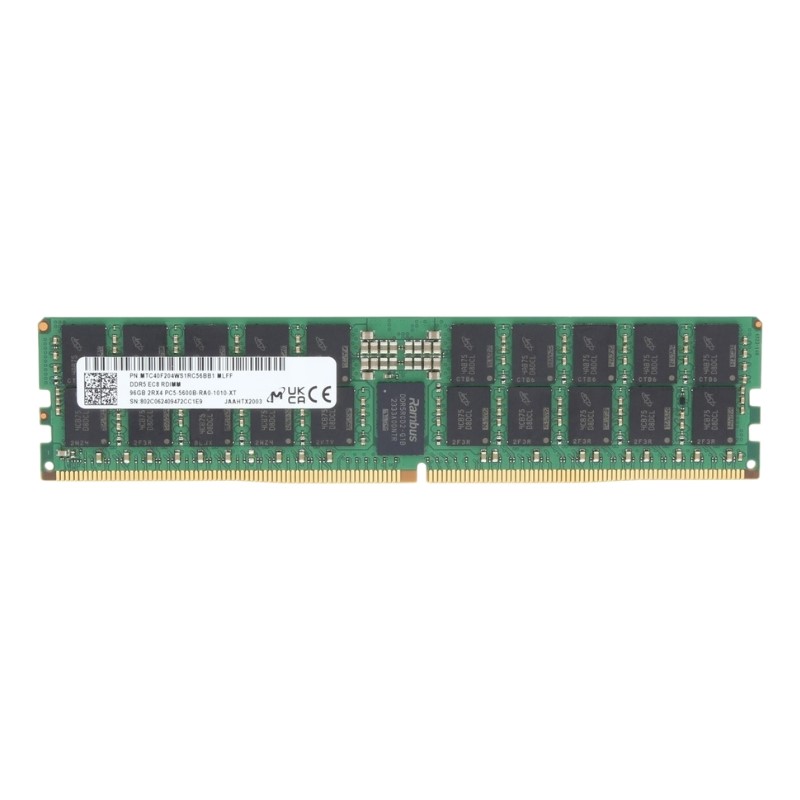


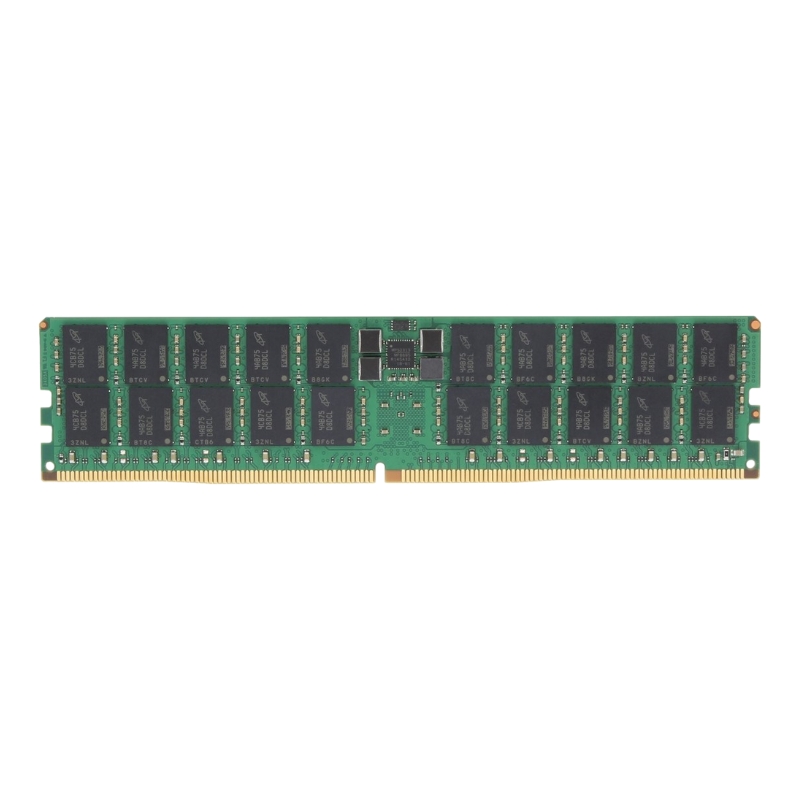
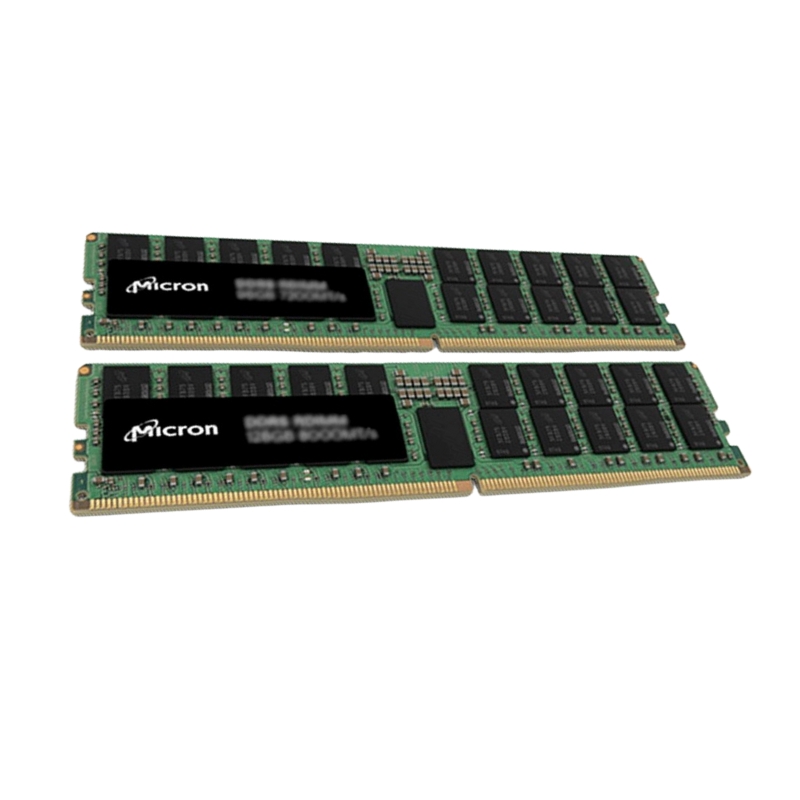
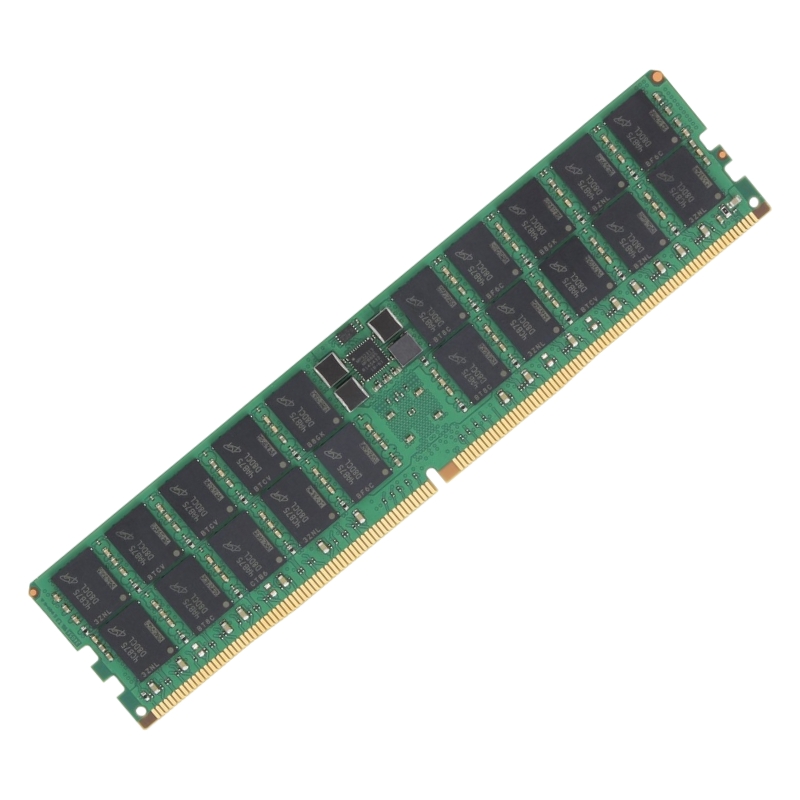
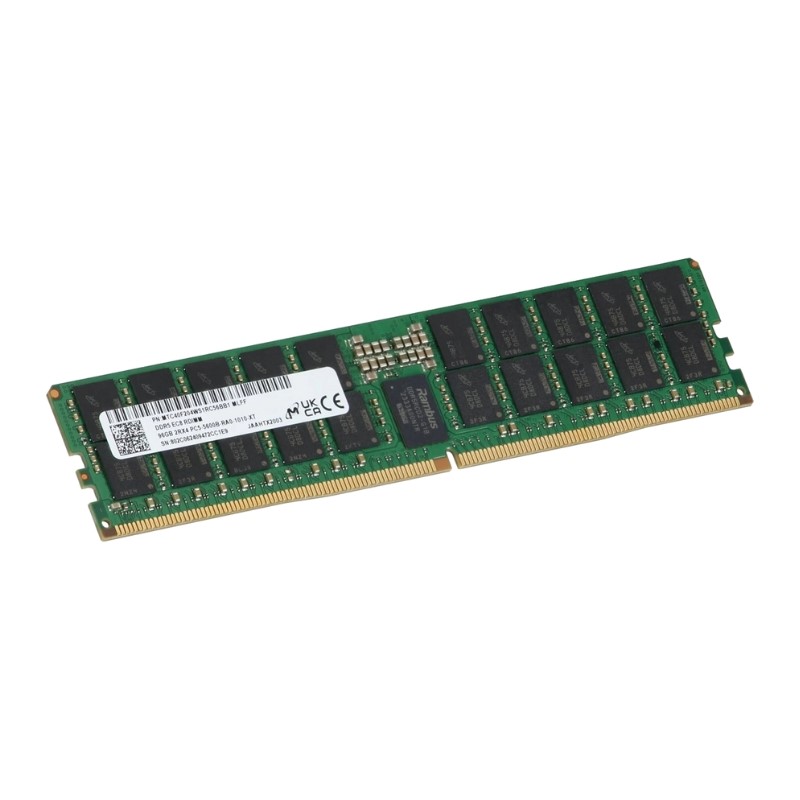
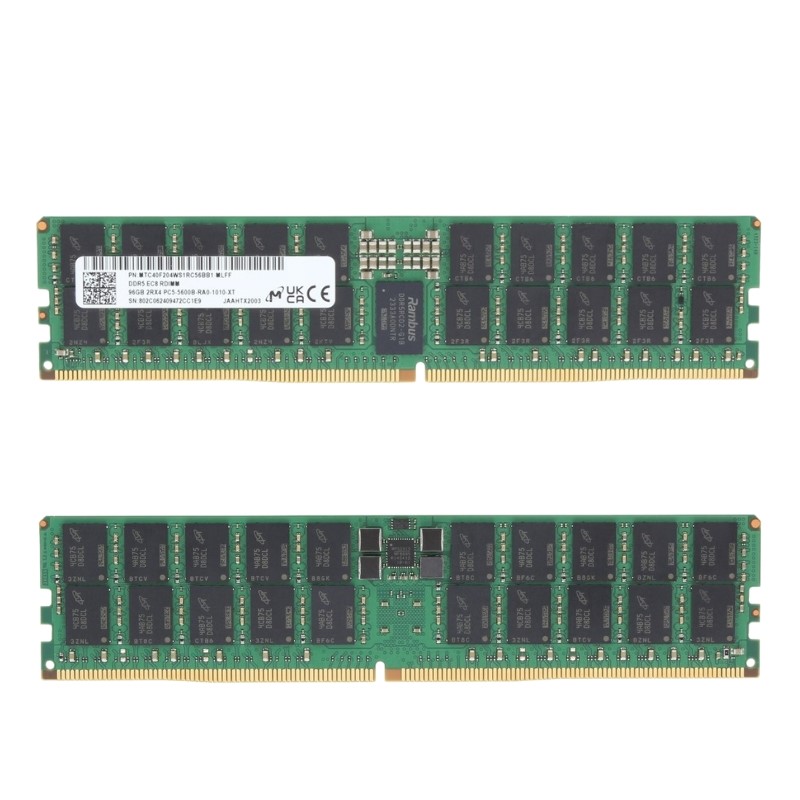
Micron MTC40F204WS1RC64BB1R 96GB DDR5 6400MT/s PC5-51200 ECC Registered Dual Rank 288-Pin Memory Module. New (System) Pull with 1 year replacement warranty
The Micron MTC40F204WS1RC64BB1R 96GB DDR5 6400MHz PC5-51200 ECC Registered Dual Rank RDIMM is engineered for enterprise servers and advanced workstation platforms. Utilizing cutting-edge DDR5 SDRAM technology, this high-capacity memory module delivers superior speed, stability, and error correction for critical computing workloads.
The Micron MTC40F204WS1RC64BB1R 96GB DDR5 6400MT/s PC5-51200 ECC Registered Dual Rank 288-Pin Memory Module represents a high-performance, enterprise-grade memory solution engineered for modern server architectures, data centers, virtualization environments, and high-performance computing workloads. This category of DDR5 Registered memory modules is designed to deliver exceptional bandwidth, reliability, and capacity to meet the demands of data-intensive applications, in-memory databases, cloud infrastructures, and mission-critical computing platforms. With a high-density 96GB capacity, operating at 6400MT/s, and dual-rank ECC Registered architecture, this memory module exemplifies cutting-edge enterprise memory design, ensuring scalability, stability, and efficiency in multi-socket server environments.
DDR5 memory introduces significant architectural improvements over DDR4, providing enhanced bandwidth, efficiency, and scalability. The Micron 96GB DDR5 6400MT/s RDIMM leverages dual independent 32-bit subchannels per DIMM, which improve parallelism and reduce memory access latency. These subchannels allow memory controllers to access data more efficiently, optimizing throughput and ensuring consistent performance for multi-threaded workloads, virtualization platforms, and high-performance computing applications.
Operating at 6400MT/s, this memory module achieves a theoretical bandwidth of PC5-51200, enabling rapid data transfer between the memory subsystem and processor cores. High memory bandwidth is critical for applications that involve large datasets, real-time analytics, scientific simulations, AI model training, and database operations. The combination of high frequency and dual-subchannel architecture ensures that workloads can be executed efficiently without being bottlenecked by memory performance.
DDR5 introduces on-die ECC (Error Correcting Code) capabilities at the DRAM chip level, which detect and correct single-bit errors before they affect system operations. When combined with module-level ECC Registered functionality, the Micron 96GB RDIMM provides multi-layer error protection, significantly enhancing data integrity and system reliability. This feature is essential for mission-critical enterprise environments, where even minor memory errors can compromise data accuracy or system stability.
The Micron MTC40F204WS1RC64BB1R utilizes a dual-rank configuration, which effectively provides two sets of memory banks that the memory controller can access independently. Dual-rank memory allows for better interleaving of memory accesses, improving effective throughput and balancing load across the memory subsystem. This configuration is particularly advantageous for server platforms that require high memory density and bandwidth to support concurrent workloads, such as virtualization hosts, database servers, and HPC clusters.
Dual-rank modules typically offer higher performance potential than single-rank modules due to the ability to interleave memory accesses between ranks. This can reduce wait times for memory requests and improve overall system responsiveness, particularly in workloads with random or unpredictable memory access patterns. For enterprise-grade servers, deploying dual-rank RDIMMs like the Micron 96GB module ensures both high capacity and optimal performance.
Registered ECC memory modules feature a register that buffers the command and address signals between the memory controller and DRAM chips. This reduces electrical load on the memory bus, enabling stable operation with multiple high-capacity modules installed. The Micron 96GB RDIMM’s combination of ECC and registered buffering provides robust protection against data corruption and system instability, which is vital for high-availability enterprise servers, financial computing platforms, and research computing clusters.
The 96GB capacity of this DDR5 RDIMM allows servers to achieve high total system memory without fully populating all available DIMM slots. This density is advantageous for virtualization hosts, in-memory databases, big data analytics, AI and machine learning workloads, and other memory-intensive applications. High-capacity memory modules reduce the number of physical modules required for a given total memory, which improves system airflow, reduces power consumption, and simplifies future expansion planning.
Virtualized environments, including VMware vSphere, Microsoft Hyper-V, and KVM-based platforms, rely heavily on available memory for virtual machine allocation. With 96GB RDIMMs, IT administrators can assign larger memory allocations per virtual machine while supporting a greater number of concurrent instances on a single physical host. This reduces the risk of memory overcommitment and enables better resource management, higher consolidation ratios, and improved VM performance.
Enterprise database systems benefit significantly from high-capacity, high-speed memory. In-memory databases such as SAP HANA, Oracle TimesTen, and Microsoft SQL Server In-Memory OLTP use system memory to store entire datasets, indexes, and buffer caches for accelerated query performance. The high bandwidth and large capacity of DDR5 6400MT/s RDIMMs allow these systems to process transactions and analytics in real-time, reduce disk I/O dependence, and maintain low-latency responses even under heavy workloads.
DDR5 modules operate at lower voltages compared to DDR4, reducing overall power consumption while maintaining high data rates. The reduced voltage combined with intelligent power regulation allows high-capacity 96GB RDIMMs to deliver enhanced performance without significantly increasing energy usage. This efficiency is critical in enterprise environments where hundreds or thousands of DIMMs may be deployed across multi-rack server clusters.
High-density server environments require memory modules that can operate reliably under constrained thermal conditions. The Micron 96GB RDIMM’s thermal design ensures stable performance even in multi-DIMM configurations and high-density rack deployments. Proper airflow, cooling, and chassis design complement the module’s efficient power characteristics to maintain optimal operating temperatures and prevent thermal throttling.
The Micron 96GB DDR5 6400MT/s RDIMM is compatible with modern enterprise server platforms supporting DDR5 Registered memory. Leading server CPUs, including Intel Xeon Scalable and AMD EPYC processors, are designed to exploit the high bandwidth, capacity, and efficiency of DDR5 memory. When deployed on compatible motherboards, these modules leverage automatic memory training, voltage, and timing adjustments through BIOS, ensuring optimal performance and stability.
To achieve the rated speed and stability of DDR5 RDIMMs, server firmware and BIOS must support high-speed memory training, proper voltage regulation, and channel interleaving. Administrators should ensure that system BIOS versions are up-to-date to fully leverage the capabilities of 6400MT/s DDR5 RDIMMs. Proper firmware configuration also ensures ECC and dual-rank functionality operate as intended, maintaining data integrity and system reliability.
Memory channel balancing is critical for achieving optimal throughput in multi-channel memory architectures. Installing identical DDR5 RDIMMs across all channels ensures uniform data distribution, reduces latency, and maximizes effective bandwidth. High-capacity 96GB modules simplify channel balancing while allowing organizations to scale total memory efficiently without compromising performance or reliability.
The Micron MTC40F204WS1RC64BB1R 96GB DDR5 ECC Registered RDIMM is suitable for a wide range of enterprise and industry workloads. Virtualization hosts, cloud computing infrastructure, in-memory databases, analytics engines, artificial intelligence and machine learning workloads, and high-performance computing clusters all benefit from the combination of high capacity, high speed, and multi-layer ECC reliability. Industries such as finance, healthcare, telecommunications, government, and scientific research rely on these memory modules to maintain data integrity, low latency, and high availability for mission-critical applications.
AI and machine learning workloads require substantial memory for dataset preprocessing, feature extraction, and model training. While GPU or accelerator resources perform intensive computations, system memory supports data staging, communication, and coordination across compute nodes. The high capacity and bandwidth of the Micron 96GB DDR5 RDIMM ensure that AI workflows can operate without memory bottlenecks, improving model training times and inference performance.
High-performance computing environments execute complex simulations, modeling, and large-scale calculations that require consistent memory performance. Dual-rank ECC Registered RDIMMs provide the reliability and capacity necessary for long-running computations, ensuring data accuracy and preventing errors from impacting results. With 96GB capacity and 6400MT/s speed, the Micron RDIMM enables research institutions, engineering firms, and scientific organizations to accelerate time-to-insight and support large-scale computational workloads.
Micron is renowned for its rigorous quality control, performance validation, and commitment to enterprise-grade reliability. The MTC40F204WS1RC64BB1R memory module undergoes extensive testing, including environmental stress tests, signal integrity verification, and compatibility assessments with major server platforms. These processes ensure consistent performance, long-term reliability, and predictable operation under enterprise workloads.
Enterprise memory modules must provide long-term availability and compatibility across multiple hardware generations. Micron designs RDIMMs with lifecycle support to ensure consistent configurations and performance over extended deployment periods. This approach simplifies server refresh cycles, reduces the risk of obsolescence, and allows organizations to maintain uniform memory architectures across their IT infrastructure.
Micron provides detailed technical documentation, compatibility matrices, and deployment guidelines to assist system integrators and IT administrators in optimizing memory configurations. These resources support reliable deployment, troubleshooting, and performance tuning, ensuring that high-capacity, high-speed DDR5 RDIMMs integrate seamlessly into enterprise systems and deliver predictable results.
The Micron MTC40F204WS1RC64BB1R 96GB DDR5 6400MT/s PC5-51200 ECC Registered Dual Rank RDIMM plays a critical role in modern enterprise computing infrastructure. Its combination of high frequency, large capacity, dual-rank architecture, and multi-layer ECC reliability enables organizations to support demanding workloads, achieve high service availability, and scale efficiently. DDR5 RDIMMs provide the performance and reliability needed for data-intensive applications, complex virtualization platforms, in-memory computing, AI workloads, and HPC clusters. Deploying these modules ensures that enterprise IT infrastructure remains future-ready, capable of supporting evolving business requirements and next-generation server technologies.


 Contact Us
 Information
 Catalog
 Solid State Drives (SSD)
 Network Switches
 Hard Disk Drives
 HBA & Controllers
 PC & Servers
 PC & Server Memory
 CPU & Processors
 Network Routers
 Power Supplies
 Tape Drives & Libraries
 Network Devices
 Computer & Network Cables