(7% discount is applied at checkout)
Cart is empty
Your go-to destination for cutting-edge server products
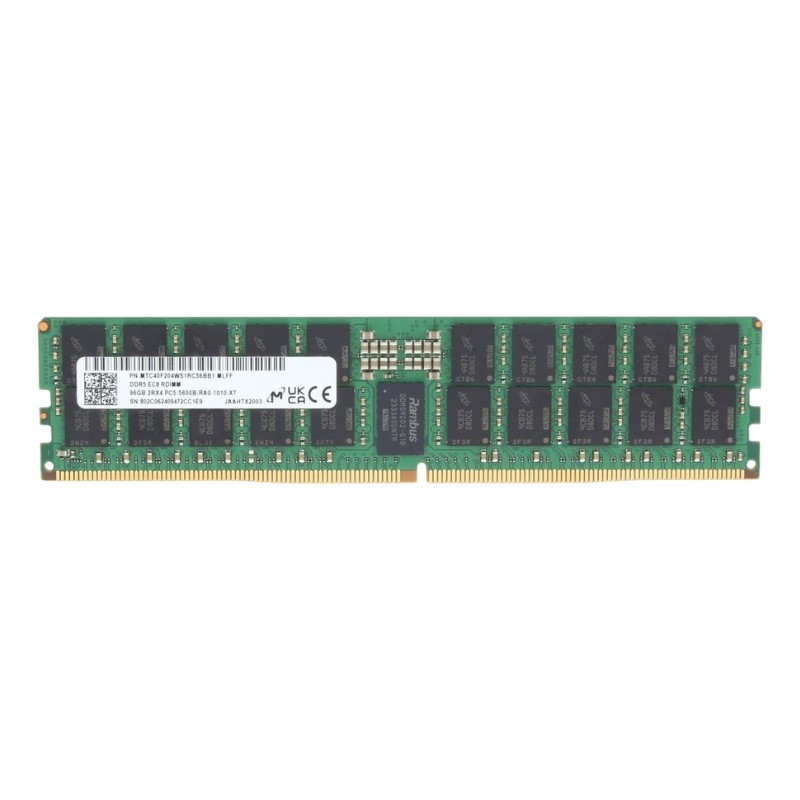


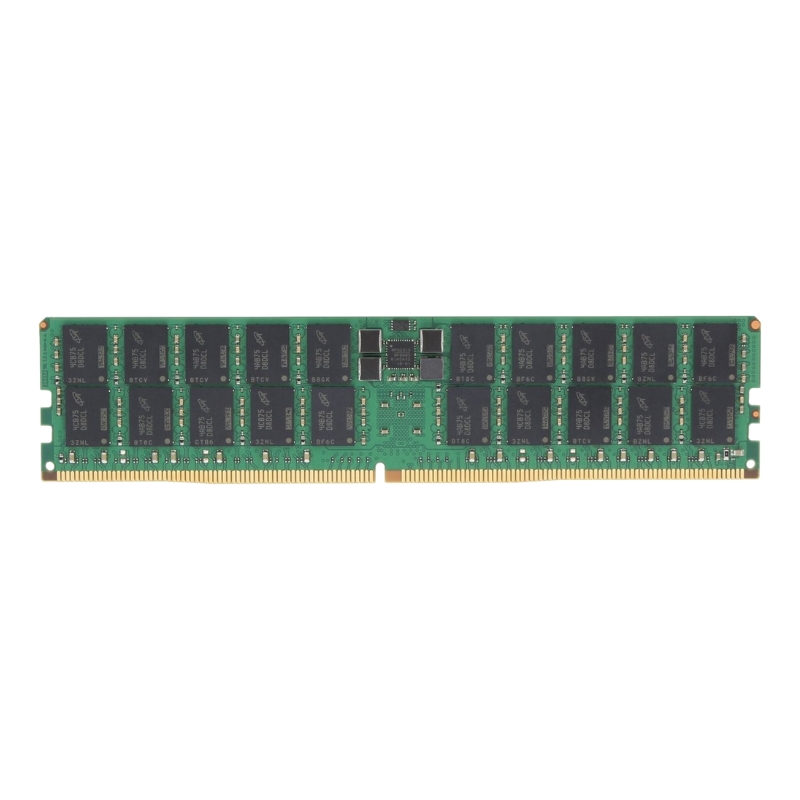
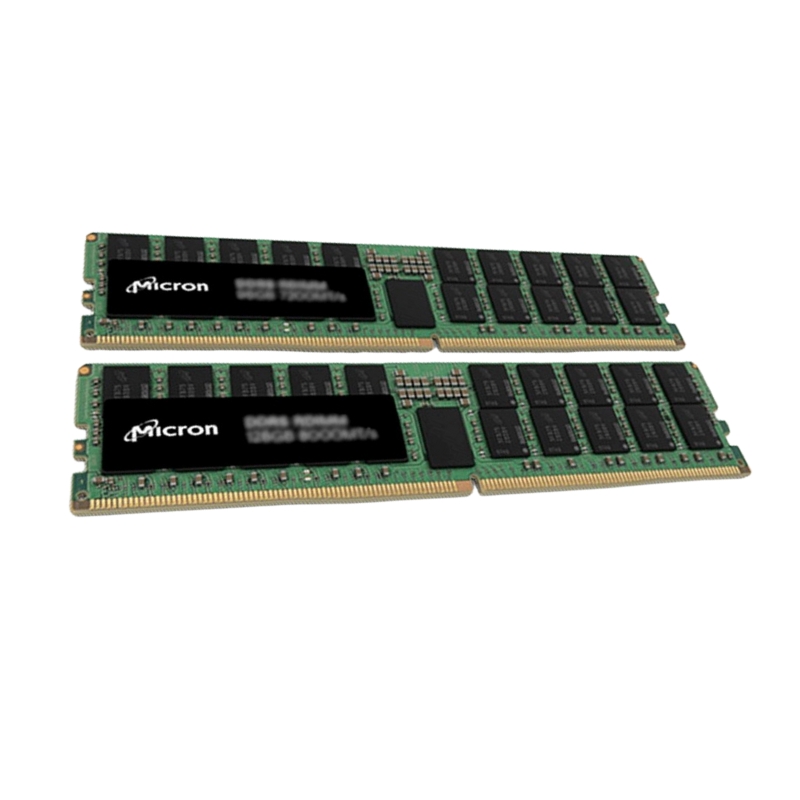
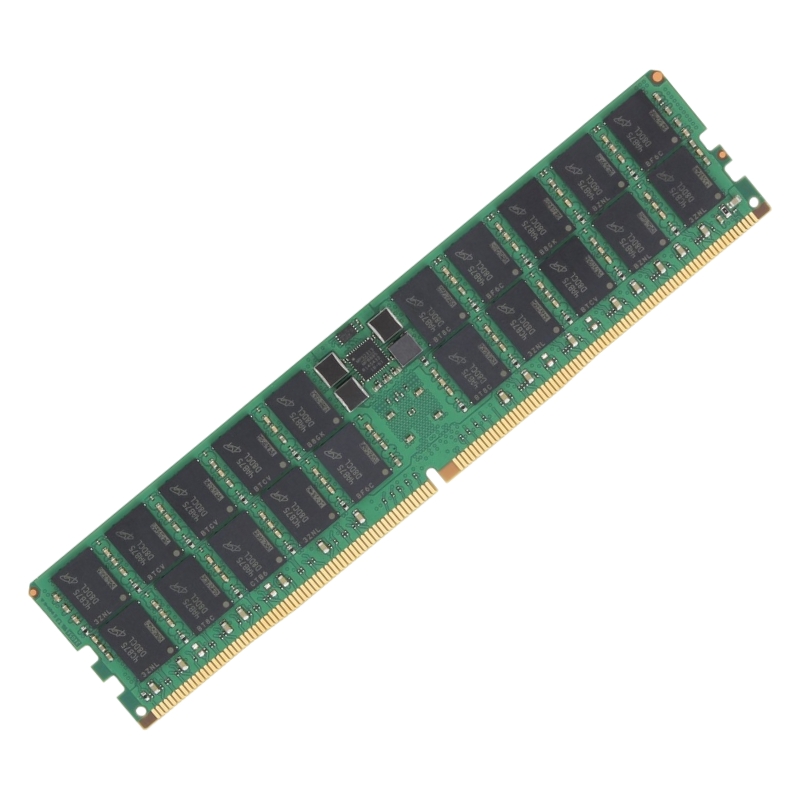
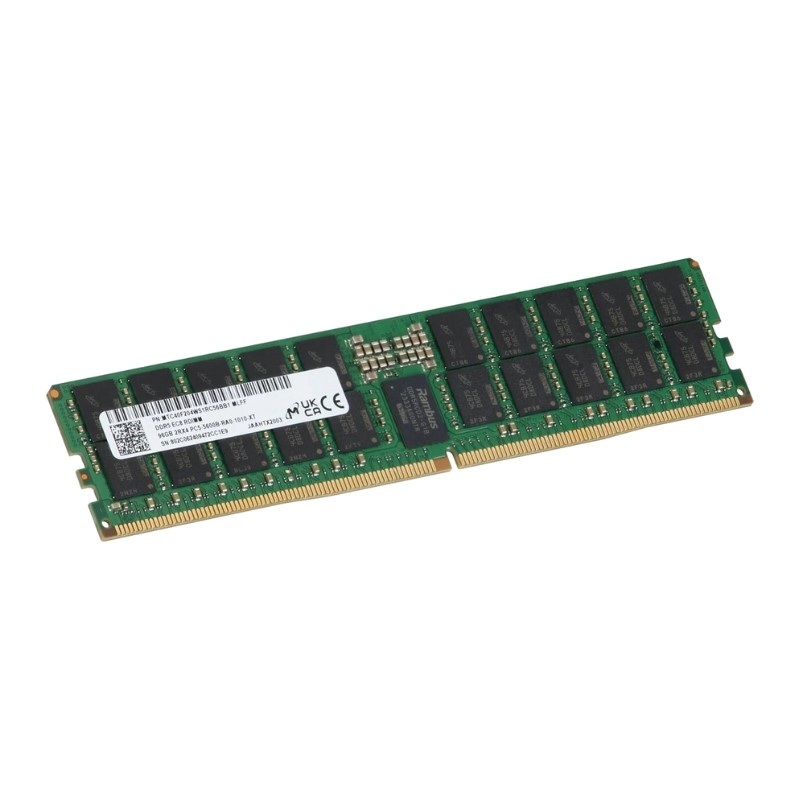
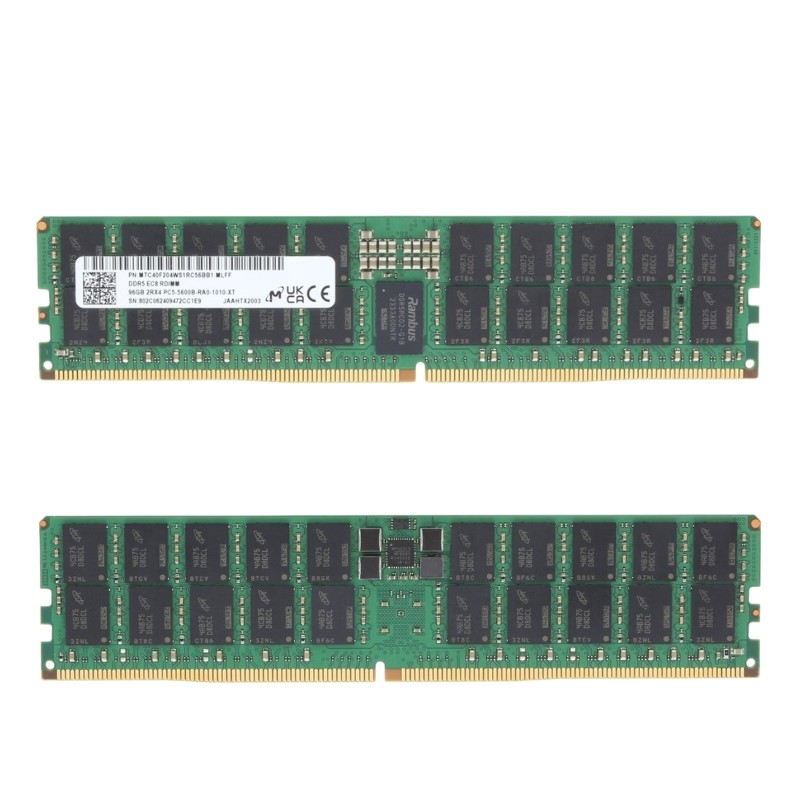
Micron MTC40F204WS1RC64BB2R 96GB 6400mhz Pc5-51200 Ecc Registered Dual Rank DDR5 288-pin Memory Module. New (System) Pull with 1 year replacement warranty
The Micron MTC40F204WS1RC64BB2R is a high-performance 96GB DDR5 Registered DIMM designed to deliver outstanding speed, efficiency, and reliability for data-intensive computing. With advanced ECC technology, dual-rank architecture, and blazing-fast 6400MHz frequency, this module ensures seamless performance for servers, enterprise platforms, and mission-critical applications.
Produced by Micron Technology, a global leader in memory solutions, this module carries the part number MTC40F204WS1RC64BB2R. Known for dependable innovation, Micron delivers enterprise-class memory designed to meet the demands of evolving data centers.
By utilizing the DDR5-6400 standard, this memory module enhances bandwidth and lowers latency, making it ideal for applications such as virtualization, real-time analytics, scientific simulations, and financial modeling. Its energy-efficient 1.1V operating voltage ensures reduced power consumption while maintaining peak performance.
The Micron DDR5 96GB RDIMM combines cutting-edge performance with enterprise-grade durability. As data centers and high-end computing environments grow, upgrading to DDR5 ensures future-proof scalability and efficiency.
As enterprises continue to scale workloads, the Micron MTC40F204WS1RC64BB2 DDR5 96GB RDIMM provides unmatched speed, reliability, and capacity to meet next-generation computing requirements. It is the perfect choice for businesses looking to optimize server performance while ensuring rock-solid data integrity.
The Micron MTC40F204WS1RC64BB2R 96GB (1x96GB) 6400MHz PC5-51200 ECC Registered memory module is a high-density DDR5 RDIMM designed for server-class reliability, data center scalability, and high-throughput computing environments. This module features ECC (Error Correcting Code) and Registered (buffered) functionality, Dual Rank organization, x8 die configuration, CL52 latency, and operates at a nominal 1.1V. Built on Micron’s DDR5 SDRAM architecture with a 288-pin RDIMM form factor, this module targets enterprise servers, virtualization hosts, database clusters, and memory-intensive workloads that demand both capacity and consistent performance.
DDR5 represents the next generation of synchronous DRAM, offering higher data rates, improved channel efficiency, and on-die features that accelerate server workloads. The PC5-51200 rating corresponds to a theoretical peak bandwidth of 51,200 MB/s per module at DDR5-6400 signaling (in single-channel terms). In multi-channel server platforms, combining multiple RDIMMs multiplies available memory bandwidth for parallel data streams—critical for database caching, large in-memory datasets, and high-throughput packet processing.
Dual Rank (2R) modules are organized with two sets (ranks) of memory that the memory controller can access independently. Each DRAM device is an x8 chip, meaning eight data bits per chip. Dual Rank modules generally offer higher effective density and can sometimes deliver improved throughput in real-world workloads due to internal bank interleaving—though they may increase trace complexity and slightly affect memory controller timing/compatibility on some platforms.
This Micron module lists CL52 timing at DDR5-6400. In DDR memory, higher frequency improves raw bandwidth but can increase CAS latency value; the tradeoff is lower access latency in clock cycles but greater absolute latency in nanoseconds might occur if the frequency rise doesn’t offset the higher CAS. For throughput-bound workloads (large sequential reads/writes, caching), bandwidth wins; for latency-sensitive workloads (high-frequency trading, some HPC kernels), absolute latency numbers matter. The Micron DDR5-6400 offering sits in the high-bandwidth tier appropriate for modern server workloads that prioritize sustained data transfer.
Cloud providers and hyperscalers are continually pushing for higher memory capacities per socket. A single 96GB DDR5 RDIMM reduces the number of modules necessary to reach target memory footprints, simplifying inventory and board routing in dense deployments. This module is ideal for virtualization hosts running many VMs, containerized services with large memory footprints, and multi-tenant environments where memory isolation and error correction are critical.
HPC clusters running scientific simulations, in-memory analytics, or graph processing benefit from DDR5’s increased bandwidth. The Micron 96GB RDIMM can serve as a building block for nodes that require large working sets in RAM—reducing the need for slower storage-tier accesses and improving job completion times for memory-limited tasks.
Databases such as in-memory OLTP systems, large NoSQL caches, and distributed caching layers (e.g., Redis, Memcached) see direct performance gains from increased RAM capacity and bandwidth. The availability of large single-module capacities simplifies capacity planning and can enable larger cache sizes per node without consuming all DIMM slots.
For organizations with dense VDI deployments or heavy virtualization consolidation ratios, larger RDIMM capacities allow administrators to allocate more RAM per VM while keeping the number of installed DIMMs manageable. This module is a fit where both capacity and stability (ECC) are required.
The module adheres to the standard 288-pin RDIMM mechanical specification for DDR5 ECC Registered memory. It fits server motherboards that accept DDR5 RDIMMs. Administrators must confirm that their motherboard and BIOS explicitly support DDR5 RDIMM modules and the targeted capacity (96GB per slot) and rank configuration.
Server platforms often enforce memory population rules—slot order, symmetric channel population, and supported rank per channel limitations. Because the Micron module is Dual Rank, some platforms may change supported DIMM-per-channel configurations or maximum achievable speeds when dual-rank RDIMMs are populated densely. Always consult the server vendor’s memory interoperability list and apply the latest BIOS/firmware to ensure optimized timing, voltage, and training sequences for DDR5 operation.
DDR5 modules typically operate at a lower voltage envelope than earlier generations, with this Micron module rated at 1.1V nominal. Lower voltage contributes to improved power efficiency per bit transferred, which is important in large data center deployments where cumulative power draw across thousands of DIMMs can be significant. However, higher frequency operation and denser capacities can increase power dissipation, so thermal management is still essential.
Maintain adequate server chassis airflow and follow vendor guidelines for maximum ambient temperatures. Where possible, use server configurations with front-to-back airflow, maintain unobstructed pathways, and consider memory heatsinks if supported by the platform. System integrators should avoid overpopulating DIMM slots without ensuring sufficient airflow, particularly in dense rack deployments.
High-capacity, dual rank DIMMs increase the complexity of signal routing on server motherboards. Server vendors design trace lengths and termination schemes to handle specific rank and speed profiles; mixing unsupported densities or ranks can reduce achievable maximum speeds. Always rely on the platform vendor’s validated configurations when planning large-scale upgrades.
For best performance, populate DIMMs symmetrically across memory channels. Balanced channel population enables optimal channel interleaving, increasing effective memory parallelism and reducing contention. Dual Rank modules often allow better bank-level parallelism, but the platform may limit maximum DIMM-per-channel frequency—tradeoffs should be assessed via vendor documentation and benchmarks.
Use real-world application benchmarks in addition to synthetic memory tests. Synthetic tools measure theoretical bandwidth and latency, but application-level benchmarks (e.g., database throughput, VM boot times, large file transcodes) reveal how memory upgrades influence end-user performance. When comparing configurations, test under representative loads and document the impact of rank, capacity, and population on throughput and latency.
When evaluating memory upgrades, consider capacity-per-module, frequency (MT/s), latency (CAS), ECC/Registered vs. LRDIMM options, and vendor ecosystem support. The Micron 96GB DDR5-6400 module balances high capacity with high bandwidth and ECC Registered reliability. Compared to lower-frequency modules, it offers higher sustained throughput; compared to LRDIMM (Load-Reduced DIMM) options, RDIMMs maintain traditional buffering and may be preferred on platforms validated for RDIMM topologies.
Larger single-module capacities (such as 96GB) reduce the number of modules required to reach target memory per node—beneficial for servers with limited DIMM slots or when reserving slots for future expansion. Conversely, smaller modules spread across multiple channels can sometimes yield better raw parallelism—so the choice depends on platform slot counts and workload parallelism characteristics.
Enterprise memory procurement must consider more than price per GB. Factor in validation time, compatibility testing, expected lifespan, energy costs (power per module at scale), support and warranty, and how memory density affects server consolidation ratios. Micron’s reputation as a major DRAM manufacturer may provide assurances about supply continuity and long-term firmware compatibility—important for large-scale deployments.
Micron typically offers enterprise warranties and support channels for registered ECC memory, including replacement policies and technical assistance for integration into validated platforms. Confirm warranty terms at point-of-sale and whether the part is covered under Micron’s enterprise warranty or through an authorized reseller for additional service-level commitments.
For critical deployments, consider requesting vendor or third-party validation testing. Some integrators offer memory validation suites that stress-test DIMMs under target workloads to ensure long-term reliability. When deploying at scale, include a memory validation phase in your rollout plan to detect marginal modules prior to production use.
Confirm that the memory modules meet environmental regulatory requirements for your region (such as RoHS) and that disposal or recycling follows local e-waste laws. Large data center operators often require supplier attestations regarding materials and end-of-life handling.
Server-grade DDR5 modules typically support a wide operating temperature range suitable for data center environments. Check Micron’s datasheet for specific temperature and humidity tolerances. For edge deployments in harsh or high-altitude environments, validate that operating conditions fall within specified limits to maintain module longevity.
While memory modules themselves do not usually contain complex firmware, features such as on-die ECC, internal redundancies, and the vendor’s supply-chain assurances (anti-tampering, traceability) can contribute to overall platform security. For security-sensitive deployments, validate the supply chain and confirm serial-number tracking and documentation.
Memory modules are configured and trained by platform firmware during boot. Ensure your server firmware and BMC implementations are patched to prevent potential side-channel vulnerabilities or training failure modes; always apply vendor security advisories and coordinate memory upgrades with firmware update windows.


 Contact Us
 Information
 Catalog
 Solid State Drives (SSD)
 Network Switches
 Hard Disk Drives
 HBA & Controllers
 PC & Servers
 PC & Server Memory
 CPU & Processors
 Network Routers
 Power Supplies
 Tape Drives & Libraries
 Network Devices
 Computer & Network Cables