(7% discount is applied at checkout)
Cart is empty
Your go-to destination for cutting-edge server products
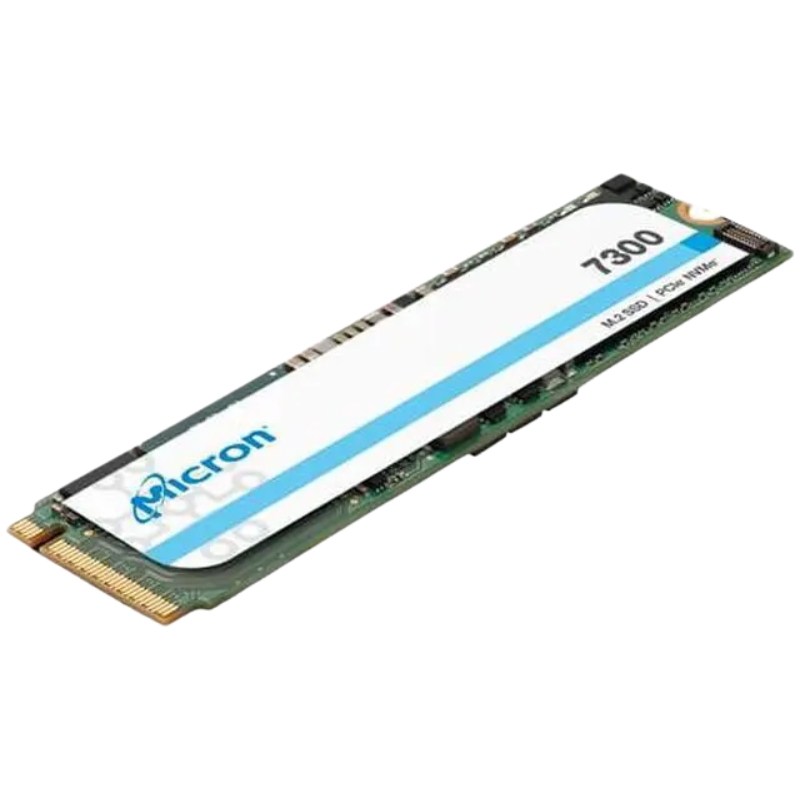


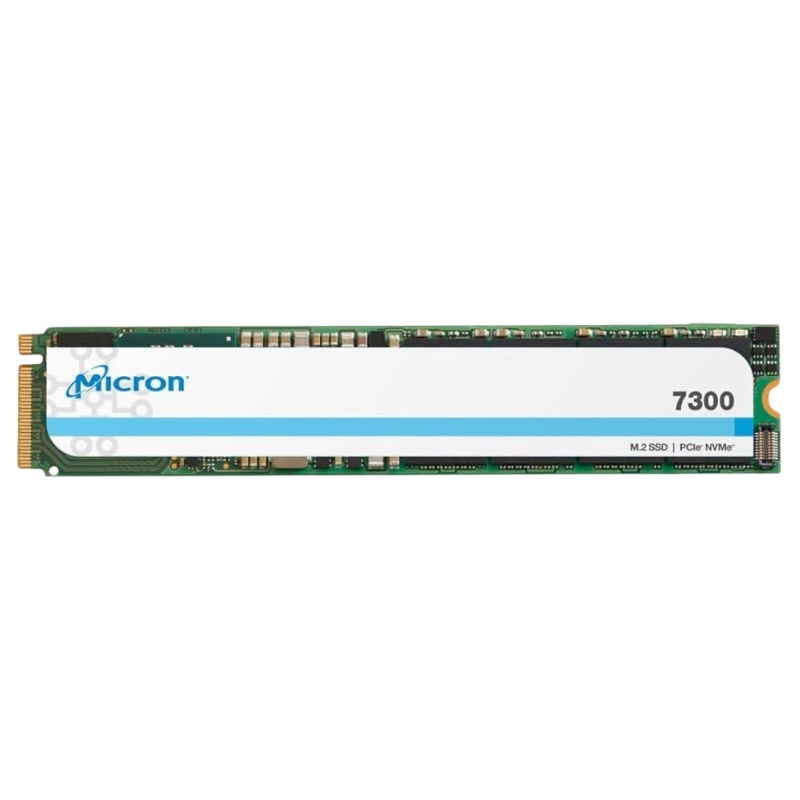
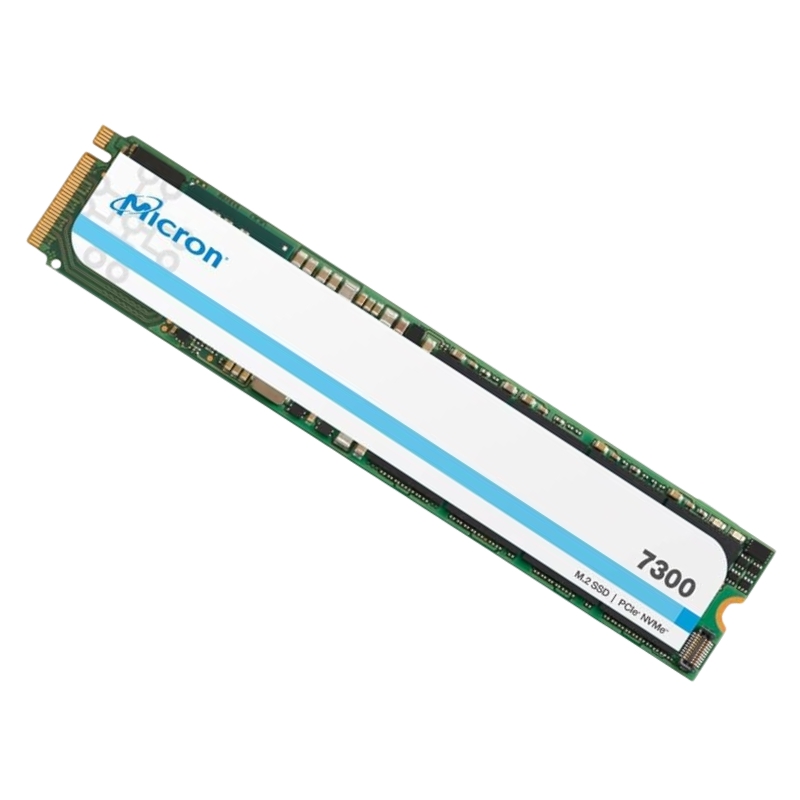
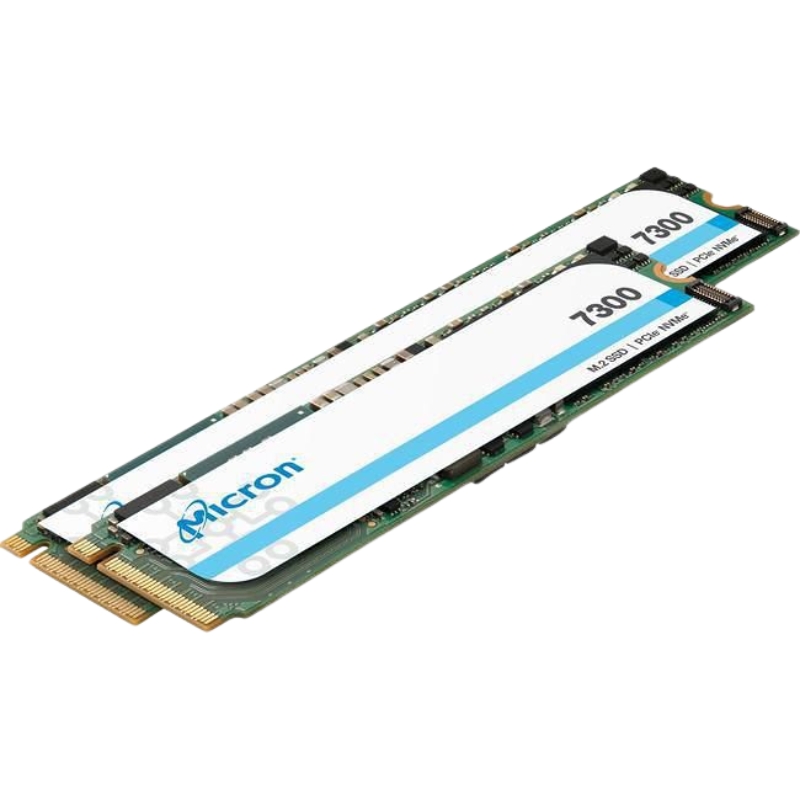
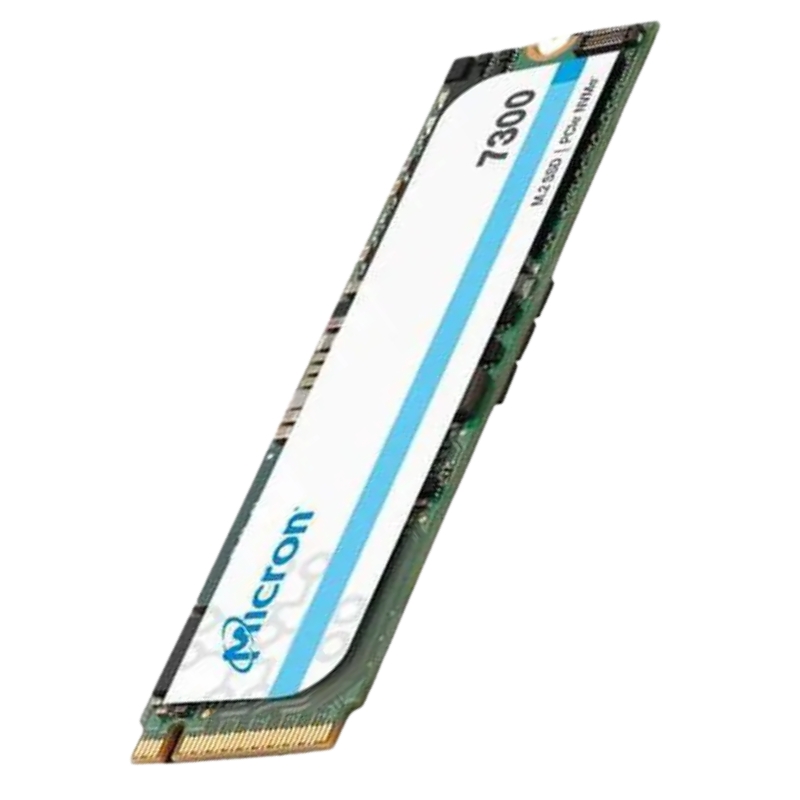
Micron MTFDHBG1T9TDF-1AW1ZABYY 7300 Pro 1.92TB TLC PCI-Express 3.0 x4 NVMe M.2 Internal Solid State Drive. New Sealed in Box (NIB) with 3 Years Warranty
The Micron MTFDHBG1T9TDF-1AW1ZABYY 7300 Pro SSD represents a pinnacle of value and performance in the data center and enterprise NVMe storage category. Designed for mixed-use workloads, this series leverages TLC NAND and a robust PCIe 3.0 x4 NVMe interface to deliver consistent, low-latency performance for read-intensive and transactional applications.
The realm of internal solid-state drives has been revolutionized by the NVMe protocol over the PCI Express interface, and the 7300 Pro series from Micron stands as a testament to this evolution. Designed for professional and data-center environments, this category of drives transcends consumer-grade performance to deliver sustained, reliable throughput essential for 24/7 operations. The Micron MTFDHBG1T9TDF-1AW1ZABYY model, with its substantial 1.92TB capacity, is engineered specifically for read-intensive applications, blending high-speed data access with enterprise-class endurance and power-loss protection. It represents a critical storage solution for servers, high-performance workstations, and storage arrays where consistent low latency and data integrity are non-negotiable.
Micron's 7300 Pro series is not merely an SSD; it is a storage engine built for the relentless demands of professional IT infrastructure. Occupying the M.2 form factor but imbued with features typically found in larger 2.5-inch enterprise drives, it offers a unique combination of density, performance, and robustness. The "Pro" designation signifies a focus on mixed-use and read-centric workloads, optimized for scenarios where data is frequently accessed and read at high speeds, such as database queries, web hosting, virtualization, and boot drives. The TLC (Triple-Level Cell) NAND architecture strikes a deliberate balance, providing a strong blend of storage density, cost-effectiveness, and endurance suitable for its target applications.
The foundation of the 7300 Pro's performance lies in its integrated hardware and firmware co-design. It leverages Micron's vertically integrated manufacturing, meaning the NAND flash, controller, and firmware are all developed in-house. This synergy allows for deep optimization, resulting in predictable Quality of Service (QoS), reduced latency variance, and enhanced reliability. The drive utilizes a PCI Express 3.0 x4 host interface, saturating the available bandwidth of this widely adopted standard to deliver sequential read speeds that can exceed 3,200 MB/s and write speeds in the range of 2,000 MB/s. More importantly, its random I/O performance, measured in Input/Output Operations Per Second (IOPS), is tuned for high queue-depth operations common in server environments.
Unlike legacy SATA-based SSDs, which are constrained by the AHCI protocol designed for slower hard disk drives, the 7300 Pro utilizes the NVMe (Non-Volatile Memory Express) protocol. NVMe is built from the ground up for flash storage, dramatically reducing protocol overhead. It supports massively parallel operations through deep command queues (up to 64K commands per queue) compared to SATA's single queue of 32 commands. This allows the Micron 7300 Pro 1.92TB drive to handle a tremendous number of simultaneous read and write requests efficiently, drastically cutting down latency and maximizing the throughput potential of the PCIe 3.0 x4 lane.
The use of 3D TLC NAND provides the density required for a 1.92TB capacity in a compact M.2 2280 form factor. To maintain high write performance during burst operations, the drive employs a pseudo-SLC (pSLC) caching mechanism. A portion of the TLC NAND is dynamically allocated to function in a faster, single-bit-per-cell mode, acting as a high-speed buffer for incoming data. Once activity subsides, data is transparently migrated to the standard TLC region. This intelligent caching strategy ensures peak write speeds during typical operational bursts without sacrificing the overall storage capacity.
The compact M.2 (Type 22110, 110mm length) package of the Micron MTFDHBG1T9TDF belies its extensive enterprise feature set. This drive is engineered for integration into data center servers, hyper-converged infrastructure, and high-density storage systems where space and power efficiency are paramount. It brings full power-loss protection and end-to-end data path protection—features that are critical for maintaining data integrity in enterprise deployments.
For any professional storage solution, unexpected power loss presents a significant risk of data corruption. The 7300 Pro series integrates robust Power-Loss Protection circuitry. This system consists of onboard capacitors that, upon detecting a power failure, provide sufficient hold-up energy to complete any in-flight writes from the volatile cache to the non-volatile NAND memory. This ensures data-at-rest consistency and prevents corruption, making the drive suitable for use in systems without uninterrupted power supplies (UPS) or as an added layer of safety.
Beyond protecting against power events, the drive safeguards data throughout its entire journey. End-to-End Data Path Protection means that from the moment data is received by the drive's controller, through its processing in DRAM (if present), and finally to its programmed location in NAND, cyclic redundancy checks (CRC) and parity checks are applied. This architecture detects and corrects silent data errors that could occur due to electrical noise or other interference within the drive's internal data paths, a vital feature for maintaining the integrity of databases, financial records, and archival data.
The performance profile of the Micron 7300 Pro 1.92TB NVMe SSD is meticulously defined for its read-intensive charter. While offering excellent write performance, its endurance and speed characteristics are optimized for workloads where read operations constitute the majority of I/O activity. This makes it an ideal storage component for a wide array of professional applications.
Manufacturer specifications for this model typically indicate sequential read speeds up to 3,200 MB/s and sequential write speeds up to 2,000 MB/s. Its random performance, however, is where its enterprise pedigree shines. Expect random read IOPS in the range of 500,000 and random write IOPS around 80,000 (at a queue depth of 16), though exact figures may vary based on firmware and testing conditions. These random read capabilities are crucial for accelerating database operations, virtual machine boot storms, and content delivery networks.
Endurance is quantified as Total Bytes Written (TBW), representing the total amount of data that can be written to the drive over its lifetime. For the 1.92TB capacity model, the TBW rating is a robust 4,300 Terabytes Written. This translates to approximately 2.3 Drive Writes Per Day (DWPD) over a 5-year warranty period, meaning you could write over twice the entire drive's capacity every single day for five years. This high endurance underscores its suitability for professional mixed-use workloads that involve significant write amplification.
For responsive applications, consistent low latency is often more critical than peak throughput. The 7300 Pro is engineered to deliver low tail latencies. Enterprise SSDs publish QoS metrics like 99.999% (five-nines) latency, which defines the maximum I/O completion time for 99.999% of operations. This predictable performance ensures that applications are not subject to erratic storage response times, which is vital for maintaining service level agreements (SLAs) in hosted and cloud environments.
The combination of high random read performance, substantial endurance, and data integrity features opens up several key use cases for this drive. It serves as an excellent boot drive for servers and workstations, accelerating system responsiveness and application loading. In virtualized environments, it can host hypervisor binaries and virtual machine images, reducing VM boot times and improving host density. For database servers (e.g., SQL, Oracle), it can store indexes, logs, or even entire databases for faster query responses. Additionally, it is well-suited for web hosting servers, caching layers, and software-defined storage solutions where consistent read performance is paramount.
The Micron MTFDHBG1T9TDF-1AW1ZABYY utilizes a specific M.2 (NGFF) connector keyed for PCIe (M-key). Its physical dimensions are 22mm wide and 110mm long, conforming to the M.2 22110 specification. The "110" length is important for compatibility, as many server and workstation motherboards provide M.2 slots that support the longer 110mm cards to accommodate drives with additional components like capacitors for power-loss protection.
The drive's firmware supports the TCG Opal 2.0 and IEEE 1667 standards for hardware-based, full-disk encryption. When combined with compatible management software and a supported operating system, this allows for the creation of self-encrypting drives (SEDs) that protect data at rest without a measurable performance penalty. Encryption keys are managed internally, and data is automatically encrypted upon writing and decrypted upon reading, providing a strong security layer for decommissioning drives or protecting against physical theft.
Positioning the Micron 7300 Pro 1.92TB within the broader storage hierarchy clarifies its value proposition. It sits above consumer NVMe SSDs, which lack power-loss protection, high endurance ratings, and consistent QoS. It is a peer to other read-optimized enterprise NVMe drives in the M.2 form factor, competing on the basis of Micron's vertical integration, specific performance profiles, and feature sets like its particular implementation of PLP. Compared to larger U.2 (2.5-inch) enterprise NVMe drives, it offers similar core features in a more space-efficient package, albeit sometimes with slightly lower peak performance or endurance due to thermal and size constraints.
The 7300 Pro series is available in multiple capacities, with 1.92TB being a strategic sweet spot. It offers substantial storage for operating systems, applications, and active datasets without the premium cost per gigabyte of lower capacities or the higher total cost of larger drives. For workloads that are almost exclusively read-only (e.g., content streaming, static web serving), a lower-capacity model might suffice. For write-heavy workloads, a higher-endurance model from Micron's portfolio, such as the 7400 Pro or 7500 series, might be more appropriate. The specific model number MTFDHBG1T9TDF-1AW1ZABYY encodes this precise configuration: Micron, Form Factor (M.2), Capacity (1.92TB), and performance/endurance tier (7300 Pro).


 Contact Us
 Information
 Catalog
 Solid State Drives (SSD)
 Network Switches
 Hard Disk Drives
 HBA & Controllers
 PC & Servers
 PC & Server Memory
 CPU & Processors
 Network Routers
 Power Supplies
 Tape Drives & Libraries
 Network Devices
 Computer & Network Cables