(7% discount is applied at checkout)
Cart is empty
Your go-to destination for cutting-edge server products
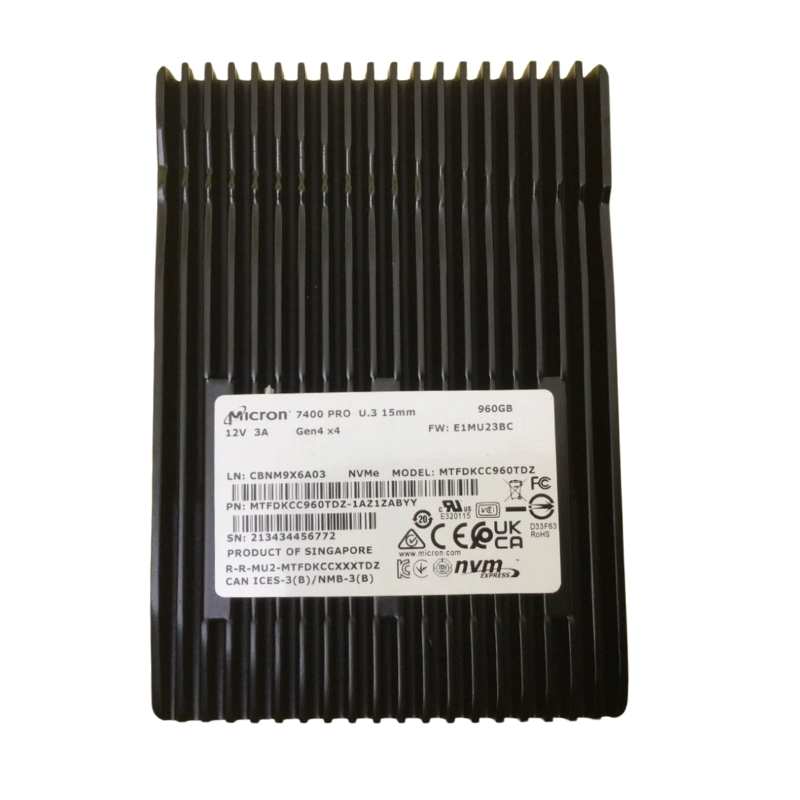


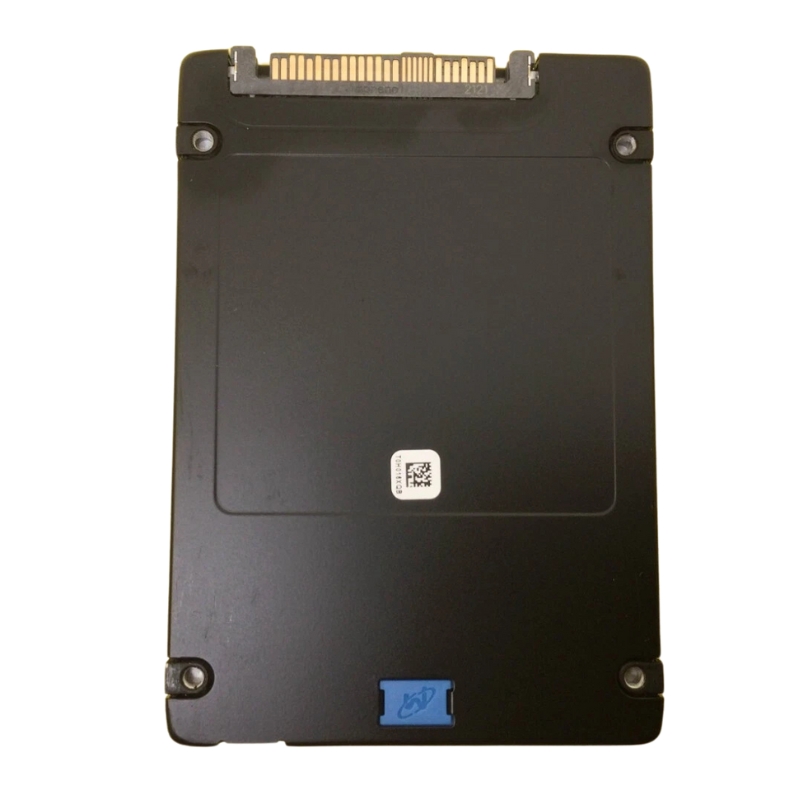
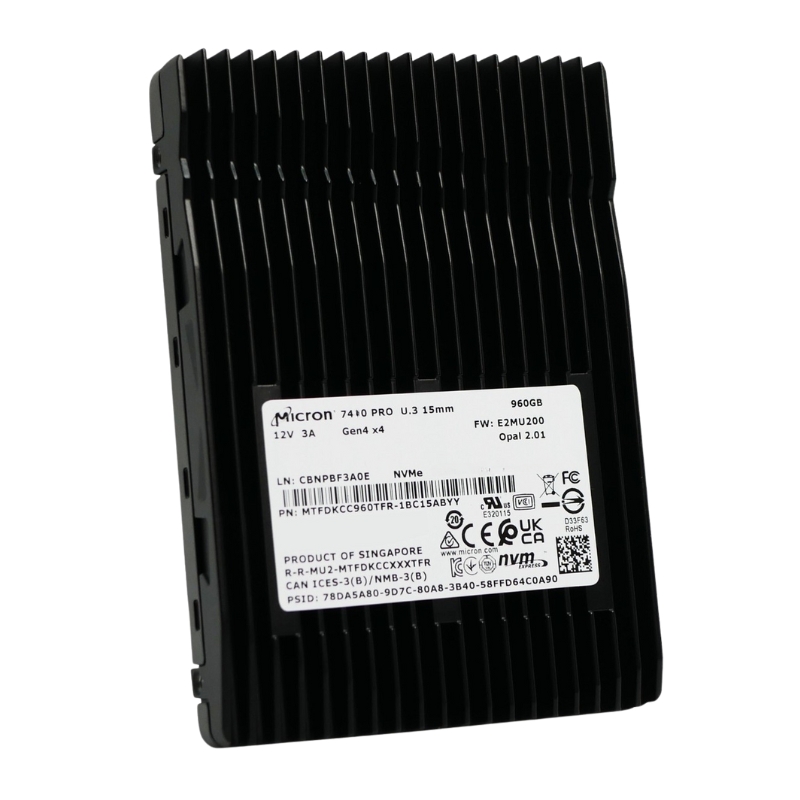
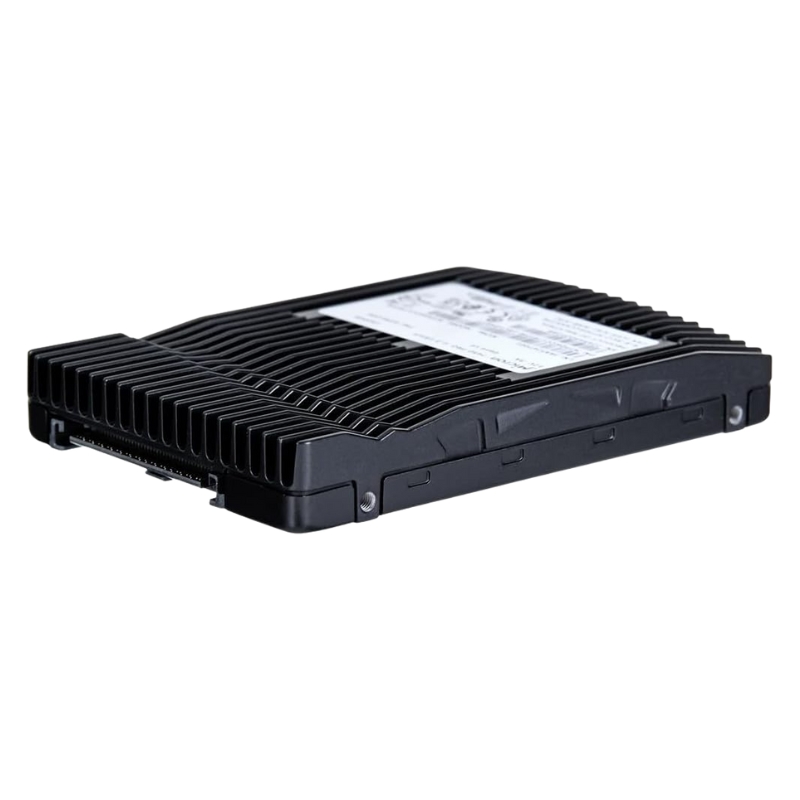
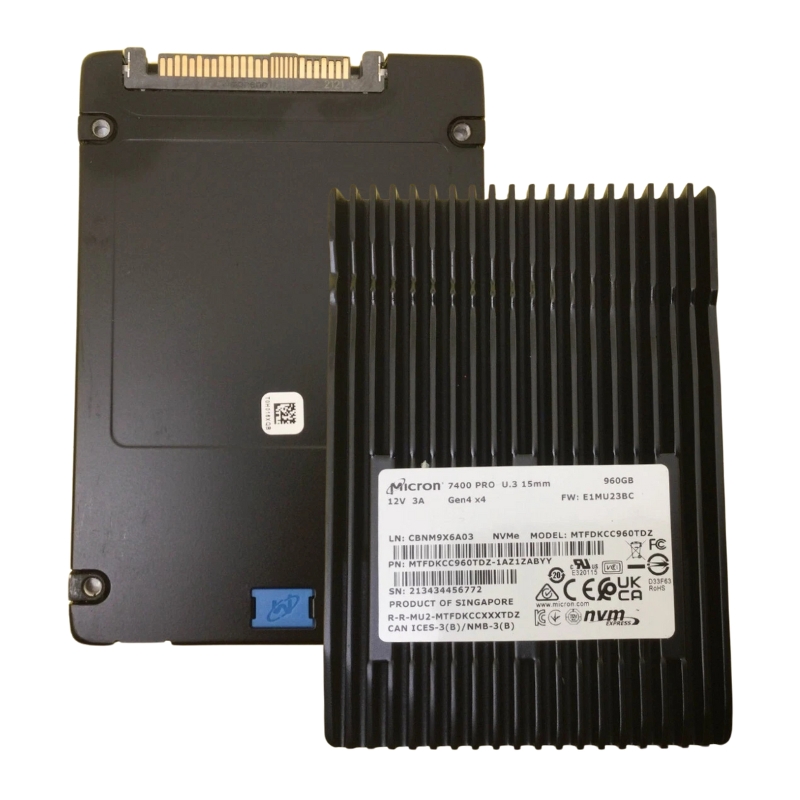
Micron MTFDKCC960TDZ-1AZ1ZABYY 7400 PRO 960GB NVMe PCIe 4x4 U.3 15mm 2.5 Inch Solid State Drive. Excellent Refurbished with 1-Year Replacement Warranty
Discover the Micron 7400 Pro 960GB, a premium NVMe solid-state storage drive (Part No. MTFDKCC960TDZ-1AZ1ZABYY) designed for demanding workloads. Built on Micron's 96-layer 3D TLC NAND and a PCIe 4.0 x4 interface, this 2.5-inch U.3 (15mm) drive blends blazing throughput with enterprise-grade durability.
Engineered for high throughput and low latency, the Micron 7400 Pro delivers industry-leading performance:
The drive is built for continuous operation and mission-critical use:
The Micron 7400 PRO represents the evolution of enterprise storage with its U.3 interface, a revolutionary connector that provides unprecedented flexibility in data center environments. U.3, often described as a "tri-mode" interface, combines compatibility with SAS, SATA, and NVMe protocols through a single, unified connector. This innovative approach eliminates the need for separate backplanes and infrastructure for different storage technologies, allowing data center operators to deploy a mix of drive technologies while simplifying procurement, maintenance, and future upgrades.
The U.3 interface maintains backward compatibility with existing U.2 infrastructure, ensuring a smooth transition path for organizations upgrading their storage systems. This compatibility protects existing investments while providing a clear migration path to higher-performance NVMe technology. The physical connector remains identical to U.2, but the electrical specifications enable the tri-mode functionality that distinguishes U.3 as the next-generation enterprise storage interface.
Tri-mode capability means the U.3 backplane can automatically detect and configure itself to support SAS, SATA, or NVMe SSDs without manual intervention. This intelligence is managed through the Sideband Signal (SMBus) interface, which communicates with the drive during initialization to determine the appropriate protocol. For the Micron MTFDKCC960TDZ-1AZ1ZABYY, this means seamless integration into heterogeneous environments where different storage technologies coexist, providing maximum deployment flexibility.
The 7400 PRO leverages the full potential of NVMe 1.4 over PCIe 4.0, delivering significantly higher performance compared to previous generations. PCIe 4.0 doubles the bandwidth per lane compared to PCIe 3.0, with x4 lanes providing up to 64 Gb/s of theoretical bandwidth (8 GB/s). This substantial increase enables the Micron 7400 PRO 960GB to achieve exceptional sequential read and write speeds, along with dramatically improved random I/O performance that directly translates to reduced application latency and improved user experiences.
Unlike legacy SAS and SATA protocols that were adapted from hard disk drive technologies, NVMe was designed specifically for flash memory from the ground up. The protocol reduces command overhead through optimized command queues that support up to 64,000 commands simultaneously, compared to SAS (256 commands) and SATA (32 commands). This massive parallelism is particularly beneficial in enterprise environments where multiple applications and users generate concurrent I/O requests, ensuring consistent performance under heavy workloads.
The x4 lane configuration refers to the number of PCI Express lanes dedicated to the SSD. Each PCIe 4.0 lane provides approximately 2 GB/s of bandwidth in each direction (read/write). With four lanes operating in parallel, the Micron 7400 PRO can achieve maximum theoretical interface speeds of nearly 8 GB/s. This abundant bandwidth ensures that the flash memory itself becomes the performance bottleneck rather than the interface, allowing the drive to deliver its full performance potential across various workload types.
The Micron 7400 PRO series occupies the sweet spot in the performance-endurance spectrum, designed for read-intensive and mixed-use workloads commonly found in enterprise environments. With capacities ranging from 960GB to 7.68TB, the series offers flexibility for different application requirements. The 960GB model (MTFDKCC960TDZ-1AZ1ZABYY) provides an optimal balance of capacity, performance, and cost-effectiveness for applications requiring consistent performance with moderate write requirements.
Micron utilizes its advanced 176-layer 3D TLC NAND in the 7400 PRO series, representing the third generation of replacement-gate architecture. This technology delivers significant improvements in both performance and power efficiency compared to previous generations. The high layer count enables greater density in a smaller physical space, while the replacement-gate architecture provides better endurance and faster write performance than competing floating-gate approaches. The 176-layer technology also reduces read latency and improves quality of service (QoS) for more predictable performance.
The 7400 PRO incorporates dedicated DRAM cache to accelerate performance by storing the flash translation layer (FTL) tables in high-speed memory. This architecture reduces latency for metadata operations and improves overall responsiveness. The 960GB model includes appropriate DRAM capacity to maintain consistent performance during sustained operations. The DRAM cache works in conjunction with the controller's advanced algorithms to optimize data placement and wear leveling across the NAND flash memory.
Enterprise SSDs demand higher reliability standards than consumer-grade products, and the Micron 7400 PRO 960GB is engineered to meet these rigorous requirements. With a rated endurance of 1.0 Drive Writes Per Day (DWPD) over a 5-year warranty period, the drive can withstand complete write cycles every day while maintaining data integrity. This translates to approximately 1.75 petabytes written (PBW) over the drive's lifespan, ensuring longevity even in write-intensive application environments.
Enterprise applications cannot tolerate data corruption during unexpected power loss events. The 7400 PRO incorporates robust power-loss protection circuits that include both tantalum capacitors and advanced firmware algorithms. When a power failure is detected, these systems provide sufficient hold-up time to complete in-progress writes and commit critical metadata to the non-volatile NAND flash. This protection extends to both sudden power loss and gradual power decay scenarios, ensuring data integrity across various failure conditions.
Micron implements comprehensive end-to-end data protection throughout the entire data path from the host interface to the NAND flash memory. This protection scheme includes cyclic redundancy check (CRC) codes for both the PCIe interface and DRAM, along with advanced error correction codes (ECC) for the NAND flash. The combination of these technologies detects and corrects errors that may occur during data transmission or storage, preventing silent data corruption and ensuring the highest levels of data integrity.
High-performance NVMe SSDs generate significant heat during operation, requiring effective thermal management to maintain optimal performance. The 7400 PRO 960GB includes temperature monitoring and dynamic thermal throttling mechanisms that adjust performance to stay within safe operating limits. Enterprise deployments should ensure adequate airflow across the drive bays, with many servers incorporating specific cooling solutions for NVMe drives. The drive reports temperature through S.M.A.R.T. attributes, allowing system administrators to monitor thermal conditions and prevent thermal throttling through proper environmental management.
The Micron 7400 PRO 960GB is optimized for a wide range of enterprise applications that demand consistent low latency and high IOPS. Its balanced performance profile makes it suitable for boot drives, hyperconverged infrastructure (HCI), database servers, virtualized environments, and content delivery networks. The drive's endurance characteristics support mixed workloads with moderate write amplification, while its high random read performance accelerates database queries and virtual machine operations.
In cloud and hyperscale environments, the 7400 PRO provides the density, performance, and reliability required for scale-out architectures. Its U.3 interface compatibility allows seamless integration into existing infrastructure while providing a path to higher performance through NVMe. The drive's power efficiency contributes to lower total cost of ownership (TCO) in large-scale deployments where power and cooling represent significant operational expenses. Quality of Service (QoS) guarantees ensure consistent performance across multiple tenants in shared environments.
Database applications, including OLTP (Online Transaction Processing) and OLAP (Online Analytical Processing), benefit from the low latency and high random I/O performance of the 7400 PRO. The drive's consistent response times under varying load conditions ensure predictable application performance, while power-loss protection prevents data corruption during transaction commits. For database workloads, the combination of DRAM cache, high-speed NAND, and optimized controller algorithms reduces query times and improves overall system throughput.
Micron's comprehensive firmware suite enhances the 7400 PRO's capabilities beyond basic storage functions. The drive supports NVMe Management Interface (NVMe-MI), which provides out-of-band management through the SMBus interface. This enables system management software to monitor drive health, update firmware, and configure settings without requiring host operating system involvement. Additional enterprise features include namespace management, sanitization commands, and advanced formatting options that optimize the drive for specific application requirements.
The 7400 PRO implements extended S.M.A.R.T. (Self-Monitoring, Analysis, and Reporting Technology) attributes that provide detailed insight into drive health and performance characteristics. Beyond basic temperature and usage statistics, the drive reports NAND wear level, available spare blocks, error counts, and thermal throttle events. These metrics enable predictive failure analysis and proactive replacement planning, reducing the risk of unexpected drive failures in critical applications. Monitoring software can track these attributes and generate alerts when parameters exceed predefined thresholds.
Enterprise data security is addressed through multiple layers of protection in the 7400 PRO. The drive supports TCG Opal 2.0 and IEEE 1667 security standards for comprehensive data encryption and access control. All user data is encrypted using AES-256 encryption in hardware, with no performance impact on read/write operations. Security protocols include instant secure erase, which cryptographically renders data inaccessible by deleting the encryption key. These features ensure data confidentiality while simplifying drive decommissioning and repurposing processes.
The Micron 7400 PRO 960GB occupies a strategic position in the enterprise SSD market, balancing performance, endurance, and cost-effectiveness. Compared to value-oriented read-intensive drives, it offers superior write performance and endurance, while being more cost-effective than write-intensive models designed for extreme workloads. This positioning makes it suitable for the majority of enterprise applications that require consistent performance without the premium cost of specialized high-endurance drives.
Within Micron's broader SSD portfolio, the 7400 PRO serves as the balanced performance option between the 7450 MAX (high performance) and 7300 PRO (value-optimized) series. This tiered approach allows customers to select the appropriate drive based on specific workload requirements and budget constraints. The 7400 PRO's combination of PCIe 4.0 performance, U.3 flexibility, and moderate endurance meets the needs of general-purpose enterprise storage while providing headroom for performance spikes and evolving workload demands.


 Contact Us
 Information
 Catalog
 Solid State Drives (SSD)
 Network Switches
 Hard Disk Drives
 HBA & Controllers
 PC & Servers
 PC & Server Memory
 CPU & Processors
 Network Routers
 Power Supplies
 Tape Drives & Libraries
 Network Devices
 Computer & Network Cables