(7% discount is applied at checkout)
Cart is empty
Your go-to destination for cutting-edge server products
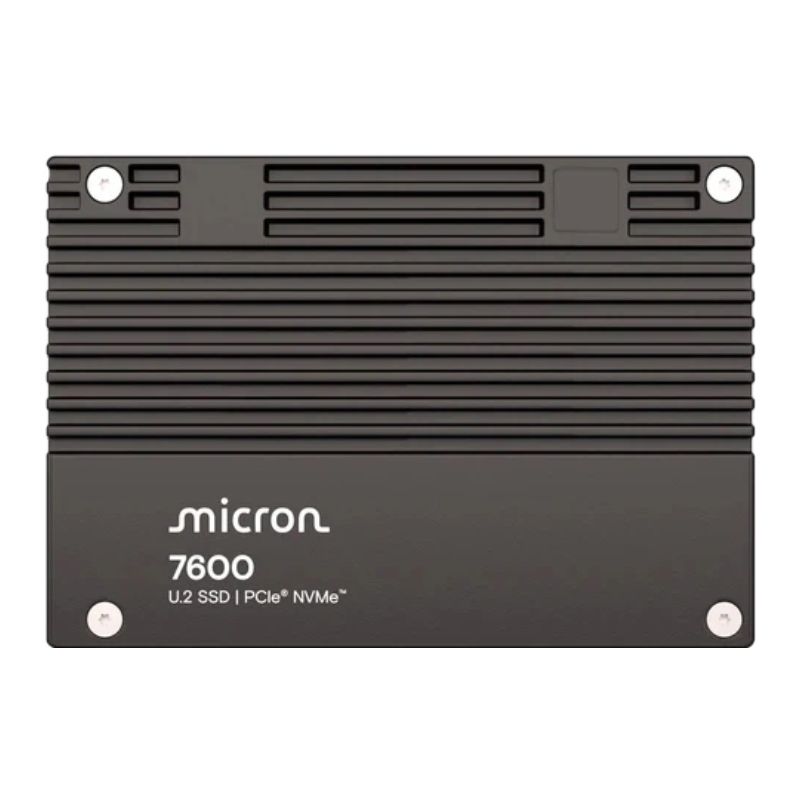


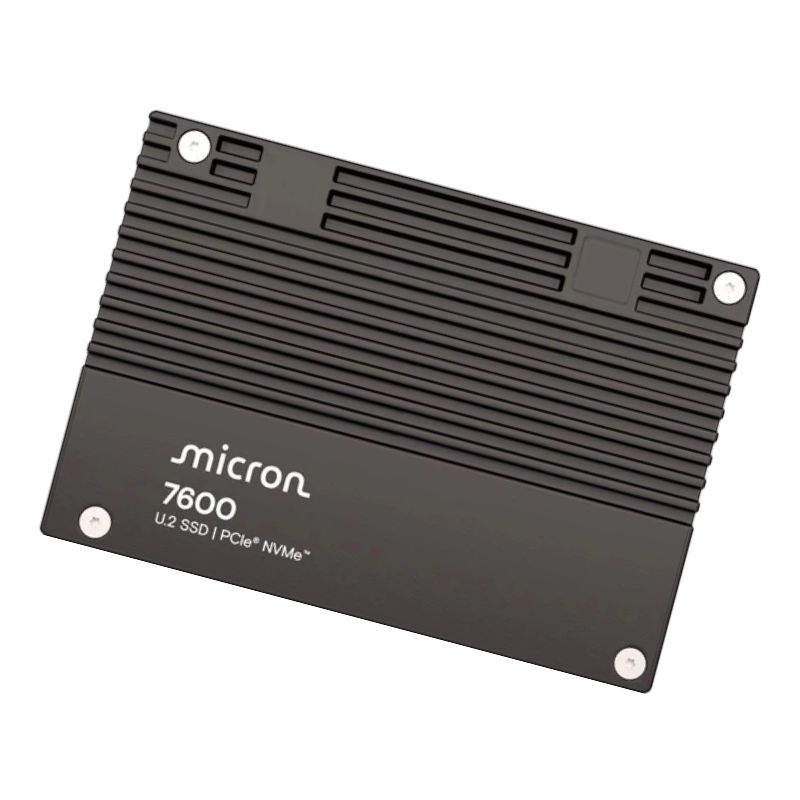
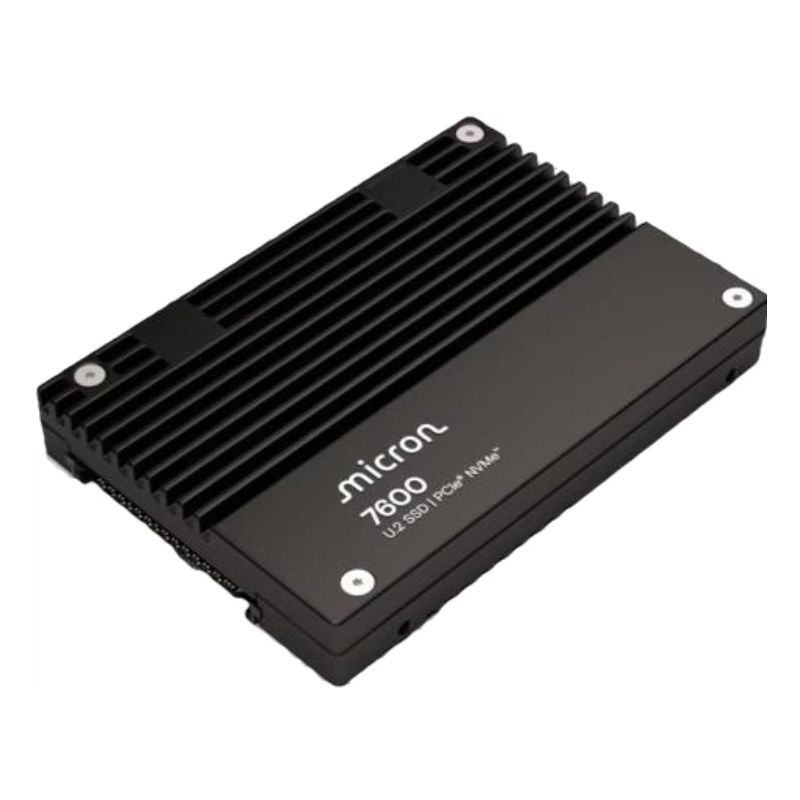
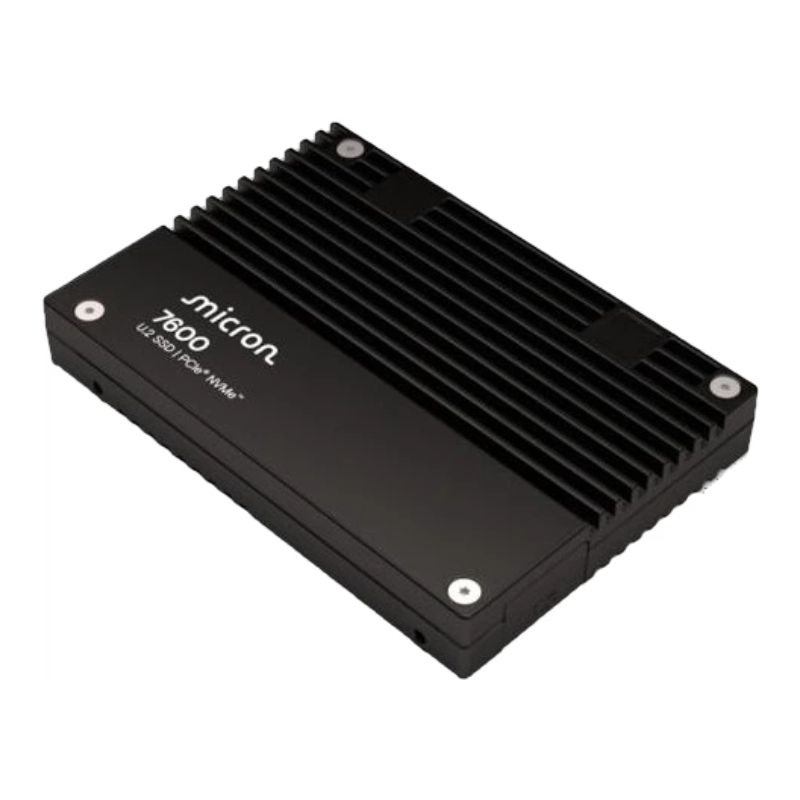
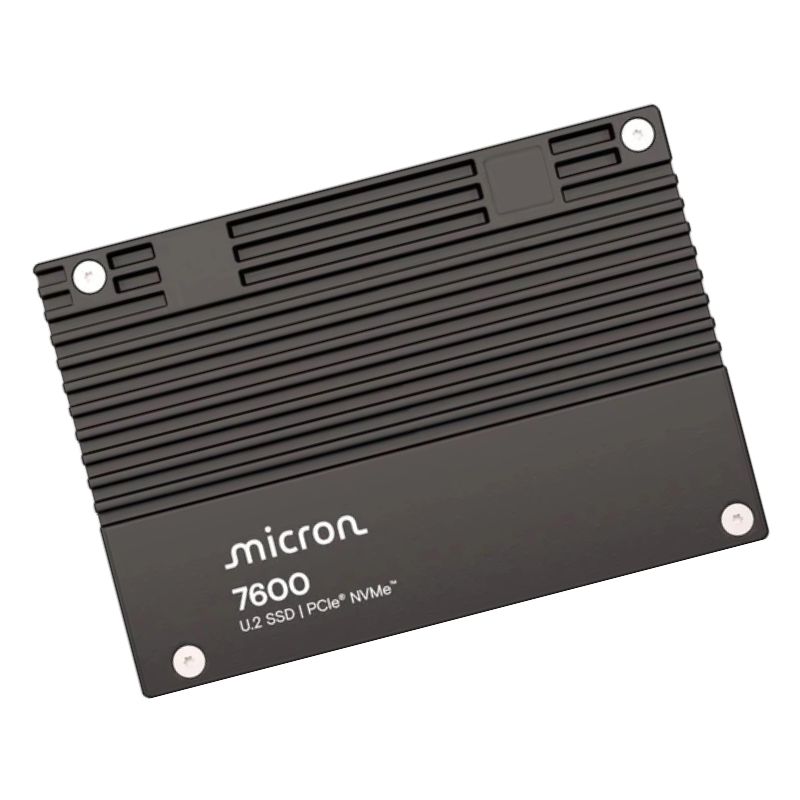
Micron MTFDLAL3T2THS-1BP1DFCYY 7600 MAX 3.2TB U.2 15mm PCIe Gen5 NVMe SSD. New Sealed in Box (NIB) with 3 years Warranty
Overview of the Micron 3.2TB Storage Drive
The Micron 7600 MAX series is designed as a performance-optimized enterprise SSD lineup targeting data-intensive workloads that require high throughput and consistent latency characteristics. Positioned within Micron’s broader enterprise NVMe portfolio, the 7600 MAX bridges the gap between mainstream enterprise storage and ultra-high-endurance write-intensive solutions. The 3.2TB U.2 15mm configuration is particularly suited for environments that demand balanced capacity and performance density within standard server backplane architectures.
The enterprise PCIe Gen5 NVMe U.2 SSD category represents the most advanced tier of solid-state storage designed for modern data centers, hyperscale computing environments, and high-performance enterprise workloads. Built to meet the escalating demands of artificial intelligence, real-time analytics, virtualization, and cloud-native applications, this category of storage devices leverages the PCIe Gen5 interface to deliver significantly higher bandwidth, reduced latency, and improved scalability compared to previous generations. The Micron MTFDLAL3T2THS-1BP1DFCYY 7600 MAX 3.2TB U.2 15mm PCIe Gen5 NVMe SSD belongs to this elite class of storage solutions, optimized for mixed-use workloads that require a balanced combination of read and write performance, endurance, and reliability.
Unlike consumer-grade SSDs, enterprise U.2 NVMe drives are engineered for sustained 24/7 operation under heavy multi-tenant workloads. They are commonly deployed in servers, storage arrays, and high-density computing clusters where consistent performance under pressure is critical. The integration of PCIe Gen5 further enhances the throughput ceiling, doubling the bandwidth of Gen4 solutions and enabling next-generation workloads that depend heavily on fast data movement and low queue depth responsiveness.
This category is especially relevant for cloud service providers, enterprise data warehouses, and AI infrastructure deployments where storage performance directly impacts computational efficiency. By leveraging advanced NAND architecture and PCIe Gen5 signaling, the 7600 MAX series enables faster data ingestion, reduced bottlenecks in compute pipelines, and improved responsiveness for transactional and analytical workloads.
At the core of the Micron 7600 MAX 3.2TB SSD is the PCIe Gen5 x4 interface, which significantly increases theoretical bandwidth compared to PCIe Gen4. This interface allows for substantially higher sequential throughput, making it ideal for workloads involving large datasets, high-speed caching, and real-time processing. NVMe protocol optimization further reduces command overhead, enabling parallel processing of storage commands through multiple queues.
The NVMe 2.0 specification introduces improved command sets, namespace management, and efficiency features that enhance performance consistency across enterprise environments. These enhancements allow the SSD to better manage mixed workloads, ensuring predictable latency even under heavy concurrent access. This is particularly important for virtualization clusters and containerized environments where storage demand fluctuates rapidly.
Enterprise-grade SSDs such as the Micron 7600 MAX utilize advanced multi-core controllers designed to handle massive parallelism. These controllers coordinate data distribution across high-density NAND flash modules, optimizing wear leveling, garbage collection, and error correction processes. The NAND architecture is typically based on high-layer 3D NAND technology, which improves storage density while maintaining performance efficiency and endurance.
Performance is a defining attribute of the PCIe Gen5 NVMe SSD category, and the Micron 7600 MAX 3.2TB model is engineered to deliver exceptional throughput and low latency across diverse workloads. The combination of high-bandwidth interface and optimized firmware enables this SSD to sustain demanding enterprise operations without degradation in performance consistency.
Sequential performance is critical for workloads such as large-scale data ingestion, media processing, and scientific computing. The PCIe Gen5 interface allows the SSD to achieve significantly higher sequential read speeds compared to earlier generations, enabling rapid access to large datasets. Sequential write performance is equally optimized, ensuring efficient handling of log aggregation, database updates, and backup operations.
Random input/output operations per second (IOPS) are essential for transactional databases, virtualization workloads, and real-time analytics systems. The Micron 7600 MAX is designed to maintain high IOPS performance under mixed workloads, where read and write operations occur simultaneously. Advanced caching algorithms and parallel processing capabilities ensure that latency remains stable even under heavy queue depths.
Latency is a critical metric in enterprise storage systems. The SSD’s architecture is optimized to minimize command processing delays, ensuring consistent response times even in high-queue-depth scenarios. This is particularly beneficial for OLTP databases, financial systems, and AI inference pipelines where microsecond-level delays can impact overall system performance.
Enterprise SSDs must provide not only performance but also long-term reliability under continuous operation. The Micron 7600 MAX 3.2TB U.2 SSD incorporates advanced endurance technologies designed to sustain heavy write workloads over extended periods. Endurance is typically measured in drive writes per day (DWPD), which indicates how much data can be written to the drive daily over its warranty period without degradation.
Wear leveling algorithms ensure even distribution of program/erase cycles across NAND cells, preventing premature wear of individual blocks. This extends the operational lifespan of the SSD and ensures consistent performance over time. Dynamic and static wear leveling techniques work together to balance performance and durability.
Enterprise-grade SSDs include power loss protection (PLP) features that safeguard data integrity during unexpected power interruptions. Capacitors within the drive provide sufficient energy to flush volatile cache data to non-volatile NAND storage, preventing corruption and ensuring transactional consistency.
Advanced error correction codes (ECC) are implemented to detect and correct bit-level errors within NAND flash memory. Combined with end-to-end data path protection, these mechanisms ensure that data integrity is maintained throughout the entire storage pipeline, from host interface to NAND media.
The U.2 15mm form factor is widely adopted in enterprise server architectures due to its compatibility with hot-swappable drive bays and backplane configurations. This form factor allows for high-density storage deployment without sacrificing thermal efficiency or serviceability. The 15mm thickness accommodates advanced thermal and power delivery components required for PCIe Gen5 operation.
U.2 interfaces provide a familiar SAS-like connectivity model while supporting the high-speed NVMe protocol. This enables easier integration into existing enterprise infrastructure while delivering next-generation performance improvements. The hot-swap capability is particularly valuable in data center environments where uptime and service continuity are critical.
The Micron 7600 MAX 3.2TB PCIe Gen5 NVMe SSD is designed for a wide range of enterprise and hyperscale applications. Its balanced performance profile makes it suitable for workloads that require both high read and write throughput without compromising endurance or latency.
In virtualized environments, multiple virtual machines share underlying storage resources. The SSD’s ability to handle high IOPS and concurrent workloads ensures smooth VM performance, reduced latency spikes, and improved resource utilization. Cloud service providers benefit from its scalability and predictable performance characteristics.
AI and machine learning workloads require rapid access to large datasets for training and inference. The high sequential throughput of PCIe Gen5 NVMe SSDs accelerates data loading times, reducing training cycle durations and improving overall computational efficiency. This is critical for large-scale neural network training environments.
OLTP databases depend heavily on low-latency storage to process thousands of transactions per second. The Micron 7600 MAX ensures consistent response times and high transaction throughput, making it suitable for financial systems, e-commerce platforms, and enterprise ERP solutions.
Big data platforms rely on fast ingestion and retrieval of large datasets. The SSD’s high bandwidth and parallel processing capabilities allow analytics engines to process data streams in real time, enabling faster insights and decision-making processes.
PCIe Gen5 SSDs generate more heat due to increased data throughput and processing demands. The Micron 7600 MAX incorporates advanced thermal management features to maintain optimal operating temperatures under sustained workloads. Efficient heat dissipation ensures performance stability and prevents thermal throttling.
Power efficiency is also a key consideration in data center environments where energy consumption directly impacts operational costs. The SSD is engineered to deliver high performance per watt, optimizing energy usage while maintaining enterprise-grade throughput levels.
Enterprise storage systems require robust security mechanisms to protect sensitive data. The Micron 7600 MAX integrates hardware-based encryption and secure erase capabilities to ensure data confidentiality and compliance with enterprise security standards.
Self-encrypting drive (SED) functionality enables automatic encryption of stored data without impacting performance. This ensures that data remains protected even if the drive is physically removed from the system.
Secure erase functionality allows for complete data sanitization, making data recovery impossible after decommissioning or repurposing of the drive. This is essential for organizations handling sensitive or regulated data.
The Micron 7600 MAX 3.2TB U.2 SSD is designed for compatibility with a wide range of enterprise servers, storage arrays, and compute platforms. Its standardized U.2 interface ensures seamless integration into existing infrastructure without requiring specialized adapters or proprietary hardware modifications.
It is commonly deployed in rack-mounted servers, blade systems, and high-density storage nodes. Compatibility with major operating systems and virtualization platforms ensures flexible deployment across diverse IT environments.
Compared to PCIe Gen4 SSDs, Gen5-based solutions such as the Micron 7600 MAX offer significantly higher bandwidth and improved scalability. This translates into faster data transfer rates, reduced bottlenecks in compute-heavy workloads, and improved responsiveness in real-time applications.
While Gen4 SSDs remain widely used in many enterprise environments, Gen5 technology represents the next step in storage evolution, particularly for AI, machine learning, and high-performance computing workloads that demand maximum data throughput.
In modern data architectures, NVMe SSDs occupy a critical position between DRAM and high-capacity HDD storage tiers. The Micron 7600 MAX serves as a high-performance storage layer that accelerates data access while reducing reliance on slower mechanical drives. This tiered storage architecture improves overall system efficiency and reduces latency across applications.
By acting as a high-speed buffer and primary storage medium for active datasets, enterprise NVMe SSDs enable faster compute cycles and more efficient resource utilization in large-scale environments.


 Contact Us
 Information
 Catalog
 Solid State Drives (SSD)
 Network Switches
 Hard Disk Drives
 HBA & Controllers
 PC & Servers
 PC & Server Memory
 CPU & Processors
 Network Routers
 Power Supplies
 Tape Drives & Libraries
 Network Devices
 Computer & Network Cables