(7% discount is applied at checkout)
Cart is empty
Your go-to destination for cutting-edge server products
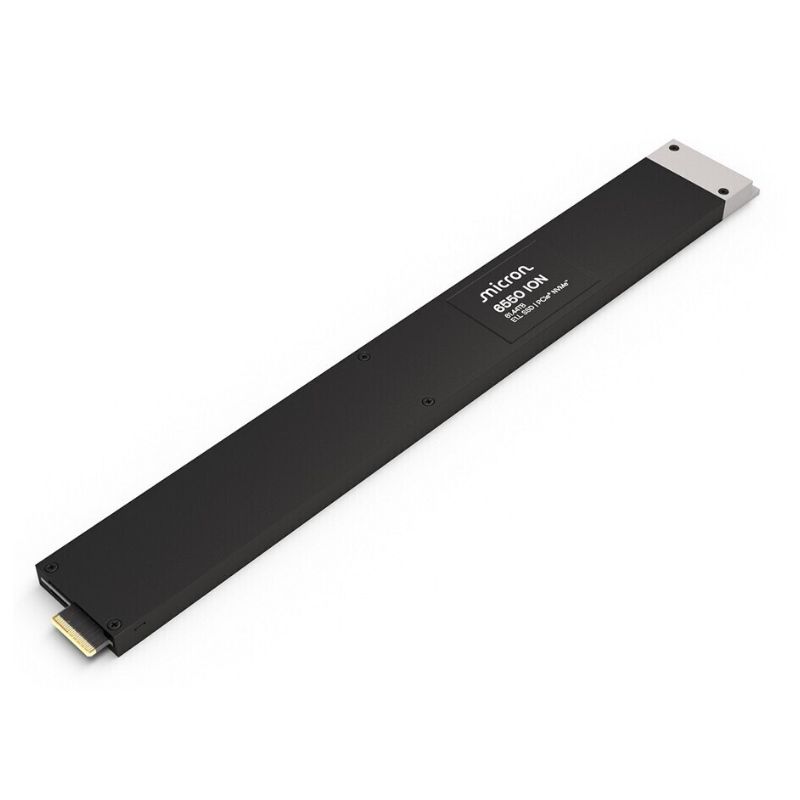


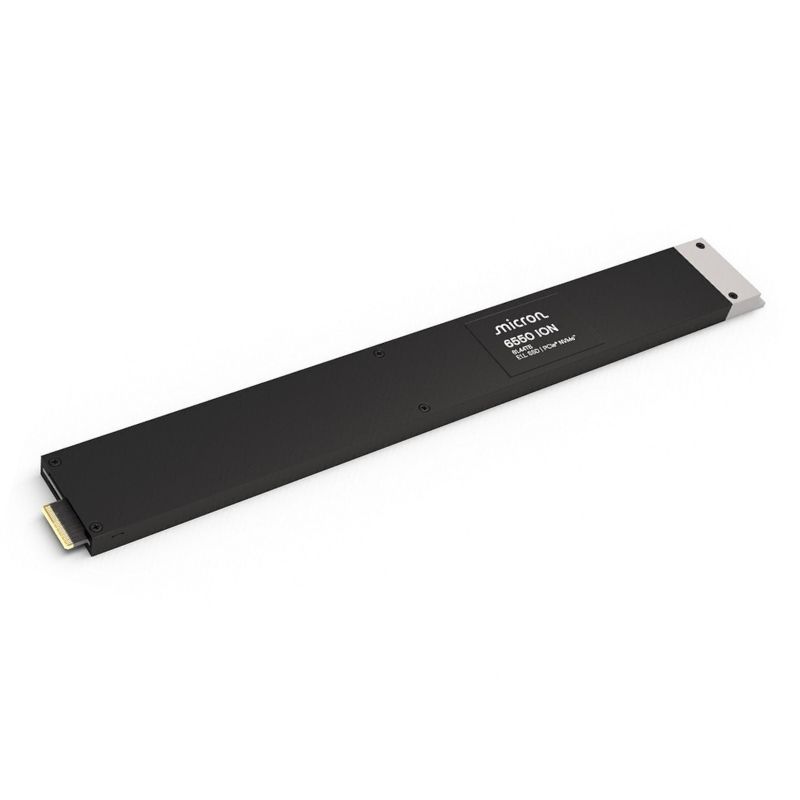
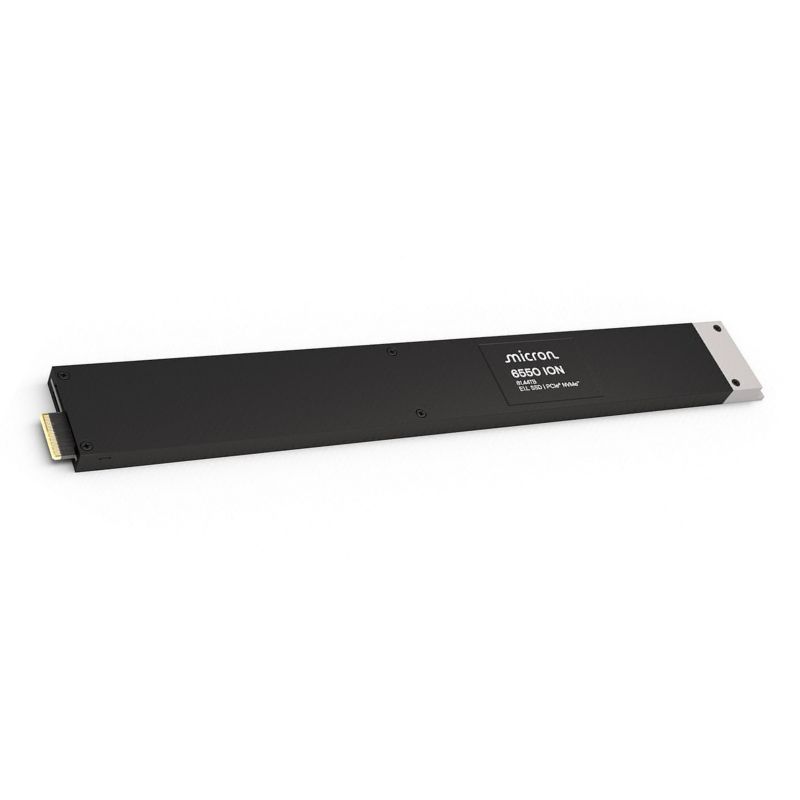
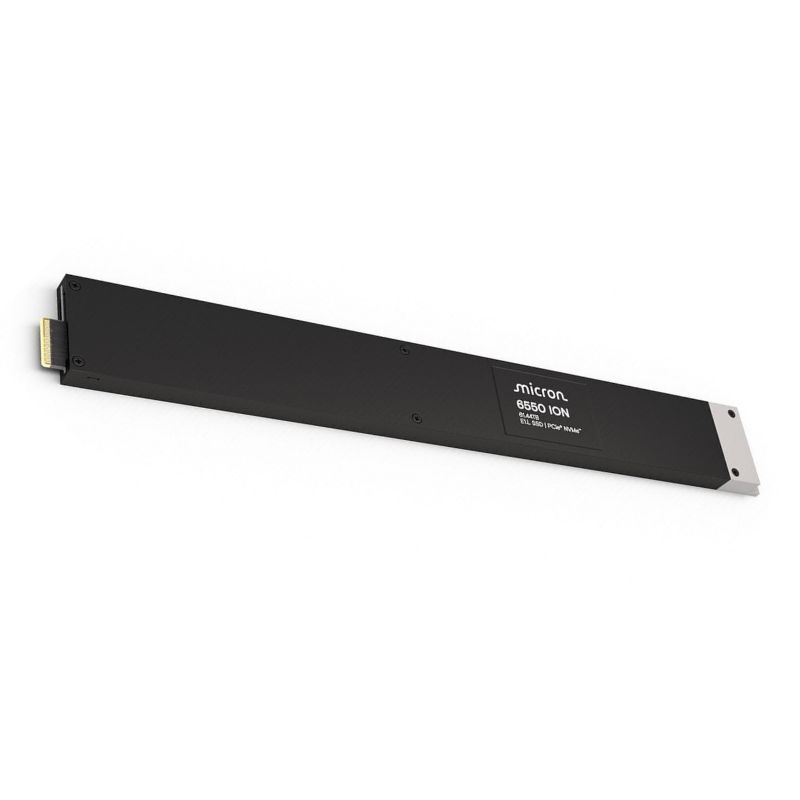
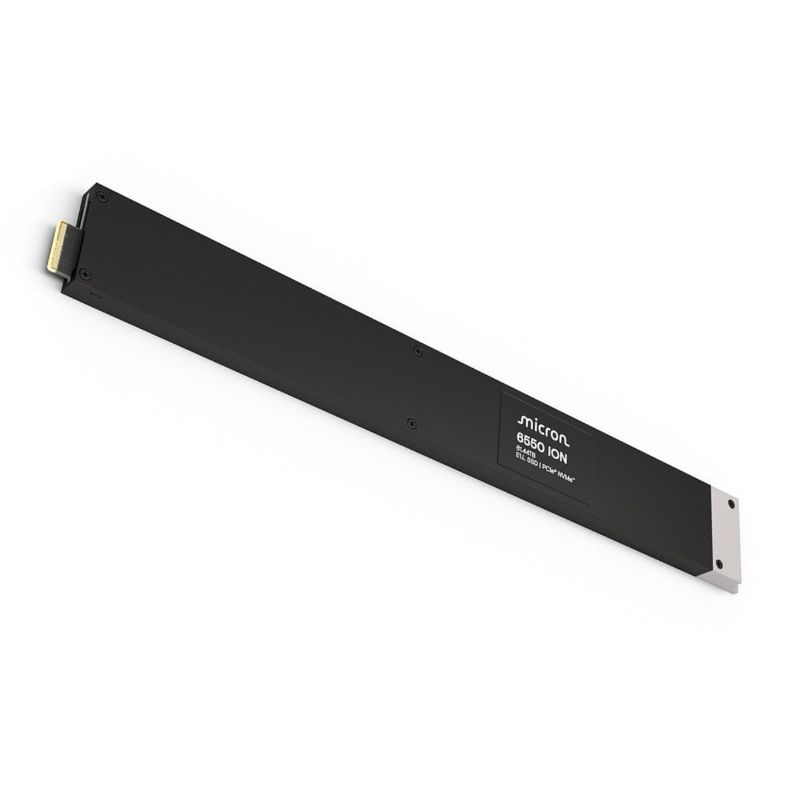
Micron MTFDLBN30T7THL-1BK1DFCYY 6550 ION 30.72TB PCIe NVMe Enterprise SSD. New Sealed in Box (NIB) with 3 years Warranty
Overview of the Micron 30.72TB Solid State Drive
The Micron 6550 ION series represents a class of ultra-high-density NVMe SSDs engineered for large-scale data center deployments. With capacities reaching 30.72TB in a single drive, this category is focused on maximizing storage density per rack unit while reducing total cost of ownership (TCO). The MTFDLBN30T7THL-1BK1DFCYY variant is positioned within this ecosystem as a flagship capacity model optimized for cold and warm storage tiers, content repositories, big data analytics, and AI dataset lakes.
The enterprise solid-state storage category built around high-capacity NVMe PCIe drives represents one of the most advanced segments in modern data infrastructure. Devices such as the MTFDLBN30T7THL-1BK1DFCYY Micron 6550 ION 30.72TB PCIe NVMe Enterprise Solid State Drive are designed specifically to meet the demands of hyperscale data centers, AI workloads, cloud-native applications, and high-density virtualization environments. These storage solutions are engineered to deliver extreme performance density, exceptional endurance, and optimized power efficiency while maintaining consistent low latency under sustained workloads.
Unlike traditional SATA-based SSDs or spinning hard disk drives, enterprise NVMe SSDs leverage the PCIe interface to dramatically increase bandwidth and reduce latency. The NVMe protocol is optimized for flash memory, allowing parallel command queues and deep queue depths, which are essential for modern multi-core processors and distributed computing environments. In this category, storage is no longer a passive component but a high-performance computational accelerator that directly influences system throughput and application responsiveness.
This category is particularly important for organizations transitioning from legacy HDD arrays to all-flash or hybrid-flash infrastructures. By consolidating multiple terabytes into a single NVMe device, enterprises can reduce rack space, minimize power consumption, and simplify storage management layers. The Micron 6550 ION lineup is designed with a focus on scalability, allowing data centers to expand storage capacity without linear increases in operational complexity.
PCIe NVMe enterprise SSDs operate on a high-speed serial interface that eliminates the bottlenecks associated with older storage protocols. The PCIe architecture provides multiple lanes of data transfer, enabling simultaneous read and write operations at extremely high throughput levels. In enterprise environments, this translates into faster database queries, reduced virtual machine boot times, and improved real-time analytics performance.
The NVMe protocol further enhances this efficiency by introducing multiple I/O queues, each capable of handling thousands of commands. This parallelism is crucial for modern workloads such as container orchestration, distributed AI training, and high-frequency transaction processing systems. The MTFDLBN30T7THL-1BK1DFCYY class of drives is designed to fully exploit these capabilities, ensuring that storage does not become a limiting factor in compute-heavy environments.
One of the defining characteristics of this storage category is its extreme capacity density. A single 30.72TB NVMe SSD significantly reduces the number of physical drives required to achieve petabyte-scale storage systems. This reduction in drive count directly impacts system design, reducing failure points, cabling complexity, and cooling requirements.
High-capacity enterprise SSDs are especially beneficial in environments where space efficiency is critical. Hyperscale data centers, cloud service providers, and enterprise backup systems benefit from reduced rack utilization while maintaining high throughput performance. Additionally, large-capacity drives simplify RAID group configurations and improve rebuild times in case of drive failure.
The enterprise NVMe SSD category is designed to support a broad range of demanding workloads. These include artificial intelligence model training, machine learning inference pipelines, big data analytics platforms, high-performance computing (HPC) clusters, and large-scale virtualization environments. In each of these scenarios, storage performance directly impacts overall system efficiency.
AI and ML workloads benefit significantly from high-throughput storage due to the constant movement of large datasets. Training models require repeated access to massive data files, and NVMe SSDs reduce data loading bottlenecks. Similarly, analytics platforms that process structured and unstructured data rely on fast random read/write operations to maintain real-time insights.
Enterprise-grade NVMe SSDs are engineered for consistent performance under heavy and sustained workloads. Unlike consumer-grade storage devices that may experience performance throttling, this category is optimized for predictable latency and stable throughput. Low latency is essential for mission-critical applications such as financial trading systems, database transaction processing, and cloud-native microservices.
The internal architecture of drives like the Micron 6550 ION series includes advanced NAND flash management, parallel channel architectures, and optimized firmware algorithms. These components work together to reduce read and write amplification, ensuring that performance remains consistent even under mixed workload conditions.
Enterprise SSDs are built with a strong emphasis on endurance and reliability. Drive writes per day (DWPD) ratings are significantly higher than consumer SSDs, allowing continuous operation in write-intensive environments. This is essential for workloads such as logging systems, virtualization clusters, and large-scale database operations.
Data integrity is maintained through advanced error correction code (ECC) mechanisms, wear leveling algorithms, and over-provisioning strategies. These technologies ensure that data remains accurate and accessible throughout the drive’s operational lifespan. In addition, enterprise SSDs typically include power-loss protection features that safeguard in-flight data during unexpected power interruptions.
Power efficiency is a critical factor in enterprise storage deployment. High-density NVMe SSDs significantly reduce the energy consumption per terabyte compared to traditional hard drives. This reduction in power usage directly translates into lower operational costs and reduced cooling requirements in large-scale data centers.
Thermal management is equally important, as NVMe drives operate at high speeds that generate heat under sustained workloads. Enterprise SSDs in this category are designed with advanced thermal throttling controls and heat dissipation mechanisms. These features ensure consistent performance while preventing overheating in densely packed server environments.
Security is a fundamental requirement for enterprise storage systems. NVMe SSDs in this category often include hardware-based encryption capabilities, such as AES 256-bit encryption, ensuring that data remains protected at rest. These features are essential for organizations operating in regulated industries such as healthcare, finance, and government infrastructure.
Compliance readiness is supported through secure erase functions, firmware authentication, and access control mechanisms. These features ensure that sensitive data can be securely managed throughout the drive lifecycle, from deployment to decommissioning.
In modern data architectures, enterprise NVMe SSDs are often deployed as part of tiered storage systems. High-performance NVMe drives serve as hot storage layers, while high-capacity models like the 30.72TB category function as warm or nearline storage tiers. This hybrid approach optimizes cost efficiency while maintaining performance where it is needed most.
Integration with object storage systems, distributed file systems, and cloud-native storage platforms allows organizations to dynamically allocate data based on access frequency and performance requirements. This improves overall infrastructure efficiency and reduces unnecessary resource consumption.
Hyperscale environments require storage solutions that can scale horizontally without introducing complexity. High-capacity NVMe SSDs simplify this requirement by reducing the number of physical devices needed to reach exabyte-scale storage architectures. This improves rack density and reduces interconnect overhead.
Cloud providers benefit from this scalability by offering high-performance storage services with reduced latency and improved reliability. The ability to deploy fewer, higher-capacity drives simplifies maintenance operations and reduces hardware replacement cycles.
Compared to traditional spinning hard disk drives, enterprise NVMe SSDs offer significantly higher performance, lower latency, and improved energy efficiency. HDDs rely on mechanical movement, which introduces delays and limits I/O operations per second. In contrast, NVMe SSDs operate using flash memory, enabling near-instantaneous data access.
When compared to SATA SSDs, NVMe SSDs provide even greater advantages due to their direct PCIe connection and parallel processing capabilities. SATA interfaces are limited in bandwidth and cannot fully support modern high-performance workloads. As a result, NVMe SSDs have become the standard for enterprise-grade storage systems.
The enterprise storage category continues to evolve rapidly as demand for higher capacity and performance grows. Future developments are expected to include increased PCIe bandwidth, higher NAND layer counts, and improved energy efficiency. These advancements will further enhance the capabilities of ultra-high-capacity SSDs like the Micron 6550 ION series.
Emerging workloads such as generative AI, real-time edge computing, and distributed cloud architectures will continue to drive innovation in this category. Storage solutions will increasingly function as integral components of compute infrastructure rather than passive data repositories.


 Contact Us
 Information
 Catalog
 Solid State Drives (SSD)
 Network Switches
 Hard Disk Drives
 HBA & Controllers
 PC & Servers
 PC & Server Memory
 CPU & Processors
 Network Routers
 Power Supplies
 Tape Drives & Libraries
 Network Devices
 Computer & Network Cables