(7% discount is applied at checkout)
Cart is empty
Your go-to destination for cutting-edge server products
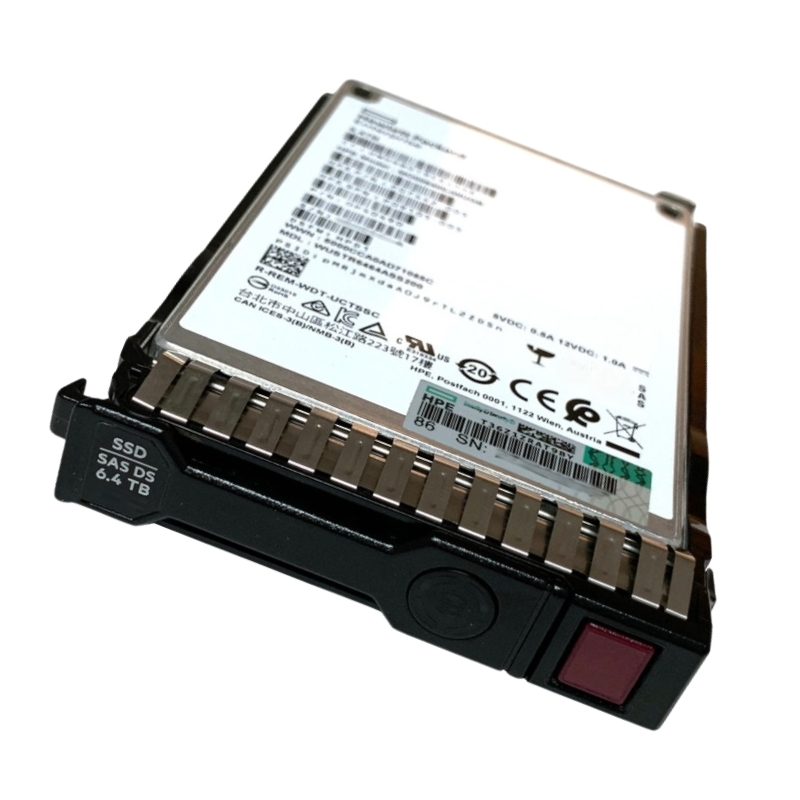


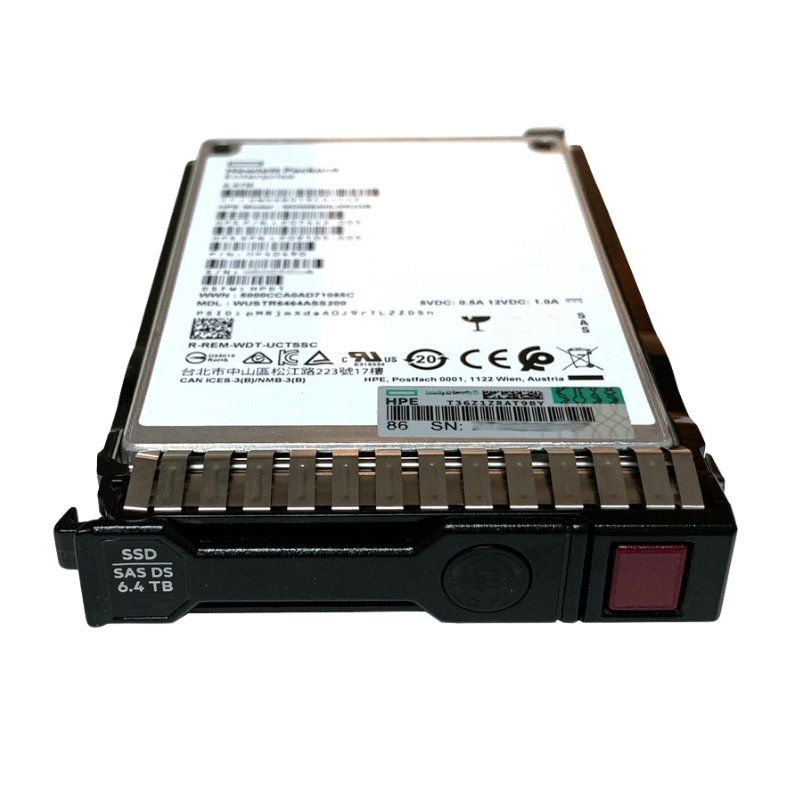
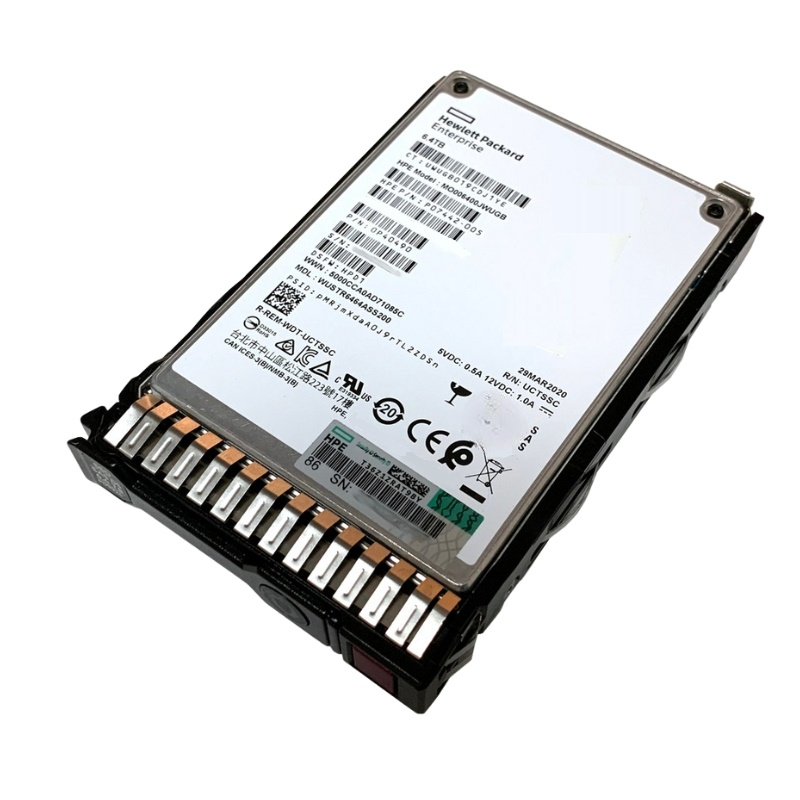
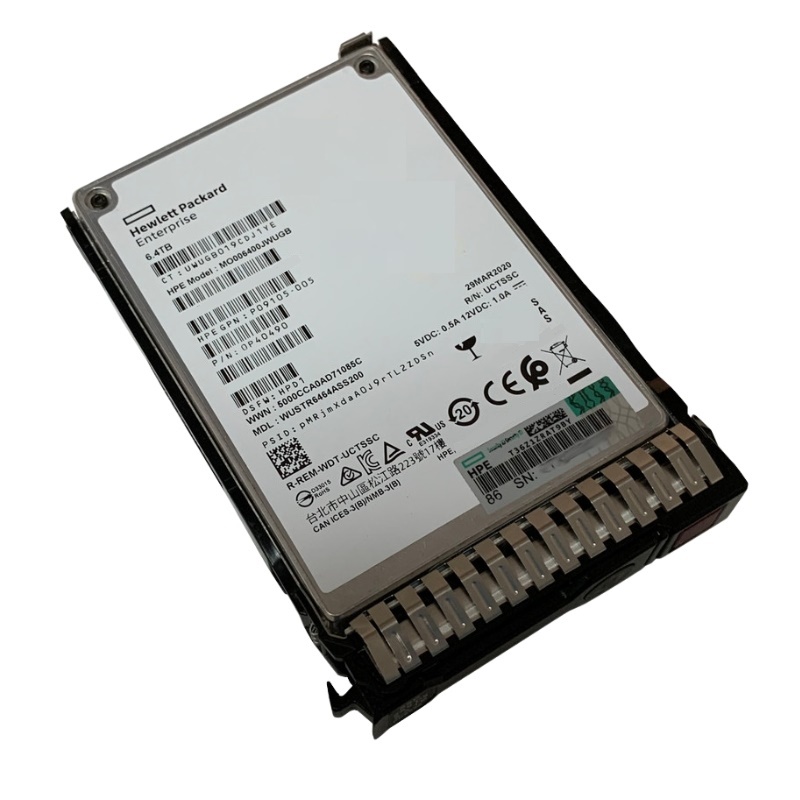
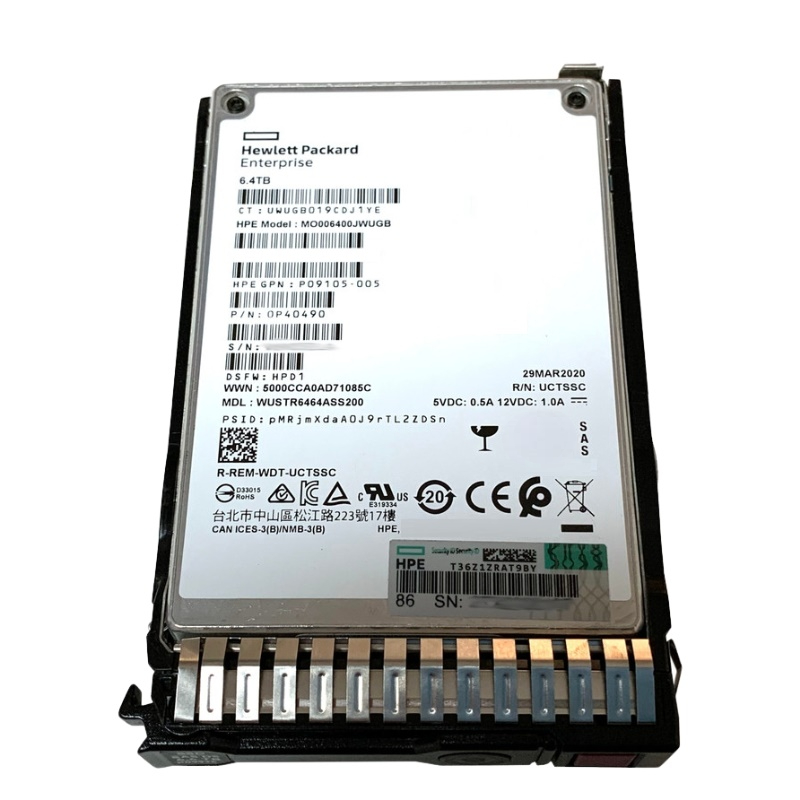
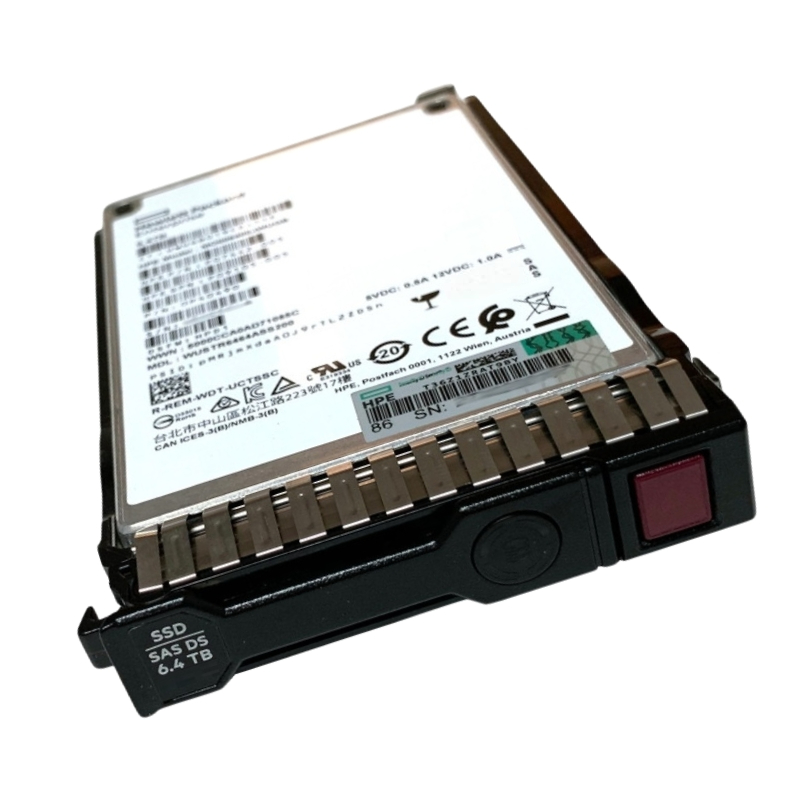
HPE MO006400PZXFA Pm1655 6.4TB Mixed Use SAS 24GBPS 2.5inch Multi Vendor Hot Swap Internal SSD. Factory-Sealed New in Original Box (FSB) with 3 Years Warranty - Call
The HPE PM1755 MO006400PZXFA solid-state drive represents a high-performance, enterprise-grade storage solution engineered for mixed-use workloads. Offering exceptional speed, endurance, and reliability, this 6.4TB SAS 24Gb/s SSD is designed to meet the demanding requirements of modern data centers and mission-critical applications.
This HPE enterprise SSD delivers outstanding I/O performance with consistent throughput and low latency. Built to handle both read- and write-intensive applications, it enhances system responsiveness and supports faster data access.
The compact 2.5-inch form factor of the HPE PM1755 SSD allows seamless integration into a wide variety of server bays, providing flexibility for scalable deployments.
This SSD is fully certified for use in multiple HPE ProLiant Gen10 and Gen10 Plus servers. It ensures smooth operation and seamless integration with HPE storage ecosystems, delivering dependable data handling for a wide range of server models.
The HPE PM1755 6.4TB SSD is built with a mixed-use endurance rating, allowing it to perform efficiently under both transactional and analytical workloads. With a 3 DWPD rating, it can withstand significant write cycles daily, ensuring sustained longevity in enterprise deployments.
Ideal for enterprises requiring a balance between speed, durability, and capacity, the HPE PM1755 MO006400PZXFA excels in:
The SAS 24Gb/s interface enhances communication between drives and servers, offering improved signal integrity and higher throughput compared to older SAS generations. This ensures that large datasets can be processed quickly and efficiently with minimal latency.
Designed For: Proliant Dl20 Gen10 Plus, Dl20 Gen10 Plus Base, Dl20 Gen10 Plus Entry, Dl20 Gen10 Plus High Performance, Dl20 Gen10 Plus Performance, Dl325 Gen10 Plus V2 For Weka Base Tracking (2.5), Dl325 Gen10 Plus V2 Performance (2.5), Dl345 Gen10 Plus (2.5), Dl345 Gen10 Plus Base (2.5), Dl345 Gen10 Plus Entry (2.5), Dl360 Gen10 Plus (2.5), Dl360 Gen10 Plus All-nvme Server For Software Defined Storage (2.5), Dl360 Gen10 Plus For Sap Hana Compute Block (2.5), Dl360 Gen10 Plus For Weka Base Tracking (2.5), Dl360 Gen10 Plus Network Choice (2.5), Dl380 Gen10 (2.5), Dl385 Gen10 Plus V2 (2.5), Dl385 Gen10 Plus V2 Base (2.5), Dl385 Gen10 Plus V2 Entry (2.5), Simplivity 325 Gen10 Plus V2 Node
Overview HPE MO006400PZXFA 6.4TB Mixed-Use 24Gbps SSD
The HPE MO006400PZXFA Pm1655 class SSD belongs to a category of enterprise internal solid-state drives designed for sustained mixed-workload environments. This category emphasizes a balance between high throughput and long-term endurance, delivering a 6.4TB capacity in a 2.5-inch form factor with a 24 Gbps SAS interface and hot-swap capability for multi-vendor server ecosystems. Use this continuous category description to inform buyers, system architects, procurement teams, and driven e-commerce pages about the practical value, technical advantages, and deployment considerations of this SSD family.
Drives in this category are engineered to handle both random and sequential I/O patterns common to virtualization, transactional databases, mixed OLTP/OLAP workloads, and consolidation platforms. Rather than optimizing exclusively for either read-heavy or write-heavy profiles, mixed-use SSDs deliver a compromise of sustainable write endurance and consistent read latency, making them ideal for environments that run a combination of application types on the same storage tier.
The 2.5-inch form factor used by this category supports high-density server trays and modular storage enclosures. Hot-swap support expedites maintenance and reduces downtime by allowing drives to be replaced while servers remain online. Multi-vendor compatibility ensures that the drive fits into HPE, Dell, Lenovo, and other server OEM sleds designed for SAS 2.5-inch drives.
24Gbps SAS (Serial Attached SCSI) provides a robust, server-grade link layer with enterprise features such as dual-port connectivity and link failover. Although 24 Gbps is the peak link speed for this class, controllers will often negotiate down to 12 Gbps when connected to older backplanes. Architects should verify controller firmware support and HBA compatibility matrices when integrating these drives into heterogeneous environments.
Many enterprise SAS SSDs include dual-port support for multipath I/O (MPIO) and SAN topologies that need path redundancy. This capability is particularly important for storage arrays and server setups that demand continuous access during component maintenance or failure scenarios.
High-density deployments can create thermal hotspots; this category typically includes thermal throttling mechanisms and recommended airflow profiles. Drive-level temperature monitoring (via S.M.A.R.T. attributes) and rack-level cooling policies should be documented in deployment guides to avoid performance degradation under heat stress.
6.4TB mixed-use SAS SSDs are commonly used for hypervisor datastores that host multiple virtual machines with differing I/O patterns. Their endurance and consistent latency make them a strong fit for VDI pools, multi-tenant cloud nodes, and consolidated databases where workloads cannot be strictly classified as read- or write-dominant.
Databases with frequent small random reads/writes — such as NoSQL engines, metadata services, and indexing engines — benefit from the low latency and predictable IOPS delivered by these drives. Deploying the Pm1655 family as a fast tier for metadata or write-back caches can dramatically reduce application response times compared to spinning media.
For sequential workloads like backup streams, media processing, and large file staging, the sequential throughput available on 24Gbps SAS can provide high data transfer rates while preserving compatibility with existing enterprise infrastructure.
Although branded by HPE as MO006400PZXFA, drives in this class are often built to industry standards and consequently exhibit broad interoperability across server vendors. Nevertheless, it is crucial to consult the server vendor’s compatibility lists and firmware advisories because vendor-specific firmware or drive whitelists can affect drive behavior in locked OEM systems.
When procuring for enterprise rollouts, review the manufacturer’s warranty terms, RMA procedures, and support-level agreements. Many organizations also consider third-party support options or custom extended warranties for long-lifecycle infrastructure projects.
Because the 2.5" form factor enables high slot density, plan for adequate cooling and airflow to sustain drive performance. Enclosures with front-to-back airflow and monitoring for intake/exhaust differentials help maintain recommended operating temperatures across densely populated bays.
Plan RAID levels based on performance, capacity, and resiliency needs. Mixed-use SSDs are frequently deployed in RAID 10 for balanced performance and redundancy or RAID 6/RAID-DP where higher capacity efficiency is required. Keep rebuild times and the potential for correlated failures in mind — SSD rebuilds can be faster than HDDs, but redundancy must still be planned carefully.
Many enterprise SSDs offer hardware encryption as an option to meet data protection and regulatory compliance mandates. SED functionality may be supported through standards like TCG Opal or vendor-specific implementations; validate encryption key management, erasure certification, and integration with existing identity and key management systems.
Read-optimized drives are tuned for predominantly read workloads and may offer higher read-density for a lower cost-per-GB, but they lack the endurance required for frequent writes. Mixed-use drives strike a middle ground, providing greater endurance than read-optimized models while preserving reasonable capacity and performance for both reads and writes.
NVMe delivers lower latency and higher parallelism via PCIe, making it a strong choice for ultra-low-latency applications. However, SAS SSDs with a 24Gbps link remain preferable in environments where SAS infrastructure, dual-port availability, and broad multi-vendor compatibility are necessary. For phased migrations, mixed-use SAS SSDs can serve as an incremental performance boost without wholesale changes to host connectivity or SAN architecture.
Enterprise SSDs command a premium per GB relative to spinning media, but the total cost of ownership (TCO) should factor in power savings, reduced floor space, improved application performance, and simplified cooling strategies. Mixed-use 6.4TB drives are often more cost-efficient for mixed workloads compared to higher-endurance write-optimized models.
Plan refresh cycles to align with warranty windows and expected endurance depletion. Drives with remaining warranty and robust SMART telemetry may retain value for lower-risk workloads, but sensitive data or regulatory constraints might mandate strict retire-and-destroy policies.
Mixed-use SAS SSDs are often consumed by software-defined storage (SDS) layers and caching appliances, where they provide a predictable fast tier for metadata and hot data. When used as a cache, these SSDs accelerate reads and absorb write bursts while preserving backend HDD capacity for long-term storage.
Integrate drive telemetry into observability stacks — SNMP traps, RESTful APIs, and vendor monitoring agents enable proactive operations and automated escalations. Predictive analytics leveraging historical SMART trends can lower unscheduled downtime by enabling preemptive replacements.
Mixing SSDs and HDDs in hybrid arrays is common, but mixing different SSD endurance classes in the same RAID group can create imbalanced wear and unpredictable rebuild characteristics. When possible, group drives with similar performance and endurance ratings to keep rebuild times and failure domains manageable.
Firmware changes can alter drive behavior, performance curves, and compatibility. Validate firmware releases in test environments that mirror production hardware and controller versions. Schedule updates during maintenance windows and have rollback plans if vendor tools support it.
Lifespan depends on workload intensity, write amplification, and environment. Monitor TBW counters and vendor-specified endurance ratings, and plan replacements before SMART indicators reach critical thresholds. For mission-critical applications, assume conservative lifetime estimates and provision spare drives accordingly.
By replacing or augmenting spinning media with mixed-use SSDs, IT teams can dramatically reduce database latency, improve virtual machine boot times, and shorten caching delays — all of which translate into better user experience and more predictable SLAs.
Higher capacity and better performance per watt reduce rack space and energy needs. For enterprises focused on sustainability or constrained by power/cooling budgets, this category provides an efficient path to densification without sacrificing reliability.
For organizations not yet ready for an all-NVMe architecture, 24Gbps SAS mixed-use SSDs offer measurable performance gains while keeping existing SAN and server investments intact. This enables phased modernization strategies and risk-controlled upgrades.
Include spare drives in purchase orders, opt for thorough warranty coverage where possible, and plan for orderly disposals with certified data sanitization to meet compliance and environmental standards.


 Contact Us
 Information
 Catalog
 Solid State Drives (SSD)
 Network Switches
 Hard Disk Drives
 HBA & Controllers
 PC & Servers
 PC & Server Memory
 CPU & Processors
 Network Routers
 Power Supplies
 Tape Drives & Libraries
 Network Devices
 Computer & Network Cables