
(7% discount is applied at checkout)
Cart is empty
Your go-to destination for cutting-edge server products
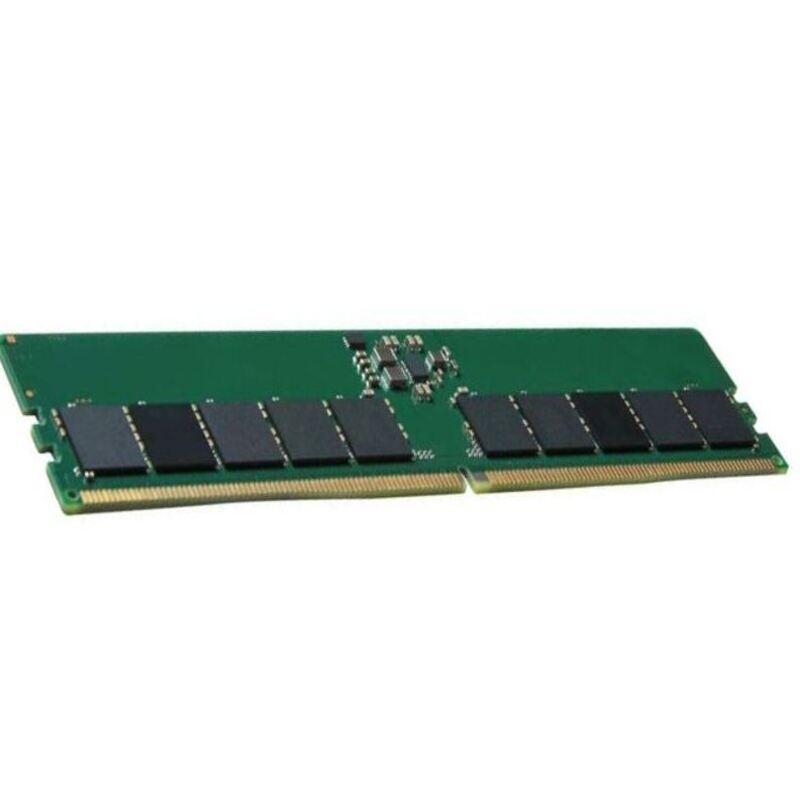
Micron MTA144ASQ16G72PSZ-2S6G1 128GB Memory Module 2666mhz Ddr4 Pc4-21300 Cl19 Ecc 2s4rx4 Ecc Registered. New (System) Pull with 1 year replacement warranty
In the realm of enterprise computing, data integrity, system stability, and capacity scalability are non-negotiable. This is where server-grade memory modules, like the Micron MTA144ASQ16G72PSZ-2S6G1, become the foundational pillars of reliable data centers, high-performance servers, and mission-critical workstations.
At the heart of robust enterprise server and high-performance computing (HPC) systems lies the critical component of memory. The Micron MTA144ASQ16G72PSZ-2S6G1 represents a pinnacle of server-grade RAM technology, designed for data centers, cloud infrastructure, and mission-critical workstations requiring exceptional capacity, unwavering reliability, and sustained throughput. This 128GB DDR4 module is engineered to deliver the foundational performance necessary for virtualization, large-scale databases, in-memory computing, and complex computational tasks.
The alphanumeric part number provides a complete technical specification summary. Breaking it down: MT denotes Micron Technology. A144A indicates a 144-ball FBGA package and the module's registered ECC (RDIMM) form factor. SQ signals a commercial temperature range (0°C to 85°C). 16G refers to the density of the individual DRAM components (16 Gigabit). 72 signifies the bus width (72-bit with ECC) and organization. PSZ is the revision/process code. Finally, -2S6G1 specifies the speed grade (DDR4-2666), latency (CL19), and other timing parameters. This detailed naming convention allows system integrators to precisely identify compatibility and performance characteristics.
The fundamental specifications of this module define its place in the server ecosystem. It is a 128GB (Gigabyte) capacity memory module. The module operates at a data rate of 2666 Megatransfers per second (MT/s), commonly referred to as DDR4-2666, with a PC4-21300 designation (theoretical peak bandwidth of 21.3 GB/s per module). It requires a nominal operating voltage of 1.2V, a significant reduction from previous DDR3 generations, contributing to lower power consumption and heat generation in dense server configurations. The physical interface is the industry-standard 288-pin Dual In-Line Memory Module (DIMM).
The "Octal Rank" designation is a key feature of this high-capacity module. A rank is an independent set of DRAM chips that the memory controller can access simultaneously, limited by the controller's addressing capability. An octal rank (8-rank) module effectively stacks memory capacity within a single DIMM slot by utilizing dual-rank components on both sides of the PCB and advanced multiplexing technology. This allows for a massive 128GB of memory to reside on one module, maximizing slot efficiency. This is particularly valuable in 1U and 2U servers with a limited number of DIMM slots per CPU, enabling total system memory capacities exceeding 1TB or even 2TB in dual-processor platforms.
Achieving 128GB on a single DIMM requires state-of-the-art component and PCB engineering. Micron utilizes high-density 16Gb (Gigabit) DRAM chips. To form the 72-bit wide data path (64 data bits + 8 ECC bits), multiple chips are grouped per rank. For an octal rank module, a significant number of these chips are mounted on a complex, multilayer printed circuit board. This PCB features optimized signal integrity pathways to ensure clean data transmission at high speeds, even with the increased electrical load of eight ranks. The physical layout is carefully designed to manage heat dissipation across the densely populated board.
For enterprise environments, data integrity and system stability are non-negotiable. This Micron module incorporates two crucial technologies to meet this demand: Registration and Error-Correcting Code (ECC).
The module features a Registering Clock Driver (RCD), a component that buffers the address and command signals from the memory controller before they are sent to the individual DRAM chips on the module. This buffering reduces the electrical load on the controller, allowing a single memory channel to support more DIMMs and, in this case, more ranks with greater stability. This is essential for populating all slots in a multi-channel server motherboard without risking signal degradation, which is critical for achieving maximum system capacity.
Buffering via the RCD enhances signal integrity, especially at higher data rates and with high-rank-count modules. It enables more reliable communication between the CPU's integrated memory controller and the dense DRAM array. This results in a more robust platform capable of continuous, error-free operation under heavy loads, a fundamental requirement for servers in data centers.
ECC is an advanced data integrity mechanism. It works by adding extra bits (8 bits for every 64 bits of data) to create a checksum for the data stored in memory. When data is read, the memory controller recalculates the checksum and compares it to the stored value. ECC can detect and, more importantly, automatically correct single-bit errors (soft errors) that can be caused by cosmic rays, electrical noise, or other factors. It can also detect, though not correct, multi-bit errors. This proactive correction prevents corrupted data from causing application crashes, system hangs, or silent data corruption, which is catastrophic in financial, scientific, and database applications.
While standard ECC protects against single-bit errors, advanced server platforms support enhanced RAS (Reliability, Availability, Serviceability) features like SDDC (Spare Device Data Correction), an evolution of the Chipkill concept pioneered by IBM. When paired with a supporting Intel Xeon or AMD EPYC platform, this Micron module can help the system withstand the complete failure of an entire DRAM chip within a rank, without crashing or losing data. This provides an additional layer of hardware fault tolerance for the most demanding environments.
While capacity and reliability are paramount, performance remains a key metric. This module operates at a speed grade of DDR4-2666, a mainstream high-performance tier for many server platforms.
The DDR4-2666 specification means the module performs 2,666 million data transfers per second per pin. With a 64-bit data bus (72-bit with ECC), the theoretical peak bandwidth is calculated as: 2666 MT/s * 64 bits / 8 bits/byte = 21,328 MB/s, or approximately 21.3 GB/s. This is the PC4-21300 label (21000 MB/s rounded). In a modern server CPU with multiple memory channels (e.g., six or eight channels), the aggregate bandwidth scales dramatically, feeding multiple processor cores with the data they need to execute tasks in parallel.
The CAS Latency (CL), measured at 19 clock cycles for this module, is the number of cycles between a read command and the moment data is available on the module's output pins. While CL is an important latency metric, overall system latency is influenced by many other timings (tRCD, tRP, tRAS). Server memory often prioritizes stability and capacity over ultra-tight timings. The CL19 rating at 2666 MT/s represents an optimized balance for server workloads, ensuring reliable operation at the advertised speed across a wide range of temperatures and configurations.
For memory-intensive applications like SQL Server, Oracle databases, SAP HANA, and large virtualization hosts (VMware, Hyper-V), the combination of high bandwidth (from speed) and large capacity (128GB per module) is more impactful than ultra-low latency. These applications benefit massively from being able to keep more working data sets entirely in RAM, reducing slow disk I/O. The bandwidth from multiple channels populated with these modules ensures that data can move quickly between memory and the CPU caches.
Proper compatibility is essential for system stability. This module is not designed for consumer desktop PCs.
The MTA144ASQ16G72PSZ-2S6G1 is designed for enterprise servers and workstations based on Intel Xeon Scalable processors (Purley, Cascade Lake, Cooper Lake platforms and later) and AMD EPYC 7002 (Rome), 7003 (Milan), and later generation platforms. It is crucial to consult the specific server manufacturer's (Dell EMC, HPE, Lenovo, Supermicro, etc.) memory qualified vendors list (QVL) or the CPU/motherboard compatibility list to ensure validated operation. These platforms provide the necessary support for octal rank DIMMs, RDIMM buffering, and advanced ECC features.
High-density, octal-rank modules have specific configuration rules. Due to the increased electrical load of eight ranks on a channel, server platforms typically enforce population rules. For example, a channel may support two octal rank DIMMs at 2666 MT/s, but only one at a higher speed like 2933 MT/s. Mixing different rank types (single, dual, quad, octal) within a channel or across channels is often restricted and may force the system to downclock to a lower speed. Optimal performance is usually achieved by populating identical modules across all channels.
A 128GB module operating at 1.2V still draws considerable power due to its high chip count. Server DIMMs often incorporate temperature sensors (TSOD) for thermal monitoring. Proper airflow within the server chassis is mandatory to keep memory within its operational temperature range (0°C to 85°C). Data centers rely on precise environmental controls and server fan profiles to maintain this, ensuring long-term reliability and preventing thermal throttling.
The deployment of 128GB modules transforms the capabilities of a single server node.
Platforms like SAP HANA, Oracle Exadata, and various real-time analytics engines are built on the principle of storing entire databases in system memory. The massive capacity afforded by these modules—enabling multi-terabyte in-memory pools—dramatically accelerates query times, transaction processing, and business intelligence operations, providing actionable insights from big data in real-time.
In virtualized environments, RAM is a primary resource constraint. Each virtual machine (VM) requires a dedicated memory allocation. Using 128GB DIMMs allows a single dual-socket server to host hundreds of VMs, improving consolidation ratios and optimizing data center space, power, and cooling efficiency. This is the backbone of private and public cloud infrastructure.


 Contact Us
 Information
 Catalog
 Solid State Drives (SSD)
 Network Switches
 Hard Disk Drives
 HBA & Controllers
 PC & Servers
 PC & Server Memory
 CPU & Processors
 Network Routers
 Power Supplies
 Tape Drives & Libraries
 Network Devices
 Computer & Network Cables