(7% discount is applied at checkout)
Cart is empty
Your go-to destination for cutting-edge server products
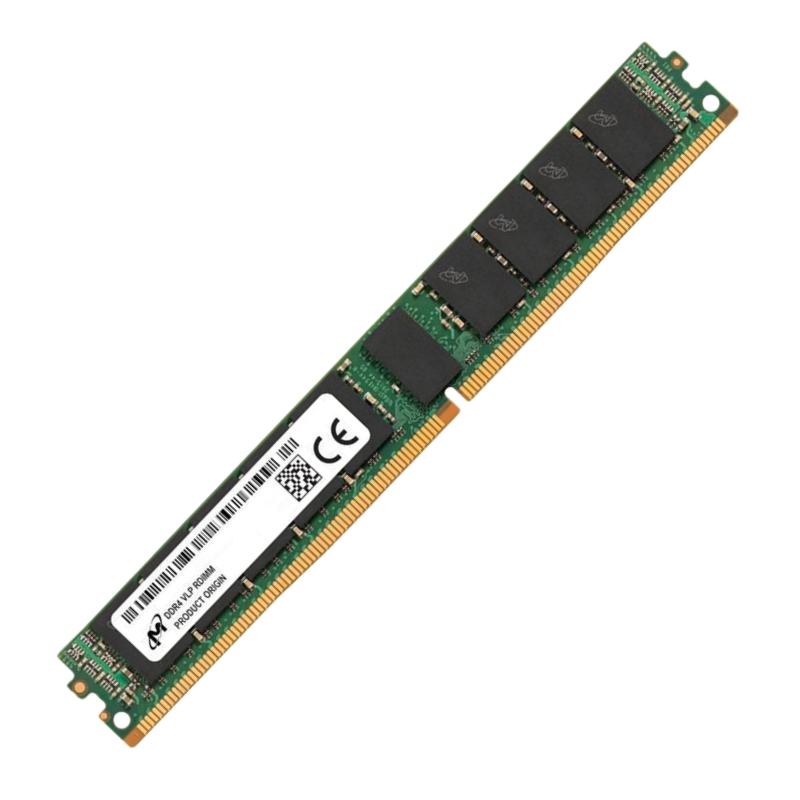


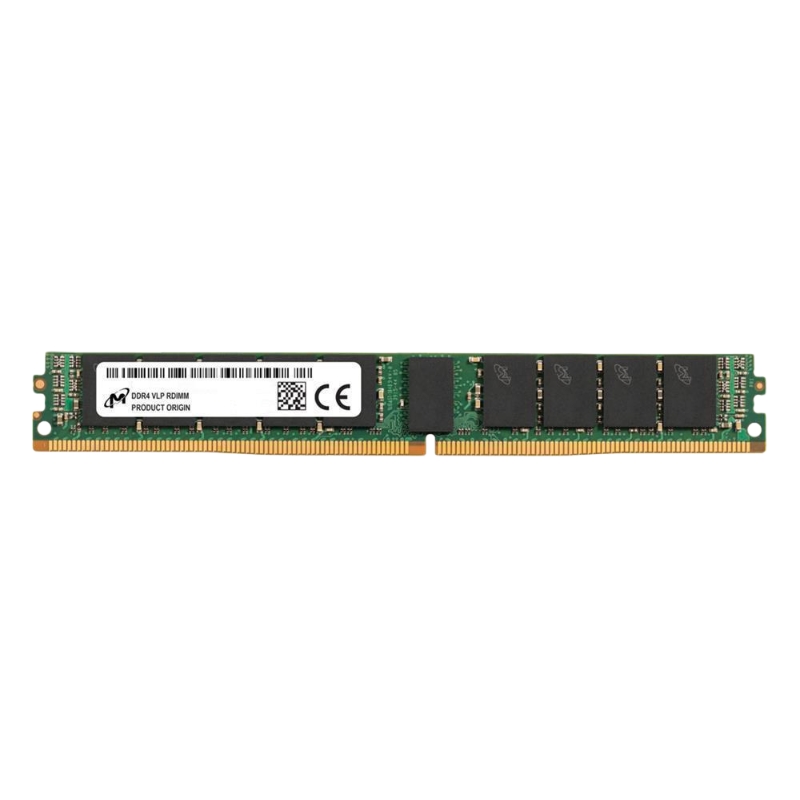
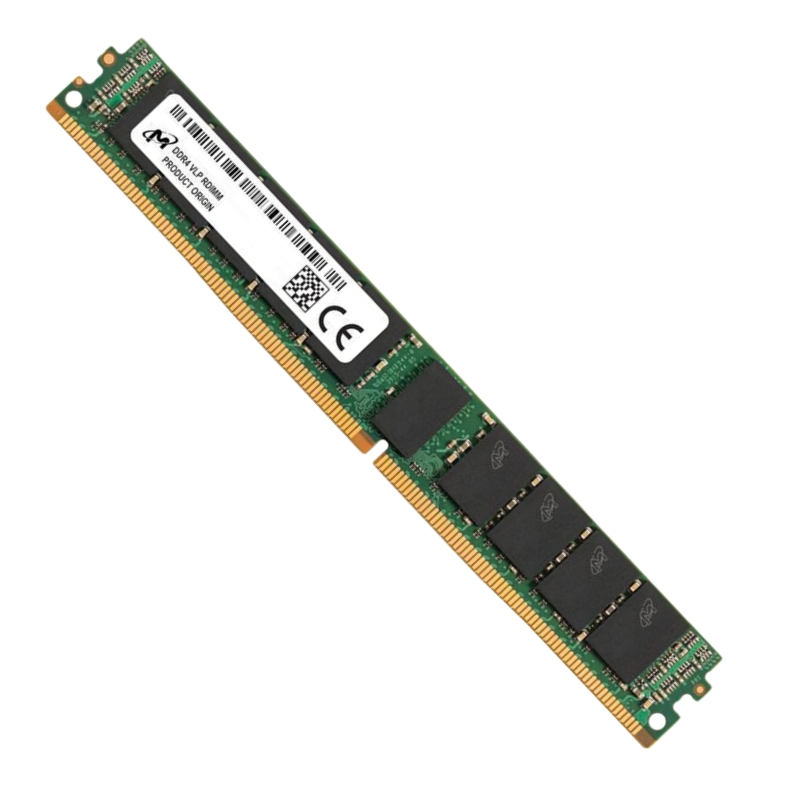
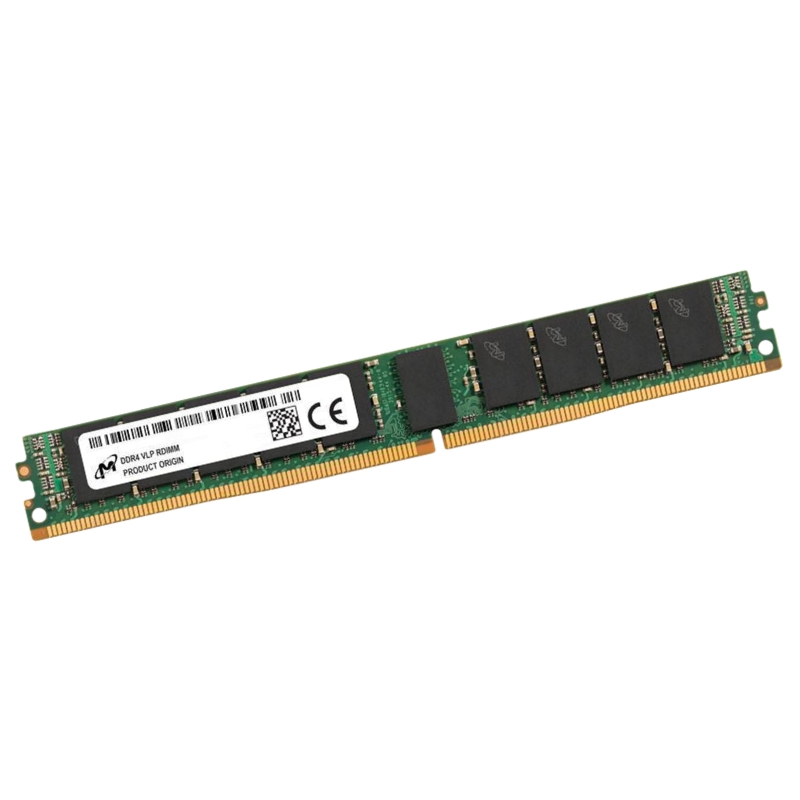
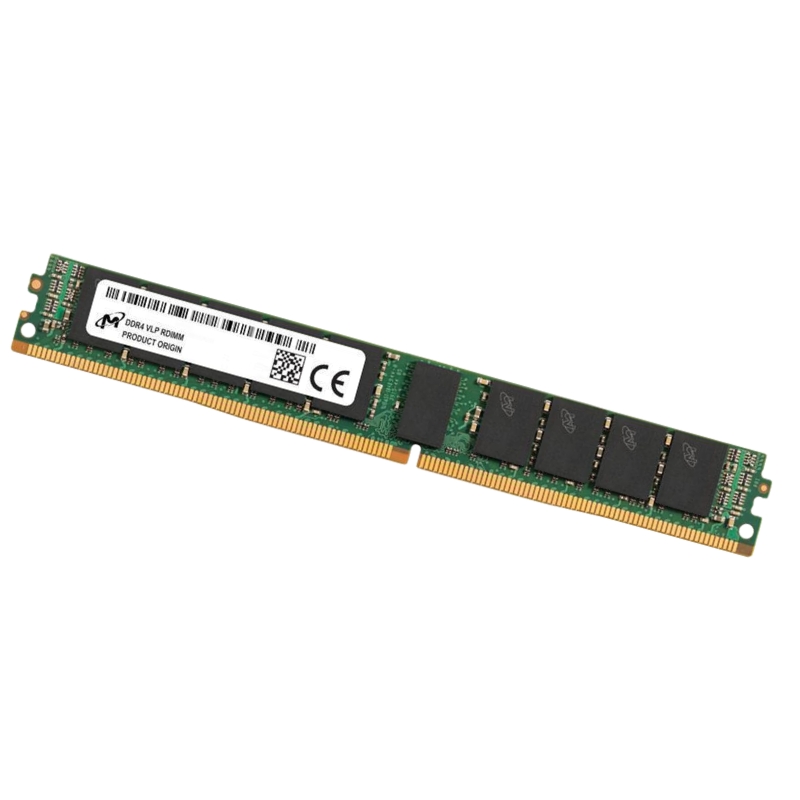
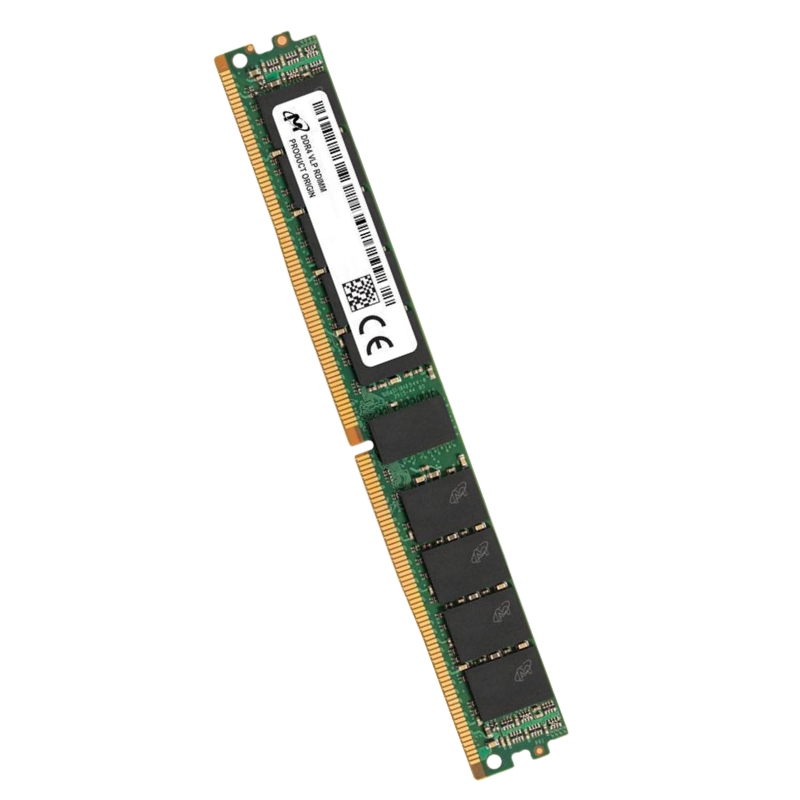
Micron MTA18ADF4G72PZ-3G2B2 32GB ECC Memory Module DDR4-3200MHz PC4-25600 1RX4. New (System) Pull with 1 year replacement warranty
In the realm of enterprise computing, storage, and telecommunications, memory is a critical component that dictates system performance, stability, and density. The Micron MTA18ADF4G72PZ-3G2B2 represents a specialized class of memory engineered for these demanding environments. This module is a 32GB, DDR4-3200, Registered ECC, Very Low Profile (VLP) RDIMM.
The Micron MTA18ADF4G72PZ-3G2B2 represents a specialized class of server and high-density computing memory, engineered for environments where space, reliability, and performance are non-negotiable. This 32GB DDR4 module combines the data integrity of Registered ECC (Error-Correcting Code) with the space-saving design of a Very Low Profile (VLP) form factor, making it a critical component for modern data centers, 1U/2U rack servers, blade systems, and networking equipment where airflow and physical clearance are tightly constrained.
At its heart, this module is defined by a precise set of JEDEC-standard specifications that ensure compatibility and performance in qualified systems. Understanding these parameters is essential for proper system integration and achieving optimal operational stability.
This detailed breakdown provides a consolidated technical reference for the module's key attributes.
Memory Type: DDR4 SDRAM; Module Format: 288-pin RDIMM (Registered ECC DIMM); Total Capacity: 32 Gigabytes (GB); Data Transfer Rate: 3200 Megatransfers per second (MT/s); Module Designation: PC4-25600; CAS Latency (CL): 22 cycles; Operating Voltage: 1.2 Volts (V); Rank Configuration: Single Rank (1R); Physical Profile: Very Low Profile (VLP).
The part number MTA18ADF4G72PZ-3G2B2 follows Micron's naming convention. "MT" denotes Micron Technology. "A" indicates a commercial temperature range (0°C to 85°C). "18AD" refers to the specific DRAM component and product family. "F4G72" signifies a 4Gb component density organized for a 72-bit wide module (64 data + 8 ECC bits). "PZ" indicates a registered ECC VLP module. "3G2" denotes a DDR4-3200 speed grade with specific timings. "B2" is the revision and/or material code. This structured naming allows for precise identification of the module's technical lineage.
The module offers a substantial 32GB (Gigabytes) of memory capacity. This density is achieved using advanced semiconductor manufacturing processes. It is configured as a Single Rank module. A single rank means all the DRAM chips on the module are accessed simultaneously by the memory controller. This design can simplify signal loading on the memory bus compared to dual-rank modules, potentially allowing for higher frequency operation or better compatibility in systems with a high number of installed modules per channel. The 32GB single-rank design is particularly valuable for maximizing total system memory in servers with a limited number of memory slots per channel.
The module operates at a DDR4-3200MHz data rate. This is often expressed as PC4-25600, where 25600 refers to the module's theoretical peak transfer bandwidth in megabytes per second (MB/s). The base timing latency is specified at CL22 (CAS Latency 22). It operates at the standard DDR4 voltage of 1.2V. These specifications are not overclocked profiles but are the guaranteed JEDEC standard (JEDEC POD DDR4-3200AA) for this module, ensuring wide compatibility and stable operation without requiring BIOS adjustments for speed or voltage.
The physical design of this module is one of its most distinguishing features. It adheres to the 288-pin DIMM standard but is built in a Very Low Profile (VLP) format.
Standard Registered ECC DIMMs are typically around 31.25mm (1.26 inches) in height. VLP modules, like the MTA18ADF4G72PZ-3G2B2, are significantly shorter, usually measuring approximately 18.75mm (0.74 inches) in height. This reduction of nearly 40% is crucial in dense server configurations. It allows for improved airflow over the memory modules and other critical components like CPUs and VRMs, leading to lower operating temperatures and potentially increased system reliability and lifespan. Furthermore, it enables memory installation in chassis or near heat sinks where standard-height modules would physically interfere.
The inclusion of both a Register (RCD) and Error-Correcting Code (ECC) defines this module's mission-critical nature. These technologies work in tandem to provide enhanced reliability and signal integrity in server environments.
ECC is a non-negotiable feature for servers and workstations handling sensitive data or running uninterrupted workloads. It detects and corrects the most common types of internal data corruption. Single-bit errors are corrected on-the-fly without any operating system or application intervention. Multi-bit errors are detected and reported to the system, which can then halt operations to prevent data corruption. This dramatically reduces silent data errors that could lead to corrupted calculations, database anomalies, or system crashes.
The "Registered" aspect refers to the presence of a register clock driver (RCD) chip on the module. This chip acts as a buffer for the address and command signals sent from the memory controller. It does not buffer the data signals. By reducing the electrical load on the memory controller, the RCD allows a system to support a much greater number of memory modules—often scaling to multiple terabytes of total RAM—while maintaining signal integrity and system stability. This comes with a one-clock-cycle latency penalty, which is inconsequential for server workloads that prioritize capacity and reliability over ultra-low latency.
It is vital to distinguish this module from consumer-grade Unbuffered (UDIMM) memory and other server types like Load Reduced DIMMs (LRDIMMs). UDIMMs lack both the register and ECC (or may have ECC only) and are designed for desktops and low-end workstations, supporting fewer modules. LRDIMMs buffer both address/command and data signals, enabling even higher capacities and densities but at a higher cost and latency. This Micron module, as an RDIMM, occupies the optimal middle ground for mainstream server applications, balancing capacity, cost, latency, and compatibility.
The Micron MTA18ADF4G72PZ-3G2B2 is designed for specific platforms and use cases. Its compatibility is determined by the system's CPU and chipset.
This DDR4-3200 RDIMM is compatible with a wide range of modern server platforms from Intel and AMD that support registered ECC memory. This includes Intel Xeon Scalable processors (Ice Lake, Cascade Lake, and compatible generations) and AMD EPYC 7002 (Rome), 7003 (Milan), and later series processors. System compatibility must always be verified against the specific server or motherboard manufacturer's Qualified Vendors List (QVL) to ensure tested and validated operation.
This memory excels in space-constrained, high-reliability environments. Primary deployment scenarios include: High-density 1U and 2U rack servers for cloud hosting and virtualization; Telecommunication and networking equipment (routers, switches); Storage area network (SAN) and network-attached storage (NAS) appliances; High-performance computing (HPC) clusters where rack density is key; and Blade server chassis where airflow is severely limited. The VLP form factor makes it the only viable option for many of these applications.
While raw speed is important, server memory performance is multi-faceted, involving bandwidth, latency, and capacity.
The DDR4-3200 speed provides a significant bandwidth uplift over previous common server speeds like DDR4-2666 or DDR4-2400. This increased bandwidth is beneficial for memory-intensive workloads such as in-memory databases (e.g., SAP HANA), scientific simulations, and virtualized environments with many active virtual machines. The CAS Latency of CL22 is typical for JEDEC DDR4-3200 RDIMMs and represents the balanced engineering choice for server-grade stability at this data rate.
To realize the full bandwidth potential, modules must be installed in matching pairs or sets according to the server manufacturer's guidelines for the specific CPU. Modern server CPUs typically feature multi-channel memory architectures (e.g., 6-channel for Intel, 8-channel for AMD EPYC). For optimal performance, channels should be populated symmetrically. The single-rank nature of this module can affect population rules; systems may have specific recommendations for mixing single-rank and dual-rank modules across channels.
Operating at the standard 1.2V, this module is power-efficient for its capacity. The VLP design further enhances its thermal characteristics. The reduced physical stature allows air from system fans to pass more easily over the module's surface and between adjacent modules, preventing hot spots. For extreme environments, some systems may utilize passive heat spreaders, though the VLP design and server-grade airflow often make them unnecessary for operation within JEDEC specifications.


 Contact Us
 Information
 Catalog
 Solid State Drives (SSD)
 Network Switches
 Hard Disk Drives
 HBA & Controllers
 PC & Servers
 PC & Server Memory
 CPU & Processors
 Network Routers
 Power Supplies
 Tape Drives & Libraries
 Network Devices
 Computer & Network Cables