(7% discount is applied at checkout)
Cart is empty
Your go-to destination for cutting-edge server products
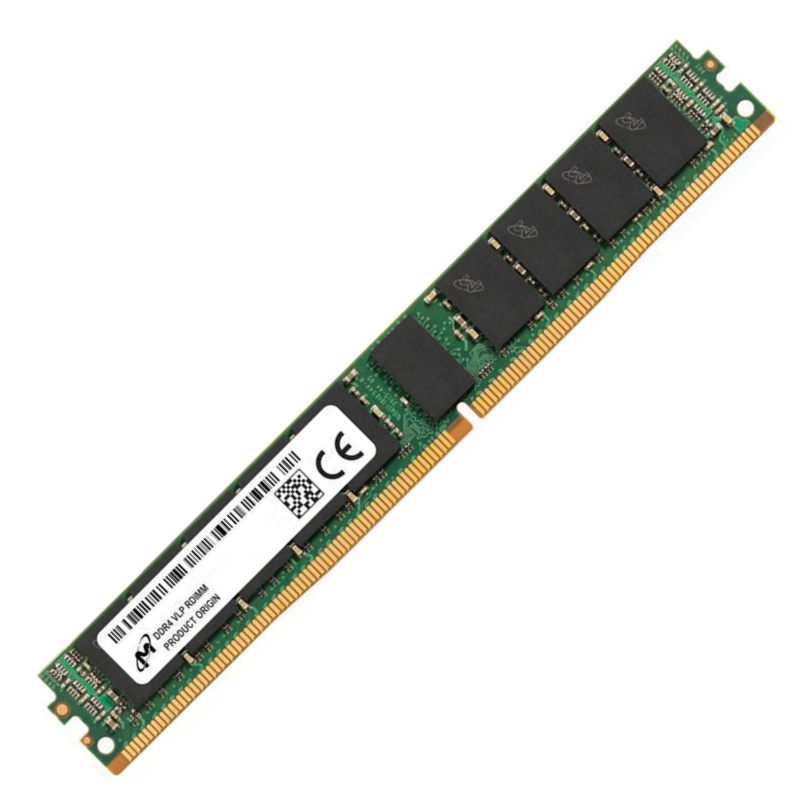


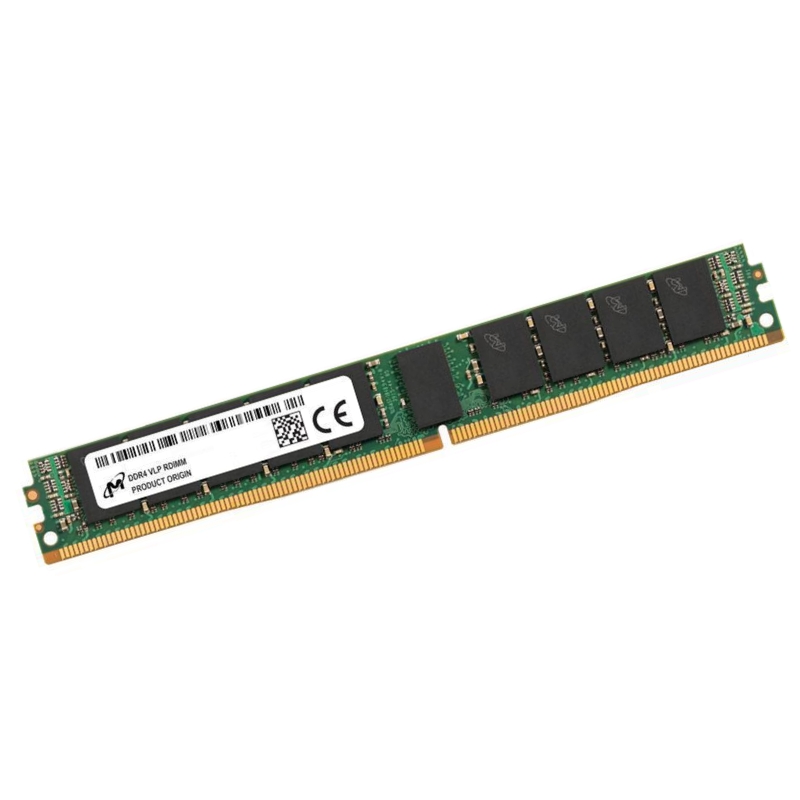
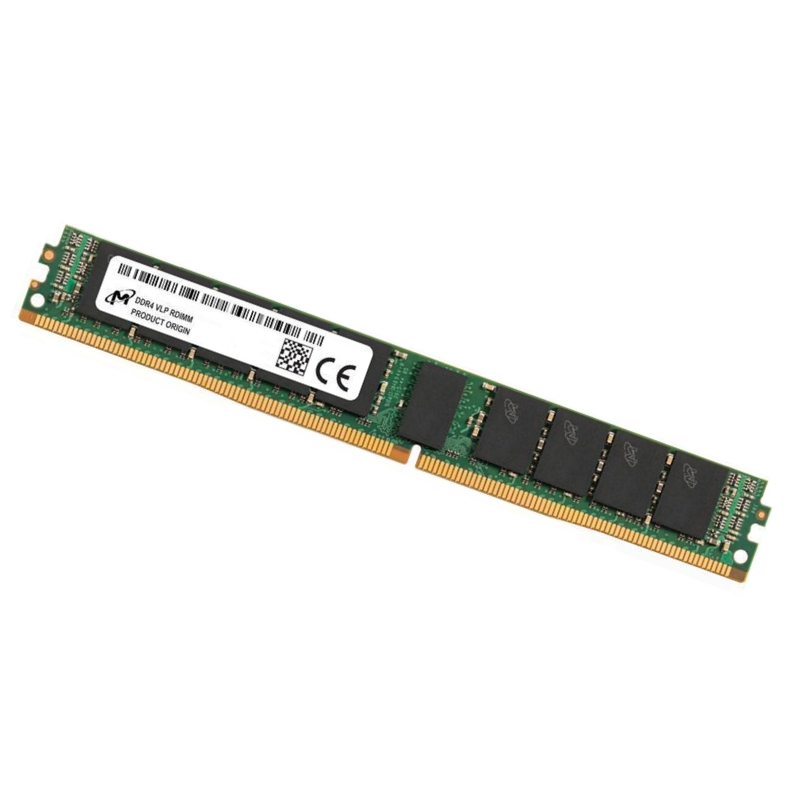
Micron MTA18ADF4G72PZ-3G2F1 32GB DDR4-3200MHz PC4-25600 Memory Module. Factory-Sealed New in Original Box (FSB) with 3 Years Warranty
The Micron MTA18ADF4G72PZ-3G2F1 is a high-performance 32GB DDR4 memory module engineered for enterprise-grade servers and storage systems. This specific module belongs to the critical category of Registered ECC DDR4 memory with a Very Low Profile (VLP) form factor. It is designed to deliver reliability, data integrity, and high-density performance in space-constrained and thermally sensitive server environments.
The Micron MTA18ADF4G72PZ-3G2F1 is a precision-engineered 32GB DDR4 memory module designed for the demanding environment of enterprise servers, high-density storage systems, and specific networking hardware. This module represents a blend of high capacity, reliability-enhancing technology, and a specialized form factor. It is not a standard consumer desktop memory (UDIMM) but falls under the category of server-grade Registered ECC DIMMs, specifically in a Very Low Profile (VLP) design. This makes it a critical component for system builders and IT professionals looking to optimize performance, ensure data integrity, and manage spatial constraints within server racks and chassis.
At its core, this module is defined by a set of standardized and specific technical parameters that dictate its compatibility and performance envelope. These specifications are essential for determining the correct application and system fit.
The module offers a substantial 32GB (Gigabytes) of memory capacity. This capacity is ideal for servers handling virtualization, in-memory databases, large-scale file serving, and other memory-intensive workloads. The fundamental speed grade of this DIMM is DDR4-3200, which indicates a data transfer rate of 3200 Megatransfers per second (MT/s). In terms of peak theoretical bandwidth, this is often referred to as PC4-25600, denoting 25,600 MB/s of bandwidth per module. The base clock speed for this data rate is 1600MHz, with the Double Data Rate (DDR) technology enabling effective transfers on both the rising and falling edges of the clock cycle.
Micron's part number system provides a wealth of information. Breaking it down: 'MTA' denotes a DDR4 DRAM module. '18A' indicates a 288-pin RDIMM. 'DF' signifies specific revision and technology codes. '4G72' reveals the component density and organization—using 4Gb components to form a 72-bit wide module (64 data bits + 8 ECC bits). 'PZ' relates to the Very Low Profile (VLP) form factor. Finally, '3G2F1' is the speed bin designation, confirming the 3200MT/s speed at the specified timings and voltage.
Memory timings, measured in clock cycles, define the latency of various operations. The primary timing for this module is CAS Latency (CL) 22. This means it takes 22 clock cycles for the memory controller to access a column of data after receiving a column address. While higher clock speeds often correlate with slightly higher CL numbers, the overall latency in nanoseconds can be comparable or better. This module's effective latency at 3200MT/s and CL22 is approximately 13.75 nanoseconds. Other important timings (often listed as a series like 22-22-22) would include tRCD and tRP, which are also critical for overall memory subsystem responsiveness.
The Micron MTA18ADF4G72PZ-3G2F1 incorporates two foundational server memory technologies that distinguish it from consumer-grade components: Registered Buffers and Error-Correcting Code.
This is a Registered DIMM (RDIMM). It features a register, or buffer, placed on the module between the memory controller and the DRAM chips. This register buffers the command and address signals, reducing the electrical load on the memory controller. This allows a server system to support a much higher number of memory modules per channel (commonly 2 or 3 per channel versus 1 or 2 for unbuffered memory) and achieve greater total memory capacity. The trade-off is an additional clock cycle of latency due to the buffering process, a cost deemed acceptable for the scalability benefits in multi-DIMM server configurations.
By isolating the DRAM chips from the direct electrical demands of the memory bus, the register improves signal integrity, especially at high speeds and in memory-intensive configurations. It is a key enabler for populating all available memory slots on a multi-processor server motherboard without risking signal degradation.
This module includes ECC, a critical data integrity feature. ECC memory can detect and correct the most common types of internal data corruption. Single-bit errors are corrected on-the-fly without any operating system or application involvement, while multi-bit errors are detected and reported. This prevents silent data corruption that could lead to application crashes, computational errors, or filesystem corruption, thereby ensuring data accuracy and system uptime.
ECC functionality is achieved by using wider memory chips. Standard non-ECC modules are 64 bits wide. This ECC module is 72 bits wide: 64 bits for data and 8 extra bits for the error-correcting code. For every 64-bit word written to memory, the memory controller calculates a checksum and stores it in the additional bits. When the data is read, the checksum is recalculated and compared. A mismatch triggers the correction logic. This makes ECC memory essential for financial, scientific, database, and any other mission-critical computing tasks.
The physical design of this module is a significant differentiator. It adheres to the standard 288-pin DDR4 DIMM layout but is built in a Very Low Profile (VLP) format.
While exact dimensions should be verified against the manufacturer's datasheet, VLP DIMMs are typically around 18.75mm to 20mm in height, compared to the standard ~31.25mm height of a typical RDIMM. This reduced height is not about saving space on the motherboard itself, but about creating crucial clearance above the memory slots.
This design is indispensable in dense, 1U and blade server form factors, or in systems where large CPU heat sinks, horizontal airflow baffles, or other components are positioned directly over the memory slots. VLP modules ensure compatibility and prevent physical interference, allowing for optimal cooling and component layout in tightly packed server racks. It is a solution for maximizing memory capacity in a spatially optimized chassis.
This module is specified as a Single Rank (1R) module. A "rank" is an independent set of DRAM chips that is accessed simultaneously by the memory controller. A single rank module presents one set of 72 bits (with ECC) to the memory controller. Compared to dual-rank (2R) modules, single rank modules can sometimes allow for slightly higher achievable data rates or support more modules per channel on some platforms because they present a lighter electrical load. The choice between 1R and 2R involves balancing capacity, speed, compatibility, and platform-specific limitations.
This DDR4 module operates at a nominal voltage of 1.2V (Volts). This represents a significant power efficiency improvement over the previous generation DDR3 standard, which typically operated at 1.5V or 1.35V. The lower voltage reduces the power consumption and heat generation of the memory subsystem, a critical factor when deploying dozens or hundreds of modules in a data center. Reduced heat output also lessens the burden on cooling systems, contributing to lower overall facility power usage effectiveness (PUE).
The Micron MTA18ADF4G72PZ-3G2F1 is built to comply with the official JEDEC specifications for DDR4-3200 at CL22 and 1.2V. JEDEC is the standards body that defines memory timings, voltages, and protocols. Compliance ensures broad interoperability with server platforms that officially support this speed bin. It is designed to work in systems with Intel Xeon Scalable processors (Cascade Lake, Ice Lake, and compatible generations) and AMD EPYC platforms that list support for DDR4-3200 RDIMMs. Critical Note: Users must always verify compatibility with their specific server motherboard or system manufacturer's Qualified Vendor List (QVL) before purchase.
This specific memory module is engineered for professional and enterprise scenarios where its combination of features provides tangible benefits.
Its primary application is in general-purpose enterprise servers, including rackmount and tower servers from vendors like Dell, HPE, Lenovo, and Cisco, as well as in whitebox server builds. These servers power corporate IT infrastructure, including file and print servers, email servers, and business application servers where reliability and capacity are key.
The 32GB capacity per module is highly effective for virtualization hosts (using VMware vSphere, Microsoft Hyper-V, KVM, etc.). Each virtual machine consumes a portion of physical RAM, so high-density modules like this allow a single server to host a greater number of VMs, improving consolidation ratios and hardware utilization in private cloud and data center environments.
In HPC clusters and systems running in-memory databases (e.g., SAP HANA) or performing large-scale data analytics, the total memory capacity and bandwidth are often the limiting factors. Populating a multi-socket server with these 32GB VLP RDIMMs can enable terabyte-scale memory configurations, allowing massive datasets to reside entirely in RAM for ultra-fast processing.
Many modern Storage Area Network (SAN) and Network Attached Storage (NAS) appliances, as well as high-end network routers and security appliances, use server-style architecture and require registered ECC memory for caching, metadata management, and operating system execution. The VLP form factor is frequently specified in these appliances to ensure fitment with custom cooling solutions.


 Contact Us
 Information
 Catalog
 Solid State Drives (SSD)
 Network Switches
 Hard Disk Drives
 HBA & Controllers
 PC & Servers
 PC & Server Memory
 CPU & Processors
 Network Routers
 Power Supplies
 Tape Drives & Libraries
 Network Devices
 Computer & Network Cables