
(7% discount is applied at checkout)
Cart is empty
Your go-to destination for cutting-edge server products
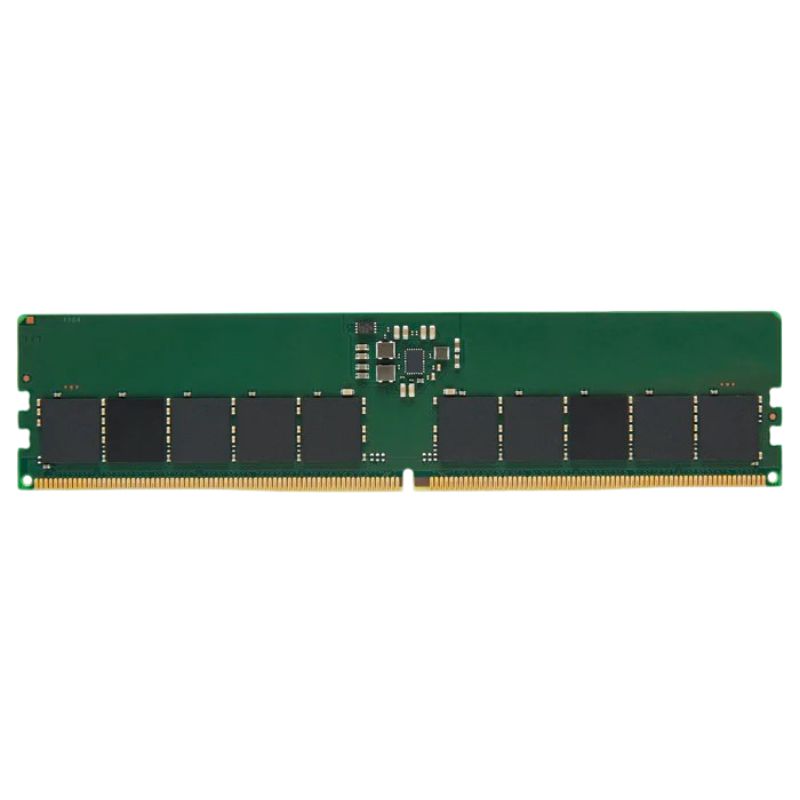


Micron MTA18ADF4G72PZ-3G2F1R 32GB DDR4-3200MHz PC4-25600 Memory Module. Factory-Sealed New in Original Box (FSB) with 3 Years Warranty
The Micron MTA18ADF4G72PZ-3G2F1R represents a highly specialized and engineered memory module designed for the demanding environment of modern servers, workstations, and storage systems. As a 32GB DDR4 Registered ECC DIMM operating at 3200MHz, it balances high bandwidth with exceptional data integrity and signal stability.
The Micron MTA18ADF4G72PZ-3G2F1R is a high-performance, server-grade memory module engineered for demanding computational environments. This 32GB DDR4 module combines robust Registered ECC functionality with a Very Low Profile (VLP) form factor, making it a critical component for modern data centers, cloud infrastructure, and high-density enterprise servers. Its specifications are meticulously designed to balance speed, capacity, reliability, and physical compatibility.
This module delivers a blend of high-density memory with optimized signal integrity. Operating at a data rate of PC4-25600, it transfers data at 3200 million transfers per second (MT/s) on a 288-pin DDR4 interface. The module requires a standard voltage of 1.2V, aligning with DDR4's power-efficient architecture, and adheres to a CAS Latency (CL) timing of 22. Its single-rank design simplifies memory subsystem loading, enabling higher frequencies and better compatibility in multi-module configurations.
The "32GB" denotes the total storage capacity of the module, which is constructed using high-density DRAM components. The "Single Rank" architecture indicates the module presents one set of 64-bit (72-bit with ECC) data lines to the memory controller. In single-socket or certain dual-socket configurations, single-rank modules can sometimes allow for higher maximum speeds or better population schemes compared to dual-rank modules of the same density, as they present a lower electrical load on the memory channel.
Understanding Micron's part number reveals the module's core attributes. 'MTA' denotes a Module Technology Assembly. '18A' signifies a 128Gb component density. 'DF' indicates a x4 DRAM configuration with Dual (Two) Chip Selects. '4G72' breaks down to a 4Gb component and a 72-bit module width (64 data + 8 ECC). 'PZ' designates a Very Low Profile (VLP) Registered ECC DIMM. Finally, '3G2F1R' denotes the specific speed grade (3200MT/s) and other production characteristics, crucial for ensuring compatibility and performance binning.
A rank is an independently addressable set of DRAM chips. This module's single-rank design means all chips are accessed simultaneously to complete a 72-bit transaction. This can lead to marginally lower access latency in some scenarios compared to dual-rank modules, which must switch between two internal banks. For servers requiring large memory capacities, a mix of single and dual-rank modules is often used to fully populate channels while adhering to the platform's rank-per-channel limitations.
This memory module is not a simple commodity component; it integrates several advanced technologies that differentiate it in the server memory market. Each feature addresses specific challenges in system stability, data integrity, signal fidelity, and thermal management within constrained server chassis.
The module employs both Registering and Error-Correcting Code (ECC) technologies, a standard for mission-critical systems. The register (or buffer) on the DIMM reduces the electrical load on the system's memory controller by buffering the address and command signals. This allows a single memory channel to support more DIMMs, significantly increasing the maximum possible memory capacity of a server.
Concurrently, ECC is a critical data integrity feature. It detects and corrects the most common types of internal data corruption. For every 64-bit word of data, an additional 8 bits are used to store an encrypted checksum. The memory controller calculates this checksum on write and verifies it on read. Single-bit errors are automatically corrected on-the-fly, while multi-bit errors are detected and reported to the system, preventing silent data corruption that could lead to application crashes, computational errors, or data loss.
It is crucial to distinguish this Registered ECC DIMM (RDIMM) from other types. Unlike Unbuffered DIMMs (UDIMMs), RDIMMs offer greater capacity and stability for servers. Compared to Load-Reduced DIMMs (LRDIMMs), which use a more complex buffer to reduce load on the data lines as well, RDIMMs offer a cost-effective, high-performance solution for most enterprise applications where the absolute maximum DIMMs per channel is not required. This module's single-rank design within an RDIMM offers an optimal balance for achieving high-frequency operation.
The Very Low Profile designation is a key physical differentiator. Standard RDIMMs have a height of approximately 31.25mm. VLP modules, like this Micron model, are typically around 18.75mm in height. This reduced vertical clearance is not merely a space-saving feature; it is a critical enabler for modern server design and thermal performance.
In blade servers, hyper-converged infrastructure, and 1U/2U rack servers, space above the memory slots is severely limited. VLP modules allow for the installation of larger, more effective CPU heatsinks or the implementation of passive heat spreaders that direct airflow more efficiently. This enables system integrators to design for higher thermal design power (TDP) processors and maintain optimal operating temperatures for both CPUs and memory, directly impacting system longevity and reliability.
While electrically identical to their standard-height counterparts, VLP DIMMs require specific chassis and motherboard support. It is essential to verify that the target server platform explicitly lists compatibility with VLP RDIMMs. The primary advantage is realized in systems where the physical constraint is the limiting factor for memory population or cooling solution efficacy.
The MTA18ADF4G72PZ-3G2F1R is engineered for platforms requiring DDR4-3200 speed. Its performance is defined not just by its megatransfer rate but by the synergy of its timing, rank configuration, and electrical design, which together determine real-world bandwidth and latency.
The module operates at a data rate of 3200 Megatransfers per second (MT/s), often informally called "3200MHz." The correct industry designation is PC4-25600. The "PC4" denotes a DDR4 module, and the "25600" refers to the theoretical peak bandwidth in megabytes per second (MB/s). This is calculated as 3200 MT/s * 8 bytes (64-bit data bus) = 25,600 MB/s. This high bandwidth is essential for data-intensive applications, virtualization, in-memory databases, and high-performance computing tasks.
The Column Access Strobe (CAS) Latency, or CL22, is a critical timing parameter. It represents the number of clock cycles between the memory controller requesting data and the first piece of data being available. At 3200 MT/s, a clock cycle is 0.625 nanoseconds. Thus, a CL22 latency translates to a real-time delay of 22 * 0.625ns = 13.75 nanoseconds. While higher frequency increases bandwidth, latency is a separate but equally important metric for application responsiveness.
This module is configured as a Single Rank (1R). A "rank" is an independent set of memory chips addressed by the same chip select signal. A single-rank module places less electrical load on the memory channel compared to dual-rank (2R) or quad-rank (4R) modules. This lower loading allows memory controllers to achieve higher operating frequencies more easily and with better signal integrity. In systems where the goal is to maximize frequency, populating channels with single-rank DIMMs is often the preferred path.
This memory module is designed for servers powered by Intel Xeon Scalable processors (e.g., Cascade Lake, Ice Lake, and compatible generations) and AMD EPYC processors (2nd Gen Rome, 3rd Gen Milan, and later). It is imperative to consult the server manufacturer's Qualified Vendor List (QVL) or memory compatibility tool to confirm support for this exact part number, including its VLP form factor and 3200MT/s speed.
The MTA18ADF4G72PZ-3G2F1R is ideally suited for: High-Density Virtualization Hosts, where large, reliable memory pools are needed for numerous virtual machines; In-Memory Analytics and Database Platforms (like SAP HANA), where data integrity and bandwidth are paramount; Cloud Infrastructure and Hyperscale Data Centers, where power efficiency and thermal management in dense racks are critical; and High-Performance Computing Clusters, where consistent, error-free computation is non-negotiable.
For optimal stability, it is strongly recommended to populate memory channels with identical modules (same part number, capacity, rank, and speed). Mixing different modules (e.g., different speeds or ranks) can force all memory to run at the lowest common denominator of timings and speed, potentially negating the performance benefits of this high-speed module. Always follow the server motherboard's population guidelines for channel sequencing and slot priority.


 Contact Us
 Information
 Catalog
 Solid State Drives (SSD)
 Network Switches
 Hard Disk Drives
 HBA & Controllers
 PC & Servers
 PC & Server Memory
 CPU & Processors
 Network Routers
 Power Supplies
 Tape Drives & Libraries
 Network Devices
 Computer & Network Cables


