
(7% discount is applied at checkout)
Cart is empty
Your go-to destination for cutting-edge server products
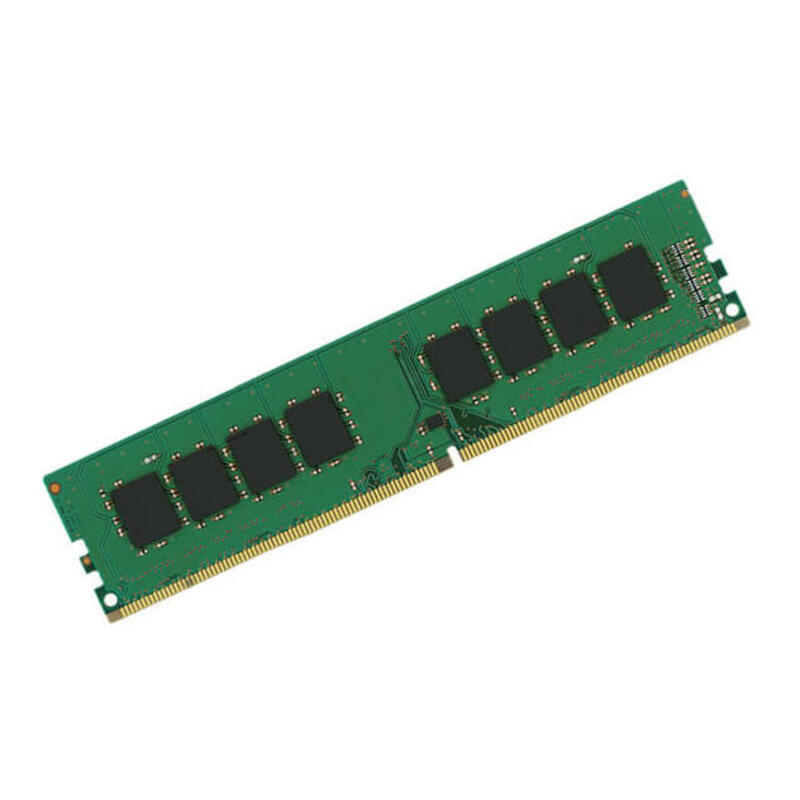
Micron MTA18ASF2G72PDZ-2G3A1 16GB 1X16GB 2400MHZ PC4-19200 Cl17 Ecc Registered DUAL RANK DDR4 SDRAM 288-Pin Dimm Memory Module. New (System) Pull with 1 year replacement warranty
| SKU/MPN | Warranty | Price | Condition | You save |
|---|---|---|---|---|
| MTA18ASF2G72PDZ-2G3A1 | 1 Year Warranty | $550.00 | New Sealed in Box (NIB) | You save: $192.50 (26%) |
| MTA18ASF2G72PDZ-2G3A1 | 1 Year Warranty | $184.00 | New (System) Pull | You save: $64.40 (26%) |
The 16GB DDR4 SDRAM Memory Module from Micron offers high-performance memory for servers and workstations. This advanced memory module is designed to enhance your system's efficiency with impressive speed and reliability.
The realm of server and high-end workstation memory is built on pillars of reliability, integrity, and capacity, requirements distinctly different from standard consumer RAM. At the heart of this domain lie DDR4 ECC Registered DIMMs, a category engineered for mission-critical stability. The Micron MTA18ASF2G72PDZ-2G3A1 exemplifies this class, integrating advanced technologies to ensure flawless operation in demanding 24/7 environments. This module is not merely a memory stick; it is a sophisticated component designed for system integrity, making it the backbone of data centers, enterprise servers, and high-availability computing infrastructure.
Micron's part number is a detailed blueprint of the module's specifications. Breaking it down provides instant insight into its capabilities:
MT: Designates a Memory Module (as opposed to a component chip). A18A: Indicates a 288-pin DDR4 Registered RDIMM form factor. SF: Specifies the module's configuration and rank. Here, "SF" typically denotes a dual-rank module. 2G72: Reveals the organization and width. This segment confirms a 72-bit wide module (64 data bits + 8 ECC bits) with a 2 Gig x 72 organization, pointing to its 16GB total capacity (2GB x 8).
PDZ: This is Micron's internal product family/suffix code. 2G3: The speed grade. Here, "2G3" translates to a data rate of 2400 MT/s (Megatransfers per second), often marketed as 2400MHz. The "A1" at the end frequently signifies a specific revision or minor product variant, ensuring compatibility with validated system lists.
This module is defined by a precise set of technical parameters that dictate its performance and compatibility profile.
The module offers a 16GB (Gigabyte) capacity. This is achieved through a 1x16GB physical organization, meaning a single module provides 16GB. It is configured as a DUAL RANK module. Dual-rank architecture means the memory chips are organized into two independent sets on the same DIMM, allowing the memory controller to access one rank while preparing the other, improving overall efficiency and throughput compared to single-rank modules at the same data rate.
The module operates at a 2400 MHz data rate, which is specified as PC4-19200. The "PC4" denotes DDR4, and the number (19200) represents the theoretical peak bandwidth in megabytes per second (MB/s), calculated as 2400 MT/s * 8 bytes = 19,200 MB/s. Its timing latency is marked at CL17 (CAS Latency 17), which is a measure of the delay in clock cycles between a read command and the moment data is available.
This module incorporates two non-negotiable technologies for enterprise stability: ECC and Registered buffering.
ECC is a paramount feature for any system where data corruption is unacceptable. The module includes extra memory chips to store error-correcting code. It can automatically detect and correct single-bit memory errors on the fly, and detect (but not correct) multi-bit errors. This drastically reduces silent data corruption, system crashes, and downtime, making it essential for financial computations, scientific research, database servers, and long-term storage arrays.
The "Registered" or "Buffered" aspect refers to an additional register (or buffer) on the DIMM that sits between the memory controller and the DRAM chips. This register buffers the address and command signals, reducing the electrical load on the memory controller. This allows a system to support a much larger number of memory modules per channel (typically 2-3 RDIMMs vs. 2 UDIMMs) and greater total capacity without signal degradation. It introduces a minimal one-clock-cycle latency penalty, a worthy trade-off for expansive, stable memory configurations.
The module conforms to the standard 288-pin Dual In-Line Memory Module (DIMM) layout for DDR4. The key notch is in a different position compared to DDR3, preventing accidental insertion into an incompatible motherboard slot. Its physical dimensions are standardized to ensure proper fit in server chassis and workstation motherboards designed for ECC Registered memory.
The Micron MTA18ASF2G72PDZ-2G3A1 is purpose-built for environments where data integrity and uptime are paramount.
Its design caters to a spectrum of professional and enterprise applications.
This is the primary domain for this memory module. It is ideal for rackmount and tower servers from major OEMs like Dell (PowerEdge), HPE (ProLiant), Lenovo (ThinkSystem), Cisco (UCS), and Supermicro. It is used in roles such as file servers, email servers, web servers, and application servers, where continuous operation is critical.
Workstations used for CAD/CAM, 3D animation, scientific simulation, and video editing often support ECC Registered memory. In these fields, a single memory error could corrupt a complex render or calculation, making the data integrity offered by this module invaluable.
Networking equipment like high-end routers, switches, and storage area network (SAN) or network-attached storage (NAS) appliances often utilize ECC RDIMMs to ensure the integrity of data packets and storage operations, preventing corruption across the network.
Deploying this module requires careful attention to system specifications.
The motherboard must explicitly support DDR4 ECC Registered (RDIMM) memory. This support is determined by the system's chipset and CPU. Common server platforms include Intel Xeon Scalable (and older E5/E7 families) and AMD EPYC (and older Opteron) processors. It is not compatible with consumer-grade platforms designed for Unbuffered (UDIMM) memory, such as those using Intel Core or AMD Ryzen processors (with rare exceptions for ECC UDIMM).
For optimal performance, servers should be populated with identical modules—same size, speed, rank, and manufacturer. Mixing different speeds, timings, or ranks can lead to the entire memory subsystem downclocking to the slowest common denominator or causing system instability. Consult the system's user manual for the correct slot population order to enable multi-channel (e.g., Dual, Quad, or Octal Channel) modes for maximum bandwidth.
Beyond the basic specs, this memory module incorporates several under-the-hood technologies that enhance its operation.
As a DDR4 module, it benefits from the generational improvements over DDR3.
DDR4 operates at a lower voltage (1.2V for this module versus 1.5V for standard DDR3), reducing power consumption and heat generation—a critical factor in densely packed servers. The architecture also enables higher per-module densities, making 16GB in a single rank a standard offering.
The DDR4 interface features a redesigned command/address bus and data-bank architecture. The introduction of a pseudo-open drain (POD) signaling standard for the I/O interface improves signal integrity at high speeds, which is crucial for maintaining stability in large memory arrays.
Micron integrates several features directly into the DRAM chips and module design.
It is important to distinguish module-level ECC from On-Die ECC (ODECC). Some underlying DRAM chips may include ODECC, an internal correction mechanism that handles bit errors within the chip itself before they are seen by the module's ECC logic. This provides an additional layer of protection, further enhancing chip longevity and reliability, though this is a feature of the specific DRAM components used and not always explicitly marketed at the module level.
Consider the workload: capacity is often king for database and virtualization servers, while speed and latency may be more critical for CPU-intensive compute nodes. Understanding the relationship between rank and population is also key; a motherboard's maximum capacity may be limited by the number of ranks it can support per channel, not just the number of slots.
Dual-rank modules (like this one) generally offer better performance than single-rank modules at the same speed due to interleaving, but they present a higher electrical load. Some older or specific server platforms may have population rules limiting the number of dual-rank DIMMs per channel.


 Contact Us
 Information
 Catalog
 Solid State Drives (SSD)
 Network Switches
 Hard Disk Drives
 HBA & Controllers
 PC & Servers
 PC & Server Memory
 CPU & Processors
 Network Routers
 Power Supplies
 Tape Drives & Libraries
 Network Devices
 Computer & Network Cables