
(7% discount is applied at checkout)
Cart is empty
Your go-to destination for cutting-edge server products
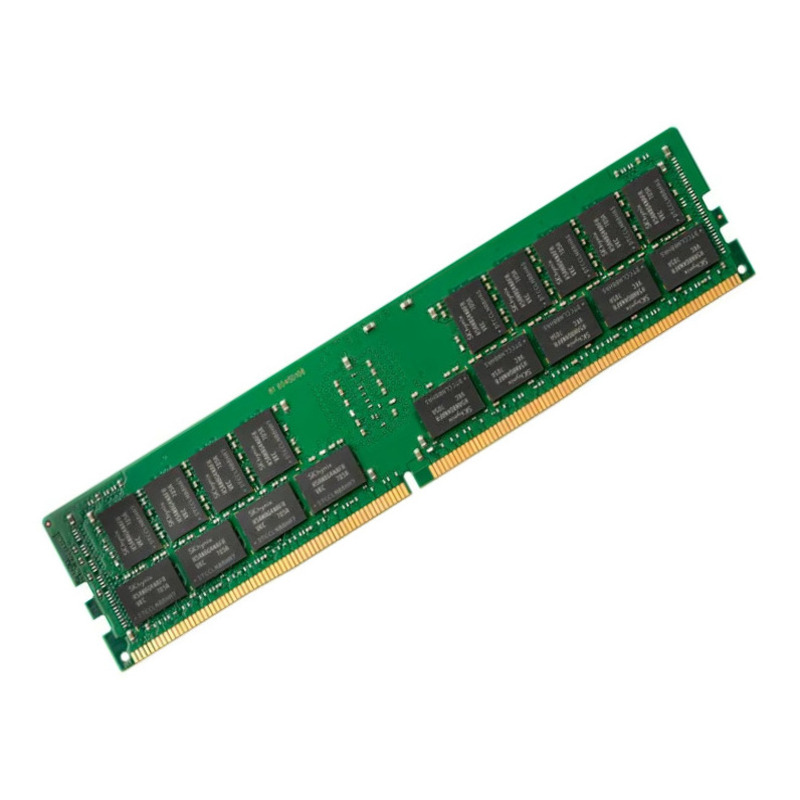
Micron MTA18ASF2G72PDZ-2G3D1 16GB 2400MHZ PC4-19200 Cl17 Ecc Registered Dual Rank DDR4 SDRAM 288-Pin Dimm Memory Module. New (System) Pull with 1 year replacement warranty
| SKU/MPN | Warranty | Price | Condition | You save |
|---|---|---|---|---|
| MTA18ASF2G72PDZ-2G3D1 | 1 Year Warranty | $550.00 | New Sealed in Box (NIB) | You save: $192.50 (26%) |
| MTA18ASF2G72PDZ-2G3D1 | 1 Year Warranty | $184.00 | New (System) Pull | You save: $64.40 (26%) |
The Micron MTA18ASF2G72PDZ-2G3D1 DDR4 SDRAM is a high-performance memory module that offers an impressive capacity of 16GB. This large capacity is ideal for users who require a significant amount of memory for their computing needs. Whether you are a professional using resource-intensive applications or a gamer looking for smooth gameplay, having 16GB of RAM ensures that your system can handle demanding tasks without any performance issues.
At the core of any server or high-end workstation memory upgrade is a deep understanding of the module's key specifications. The Micron MTA18ASF2G72PDZ-2G3D1 is a sophisticated DRAM component engineered for reliability and performance in demanding environments. Its part number, a detailed code, reveals its core attributes: a single 16GB module operating at a data rate of 2400 million transfers per second (MT/s), structured as a dual-rank, registered ECC DIMM. These fundamental specs form the foundation for its compatibility and operational characteristics within a server ecosystem, ensuring data integrity and system stability under continuous load.
The alphanumeric string MTA18ASF2G72PDZ-2G3D1 is not arbitrary; it is a detailed technical identifier. Breaking it down provides immediate insight. 'MT' signifies Micron Technology, the manufacturer. 'A' denotes a DDR4 product. '18' indicates a module density of 18Gb per die (organized to create a 16GB module). 'AS' specifies that it is a 288-pin Registered DIMM (RDIMM). 'F2' relates to the component revision and feature set. 'G72' points to the organization: 72 bits wide (64 data + 8 ECC) with specific bank groupings. 'P' confirms the use of 1.2V DDR4 voltage. 'DZ' is the package and material code. Finally, '-2G3D1' designates the speed grade (2400 MT/s at CL17 timings) and the specific product variant. Understanding this nomenclature allows IT professionals to precisely identify and cross-reference the module.
This module offers a substantial 16 gigabytes (GB) of memory capacity as a single, monolithic module (1x16GB). This density is achieved through advanced semiconductor manufacturing, stacking multiple memory dies on the printed circuit board (PCB). The 16GB capacity per module represents a sweet spot for many server configurations, balancing cost, power consumption, and the ability to populate multiple DIMM slots to reach high total system memory (e.g., 128GB across 8 slots). It allows for efficient scaling of memory resources in database servers, virtualization hosts, and enterprise applications.
Sold as a single module, the MTA18ASF2G72PDZ-2G3D1 provides flexibility for targeted upgrades or custom system builds. It is crucial to note that for optimal performance in multi-channel architectures (like Dual-Channel or Quad-Channel), identical modules should be installed in matched pairs or sets of four. This module is often purchased in multiples to enable these high-bandwidth configurations, but it is verified and qualified to function independently, making it suitable for replacing a failed DIMM or asymmetrically expanding existing memory.
The module is built on the Double Data Rate Fourth Generation (DDR4) SDRAM standard, a significant evolution from DDR3. DDR4 introduces lower operating voltage, higher data rates, and improved signal integrity. The Micron 16GB module leverages these advancements to deliver efficient, high-bandwidth performance for server applications where throughput and latency directly impact overall system responsiveness and transaction processing capability.
The module operates at a clock speed of 2400MHz, which translates to a data rate of 2400 Megatransfers per second (MT/s). This is often interchangeably referred to as the module's "speed." The industry-standard designation for this speed is PC4-19200. The "PC4" denotes DDR4, and the "19200" indicates the theoretical peak bandwidth in megabytes per second (MB/s), calculated as 2400 MT/s * 8 bytes (64-bit data bus) = 19,200 MB/s. The CAS Latency (CL) of 17 refers to the number of clock cycles between a read command and the moment data is available on the output pins. The CL17 timing at 2400MT/s represents a standard performance profile for server-grade RDIMMs, optimizing for stability and compatibility across a wide range of server platforms.
While higher-speed DDR4 modules exist (e.g., 2666MT/s, 2933MT/s), 2400MT/s remains a widely supported and highly stable baseline for Intel Xeon E5 v3/v4, E7, and many AMD EPYC processor generations. This speed ensures broad compatibility and reliable operation without over-stressing the server's memory controller. The delivered bandwidth is more than sufficient for a vast array of enterprise workloads, including file serving, web hosting, mid-size databases, and virtualized environments. The focus at this tier is unwavering reliability over extreme, niche performance.
This is where server memory distinctly separates itself from standard desktop memory. The MTA18ASF2G72PDZ-2G3D1 incorporates three non-negotiable features for enterprise-duty systems: Error-Correcting Code (ECC), Registering, and a Dual-Rank design. Together, these technologies mitigate errors, enhance signal integrity, and support high-density memory configurations, which are paramount for systems that cannot tolerate data corruption or unscheduled downtime.
ECC is a fundamental requirement for any mission-critical computing. The module includes additional DRAM chips to store error-correcting code bits. As data is written to memory, a checksum is calculated and stored. Upon readback, the checksum is recalculated and compared. The ECC circuitry can automatically detect and correct single-bit errors (SEC) and detect (but not correct) multi-bit errors. This hardware-level protection silently safeguards against data corruption caused by cosmic rays, electrical noise, or subtle component degradation, preventing silent data errors from propagating and potentially crashing applications or corrupting databases.
In a server running continuously for months or years, the probability of a soft memory error becomes significant. An ECC module like this Micron DIMM actively monitors and corrects these errors in real-time. System administrators can often review logs to see corrected error counts, providing proactive health monitoring. This capability is essential for financial systems, scientific computing, medical records databases, and any application where data accuracy is legally or operationally mandatory.
The module is a Registered DIMM (RDIMM). It features a register (or buffer) on the DIMM itself, situated between the memory controller and the DRAM chips. This register buffers the command, address, and clock signals, reducing the electrical load on the server's memory controller. This allows a system to support a greater number of memory modules at higher capacities and speeds with greater stability. While the register adds a minimal latency of one clock cycle, the benefit in system scalability and signal integrity is indispensable for multi-socket servers and fully populated memory channels.
Unlike Unbuffered DIMMs (UDIMMs) used in desktops, which place a direct electrical load on the memory controller, RDIMMs buffer the signals to support heavier loads. A further evolution is the Load-Reduced DIMM (LRDIMM), which uses a more advanced buffer to virtually eliminate load, enabling the highest possible densities and speeds. The Micron MTA18ASF2G72PDZ-2G3D1, as an RDIMM, occupies the mainstream server performance and capacity tier, offering the optimal balance of cost, compatibility, density, and performance for most enterprise deployments.
This module is configured as a Dual-Rank (2R) module. A "rank" is an independent set of DRAM chips that is accessed at one time by the memory controller. A dual-rank module essentially contains two logical ranks on one physical DIMM. While only one rank can be active at a time, the controller can interleave operations between the two ranks, effectively hiding latency and improving overall memory bandwidth utilization compared to a single-rank module of the same capacity. This design makes efficient use of the memory channel and is a common configuration for 16GB and 32GB server modules.
The module conforms to the standardized physical and electrical specifications for server-grade DDR4 memory, ensuring mechanical fit and operational compatibility within a wide range of qualified server systems and workstations.
The module uses the 288-pin Dual In-Line Memory Module (DIMM) connector, which is physically and electrically incompatible with prior generations (DDR3's 240-pin). The notch key is in a different position to prevent accidental insertion into an incorrect slot. The PCB height is standard for server modules, though heat spreaders are less common on registered ECC memory due to the focus on airflow and the relatively lower power consumption of DDR4 compared to older standards.
Operating at a nominal voltage of 1.2 volts (V), this DDR4 module provides a significant reduction in power consumption compared to DDR3's 1.5V or 1.35V standards. This lower voltage translates directly to lower heat output and reduced energy costs in large-scale data center deployments where hundreds or thousands of DIMMs may be in operation. The module supports JEDEC-standard power management features to further conserve energy during periods of low activity.
The Micron MTA18ASF2G72PDZ-2G3D1 is designed for specific server and workstation platforms. Its compatibility is determined by its technical attributes aligning with the requirements of the system's motherboard and processor.
This memory module is primarily intended for use in servers from major OEMs such as Dell (PowerEdge), HPE (Proliant), Lenovo (ThinkSystem), Cisco (UCS), as well as Supermicro and other white-box server platforms. It is also compatible with high-end workstations utilizing Intel Xeon or AMD EPYC processors that support registered ECC memory. It is critical to consult the system's official memory compatibility list or qualified vendor list (QVL) before purchase, as BIOS and platform-specific validation can affect performance and stability.
The reliable performance of this Micron module makes it suitable for a vast array of business-critical and infrastructure workloads. Its combination of capacity, ECC protection, and registered stability is the baseline for modern enterprise computing.
In virtualization hosts (utilizing VMware vSphere, Microsoft Hyper-V, or KVM), memory is a primary resource constraint. Populating servers with multiple 16GB RDIMMs allows for the consolidation of numerous virtual machines (VMs), each with dedicated memory allocations. ECC ensures the hypervisor and guest VM data remains intact, while the density allows for cost-effective scaling of RAM per host.
For in-memory databases or analytics platforms (like SAP HANA), where entire datasets reside in RAM, memory capacity, speed, and integrity are paramount. While such deployments may eventually use higher-speed or higher-density modules, the fundamental architecture relies on the same ECC and Registered principles embodied in this module. A cluster of servers using 16GB RDIMMs can form a scalable, reliable in-memory compute grid.


 Contact Us
 Information
 Catalog
 Solid State Drives (SSD)
 Network Switches
 Hard Disk Drives
 HBA & Controllers
 PC & Servers
 PC & Server Memory
 CPU & Processors
 Network Routers
 Power Supplies
 Tape Drives & Libraries
 Network Devices
 Computer & Network Cables