(7% discount is applied at checkout)
Cart is empty
Your go-to destination for cutting-edge server products
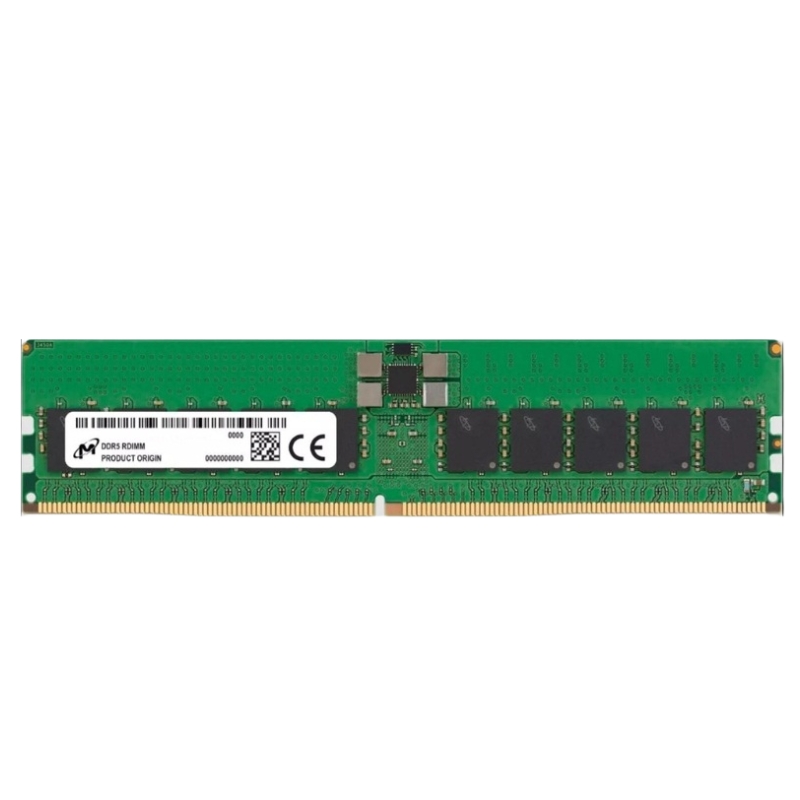


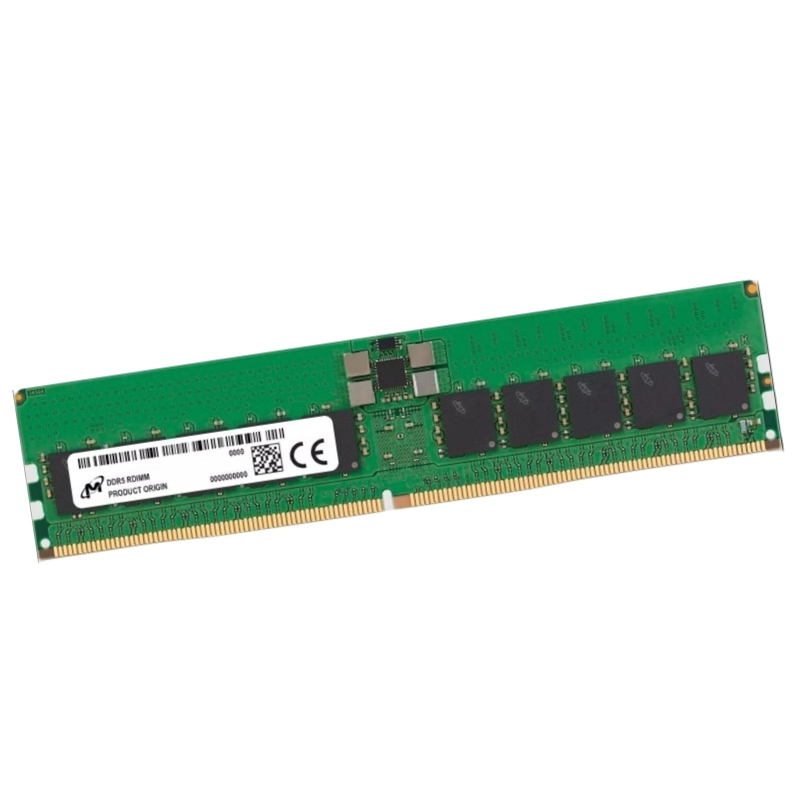
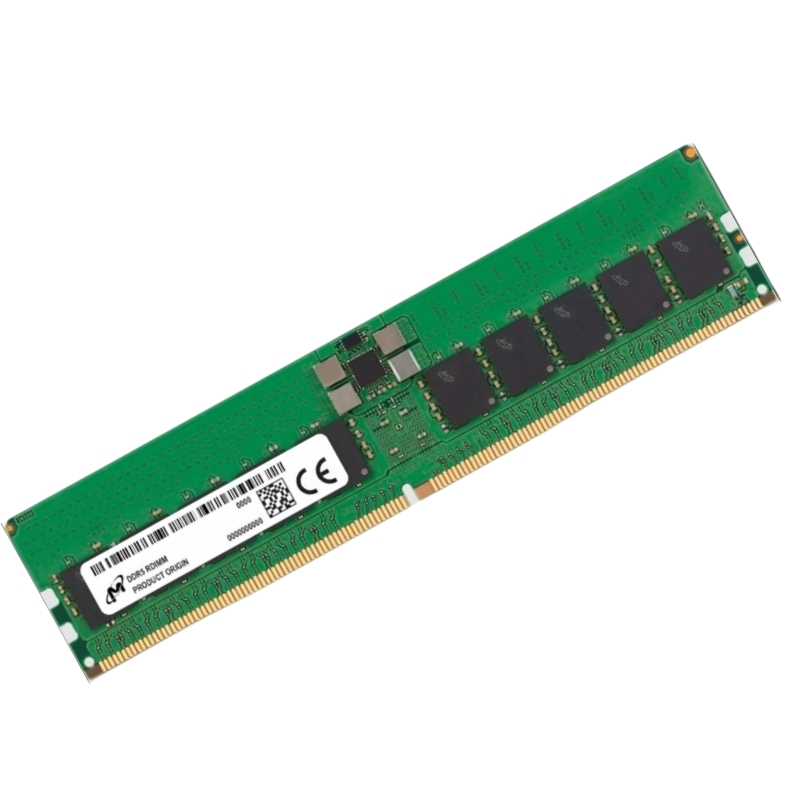
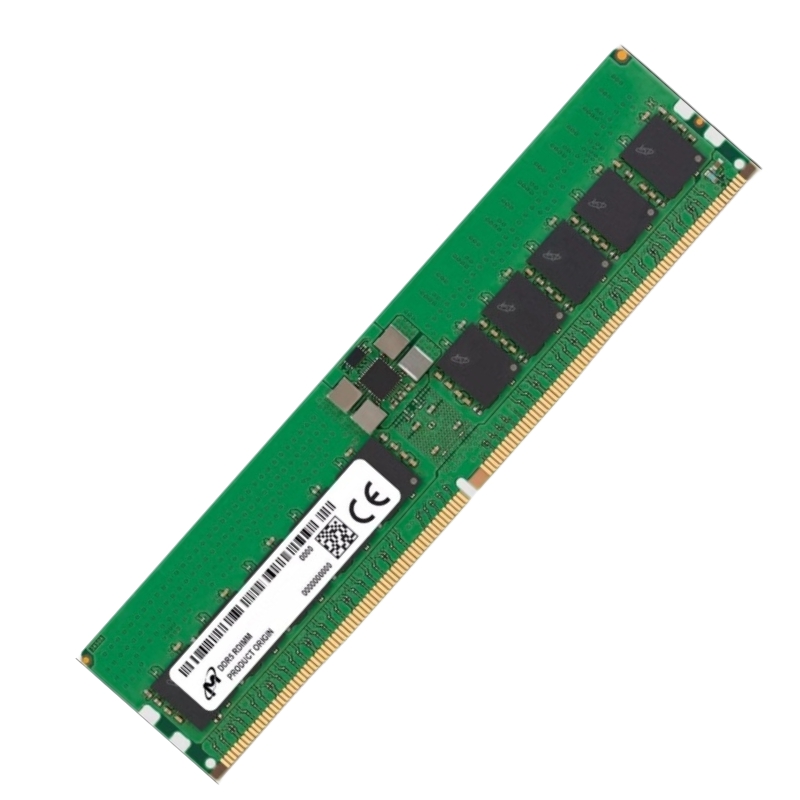
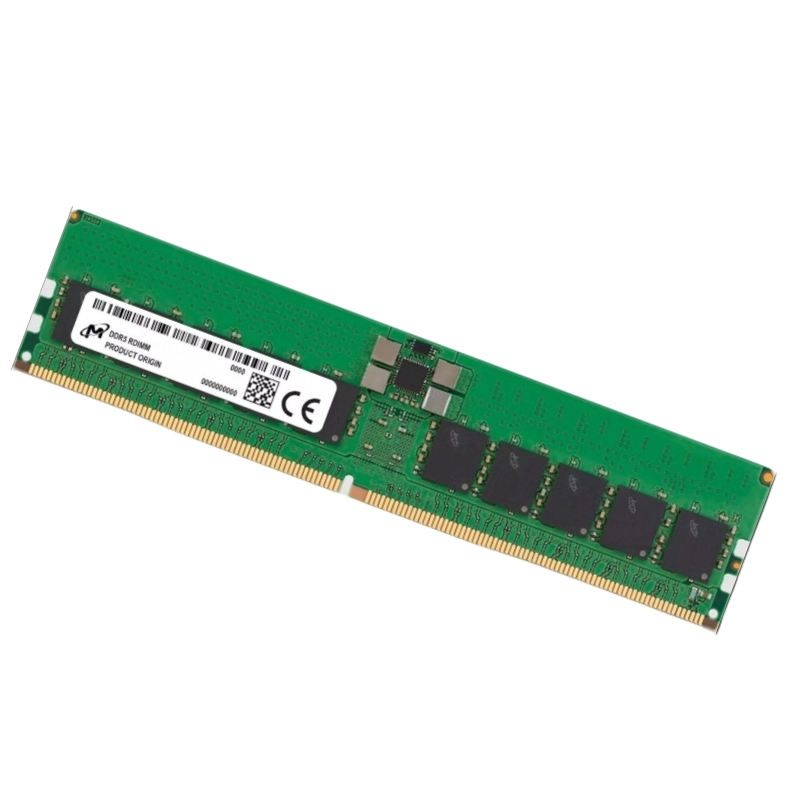
Micron MTC20F104XS1RC56BB1T 48GB DDR5 SDRAM Memory Module 5600MT/s PC5-44800 CL46 ECC Registered. Factory-Sealed New in Original Box (FSB) With 3 Years Warranty
Micron MTC20F104XS1RC56BB1T 48GB RAM
Elevate server performance with the Micron MTC20F104XS1RC56BB1T—an enterprise-grade 48GB DDR5 RDIMM engineered for high throughput, low latency, and dependable uptime. Designed for modern multi-core CPUs, this module delivers 5600 MT/s data rates, optimized signal integrity, and robust reliability for virtualization, analytics, and cloud-native workloads.
The Micron MTC20F104XS1RC56BB1T 48GB DDR5 SDRAM Memory Module belongs to the advanced category of enterprise-class DDR5 ECC Registered DIMMs designed to meet the rigorous demands of modern data centers, cloud infrastructures, and mission-critical server platforms. This category of memory modules represents a major generational shift from DDR4, introducing higher bandwidth, improved signal integrity, enhanced power efficiency, and superior reliability features that are essential for today’s compute-intensive workloads.
DDR5 ECC Registered memory modules are purpose-built for server and workstation environments where stability, scalability, and sustained performance are non-negotiable. Registered DIMMs incorporate a register clock driver between the memory controller and DRAM devices, reducing electrical load and enabling support for higher-capacity configurations. When combined with error-correcting code functionality, this architecture significantly enhances data integrity by detecting and correcting single-bit memory errors during operation.
This 48GB DDR5 module operating at 5600MT/s aligns with the upper tier of the PC5-44800 memory classification, delivering substantial bandwidth improvements over previous DDR generations. Within the broader DDR5 SDRAM memory category, this module is optimized for enterprise workloads such as virtualization, database management, AI inference, analytics processing, and high-density cloud deployments.
Micron’s server-grade DDR5 memory category emphasizes consistent performance under continuous load, ensuring that system responsiveness remains stable even during peak usage periods. The registered design allows servers to populate multiple DIMMs per channel without compromising signal quality, enabling higher total memory capacities per system.
The 48GB capacity of this DDR5 ECC Registered module fills a crucial segment in the memory hierarchy between standard 32GB modules and ultra-high-capacity DIMMs. This capacity class enables IT architects to fine-tune memory configurations, balancing total system memory, channel population, and cost efficiency.
In enterprise server deployments, 48GB DDR5 modules provide flexibility when designing systems for mixed workloads. They allow for higher aggregate memory capacity without forcing compromises on channel symmetry or frequency operation. This makes them especially suitable for multi-socket servers where memory bandwidth and capacity must scale evenly across processors.
High-density memory configurations are increasingly important for workloads that rely heavily on in-memory processing. Applications such as real-time analytics, large-scale virtualization, and containerized microservices benefit from the expanded addressable memory space provided by 48GB DDR5 modules. By reducing the need for frequent data paging to storage, overall system latency is significantly improved.
DDR5 memory modules in this category also support larger memory footprints per virtual machine, enabling higher consolidation ratios in virtualized environments. This leads to improved resource utilization and reduced infrastructure overhead.
The 48GB configuration supports balanced scaling across memory channels, which is critical for maintaining optimal memory throughput in enterprise processors. Balanced population ensures uniform access latency and consistent performance across NUMA nodes, particularly in dual-socket and quad-socket server architectures.
Operating at 5600 mega-transfers per second, this DDR5 module delivers exceptional memory throughput aligned with the PC5-44800 specification. This data rate represents a substantial leap forward compared to DDR4 memory, enabling servers to process more data per clock cycle and support increasingly parallel workloads.
The higher data transfer rate is achieved through DDR5’s architectural enhancements, including dual 32-bit subchannels per DIMM. This design improves efficiency by allowing more concurrent memory operations, reducing access bottlenecks, and improving overall system responsiveness.
Servers equipped with DDR5-5600 memory modules experience measurable performance gains in applications that rely on rapid data access. High-performance computing tasks, large-scale simulations, and machine learning inference workloads all benefit from increased memory bandwidth and lower effective latency.
Database-driven applications, particularly those utilizing in-memory caching or columnar storage engines, can leverage the increased throughput to accelerate query execution and transaction processing.
Enterprise DDR5 memory modules such as this Micron offering are validated to maintain stable operation at rated speeds under continuous load. This stability is critical for production environments where memory errors or throttling can result in downtime or degraded service levels.
The CAS latency rating of CL46 reflects the timing characteristics of this DDR5 module operating at 5600MT/s. While DDR5 introduces higher nominal latency values compared to DDR4, the increased clock frequency and architectural efficiency result in comparable or improved real-world performance.
Latency-sensitive applications benefit from DDR5’s ability to process more data per unit time, effectively offsetting the higher cycle count associated with CAS latency. This balance between latency and bandwidth makes DDR5 ECC Registered memory well-suited for mixed workload environments.
Server processors are designed to take advantage of DDR5’s enhanced prefetching and parallelism. This enables efficient utilization of available memory bandwidth, reducing the impact of raw latency values on application performance.
Workloads such as transactional databases, web servers, and enterprise middleware platforms benefit from consistent memory response times, ensuring predictable performance under varying load conditions.
Micron’s enterprise DDR5 memory category emphasizes consistency in timing characteristics across temperature ranges and sustained workloads. This ensures that latency-sensitive applications maintain stable performance without unexpected fluctuations.
Error-correcting code functionality is a defining feature of this DDR5 ECC Registered memory module category. ECC memory automatically detects and corrects single-bit errors while identifying multi-bit errors, significantly reducing the risk of data corruption in mission-critical systems.
In enterprise environments, data integrity is paramount. Memory errors can lead to application crashes, corrupted databases, and system instability. ECC DDR5 memory provides an essential layer of protection, ensuring that workloads run reliably over extended periods.
ECC memory is widely adopted in servers, workstations, and high-reliability computing platforms. It is particularly important in industries such as finance, healthcare, scientific research, and cloud services where data accuracy and uptime are critical.
DDR5 ECC memory builds upon previous generations by integrating advanced error detection mechanisms that align with higher memory densities and increased data rates.
The registered DIMM architecture of this memory module plays a crucial role in supporting high-capacity, high-frequency server memory configurations. The register acts as a buffer between the memory controller and DRAM chips, reducing electrical load and improving signal integrity.
This design enables servers to support more memory modules per channel while maintaining stable operation at DDR5-5600 speeds. As a result, enterprise platforms can scale memory capacity without sacrificing performance or reliability.
Registered memory modules are specifically engineered for server environments where large memory footprints are required. Unlike unbuffered DIMMs, RDIMMs support higher capacities and more populated memory channels, making them ideal for multi-socket server architectures.
This scalability is essential for modern workloads that demand extensive in-memory resources, such as virtualization clusters and large-scale analytics platforms.
DDR5 ECC Registered modules are designed to work seamlessly with server-class CPUs from leading vendors. Platform validation ensures compatibility, stability, and optimal performance across supported systems.
DDR5 memory introduces significant improvements in power management compared to previous generations. One of the key enhancements is the integration of on-module power management circuitry, which allows for more precise voltage regulation.
This category of DDR5 ECC Registered memory operates at lower voltages while delivering higher performance, resulting in improved energy efficiency for enterprise systems.
Efficient power delivery reduces heat generation, contributing to improved thermal management within server enclosures. Lower operating temperatures enhance component longevity and support higher-density deployments.
Power efficiency is particularly important in large data centers where energy consumption directly impacts operational costs.
By reducing power consumption per unit of performance, DDR5 ECC Registered memory modules align with sustainability initiatives aimed at minimizing the environmental impact of large-scale computing infrastructures.
The Micron 48GB DDR5 ECC Registered memory module category is well-suited for a wide range of enterprise applications. These include virtualization hosts, cloud computing platforms, database servers, enterprise resource planning systems, and AI-driven workloads.
High bandwidth, robust error correction, and scalable capacity make this memory category a foundational component for modern server infrastructures.
In virtualized environments, memory capacity and reliability directly influence performance and consolidation ratios. DDR5 ECC Registered memory enables higher virtual machine density while maintaining predictable performance.
Analytics engines and AI workloads benefit from DDR5’s increased throughput, enabling faster data ingestion and model inference. High-capacity memory configurations reduce reliance on slower storage tiers.
Database servers rely heavily on memory for caching, indexing, and transaction handling. DDR5 ECC Registered memory ensures consistent performance and data integrity, supporting high transaction volumes and low-latency access.


 Contact Us
 Information
 Catalog
 Solid State Drives (SSD)
 Network Switches
 Hard Disk Drives
 HBA & Controllers
 PC & Servers
 PC & Server Memory
 CPU & Processors
 Network Routers
 Power Supplies
 Tape Drives & Libraries
 Network Devices
 Computer & Network Cables