(7% discount is applied at checkout)
Cart is empty
Your go-to destination for cutting-edge server products
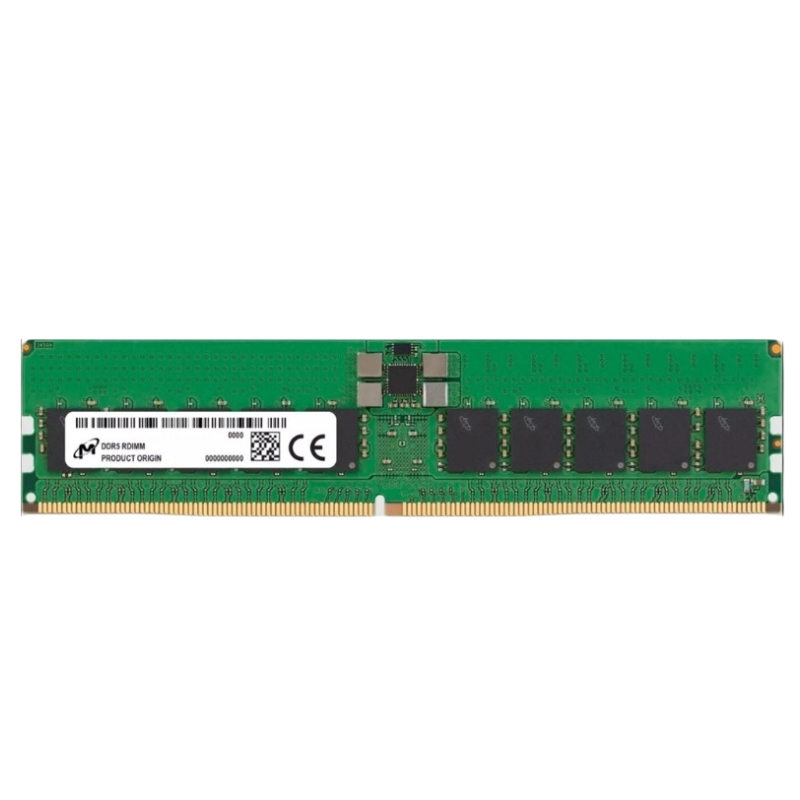


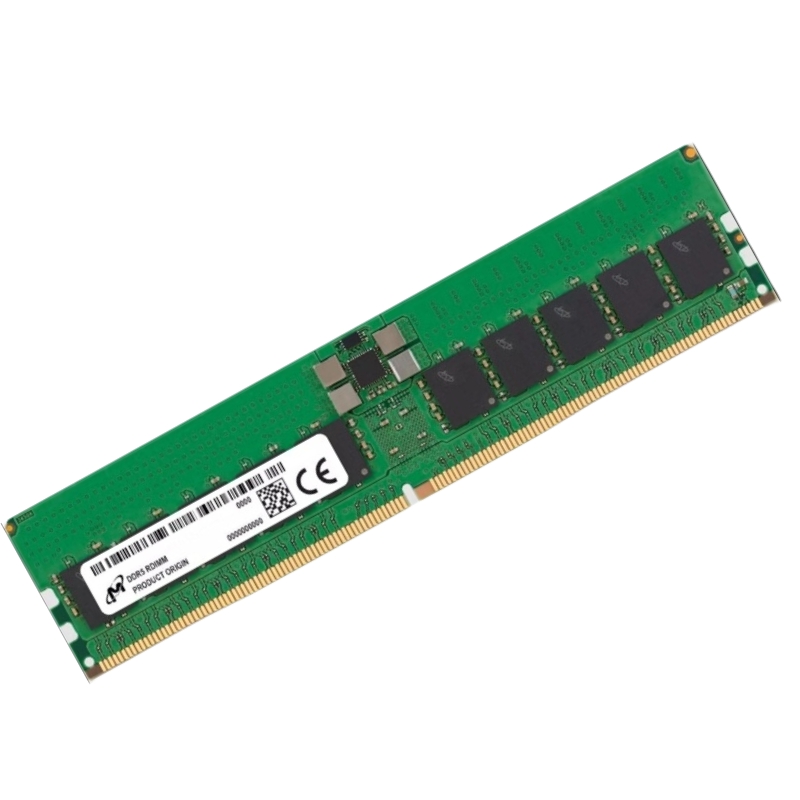
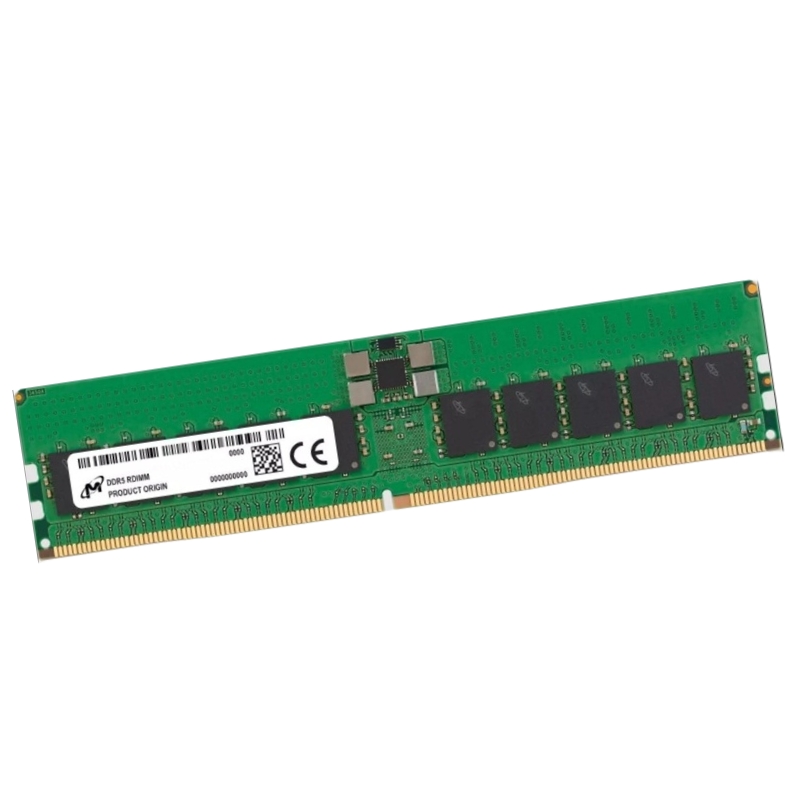
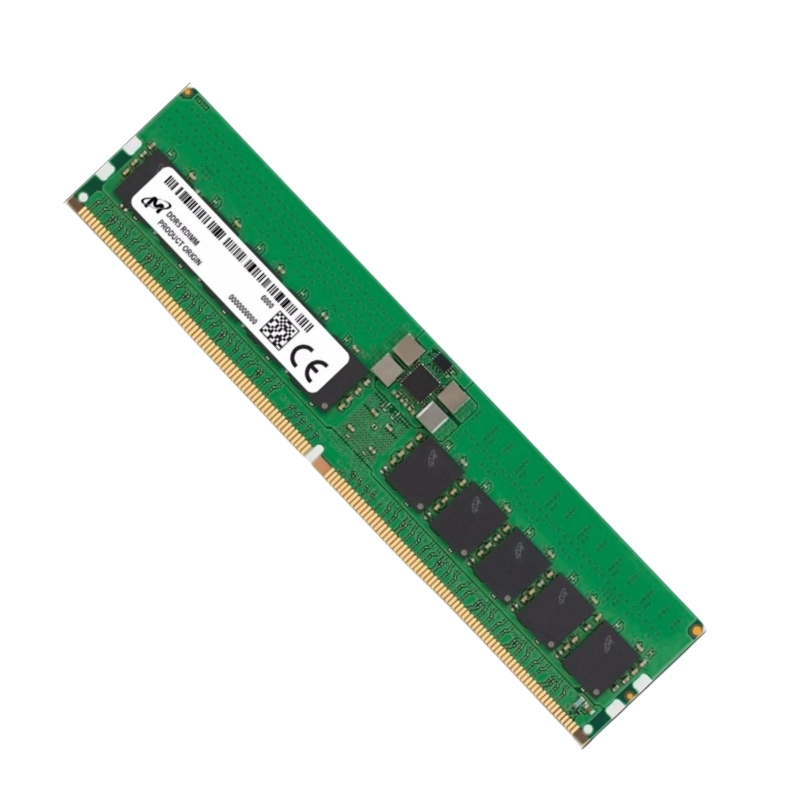
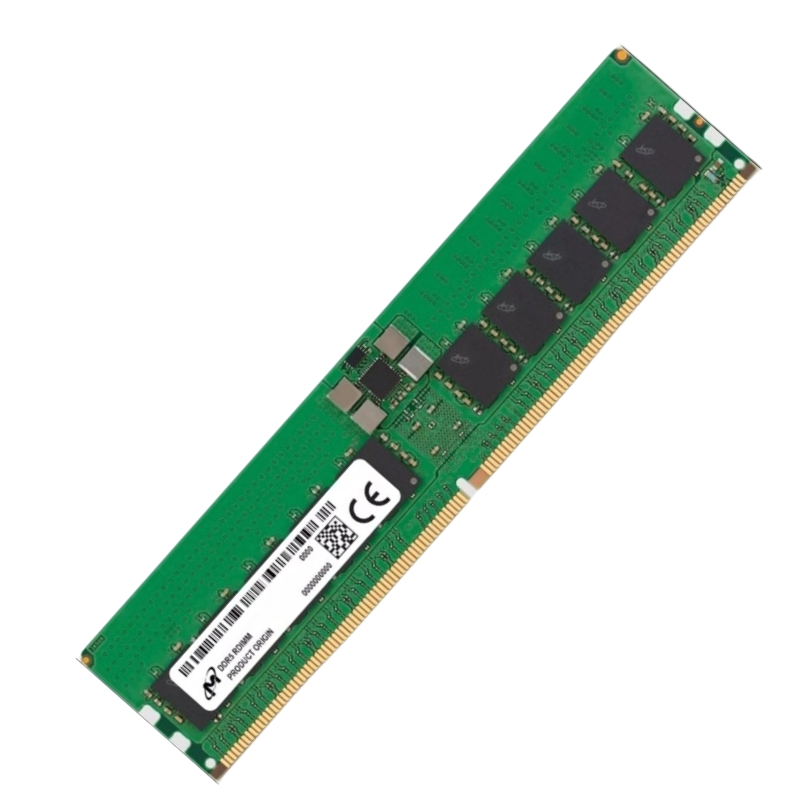
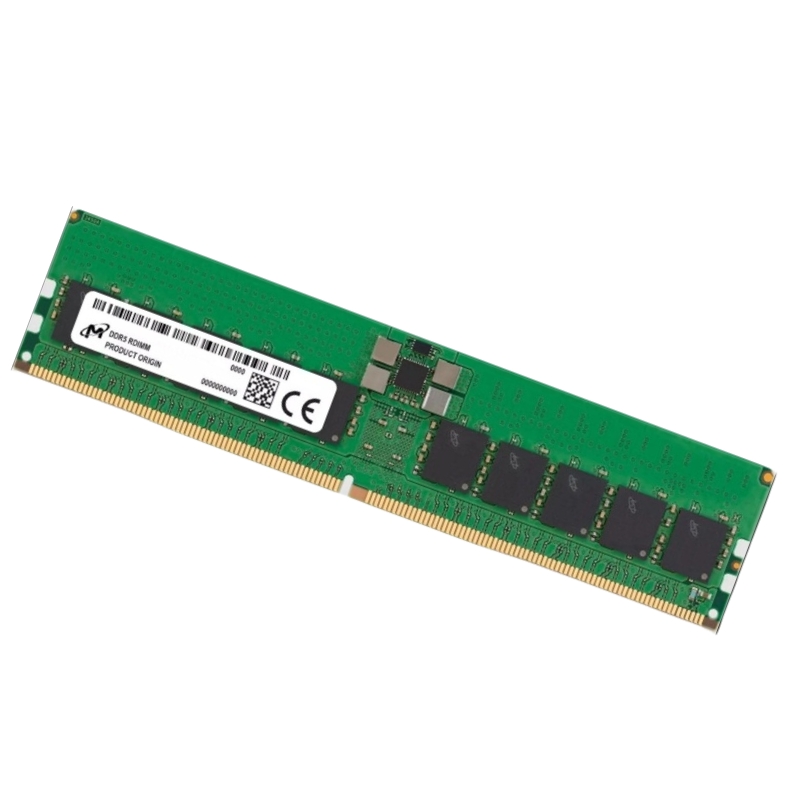
Micron MTC40F2046S1RC56BT 64GB Ddr5 5600MHz Pc5-44800 2rx4 Ecc Registered Cl46 Rdimm Memory Module. New Sealed in Box (NIB) with 3 Years Warranty
The category encompassing the MTC40F2046S1RC56BT Micron 64GB DDR5 5600MHz PC5-44800 2Rx4 ECC Registered CL46 RDIMM represents a critical segment of enterprise-grade memory solutions designed for modern data-intensive computing environments. This class of memory modules is engineered specifically for servers, workstations, and professional platforms that demand exceptional reliability, scalability, and sustained performance under continuous workloads. Unlike consumer-oriented memory, DDR5 RDIMM modules are built to support mission-critical applications where data integrity, bandwidth, and thermal stability are non-negotiable requirements.
DDR5 Registered DIMMs (RDIMMs) introduce a new architectural foundation that improves signal integrity and enables higher memory capacities per module. The inclusion of a register (or buffer) between the memory controller and DRAM chips reduces electrical load, allowing servers to populate more DIMMs per channel without compromising stability. This category is particularly relevant for enterprise servers, virtualization hosts, cloud infrastructure, AI training systems, large databases, and high-performance computing clusters.
DDR5 memory technology represents a substantial evolution over DDR4, delivering higher data rates, improved power efficiency, and enhanced internal memory management. With a base speed of 5600MHz, modules in this category operate at PC5-44800 bandwidth levels, enabling faster data transfers between the processor and memory subsystem. This performance uplift is essential for modern CPUs that feature increasing core counts and wider memory channels.
DDR5 introduces dual independent 32-bit subchannels per DIMM, replacing the single 64-bit channel architecture found in DDR4. This design reduces latency and increases parallelism, allowing the memory controller to handle multiple operations simultaneously. For enterprise workloads such as virtualization, analytics, and in-memory databases, this architectural change translates into smoother multitasking and reduced bottlenecks.
The 5600MHz speed rating places this category firmly within the high-performance tier of DDR5 memory. With a theoretical bandwidth of 44.8GB/s per module, PC5-44800 memory supports data-heavy workloads that require rapid access to large datasets. This is especially beneficial for applications like real-time analytics, scientific simulations, and content rendering, where memory throughput directly influences execution times.
Servers equipped with 5600MHz DDR5 RDIMMs can better exploit the capabilities of modern processors, ensuring that CPU cores are not starved for data. This balance between compute and memory performance is critical in environments where efficiency and scalability determine overall system effectiveness.
RDIMM memory modules incorporate a register that buffers command and address signals before they reach the DRAM chips. This design significantly improves signal integrity, particularly in systems with multiple DIMMs installed per channel. In enterprise servers where memory capacity and density are paramount, RDIMMs enable stable operation at higher frequencies and larger configurations.
The registered architecture also reduces electrical noise and signal distortion, which can otherwise lead to data errors or system instability. This makes RDIMMs the preferred choice for servers and workstations that operate continuously under heavy loads. The category of Micron DDR5 RDIMM modules exemplifies this focus on stability and long-term reliability.
The 2Rx4 configuration refers to a dual-rank module with x4 DRAM chips. This organization is common in enterprise memory because it balances performance, capacity, and fault tolerance. Dual-rank modules allow the memory controller to interleave accesses between ranks, improving effective bandwidth and reducing latency in certain workloads.
The x4 DRAM layout enhances error correction capabilities when combined with ECC technology, making this configuration ideal for environments where data accuracy is critical. This category of memory is well-suited for database servers, financial systems, and virtualization platforms where even minor data corruption can have significant consequences.
Error Correcting Code (ECC) memory is a defining characteristic of enterprise-grade RDIMMs. ECC functionality allows the memory module to detect and correct single-bit errors and detect multi-bit errors in real time. This capability is essential in systems that must maintain data integrity over long periods of continuous operation.
The category of Micron 64GB DDR5 ECC RDIMM modules is designed for use in environments where system crashes, data corruption, or silent errors are unacceptable. ECC memory significantly reduces the risk of these issues, contributing to higher system uptime and lower maintenance costs.
ECC memory is particularly valuable in applications involving large datasets, such as enterprise resource planning, machine learning, and virtualization. In these scenarios, even a single memory error can propagate through calculations or virtual machines, leading to incorrect results or system instability.
By correcting errors automatically, ECC RDIMMs help ensure consistent and reliable operation. This category of memory is therefore a foundational component in mission-critical IT infrastructure, supporting business continuity and data accuracy.
The 64GB capacity of modules within this category enables servers and workstations to scale memory resources efficiently. High-capacity DIMMs reduce the total number of modules required to achieve large memory configurations, which can simplify system design and improve airflow within server chassis.
Large memory capacities are increasingly important as applications shift toward in-memory processing and virtualization. With 64GB per module, system architects can design platforms with hundreds of gigabytes or even terabytes of RAM, supporting dense virtual machine deployments and memory-intensive workloads.
DDR5 memory operates at lower voltages compared to DDR4, contributing to improved power efficiency. This is particularly beneficial in data centers where energy consumption and thermal management are major concerns. High-capacity DDR5 RDIMMs allow operators to maximize memory density while minimizing power draw per gigabyte.
The integration of on-DIMM power management in DDR5 further enhances efficiency and stability. This category of memory modules is therefore well-aligned with modern data center strategies focused on sustainability and operational cost reduction.
CAS latency (CL) is an important timing parameter that influences memory responsiveness. A CL46 rating reflects the balance between high operating frequency and stable timing margins in DDR5 RDIMM modules. While latency values are higher numerically compared to DDR4, the increased clock speeds and architectural improvements of DDR5 result in overall performance gains.
In enterprise workloads, raw latency is often less critical than sustained throughput, reliability, and scalability. The timing characteristics of CL46 DDR5 RDIMMs are optimized for consistent performance under load, making this category suitable for long-running server applications.
Micron is a globally recognized leader in memory manufacturing, known for rigorous quality control and extensive validation processes. Modules in this category benefit from Micron’s enterprise-grade testing standards, ensuring compatibility with major server platforms and chipsets.
Enterprise validation includes thermal testing, signal integrity analysis, and long-term reliability assessments. This level of scrutiny ensures that DDR5 RDIMM modules perform reliably in demanding environments such as data centers, research institutions, and industrial computing systems.
DDR5 RDIMM memory modules are designed to work with the latest server CPUs and chipsets that support DDR5 technology. This includes platforms optimized for high core counts, wide memory buses, and advanced interconnects.
System integrators and IT professionals rely on validated memory categories like this one to ensure smooth deployment and predictable performance across diverse hardware configurations.
The category of 64GB DDR5 5600MHz ECC Registered RDIMM memory is suitable for a wide range of professional and enterprise use cases. These include virtualization hosts running dozens of virtual machines, database servers handling large transactional workloads, and AI or machine learning systems processing massive datasets.
High-performance computing environments also benefit from the bandwidth and capacity offered by this category. Scientific simulations, engineering analysis, and financial modeling applications rely heavily on memory performance and reliability, making DDR5 RDIMMs a critical component.
In cloud and data center environments, memory density and efficiency directly impact total cost of ownership. High-capacity DDR5 RDIMMs enable providers to offer more resources per server while maintaining energy efficiency and reliability.
This category aligns well with hyperscale and enterprise data center requirements, supporting scalable architectures and future-proof deployments.
Enterprise memory modules are designed to operate reliably under sustained thermal loads. DDR5 RDIMMs incorporate improved thermal characteristics and are compatible with server-grade cooling solutions. Maintaining stable temperatures is essential for preserving memory integrity and performance over time.
Proper airflow and thermal design within server systems ensure that high-capacity modules can operate at full speed without throttling. This category of memory is engineered to meet these demands, supporting continuous operation in 24/7 environments.
Enterprise memory investments are evaluated not only on performance but also on longevity and support lifecycle. DDR5 RDIMM modules from established manufacturers are designed for extended availability and consistent specifications, which is important for large-scale deployments and maintenance planning.
This category supports long-term infrastructure strategies by offering predictable performance, compatibility, and reliability over the lifespan of enterprise systems. IT teams can standardize on this memory class to simplify procurement, upgrades, and system validation.


 Contact Us
 Information
 Catalog
 Solid State Drives (SSD)
 Network Switches
 Hard Disk Drives
 HBA & Controllers
 PC & Servers
 PC & Server Memory
 CPU & Processors
 Network Routers
 Power Supplies
 Tape Drives & Libraries
 Network Devices
 Computer & Network Cables