(7% discount is applied at checkout)
Cart is empty
Your go-to destination for cutting-edge server products
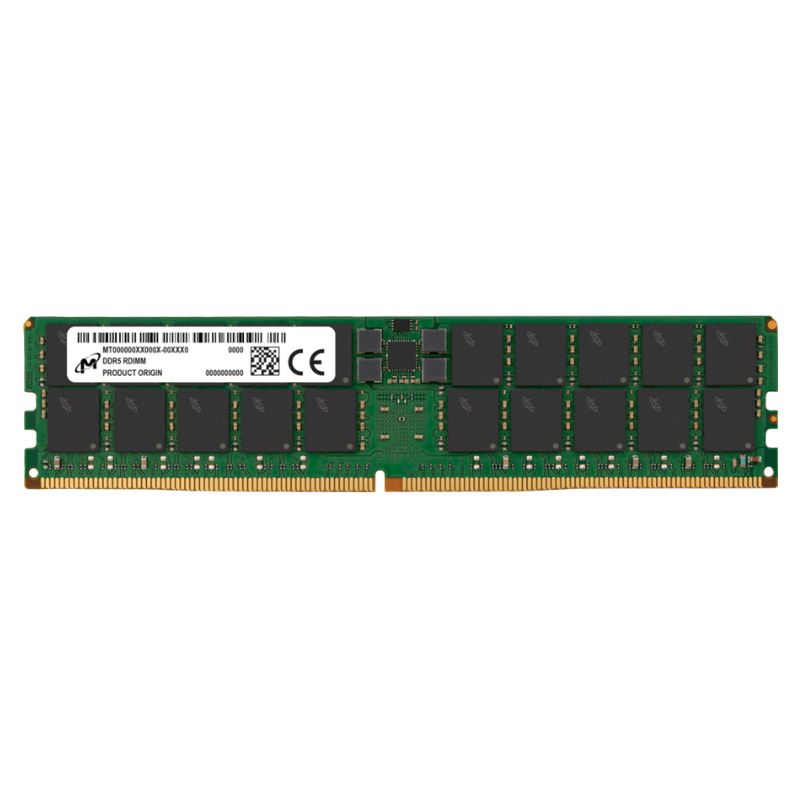


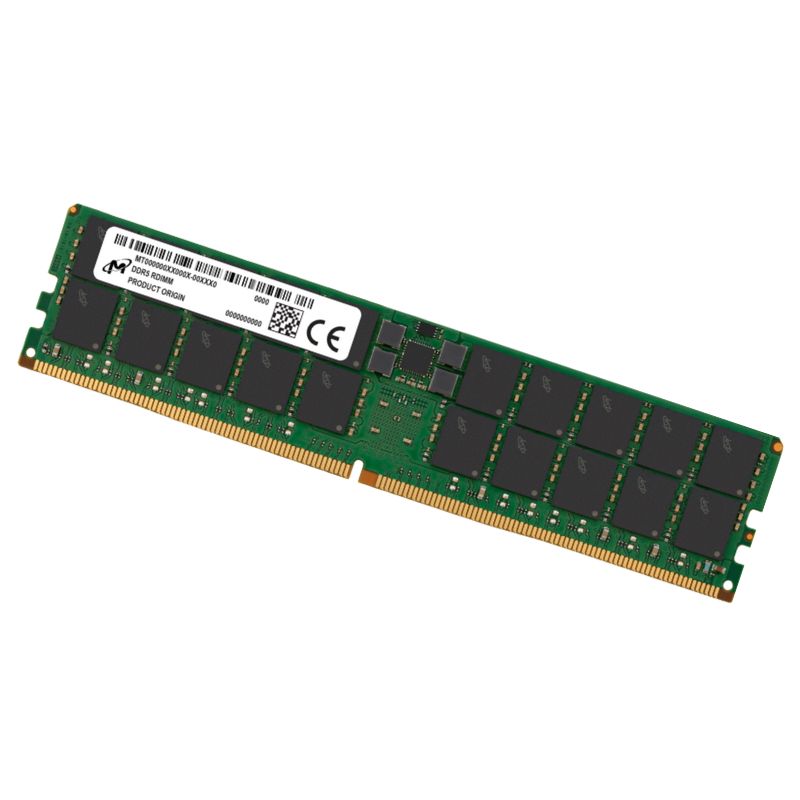
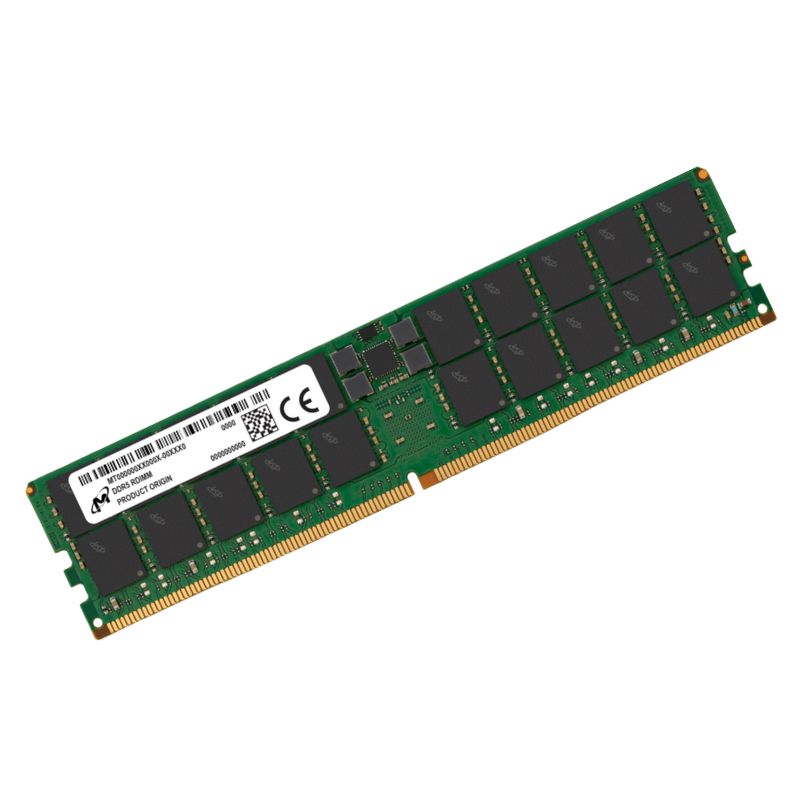
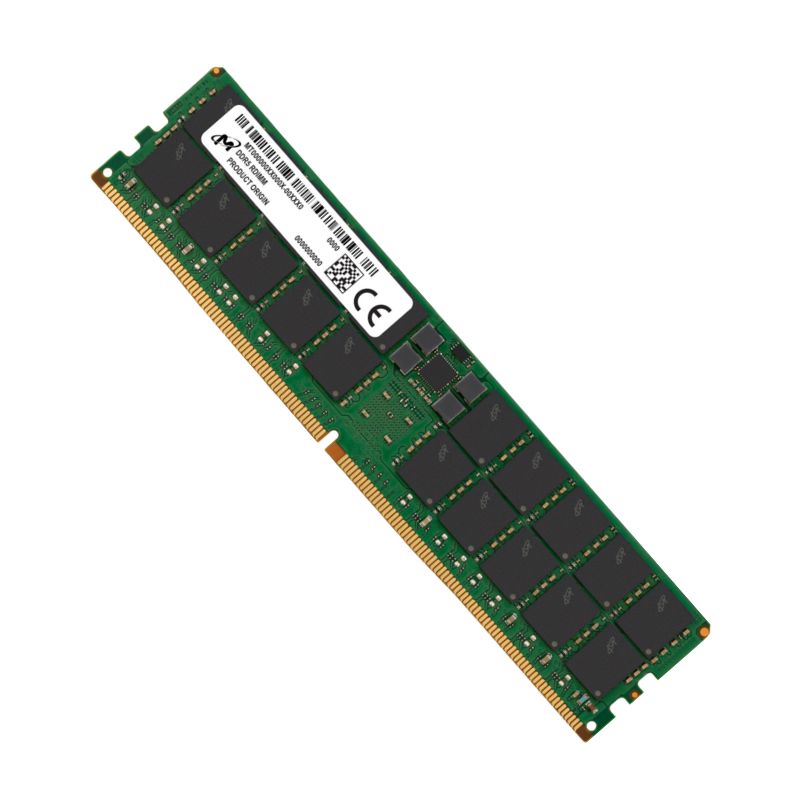
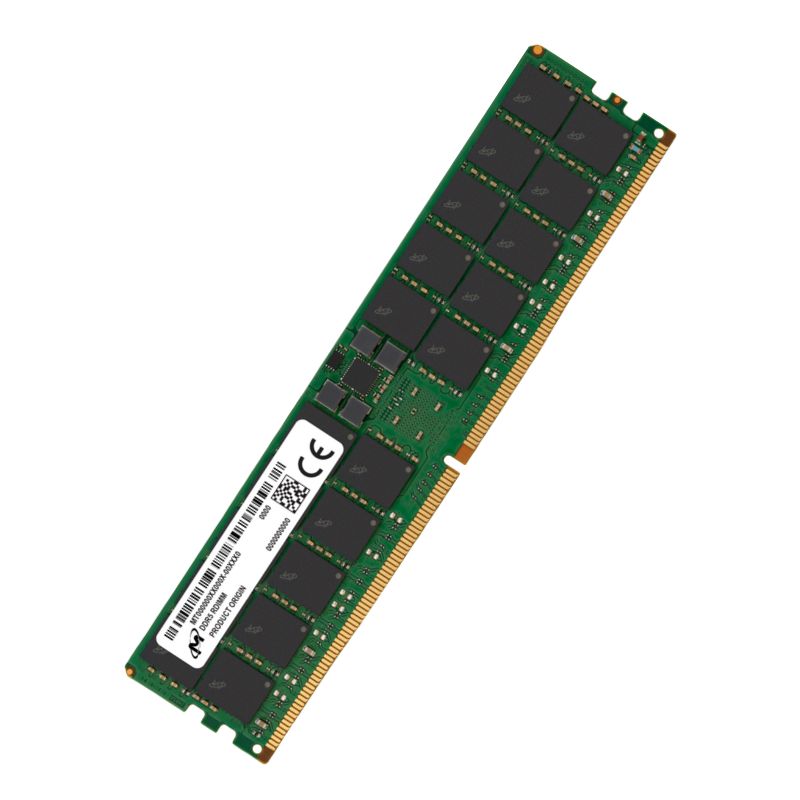
Micron MTC40F2047S1RC56B 128GB PC5-44800 DDR5-5600MHz ECC Registered CL46 288-pin RDIMM Memory Module. New Sealed in Box (NIB) with 3 Years Warranty
Overview of the 128GB Memory
The MTC40F2047S1RC56B Micron 128GB DDR5-5600MHz ECC CL46 RDIMM Memory represents a high-capacity, server-class memory category engineered for modern data centers, enterprise servers, and mission-critical computing platforms. This category encompasses registered dual in-line memory modules (RDIMMs) built on the DDR5 SDRAM standard, combining exceptional bandwidth, increased density, and robust reliability features required by today’s scalable compute infrastructures.
DDR5 RDIMM memory modules introduce a fundamental architectural evolution compared to prior DDR4 generations. They feature dual independent 32-bit subchannels per DIMM, allowing improved command efficiency, reduced latency bottlenecks, and higher sustained throughput under multi-threaded workloads. With a native operating speed of 5600MT/s, this category delivers a significant increase in data transfer rates, enabling processors to access memory faster while maintaining signal integrity across densely populated memory channels.
Registered memory, as defined by this category, integrates a register (or clock driver) that buffers control signals between the memory controller and the DRAM chips. This buffering reduces electrical load on the memory controller, enabling support for higher memory capacities and improved stability in multi-DIMM configurations. As a result, RDIMMs such as this Micron 128GB DDR5 module are the preferred choice for servers requiring large memory footprints and consistent uptime.
DDR5 memory technology introduces substantial improvements in bandwidth, efficiency, and scalability. Operating at 5600MHz, this category supports data rates that significantly exceed previous DDR4 standards, providing a critical performance advantage for compute-intensive applications. The higher transfer rate allows CPUs to feed cores with data more efficiently, reducing stalls and improving overall system responsiveness.
The CL46 latency specification reflects the timing characteristics aligned with JEDEC standards for high-speed DDR5 operation. While absolute latency values increase compared to earlier generations, the effective latency measured in nanoseconds remains competitive due to the substantially higher clock speeds. This balance ensures that applications sensitive to memory access patterns can still benefit from improved throughput without sacrificing predictability.
The DDR5 architecture also includes a dedicated power management integrated circuit (PMIC) mounted directly on the module. This design shift transfers voltage regulation responsibilities from the motherboard to the DIMM itself, improving power delivery accuracy and reducing noise. The result is enhanced power efficiency, finer voltage control, and greater stability under varying workload conditions.
Each DDR5 RDIMM is divided into two independent subchannels, each 32 bits wide, compared to the single 64-bit channel design of DDR4. This dual subchannel architecture allows for more efficient command scheduling and improved parallelism, particularly in multi-core and multi-socket systems. By enabling simultaneous access to different memory regions, the memory controller can optimize data flow and minimize idle cycles.
For enterprise workloads such as virtualization, container orchestration, and in-memory databases, this architectural enhancement translates into smoother performance under heavy concurrency. The memory subsystem can handle a greater number of outstanding requests, supporting higher transaction rates and improved quality of service across virtual machines and applications.
The 128GB capacity classification places this Micron DDR5 RDIMM within the high-density memory category, designed to support systems that require expansive addressable memory space. High-capacity DIMMs reduce the total number of modules needed to reach large memory configurations, freeing up DIMM slots and enabling more flexible system designs.
In enterprise servers, large memory capacity is critical for workloads such as virtualization hosts, enterprise resource planning systems, real-time analytics, and large-scale caching. By deploying 128GB RDIMMs, administrators can configure servers with multiple terabytes of RAM while maintaining signal integrity and system stability.
High-density DDR5 modules are manufactured using advanced DRAM processes that allow greater bit density per chip. This category benefits from Micron’s expertise in memory fabrication, ensuring consistent quality, long-term availability, and compatibility with server platforms from major CPU vendors.
Virtualized environments rely heavily on memory capacity and bandwidth to support multiple guest operating systems and applications simultaneously. The 128GB DDR5 RDIMM category enables higher virtual machine density per host, reducing hardware sprawl and improving resource utilization. With more memory available, hypervisors can allocate larger memory pools to critical workloads without overcommitment.
Cloud service providers and private cloud operators benefit from the scalability of this memory category. High-capacity RDIMMs allow rapid scaling of memory resources to meet fluctuating demand, supporting elastic workloads and improving service-level agreements. The increased bandwidth of DDR5 further enhances performance consistency across tenants.
Modern databases and analytics platforms increasingly rely on in-memory processing to achieve low-latency data access and real-time insights. This memory category is well-suited for in-memory databases, large data caches, and analytics engines that require fast access to vast datasets. The combination of 128GB capacity and 5600MHz speed ensures that data-intensive operations can be executed efficiently.
For workloads such as machine learning feature stores, financial modeling, and scientific simulations, the ability to keep large datasets resident in memory significantly reduces reliance on slower storage tiers. This leads to faster query response times, improved throughput, and more predictable performance under load.
ECC memory is a defining characteristic of this category, providing built-in error detection and correction capabilities essential for enterprise and mission-critical systems. ECC technology can identify and correct single-bit memory errors and detect multi-bit errors, preventing data corruption and system crashes that could otherwise result from transient faults.
In environments where data integrity is paramount, such as financial services, healthcare, and scientific research, ECC memory is not optional. The MTC40F2047S1RC56B DDR5 RDIMM category ensures that systems maintain accuracy and stability even under heavy workloads and extended uptime requirements.
DDR5 ECC RDIMMs also support advanced reliability, availability, and serviceability (RAS) features at the platform level. These features enable proactive error monitoring, predictive failure analysis, and graceful recovery mechanisms that minimize downtime and maintenance costs.
The registered design of this memory category enhances stability by buffering command and address signals. This buffering allows servers to populate more DIMMs per memory channel without compromising signal integrity. In multi-socket systems, where memory channels are heavily utilized, RDIMMs provide a reliable foundation for consistent performance.
Enterprise platforms certified for DDR5 RDIMM memory benefit from predictable behavior under load, reduced error rates, and improved thermal characteristics. These attributes contribute to longer system lifespans and lower total cost of ownership for data center operators.
Continuous operation is a core requirement for many enterprise systems. ECC DDR5 RDIMMs are engineered to support 24/7 operation, handling thermal stress, voltage fluctuations, and heavy access patterns without degradation. This reliability is critical for applications that cannot tolerate unexpected downtime or data loss.
By reducing the risk of silent data corruption and system instability, this memory category supports compliance with industry regulations and internal governance policies. Organizations can deploy these modules with confidence, knowing that their data is protected at the memory level.
Power efficiency is a key consideration in modern data centers, where energy consumption directly impacts operational costs. DDR5 RDIMM memory introduces architectural enhancements that improve power efficiency per bit transferred. The on-DIMM PMIC enables precise voltage regulation, reducing wasted energy and improving overall efficiency.
This category operates at optimized voltage levels designed to balance performance and power consumption. The result is reduced heat generation compared to older memory technologies, allowing for denser system configurations without exceeding thermal limits.
High-capacity memory modules can contribute significantly to system heat output. DDR5 RDIMMs are designed with thermal considerations in mind, supporting efficient heat dissipation through optimized PCB layouts and component placement. This allows servers to maintain stable operating temperatures even when fully populated.
Effective thermal management enhances reliability and extends component lifespan. Data center operators can deploy high-density memory configurations with confidence, knowing that thermal performance has been engineered to meet enterprise requirements.
The improved efficiency of DDR5 RDIMM memory aligns with energy-aware data center strategies focused on sustainability and cost reduction. By delivering higher performance per watt, this memory category helps organizations achieve more compute output with less energy input.
Reduced power consumption also eases the burden on cooling infrastructure, further lowering operational expenses. These benefits make high-performance DDR5 RDIMMs an attractive choice for organizations seeking to modernize their infrastructure while managing energy budgets.
This memory category is designed for compatibility with the latest server platforms supporting DDR5 RDIMM technology. It adheres to JEDEC specifications, ensuring interoperability with certified motherboards, CPUs, and chipsets from leading enterprise hardware vendors.
Server manufacturers validate DDR5 RDIMMs extensively to ensure proper operation across a wide range of configurations. This validation process ensures that the memory performs reliably within supported systems, reducing deployment risks and simplifying maintenance.
While primarily targeted at servers, high-capacity DDR5 RDIMMs are also used in professional workstations that require exceptional memory performance and reliability. Engineering, content creation, and scientific computing workstations benefit from the same attributes that make this memory category ideal for data centers.
Scalability is a defining feature, allowing organizations to start with smaller memory configurations and expand as workload demands increase. The ability to add additional high-capacity RDIMMs over time provides flexibility and protects infrastructure investments.
Enterprise memory categories prioritize long-term availability and consistent specifications. This ensures that organizations can source compatible modules for upgrades and replacements throughout the lifecycle of their systems. Consistency in performance and characteristics simplifies capacity planning and support.
By standardizing on a reliable DDR5 RDIMM category, IT teams can streamline inventory management, reduce compatibility issues, and maintain predictable system behavior across deployments.


 Contact Us
 Information
 Catalog
 Solid State Drives (SSD)
 Network Switches
 Hard Disk Drives
 HBA & Controllers
 PC & Servers
 PC & Server Memory
 CPU & Processors
 Network Routers
 Power Supplies
 Tape Drives & Libraries
 Network Devices
 Computer & Network Cables