(7% discount is applied at checkout)
Cart is empty
Your go-to destination for cutting-edge server products
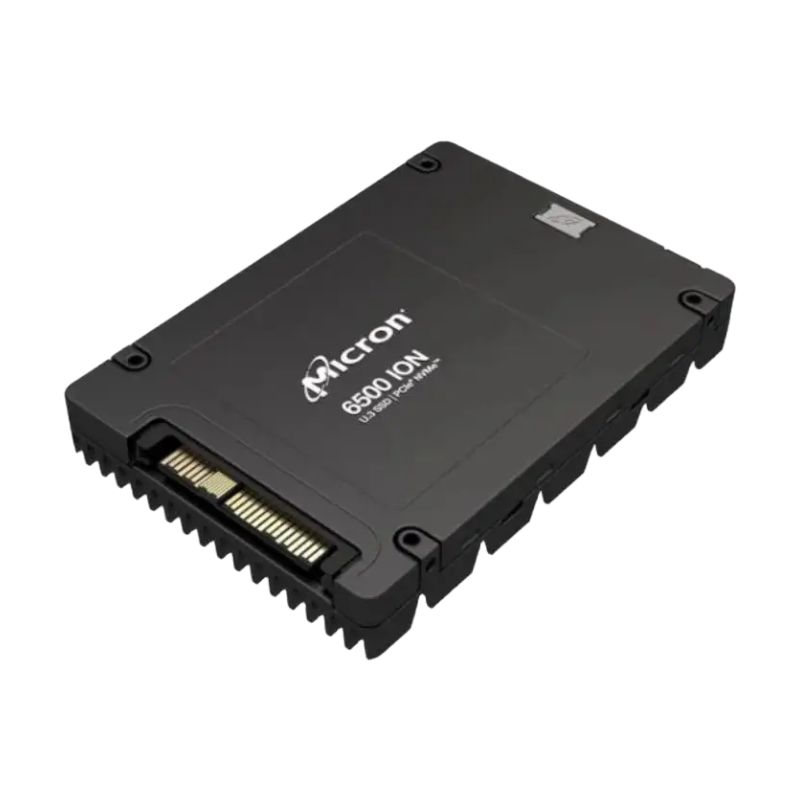


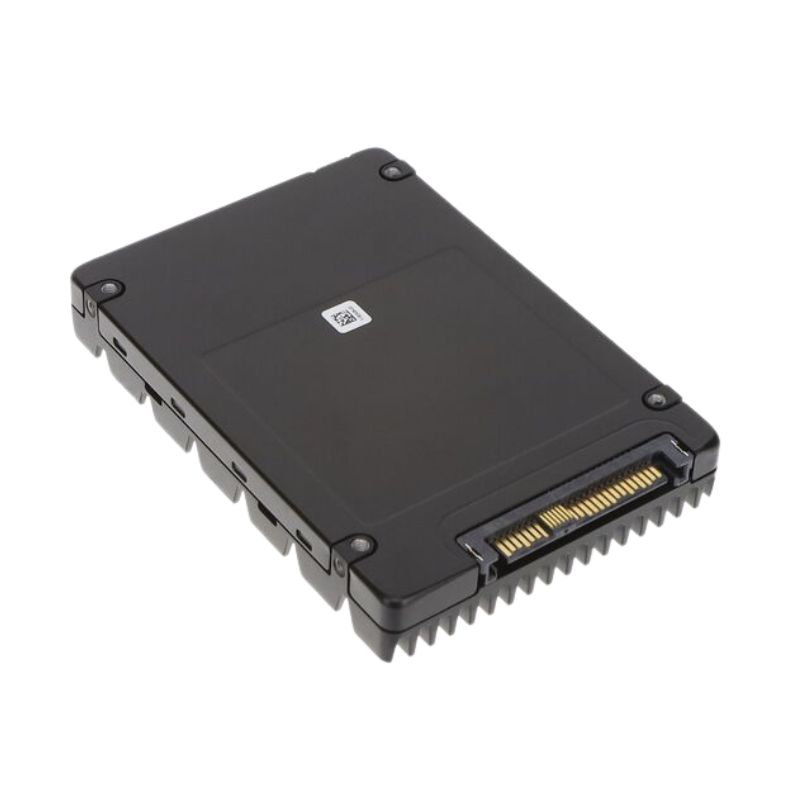
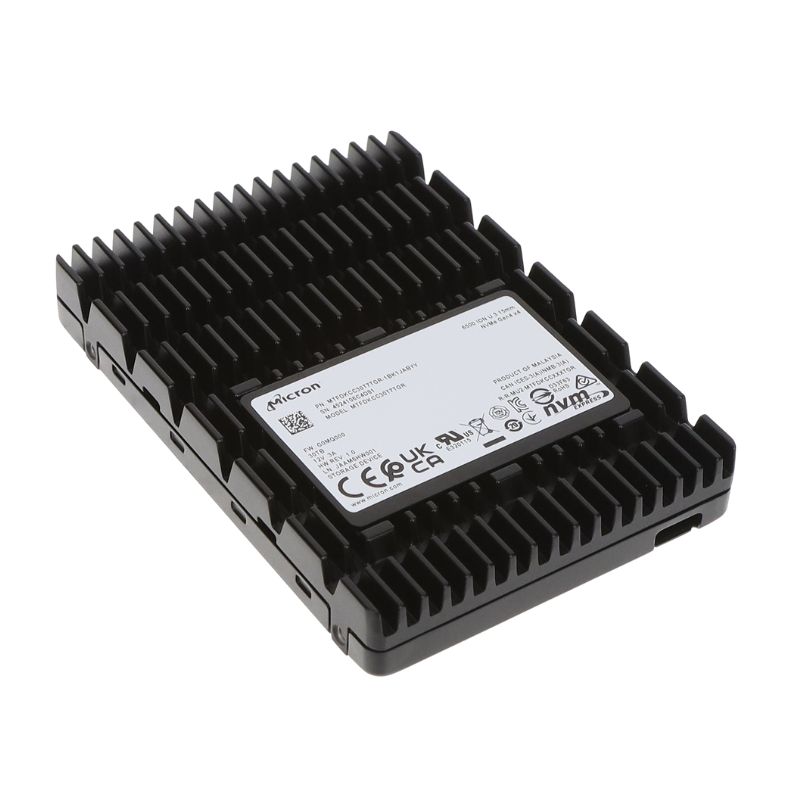
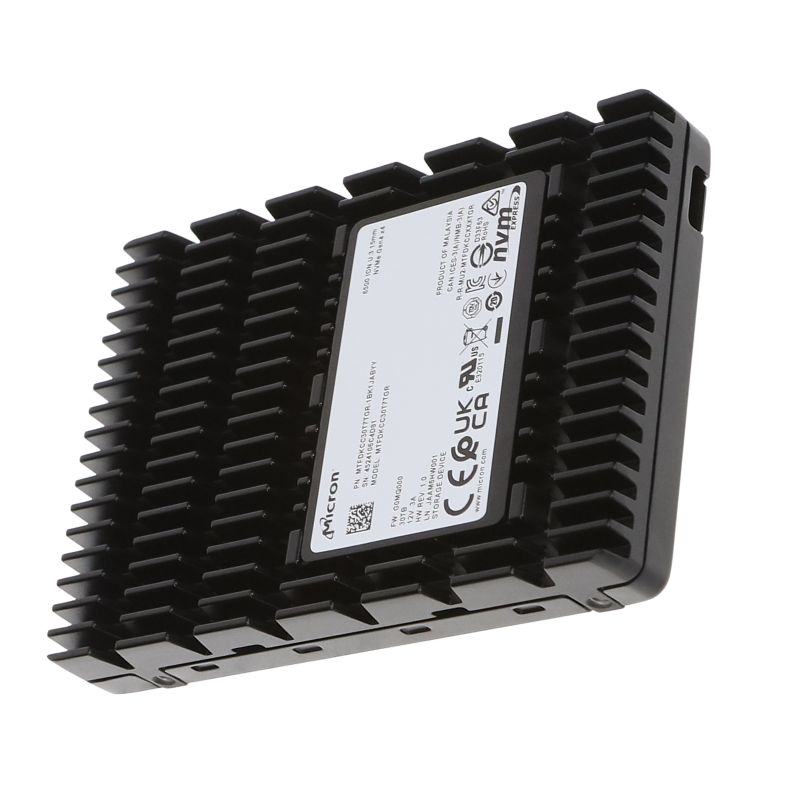
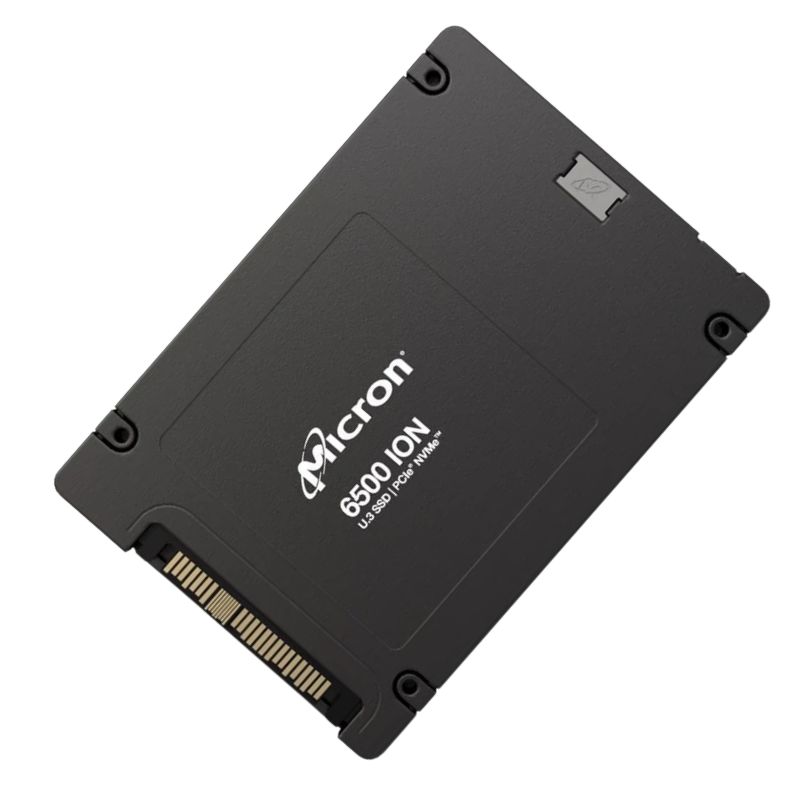
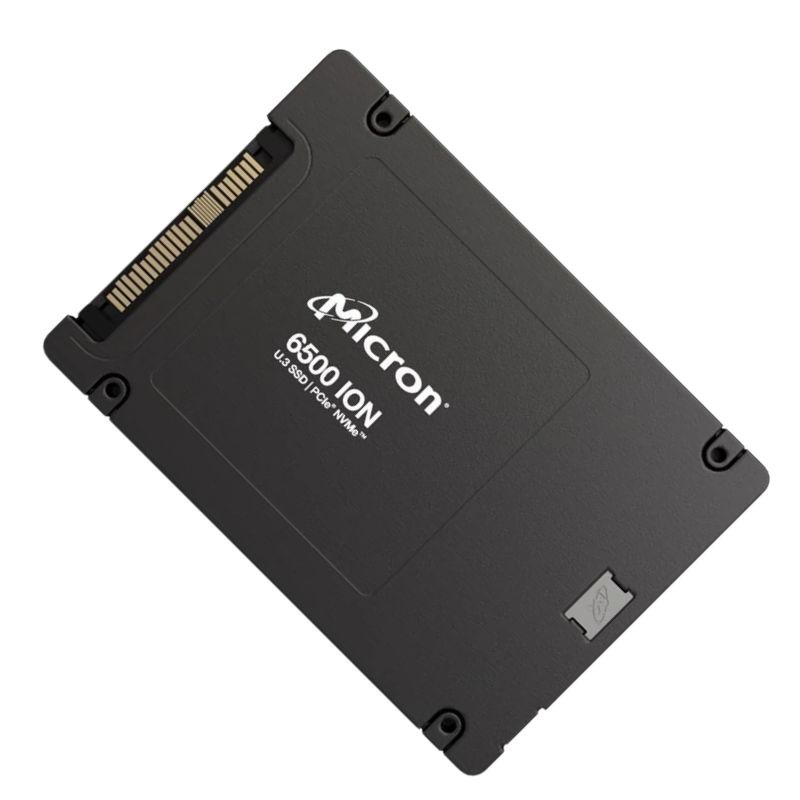
Micron MTFDKCC30T7TGR-1BK1JABYY SFF 30.72TB U.3 PCIe Gen4 NVMe QLC SSD. Excellent Refurbished with 1 year Replacement Warranty
Massive 30.72 TB capacity in a compact 2.5-inch, 15 mm U.3 form factor. PCIe Gen4 NVMe (x4) interface for consistently high throughput and ultra-low latency. Designed for scale-out storage, data lakes, content repositories, and read-intensive analytics. OCP 2.0–aligned firmware (Non-SED) and robust power-loss protection for data integrity.
The MTFDKCC30T7TGR-1BK1JABYY is a high-capacity, small form factor (SFF 2.5-inch) enterprise solid state drive that brings together the density of 30.72TB, the connectivity of U.3, the bandwidth of PCIe Gen4, the low-latency protocol of NVMe, and the cost-optimized efficiency of QLC NAND. This combination makes it an exceptionally compelling category choice for modern data centers seeking to consolidate storage footprints, accelerate read-intensive workloads, and simplify fleet management without sacrificing service levels. Whether you are building out a fresh rack of servers or refreshing legacy U.2 backplanes that support U.3 tri-mode operation, this drive category is designed to make dense flash practical at scale.
Enterprise operators face an ongoing tradeoff between performance, density, endurance, and total cost of ownership (TCO). The MTFDKCC30T7TGR-1BK1JABYY Micron SFF 30.72TB U.3 PCIe Gen4 NVMe QLC SSD category sits at the sweet spot for read-heavy and mixed read-dominant workloads that benefit from flash latency and throughput while demanding extreme capacity per drive bay. It is ideal for content repositories, data lakes, AI feature stores, log analytics, video libraries, backup and recovery staging, edge-cache tiers, VM templates, and cold-to-warm datasets. By leveraging QLC’s four bits per cell density, operators can reduce the number of drives required, minimize chassis count, and improve power, cooling, and rack space metrics on a per-terabyte basis.
The MTFDKCC30T7TGR-1BK1JABYY Micron SFF 30.72TB U.3 PCIe Gen4 NVMe QLC SSD category capitalizes on the bandwidth of PCIe 4.0 x4, which—under ideal conditions—offers double the lane bandwidth of PCIe 3.0. In real deployments, that translates into noticeably higher sequential throughput, faster rebuild and resync windows, snappier analytic query response, reduced tail latencies under mixed loads, and improved parallelism when many clients read concurrently. NVMe’s deep queues, efficient command set, and vendor optimizations for multi-core controllers help keep latency predictable even when the drive is servicing multiple namespaces or mixed I/O sizes.
QLC (Quad-Level Cell) NAND stores four bits per cell, increasing capacity density relative to TLC. That density advantage enables the headline 30.72TB capacity inside a standard 2.5-inch SFF envelope. While QLC has lower write endurance than TLC, it is outstanding for read-heavy and sequential write patterns—precisely the access profiles associated with large data repositories, content delivery nodes, backup landing zones, and analytics caches. Many enterprise platforms also incorporate write coalescing, tiering, and erasure coding strategies that further optimize QLC utilization across clusters. For consistently write-intensive transactional workloads (e.g., high-churn OLTP logs), a TLC-based category may still be advisable for certain tiers. However, many environments blend QLC capacity SSDs with a smaller TLC or persistent memory layer to absorb bursts and then destage to QLC. That hybrid approach achieves both responsiveness and TCO efficiency.
Because the MTFDKCC30T7TGR-1BK1JABYY belongs to a broader family of enterprise NVMe U.3 drives, it is useful to think about the internal segmentation within the category. Buyers typically evaluate based on the following vectors.
Deploying the MTFDKCC30T7TGR-1BK1JABYY Micron SFF 30.72TB U.3 PCIe Gen4 NVMe QLC SSD category at scale benefits from a few best practices that protect performance and maximize longevity.
High-capacity NVMe SSDs dissipate heat based on sustained write activity and environmental conditions. Ensure airflow is front-to-back with sufficient CFM per drive bay as recommended by the server vendor. In dense chassis, stagger large sequential ingest jobs or use QoS limits to keep drives in comfortable thermal envelopes. Many enterprise drives in this category report temperature SMART attributes; monitor and alert on thresholds to protect reliability.
While NVMe SSDs are very reliable, system-level redundancy remains essential. For single-host deployments, RAID-10 or RAID-6 can provide predictable rebuild behavior and fault tolerance. In software-defined storage clusters (Ceph, MinIO, BeeGFS, Gluster, or vendor SDS), use erasure coding profiles calibrated for node count and rack awareness. Higher drive capacities reduce the total number of devices in a cluster, which can simplify fault domains but can also increase rebuild times; leverage the drive’s fast read performance to accelerate reconstruction windows.
Log analytics, columnar databases, and distributed search engines (e.g., Elasticsearch/OpenSearch, ClickHouse, Druid) are often read-dominant after initial indexing and compaction. This category’s blend of capacity and low-latency access enables longer data retention windows on fast media, improving query coverage and mean time to insight (MTTI). Tiering older partitions to QLC keeps hot queries on flash without the cost profile of all-TLC fleets.
High-bitrate media reads sequentially and benefits from predictable throughput. Instead of sprawling HDD farms, creative shops use a smaller array of 30.72TB NVMe U.3 drives to serve editorial, color grading proxies, and transcode queues. The result is reduced rack space, lower power per TB, and faster pulls from asset management systems.
Backup windows are time-bounded; ingest speed matters. The NVMe interface and PCIe Gen4 bandwidth support rapid backup landing. After ingest, data typically transitions to read-mostly state (verification scans, test restores, or replication). QLC’s efficiency helps retain more restore points on flash, shortening recovery objectives for common failures.
Many AI pipelines maintain large feature matrices or vector indexes that are updated in batches but read frequently during inference. The category’s capacity per bay allows larger indexes to live on low-latency storage, decreasing cache misses and tail latency for retrieval-augmented generation, semantic search, and recommendation systems.
For sequential or semi-sequential workloads, filesystems such as XFS or ext4 tuned with larger allocation groups and appropriate read-ahead values can improve throughput consistency. For object and SDS platforms, follow vendor guidance for block sizes (often 1MB–4MB chunks) that align well with SSD internal page and block geometry, minimizing write amplification and maximizing the effectiveness of internal SLC caching strategies commonly used by QLC drives.
Enterprise NVMe drives in this category typically implement end-to-end data path protection and support secure sanitize operations to meet data disposition requirements. Many models support optional at-rest encryption with standardized mechanisms. While specific feature sets can vary by firmware versions and regions, the category’s baseline aligns with modern compliance expectations in multi-tenant environments, colocation facilities, and cloud data centers.
QLC thrives with free space headroom. In large clusters, reserve space at the pool level, not just the device level, to reduce write amplification. For predictable performance, avoid driving devices to >90% full for extended periods; batch large deletes or archival moves to reclaim space efficiently.
NVMe shines with concurrency. Tune queue depths to saturate PCIe Gen4 bandwidth, but avoid excessive outstanding I/O that inflates latency under burst conditions. Use asynchronous I/O libraries or modern thread pools to keep submission/completion queues active without oversubscription.
For sequential ingest, larger I/O sizes (512KB to multiple MB) reduce CPU overhead and improve effective throughput. Align stripes and object chunk sizes to multiples of the typical erase block sizes recommended by the platform vendor. For mixed workloads, test with representative datasets under realistic concurrency to fine-tune I/O sizes.
In hyper converged infrastructure, it is common to run a smaller number of compute-heavy nodes with TLC and a larger number of capacity-oriented nodes populated with 30.72TB QLC U.3 devices. This balances core licensing and accelerates read throughput for VM images, backups, and templates, while keeping overall costs predictable.
Flash-native snapshots allow rapid clone creation for dev/test and analytics sandboxes. With 30.72TB per drive, snapshot trees can be deeper while remaining on fast media, shortening the path from test to production validation.
A 1PB usable target becomes dramatically simpler with 30.72TB drives. Even accounting for redundancy (RAID-6 or erasure coding), the number of required bays is significantly lower than with mid-capacity devices. That translates into fewer chassis, fewer power supplies, lower top-of-rack switch port consumption, and shorter firmware maintenance windows.
Remote facilities often have limited rack space and constrained cooling. Using a small server with a handful of 30.72TB U.3 NVMe drives allows IT teams to project enterprise-class storage performance and capacity to the edge, supporting retail analytics, industrial telemetry, and local AI inference without backhauling all data to a central region.
Beyond redundancy, enterprise operators must prove compliance. This category supports secure erase workflows for drive retirement and helps maintain chain-of-custody with verifiable sanitization. Coupled with encryption (where enabled), these practices align with GDPR, HIPAA, and other data protection frameworks by ensuring data at rest is safeguarded throughout the device lifecycle.
Many organizations implement write-once, read-many semantics using filesystem or object storage policies. Dense QLC NVMe allows these immutable stores to remain on fast media for the period where restores are most likely, increasing cyber-resilience against ransomware and insider threats while maintaining rapid recovery times.
Migrating from legacy arrays to NVMe U.3 30.72TB devices follows a straightforward plan: stage new capacity, mirror or replicate datasets, cut over in a maintenance window, then decommission or repurpose legacy tiers. Because each drive provides so much capacity, the staging footprint is smaller, and replication completes sooner thanks to higher sequential throughput on both source and destination sides.
Treat storage configuration as a living artifact. Record firmware versions, namespace layouts, RAID/erasure coding choices, filesystem options, and tuning parameters for each cluster. Use pull requests and peer review for changes to ensure reproducibility and reduce the chance of configuration drift.
Some applications exhibit unusual I/O patterns—tiny random sync writes, frequent fsyncs, or heavy metadata churn. In those cases, a blend of QLC and TLC across tiers, or the inclusion of NVRAM write logs, can deliver the desired SLAs while preserving the efficiency benefits of 30.72TB QLC drives for the bulk of the dataset.
For hosts serving multiple tenants or departments, isolate namespaces per tenant and apply cgroup or I/O scheduler policies to enforce fairness. This prevents one tenant’s compaction job from monopolizing internal queues and ensures predictable performance across teams.
U.3’s role in the enterprise continues to be about flexible, standards-aligned NVMe deployment in familiar 2.5-inch bays. As PCIe generations advance in new platforms, the investment in U.3-capable chassis continues to pay dividends, offering a clear upgrade path as controllers and NAND improve. The MTFDKCC30T7TGR-1BK1JABYY category positions your environment to take advantage of these gains without wholesale infrastructure changes.
For operators extending storage over fabrics, U.3 NVMe devices make excellent building blocks for targets in NVMe-oF TCP or RoCE architectures. The combination of high capacity per slot and strong sequential throughput enables efficient shared pools with minimal overhead, improving utilization and simplifying growth planning.


 Contact Us
 Information
 Catalog
 Solid State Drives (SSD)
 Network Switches
 Hard Disk Drives
 HBA & Controllers
 PC & Servers
 PC & Server Memory
 CPU & Processors
 Network Routers
 Power Supplies
 Tape Drives & Libraries
 Network Devices
 Computer & Network Cables