(7% discount is applied at checkout)
Cart is empty
Your go-to destination for cutting-edge server products
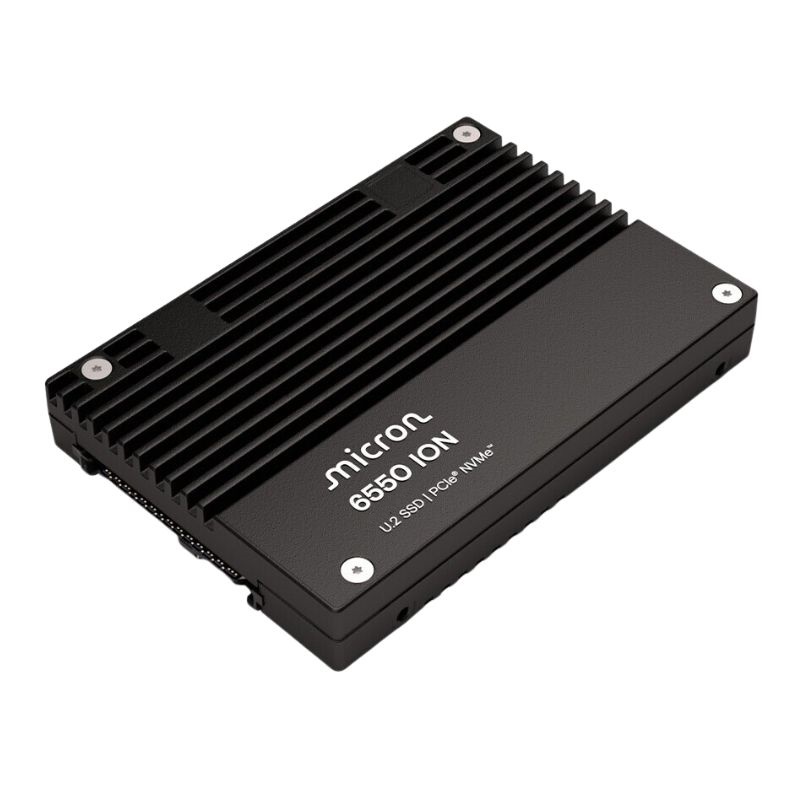


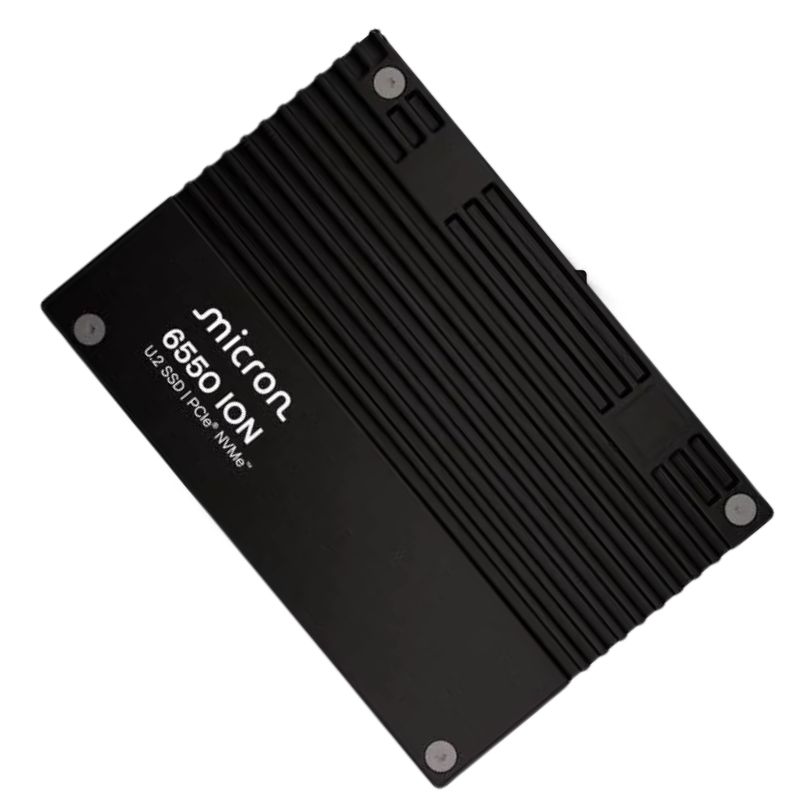
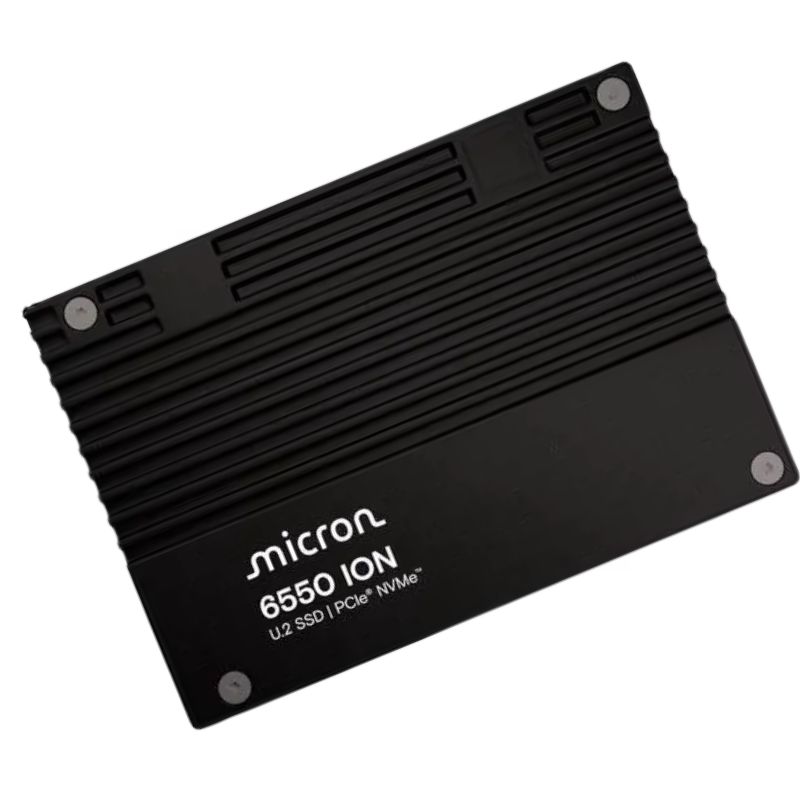
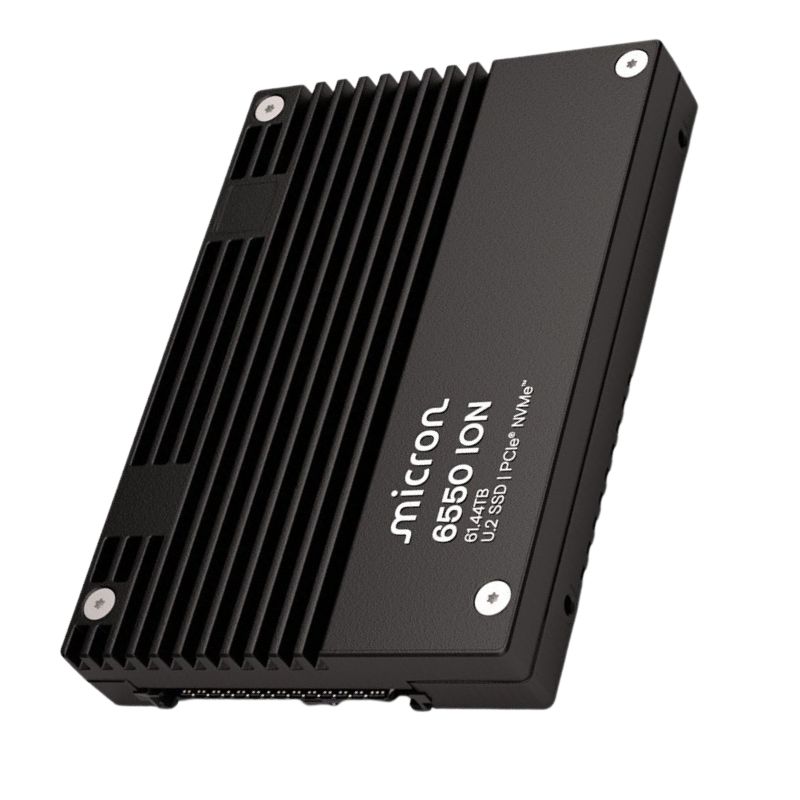
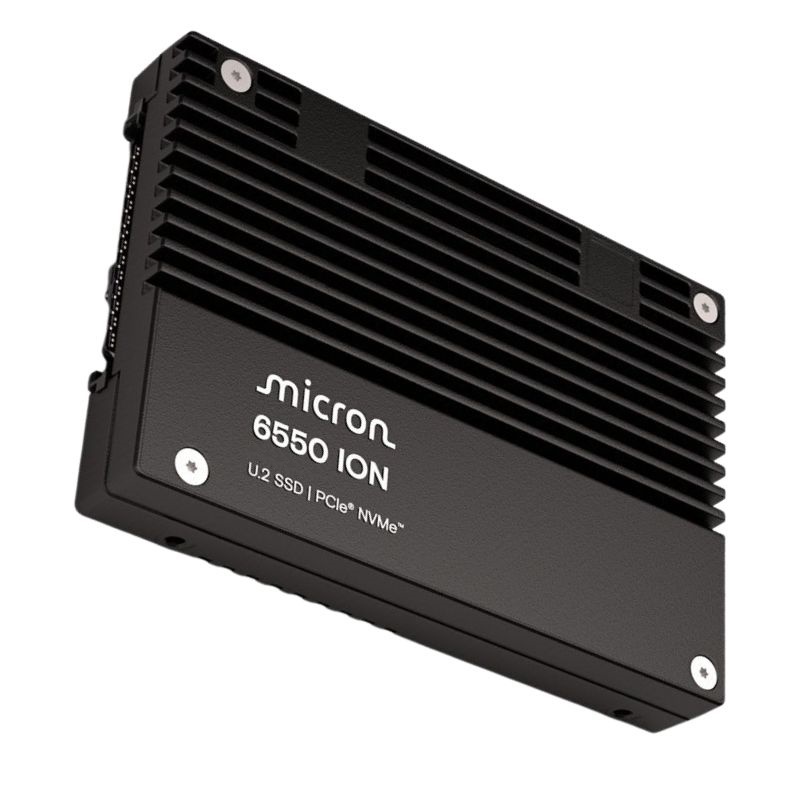
Micron MTFDLBQ61T4THL-1BK1DFCYY 61.44TB 6550 ION E.3S Gen5 7.5mm Nvme SSD. New Sealed in Box (NIB) with 3 Years Replacement Warranty
The Micron 6550 ION series offers a groundbreaking combination of immense storage capacity, lightning-fast performance, and enterprise-level endurance. Built on the latest PCIe Gen5 interface, this drive is designed to meet the rigorous demands of modern data centers.
Interface and NAND Technology
This drive leverages the MTFDLBQ61T4THL-1BK1DFCYY PCIe Gen5 x4 NVMe v2.0b interface, enabling drastically faster speeds compared to older PCIe generations. Integrated with Micron G8 TLC NAND flash memory, the SSD delivers both reliability and optimized performance for varied data-intensive environments.
Micron 6550 ION product family overview and category scope
The Micron 6550 ION series represents Micron’s next-generation, high-density NVMe SSDs purpose-built for modern data center workloads. This category covers compact EDSFF E3.S 7.5mm modules, high-capacity 61.44TB variants such as MTFDLBQ61T4THL-1BK1DFCYY, and alternative form factors that share the same controller, firmware architecture and NAND technology. The drives are positioned for cloud, hyperscale and enterprise environments where throughput, energy efficiency, and rack-level storage density matter most. Key attributes across this category include PCIe Gen5 x4 NVMe interfaces, Micron 3D TLC NAND, industry-class security options, and thermal/physical designs tuned for 1U/2U density.
The E3.S (sometimes written E3.s or E3.S-1T) 7.5mm height form factor combines the space-efficiency of EDSFF with mechanical compatibility for hot-swap sleds and modern server trays. Compared to U.2 or full-height U.3, E3.S enables denser packing per rack unit and is a preferred option for manufacturers optimizing for 1U and 2U nodes. The Micron 6550 E3.S 61.44TB module leverages this form factor to increase per-rack storage while keeping thermal interfaces accessible for active cooling solutions. :contentReference[oaicite:2]{index=2}
These drives implement PCI Express Gen5 (PCIe 5.0) x4 links and the NVMe command set (NVM Express), enabling substantial jump in raw bandwidth and efficiency over Gen4 parts. The Gen5 x4 connection significantly increases sequential throughput headroom and helps lower latency for mixed and random workloads common to AI, database, and analytics stacks. Micron’s product materials quantify Gen5 advantages in throughput and power efficiency compared to previous-generation enterprise SSDs.
The 6550 family uses Micron’s 3D TLC NAND technology (often referenced as Micron G8 or equivalent process nodes in vendor briefs), balancing cost per GB with endurance far superior to QLC-based high-capacity parts. TLC provides a favorable write/erase cycle window and predictable performance under sustained activity — a critical consideration when deploying large-capacity SSDs in write-heavy analytics or logging workloads.
Enterprise-class drives in this category are engineered for high drive writes per day (DWPD) and long field lifecycles. Micron’s technical specification calls out endurance ratings, mean time between failures (MTBF), and workload-optimized behavior — including firmware-level wear leveling, read disturb management and robust bad-block handling. These drives also support enterprise telemetry (SMART and vendor extensions) for proactive monitoring and lifecycle planning. Always consult the precise spec sheet for exact DWPD and warranty details for the SKU you plan to buy.
The Micron 6550 ION 61.44TB targets very high sequential and random throughput numbers under Gen5, delivering enterprise-class sequential bandwidth and strong random IOPS at low power envelopes versus competing 60TB-class devices. Micron technical briefs and GDS (general distribution system) performance testing show the 6550 producing better GB/s-per-watt efficiency and higher sustained performance under multi-threaded worker scenarios, making it favorable for dense deployments where power budget is a limiting factor.
Micron offers multiple security tiers across the 6550 product family: from standard firmware-based encryption to Self-Encrypting Drive (SED) options that meet FIPS certification and additional regulatory frameworks. Some SKUs in the family are listed with SED + FIPS + TAA compliance for customers requiring strict chain-of-custody and cryptographic assurance. Implementing SED drives simplifies data-at-rest encryption, reduces host CPU burden for software encryption, and helps with compliance audits.
The 6550 supports NVMe namespaces and enterprise-grade manageability features like OCP 2.5 datacenter NVMe specification compatibility, vendor telemetry, and secure firmware update paths. Support for up to hundreds of namespaces (512 is referenced in product specs) enables multi-tenant and partitioned storage strategies in cloud contexts. These management capabilities simplify operations across large fleets and make the drives appropriate for service providers and CSPs.
Large-capacity, high-throughput Gen5 SSDs are ideal for AI/ML pipelines where data shuffling and high-bandwidth streaming from NVMe storage accelerate training. The 61.44TB modules allow massive data sets to remain hot and available close to compute, reducing the need for tiered architectures or complicated object-store pipelines for intermediate training data. Micron positions the 6550 specifically for AI data lakes and HPC workloads.
Mixed random and sequential workloads common to analytics and large-scale databases benefit from the 6550’s random IOPS and sustained bandwidth. When used as a caching tier or primary storage for hot partitions, these drives lower query latency and improve throughput for parallel analytics jobs. Their endurance and TLC NAND also give them a durability advantage over QLC-based alternatives in write-heavy database scenarios.
For cloud providers, the ratio of capacity-per-U and power-per-GB are essential metrics. The E3.S 61.44TB parts deliver 67% more density per rack U than earlier U.2 60TB parts according to Micron’s density comparisons, enabling providers to increase capacity without redesigning server chassis at the same time reducing cost-per-PB in a rack. This makes the 6550 practical for object caching, metadata acceleration and other services where proximity to compute matters.
Plan for firmware management: enterprise SSDs receive periodic firmware updates that improve compatibility, security and performance. Organizations should adopt a firmware rollout plan (test on a representative subset, validate telemetry and SMART attributes before fleet-wide deployment) and confirm vendor-supplied update tools are compatible with the chosen management stack. Maintain backup images or snapshot strategies when updating critical controller firmware to mitigate downtime risks.
Single-unit price for high-capacity enterprise Gen5 modules will be higher than consumer NVMe parts, but the cost-per-GB and TCO advantages derive from increased rack density, lower energy consumption per GB, and reduced need for external tiering or off-box storage. Micron’s product brief highlights power-efficiency benefits (e.g., achieving rated performance at ~20W) that translate to fewer watts per GB across data center deployments, which can be a major operating expense saving at scale. Procurement teams should balance upfront cost with expected lifecycle, endurance requirements and space/power budgets when modeling alternatives.
Because E3.S modules are dense and often tightly packed, cooling strategy is paramount. Use vendor-approved airflow channels, consider active heatsink attachments, and monitor drive temperature telemetry. For sustained heavy workloads — such as long-running GDSIO tests or sustained mixed IO — thermal throttling can reduce performance if drives exceed their thermal limits. Place heavily-loaded drives in slots with confirmed airflow and, where possible, distribute peak IO across multiple drives to avoid local hotspots.
When expanding capacity, teams must decide whether to scale by adding more high-capacity E3.S modules (density-first) or by adding larger numbers of smaller, higher-performance parts (performance-first). The 61.44TB E3.S SKU is optimized for density and a balance of high bandwidth; adding more of these modules is efficient when the bottleneck is capacity or streaming bandwidth. If extreme random IOPS is the primary metric, a mixed tier incorporating lower-capacity, higher-IOPS drives may make sense. Hybrid strategies (E3.S for capacity + NVMe for hot cache) deliver cost-effective performance.
Enterprise deployments typically combine drive-level redundancy (RAID/erasure coding) with NVMe namespace partitioning to meet multi-tenant SLAs. While NVMe supports multiple namespaces, consider tradeoffs between namespace count, ease of management and recovery complexity. For distributed storage systems, erasure coding across devices often yields higher usable capacity than classic RAID at similar reliability levels. Always evaluate rebuild times versus drive capacity and map redundancy schemes accordingly to maintain service levels during rebuilds.
Compared to other 60–62TB enterprise NVMe devices, the Micron 6550 focuses on the combination of Gen5 bandwidth, power efficiency (lower watts at rated performance), and EDSFF density improvements (per-U PB improvements). In several of Micron’s technical briefs and benchmark comparisons, the 6550 demonstrates measurable gains in GB/s-per-watt and multi-worker throughput versus selected competitors, which is a core reason data centers focused on energy and rack density adopt the family. Procurement teams should benchmark representative workloads since raw spec sheets do not always reflect application-level behavior.


 Contact Us
 Information
 Catalog
 Solid State Drives (SSD)
 Network Switches
 Hard Disk Drives
 HBA & Controllers
 PC & Servers
 PC & Server Memory
 CPU & Processors
 Network Routers
 Power Supplies
 Tape Drives & Libraries
 Network Devices
 Computer & Network Cables