(7% discount is applied at checkout)
Cart is empty
Your go-to destination for cutting-edge server products
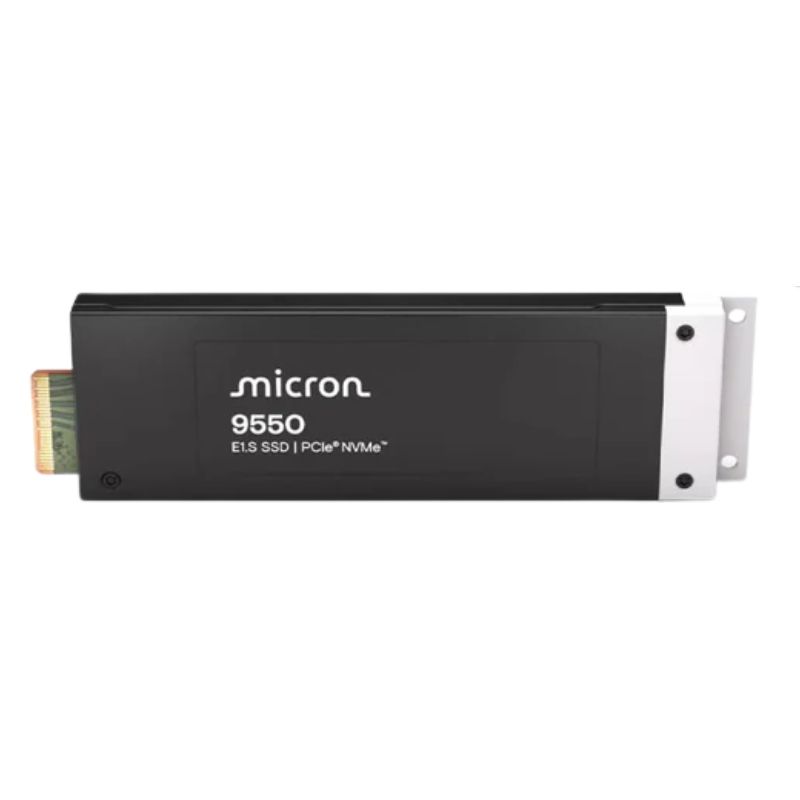


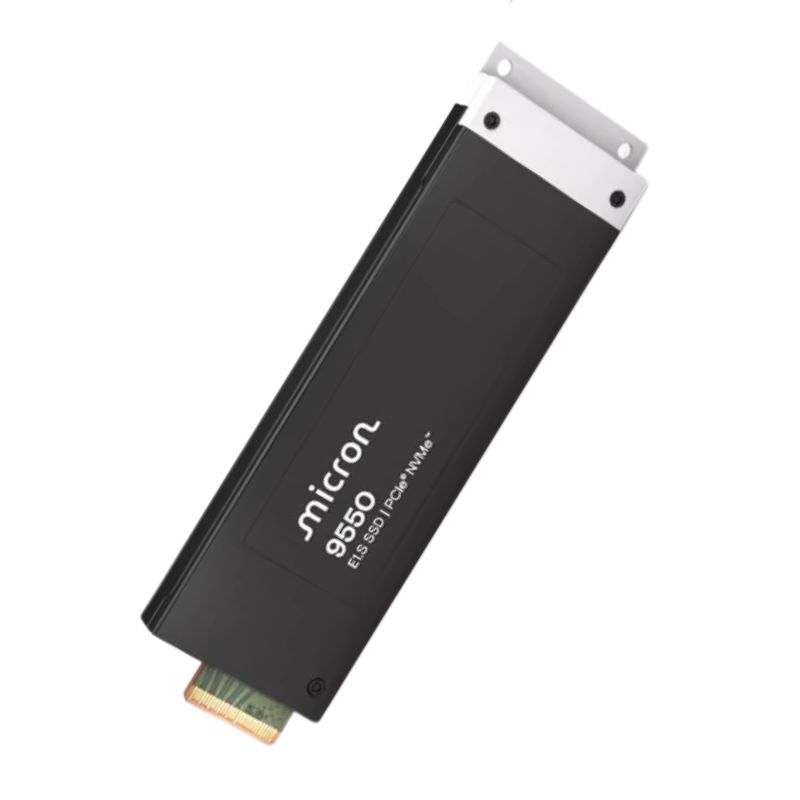
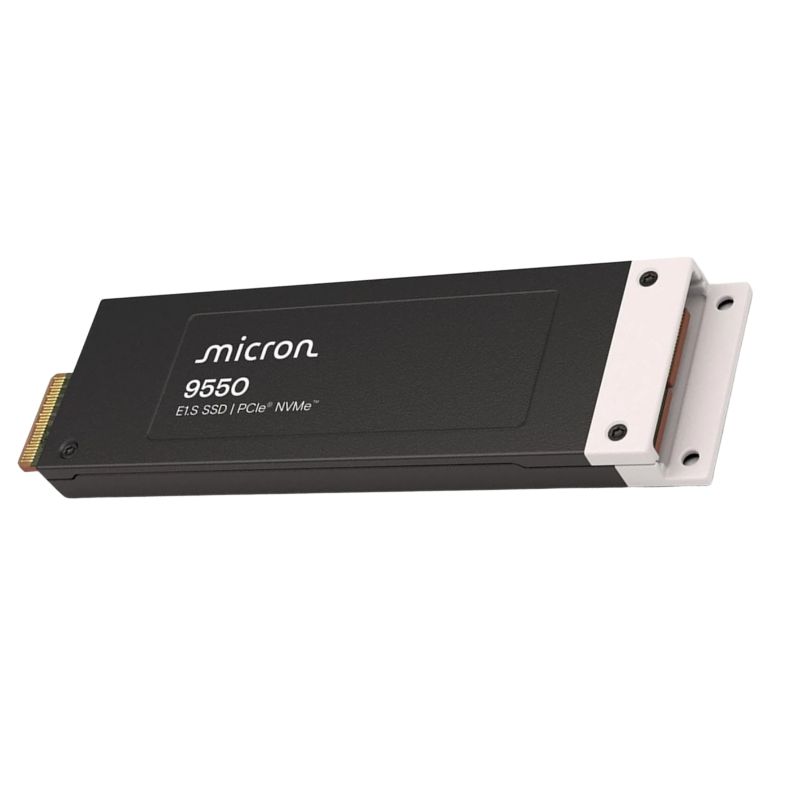
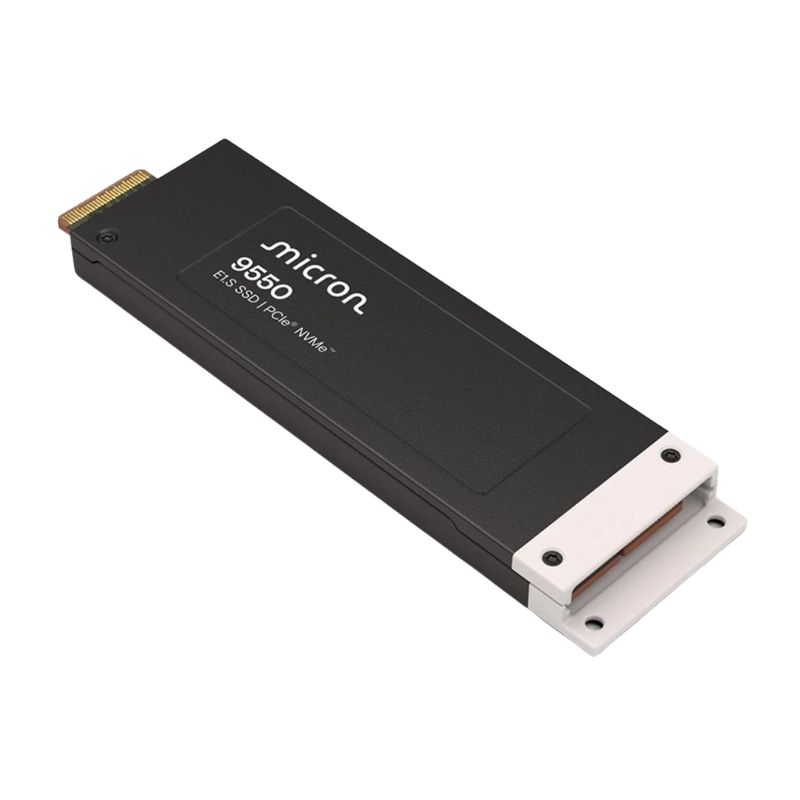
Micron MTFDLCE15T3THA-1BK1DABYY 9550 Pro 15.36TB E1.S 15mm 3D TLC NAND NVMe SSD. New Sealed in Box (NIB) with 3 Years Replacement Warranty. Call
The MTFDLCE15T3THA-1BK1DABYY Micron 9550 Pro 15.36TB PCI Express 5.0 x4 NVMe E1.S 15mm 3D TLC NAND Solid State Drive is a high-performance enterprise-class solution designed for next-generation data center workloads. With industry-leading throughput, impressive endurance, and compact form factor.
The MTFDLCE15T3THA-1BK1DABYY Micron 9550 Pro delivers an enterprise-class, high-density NVMe SSD solution engineered for modern data centers, AI training and inference workloads, caching tiers, and high-throughput transaction systems. Presented in the E1.S 15 mm form factor and offering 15.36 TB of raw capacity, this drive pairs Micron’s advanced 3D TLC NAND with a PCIe® Gen5 x4 NVMe™ interface to provide a balance of blistering sequential bandwidth, strong random I/O, and data center-grade reliability and security features. The product sits in the echelon of storage components designed specifically to feed GPU clusters, accelerate low-latency services, and consolidate hot data tiers.
The MTFDLCE15T3THA-1BK1DABYY Micron 9550 Pro variant in question is supplied in the E1.S 15 mm profile — a widely adopted server-centric, sled-compatible form factor tailored for modern OCP-style server bays. The 15 mm height provides room for thermal and power management features while remaining compatible with many enterprise chassis designs. This shape factor enables high rack-level storage density without the thermal penalties that larger U.2 drives sometimes encounter.
Leveraging PCIe Gen5 x4 lanes, this drive connects over NVMe to unlock much higher per-device bandwidth than Gen4 parts. The interface supports NVMe features necessary for data center scale — including low-latency command processing, robust IO queues, and extensive vendor telemetry hooks. This translates directly into better sequential throughput for streaming workloads and reduced I/O queuing latency for random read/write workloads typical in database and AI inference scenarios. Micron’s product brief documents headline sequential numbers that reflect Gen5 performance.
Built on Micron’s advanced 3D TLC NAND, the 9550 Pro optimizes cost-per-GB while delivering endurance and write amplification strategies suitable for mixed and read-intensive enterprise use cases. Micron’s controller logic is tuned for aggressive garbage collection, background media management, and power/thermal-aware throttling — all important to maintain consistent tail latency at scale. The result: a drive that balances raw capacity with predictable I/O behavior under sustained load.
According to Micron’s published materials and product briefs, the 9550 family reaches very high sequential throughput levels that make it particularly effective for streaming and dataset staging for GPUs. Typical top-line figures referenced across vendor materials include sequential read speeds up to ~14.0 GB/s and sequential write speeds in the neighborhood of ~10.0 GB/s for high-capacity parts — figures that signify a Gen5-enabled drive tuned for next-generation workloads. These are datasheet-class metrics and actual sustained throughput will depend on host configuration, queue depth, and thermal constraints.
Beyond sequential numbers, the Micron 9550 Pro emphasizes random read/write IOPS and consistent latency performance. Enterprise buyers often care most about tail latency (e.g., 99.9th percentile read latency), which Micron addresses through firmware quality-of-service (QoS) features and thermal/power control mechanisms. These elements help ensure predictable behavior for latency-sensitive workloads like online transaction processing and real-time feature serving for ML models.
Micron rates the 9550 Pro for data center endurance levels that vary by capacity point and intended usage profile (e.g., read-intensive vs. mixed-use). The drive includes enterprise-class error-correcting code (ECC), power-loss protection mechanisms, end-to-end data path integrity, and advanced media management to extend usable life. These attributes combine to provide storage administrators with the metrics necessary for lifecycle planning and replacement strategies.
The MTFDLCE15T3THA-1BK1DABYY is offered with self-encrypting drive (SED) options and support for TCG Opal and industry-standard AES encryption modes. These functions enable at-rest encryption and streamlined key management to meet compliance needs for regulated industries. Drive-level encryption reduces the need for additional host-side encryption processing and simplifies secure decommissioning procedures.
Designed with the enterprise ecosystem in mind, the Micron 9550 line implements NVMe 2.0-compatible features, OCP 2.0 (with support for additional OCP telemetry extensions), and SPDM 1.2 device authentication in applicable configurations. These controls provide administrators access to telemetry for monitoring drive health, temperature, power usage, and predictive indicators of failure. Robust telemetry is crucial for integrating NVMe devices into large-scale fleet management and proactive replacement programs.
For integrators and cloud operators, manageability means predictable behavior at rack scale. Micron provides firmware tools, SMART attributes, and vendor-specific management commands that allow administrators to script health checks, perform secure erases, and capture detailed logs for forensics. The E1.S form factor also fits neatly into OCP-compliant sleds, enabling denser server builds with centralized thermal and power management.
Selecting a 15.36 TB device like the MTFDLCE15T3THA-1BK1DABYY reduces the number of devices required to reach a target raw capacity, simplifying cabling and potentially reducing platform overhead. However, larger devices may impact rebuild times and fault domains in some architectures, so plan RAID/erasure coding strategies accordingly.
High-performance NVMe drives can produce significant heat under sustained load. MTFDLCE15T3THA-1BK1DABYY The E1.S 15 mm form factor allows for integrated heatsinks or host-provided cooling solutions; ensure that server airflow and chassis design match vendor guidance to avoid thermal throttling. Power budgets should account for peak and sustained power draw, especially when multiple Gen5 NVMe drives populate a single host.
Enterprise SSDs are typically covered by manufacturer warranties and RMA support; check Micron’s warranty terms and the reseller contract. Understanding warranty coverage for endurance-related wear and power-related failures helps establish a lifecycle policy, reserve budgets for replacements, and define acceptable levels of spare capacity in your inventory.
Compared to previous-gen Micron enterprise drives, the 9550 family emphasizes Gen5 throughput and higher sustained sequential bandwidth. If you are upgrading from Gen4 devices, expect measurable gains in both raw sequential throughput and improved efficiency when feeding GPU-heavy workloads. For some legacy workloads, however, a Gen4 drive may still offer a better price-to-performance trade-off depending on host capabilities.
The modern NVMe market includes offerings from several vendors. MTFDLCE15T3THA-1BK1DABYY The 9550 Pro’s differentiators include Micron’s vertical integration of NAND and controller design, enterprise-grade firmware, and a track record of data center support. When choosing between vendors, compare not only headline bandwidth and capacity but also QoS/latency behavior, telemetry capabilities, TCO (total cost of ownership), and vendor support ecosystems.
Keep drive firmware and host drivers aligned with Micron’s recommendations. Many performance and reliability issues stem from mismatched firmware or unsupported host versions. When deploying at scale, validate firmware images in a staging cluster before wide rollouts.
Ensure chassis fans, sled heatsinks, or host-provided cold plates meet the drive’s dissipation needs. In high-density racks with multiple Gen5 NVMe drives, consider proactive temperature monitoring and throttling policies to avoid thermal excursions that may trigger QoS degradation.
Large-capacity drives can influence rebuild times during failure recovery. Adopt erasure coding or RAID levels that balance rebuild performance and storage efficiency. Keep spare drive inventory available and use monitoring tools to pre-stage replacements based on predictive failure indicators.
High-density enterprise NVMe SSDs are priced as capital investments and are often procured through authorized resellers, distributors, or direct OEM channels. Prices vary widely based on supply, warranty, and service terms; always compare quotations that include warranty length, RMA logistics, and firmware support agreements.
The Micron part number MTFDLCE15T3THA-1BK1DABYY reflects family, capacity, and configuration metadata. When ordering, verify the full part number, SED options, and any country- or channel-specific suffixes to avoid mismatches at receipt.
Yes. The drive’s Gen5 bandwidth and strong sequential/read performance make it an appropriate choice for dataset streaming and GPU feeding. It is explicitly marketed for data center and AI applications where large sequential throughput and stable random reads are required.


 Contact Us
 Information
 Catalog
 Solid State Drives (SSD)
 Network Switches
 Hard Disk Drives
 HBA & Controllers
 PC & Servers
 PC & Server Memory
 CPU & Processors
 Network Routers
 Power Supplies
 Tape Drives & Libraries
 Network Devices
 Computer & Network Cables