(7% discount is applied at checkout)
Cart is empty
Your go-to destination for cutting-edge server products
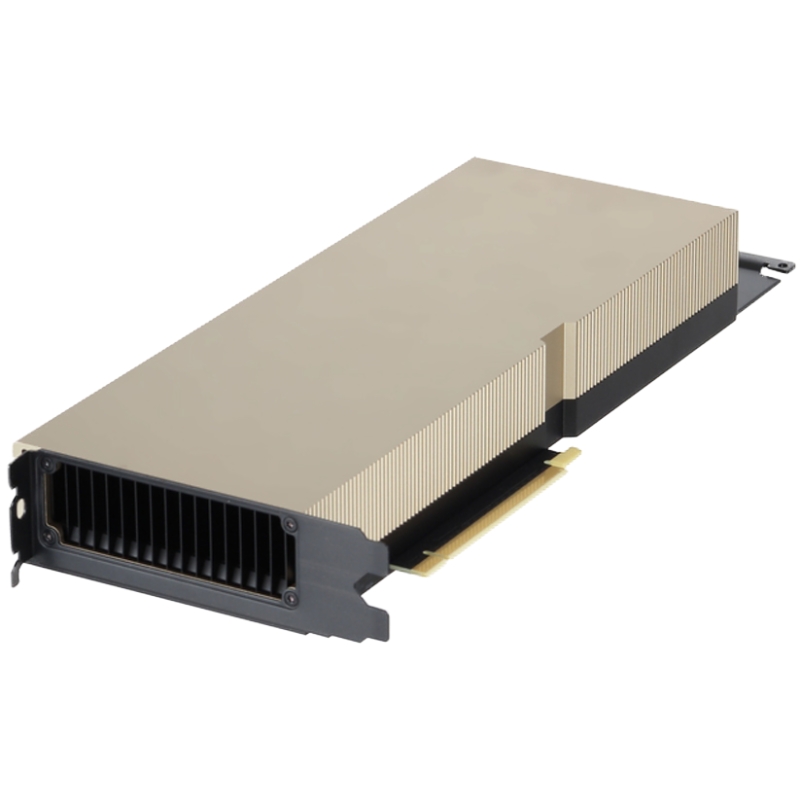


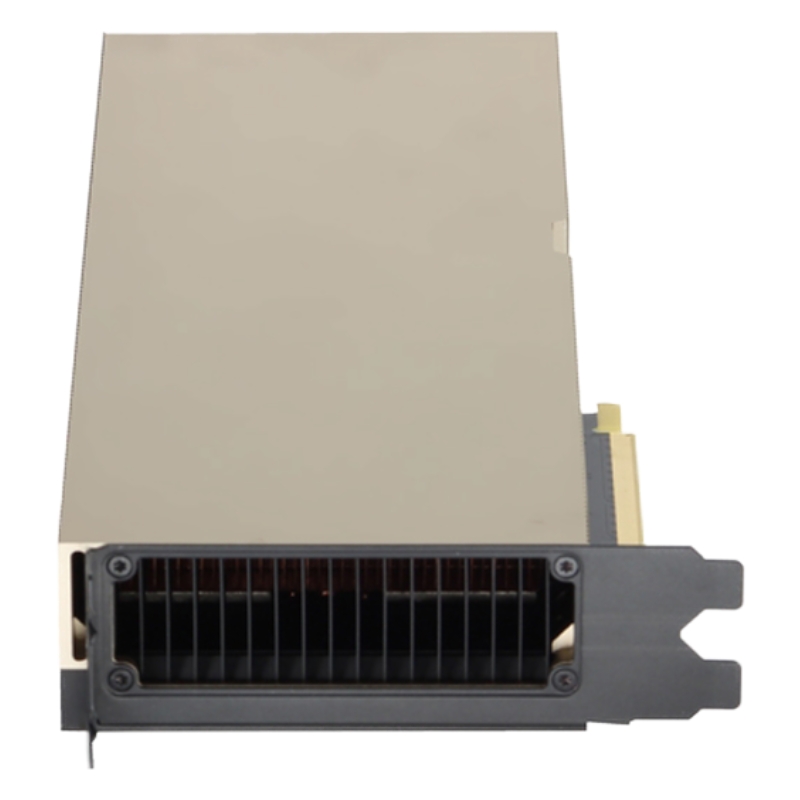
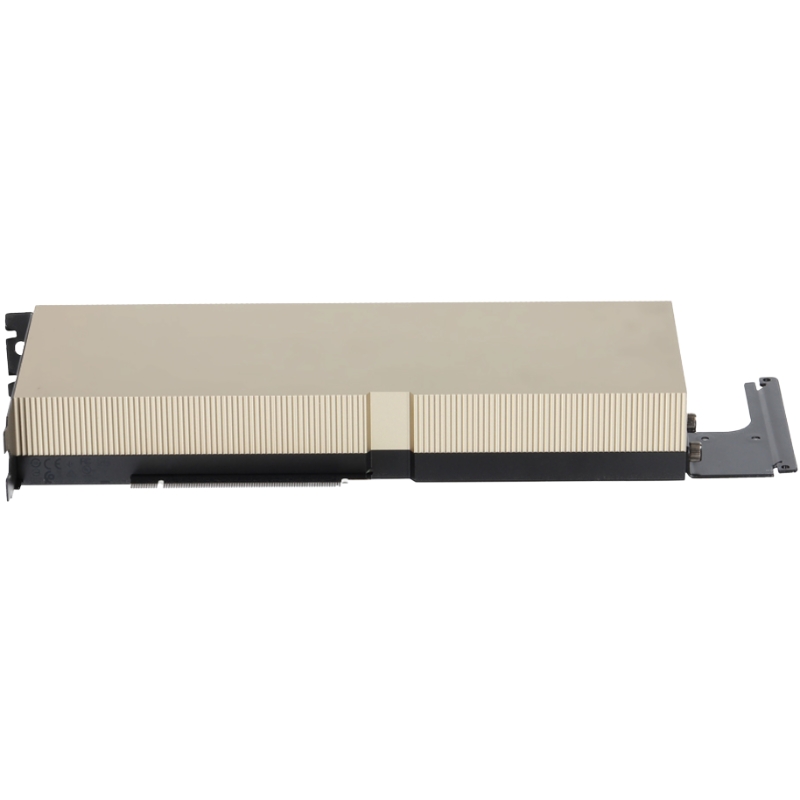
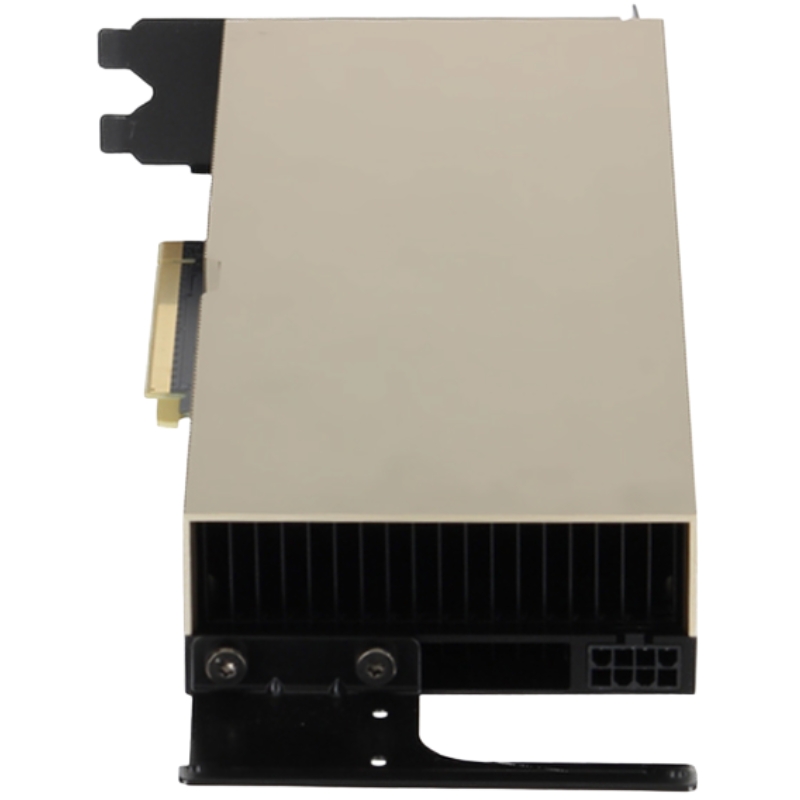
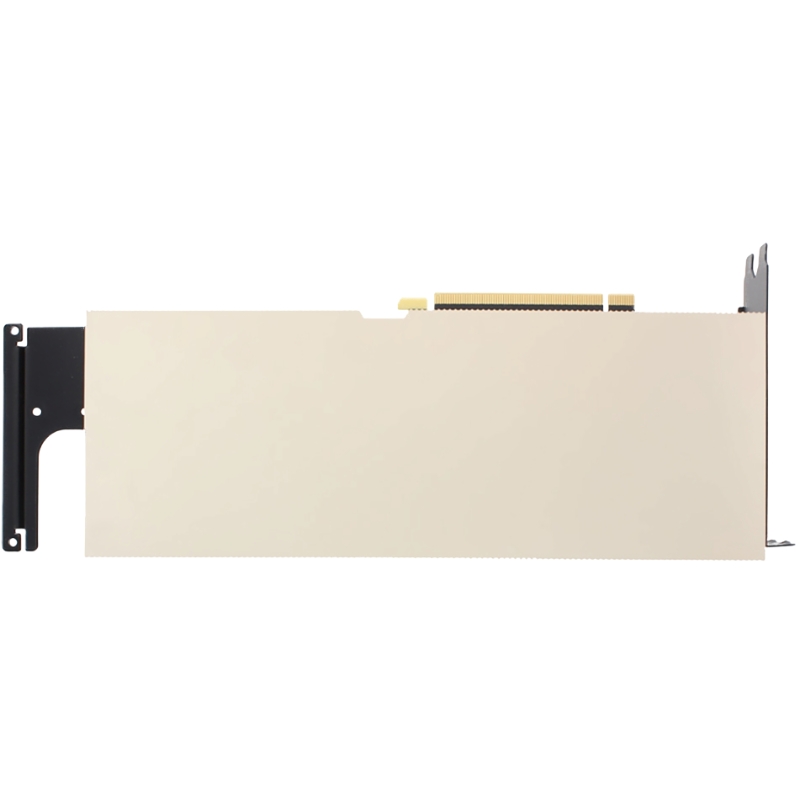
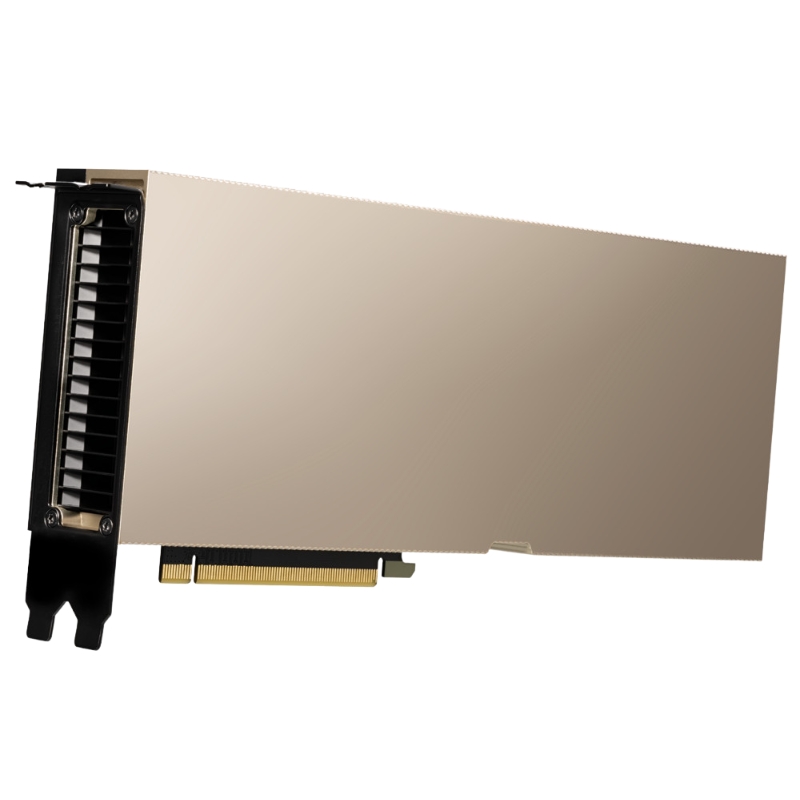
Nvidia 699-21001-0200-400 A100 40GB HBM2 PCIE GPU Tensor Ampere Computing Accelerator Card. Excellent Refurbished with 1-Year Replacement Warranty
The Nvidia A100 40GB HBM2 PCIe GPU (Part Number: 699-21001-0200-400) is a high-performance graphics card designed for advanced computing workloads, artificial intelligence, and deep learning applications.
The Nvidia 699-21001-0200-400 A100 40GB HBM2 PCIe GPU sits within the high-performance accelerator category designed for compute-intensive workloads in data centers, research labs, and enterprise AI deployments. This category centers on server-grade general-purpose GPU accelerators that combine massive floating point and mixed-precision throughput with high memory bandwidth, enabling accelerated training, inference, high-performance computing (HPC), scientific simulation, and data analytics. The A100 40GB PCIe SKU uses Nvidia’s Ampere architecture and HBM2 memory to deliver a balance of memory capacity and bandwidth for models and datasets that require more than standard consumer GPUs but benefit from the PCIe form factor for flexible server integration.
The core of this category is the Ampere GPU architecture, which introduces improvements in tensor processing, CUDA core efficiency, and memory subsystem design. Within this family, the A100 40GB PCIe variant integrates a high-density HBM2 stack and a large number of tensor cores optimized for mixed precision and sparsity-accelerated operations. This accelerates both dense linear algebra used in deep learning and sparse computations common in graph analytics and scientific codes. The architecture also supports advanced features such as third-generation tensor cores, structural sparsity support, and multi-precision compute paths, allowing workloads to exploit FP64, FP32, TF32, BFLOAT16, and INT8 where appropriate.
A distinguishing attribute of the category is the use of high-bandwidth memory, specifically HBM2, which offers significant bandwidth advantages over GDDR memory typically found on gaming or prosumer GPUs. The 40GB capacity of HBM2 on this SKU strikes a strategic balance: it provides enough memory for many large training batches, high-resolution inference inputs, and sizable simulation working sets while maintaining the thermal and power constraints of a PCIe card. High sustained bandwidth ensures that feeding tensor units with data is less likely to become a bottleneck, improving throughput for memory-bound kernels and large matrix multiplications that underpin neural network workloads.
The PCIe form factor is the category’s practical advantage for data centers and edge nodes that require compatibility with a broad range of servers and motherboards. Unlike SXM or proprietary form factors that demand specific validated servers and liquid cooling, the PCIe A100 fits conventional server slots and leverages standard air-cooling or enhanced chassis cooling solutions. This flexibility simplifies procurement, reduces integration time, and allows organizations to deploy high-performance accelerators without a complete server redesign. The PCIe interface also enables interoperability with existing PCIe fabrics and expansion topologies, supporting a phased upgrade path for mixed CPU-GPU infrastructures.
While the PCIe A100 does not include native SXM-style NVLink on the card itself, the category is designed to work in multi-GPU server environments where high-speed interconnects may be offered via motherboard trace routing, PCIe switches, or platform-level NVLink bridges in specific server builds. For distributed training or multi-node HPC clusters, the A100 40GB PCIe is commonly deployed alongside high-bandwidth networking such as InfiniBand HDR or Ethernet with RDMA to minimize communication overhead and permit efficient model parallelism and data parallel synchronization across nodes. Architects planning dense multi-GPU topologies should consider the trade-offs between PCIe-based flexibility and SXM-based raw inter-GPU bandwidth when designing systems for extreme scaling.
The value of this GPU category is amplified by Nvidia’s software stack. Developers and system architects leverage CUDA, cuDNN, cuBLAS, NCCL, and other libraries to extract maximum throughput. Higher-level frameworks such as TensorFlow, PyTorch, RAPIDS, and MXNet include optimized kernels and distribution mechanisms to accelerate workloads on A100 devices. The presence of containerized workflows and Nvidia’s NGC catalog simplifies deployment of prebuilt images for model training, inference, and HPC applications. Additionally, features like Multi-Instance GPU, when supported by the specific A100 firmware and system BIOS, allow one physical GPU to be partitioned into several secure instances for workload consolidation and multi-tenant hosting, improving utilization in shared environments.
Compatibility with mainstream server operating systems and orchestration platforms is a hallmark of this accelerator category. Support for Linux distributions used in enterprise data centers is comprehensive, and vendor-provided drivers and enterprise-support options ensure long-term stability. The A100 PCIe GPUs integrate with orchestration systems such as Kubernetes through device plugins, enabling GPU scheduling and sharing across containerized workloads. This makes the GPU attractive for cloud-like private clusters where elasticity, resource isolation, and reproducible environments are required for research and production-grade AI services.
Performance in this category is workload-dependent, with the A100 excelling at matrix-heavy operations typical of deep learning. Training large transformer models, convolutional neural networks, and recommendation systems reliably benefit from tensor core acceleration and optimized libraries. For inference, the A100 provides high throughput at low latency for batch processing and can be tuned for real-time serving with model quantization and pruning techniques. For HPC applications such as computational fluid dynamics, molecular dynamics, and finite element analysis, the double precision and mixed-precision capabilities of the A100 contribute to significant speedups compared to CPU-only clusters, often enabling orders-of-magnitude reductions in time-to-solution for suitably parallelized codes.
Enterprises use this GPU category for a range of tasks that include large-scale model development, hyperparameter sweeps, and production model deployment. Research institutions rely on the A100 for training state-of-the-art models in natural language processing and computer vision. Data analytics teams accelerate ETL and feature engineering pipelines with GPU-accelerated dataframes and SQL engines. Simulation-oriented research benefits from GPU-accelerated solvers and domain-specific libraries, while financial services deploy the accelerators for risk modeling and Monte Carlo simulations. The breadth of real-world use cases demonstrates the category’s versatility across sectors and problem types.
Thermal and power characteristics are essential considerations when selecting an accelerator. The A100 40GB PCIe has thermal design parameters intended for server-class environments with robust airflow. Rack planners and data center engineers must verify chassis compatibility, ensure adequate intake and exhaust paths, and confirm that power delivery via the PCIe slot or auxiliary power connectors meets the card’s needs. When deploying multiple cards in a rack, attention to thermal stacking and hot-aisle containment becomes critical to maintain sustainable performance and avoid thermal throttling. For denser deployments, upgrade paths might include server-level cooling enhancements or the use of validated server platforms designed for multiple high-power PCIe accelerators.
Reliability is a central metric in the category, with enterprise GPUs backed by warranty and support services that include firmware updates and driver maintenance. Lifecycle management practices include firmware validation within the platform, monitoring for thermal and power metrics, and periodic driver updates to maximize compatibility with newer frameworks and libraries. Many organizations integrate GPU health telemetry into their monitoring systems to track utilization, temperature, memory errors, and ECC events, enabling proactive maintenance and optimized scheduling to extend hardware lifetime and reduce unplanned downtime.
Security considerations are increasingly relevant as GPUs are used in multi-tenant cloud-like environments and research clusters. The category supports secure deployment practices, including driver-level isolation, secure boot compatibility in some server platforms, and hardware-level features that mitigate side-channel risks where applicable. Multi-Instance GPU capability provides logical partitioning that can be used to enforce tenancy boundaries between workloads. Combining these capabilities with robust network segmentation and container security policies helps ensure that GPU resources can be shared safely in environments that require compliance and controlled access.
Optimizing workloads for the A100 category involves multiple layers of tuning. At the model level, techniques such as mixed-precision training, gradient accumulation, activation checkpointing, and sparsity-aware transforms reduce memory footprints and improve throughput. At the system level, adjusting batch sizes, pinning GPU memory, and aligning data pipelines to avoid I/O stalls are critical. For multi-GPU training, using optimized collective communication libraries and overlapping communication with computation can minimize synchronization overhead. Finally, compiler-level optimizations and domain-specific libraries provide kernel-level improvements that unlock additional performance potential on the Ampere tensor cores and memory subsystems.
This accelerator sits between mainstream consumer GPUs and specialized SXM-based datacenter accelerators. Compared to consumer cards, the A100 offers far superior double precision, tensor core performance, and HBM2 bandwidth as well as enterprise-grade firmware and driver support. Compared to SXM A100 variants, the PCIe SKU emphasizes compatibility and flexibility over maximum interconnect bandwidth; SXM variants may achieve higher aggregate inter-GPU throughput through NVLink and denser thermal envelopes but require specific server platforms. Buyers should match specific SKU attributes to workload scaling and server design constraints when choosing between these adjacent categories.
Common deployment patterns for this GPU category include single-node acceleration for model prototyping, multi-GPU nodes for parallelized training, and clustered architectures for very large model training using distributed frameworks. Reference architectures typically specify the CPU-to-GPU ratio, memory allocation, and network topology to balance data ingestion, preprocessing, and model compute. For inference, edge-optimized racks and inference farms can be built using PCIe accelerators to serve large numbers of models with low latency requirements. Vendors and system integrators provide validated configurations that streamline deployment and ensure predictable performance across typical workloads.
High-performance accelerators have notable power and cooling footprints that factor into sustainability planning. Data center operators often evaluate power usage effectiveness and consider efficiency measures such as workload consolidation, demand-based provisioning, and scheduling non-critical workloads during off-peak periods. The PCIe A100’s ability to enable faster computation per watt compared to CPU-only equivalents can reduce total energy consumed for a given computational task, but planners must design airflow, power distribution, and server placement to avoid inefficiencies that negate these gains.
Typical case studies in this category describe organizations reducing model training times from days to hours, enabling iterative experimentation and faster product improvements. In another narrative, research groups scale fluid dynamics simulations to larger meshes and finer granularity, unlocking new scientific discoveries while reducing compute costs. Production deployments often showcase improvements in inference latency and increased throughput for recommendation systems, leading to better user experiences and higher system capacity without linear increases in server count. These narratives underline the practical benefits when architecture, software, and operations align around the accelerator’s capabilities.


 Contact Us
 Information
 Catalog
 Solid State Drives (SSD)
 Network Switches
 Hard Disk Drives
 HBA & Controllers
 PC & Servers
 PC & Server Memory
 CPU & Processors
 Network Routers
 Power Supplies
 Tape Drives & Libraries
 Network Devices
 Computer & Network Cables