(7% discount is applied at checkout)
Cart is empty
Your go-to destination for cutting-edge server products
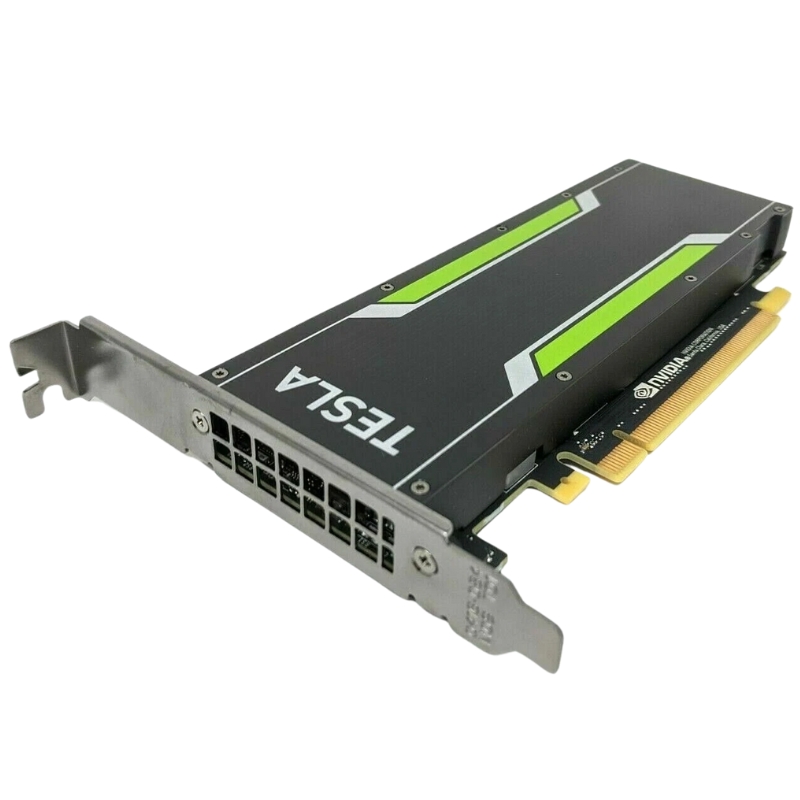


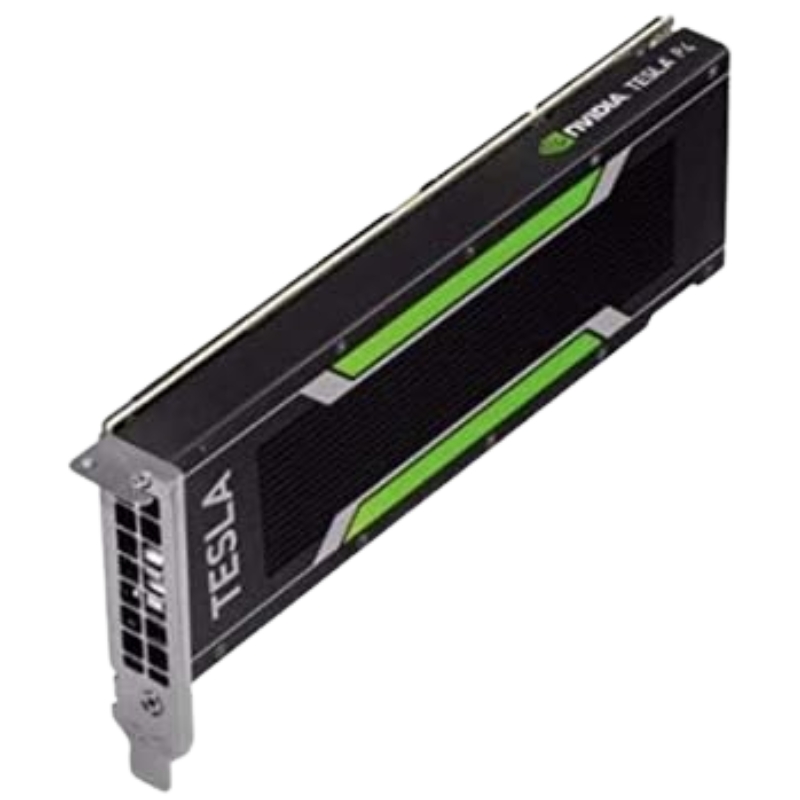
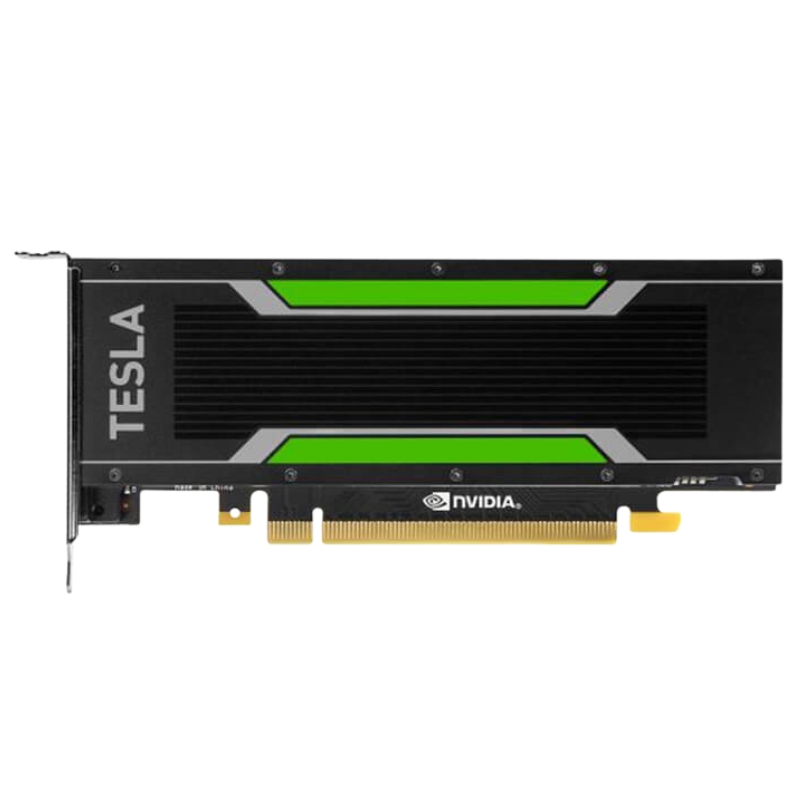
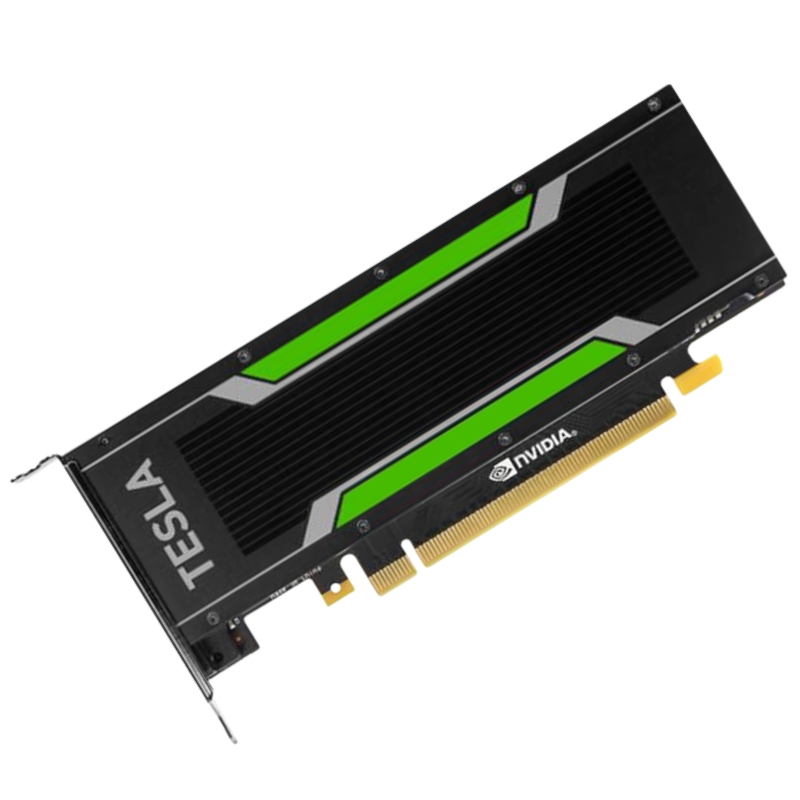
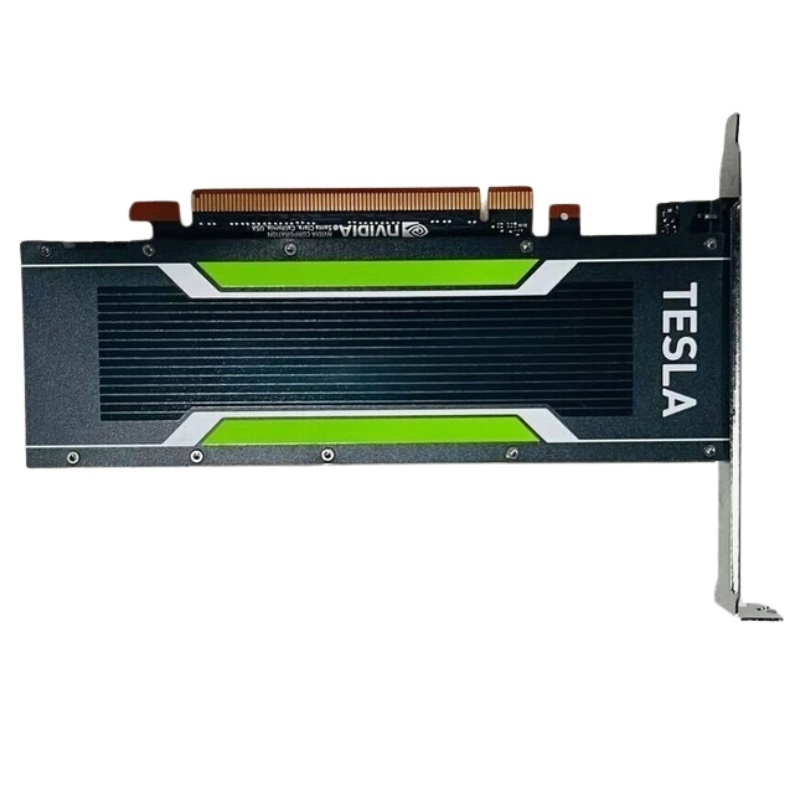
Nvidia 699-2G414-0200-110 Tesla P4 8GB 2560 Cores GDDR5 Memory Bandwith 192 GB/s Graphics Processing Unit. Excellent Refurbished with 1 year replacement warranty - HPE Version
Built upon the Pascal microarchitecture, the Tesla P4 GPU is optimized for deep learning workloads. It offers a powerful blend of high memory density and precision computing, enabling faster model training and inference without sacrificing accuracy.
The Nvidia 699-2G414-0200-110 Tesla P4 8GB appears on server spec sheets and procurement lists as a focused inference and virtualization accelerator rather than a general-purpose desktop gaming card. Its design philosophy centers on delivering energy-efficient, high-throughput tensor and FP32 workloads in datacenter and edge environments. The physical and electrical footprint, memory configuration, and thermal profile signal a card optimized for dense deployment: multiple units per rack, quiet operation in server chassis with directed airflow, and a focus on maximizing inferences per watt. The Tesla P4 model name, combined with the OEM code 699-2G414-0200-110, identifies a very specific board configuration of the Pascal-generation board that is most often used where power envelopes, latency and sustained throughput matter more than peak floating-point performance for single, sustained bursts.
With 2560 processing cores exposed to the CUDA programming model, this Tesla P4 variant provides parallel compute capacity that is well suited to highly parallelizable tasks. The core count translates into broad SIMD-style parallelism, which accelerates workloads such as convolutional neural network inference, image and video decoding pipelines, and many data-parallel preprocessing tasks. That number of cores, when paired with optimized libraries like cuDNN and TensorRT, unlocks efficient matrix multiplication and convolution operations central to modern AI inference. The architecture leans into many smaller, energy-efficient cores rather than fewer, extremely powerful monolithic units, which reduces per-inference energy cost when models and runtime are finely tuned.
Equipped with 8GB of GDDR5 memory and a memory bandwidth specification around 192 GB/s, the Tesla P4 card is positioned for moderate working set sizes and high-throughput streaming. The GDDR5 memory type balances cost, latency and sustained transfer rate for inference pipelines that stream input batches and intermediate activations continuously. For many production inference tasks, 8GB is sufficient to host quantized models or batched requests, and the available bandwidth permits efficient feeding of data to the compute cores without easily becoming the bottleneck for medium-scale models. Memory architecture and caching behavior encourage developers to structure data movement with tiled or batched approaches to avoid unnecessary thrashing and to maximize utilization of the 192 GB/s peak transfer capability.
The Tesla P4 excels at inference and certain GPU-bound streaming tasks. It was designed to sit in the rack alongside network and storage backplanes and to be used for high-density inference servers. Typical applications include real-time video analytics, image classification at scale, object detection for camera feeds, speech recognition and natural language inference tasks that require both low latency and high throughput. Unlike high-end training cards that favor mixed precision matrix math and enormous on-board memory, the P4 is tuned for steady-state inference where sustained throughput per watt and per dollar matters. The card's relative performance in these domains is derived from the interplay of its core count, clock frequency, and memory bandwidth, and in practice, the best performance gains come when software is optimized for its particular strengths: batching for throughput, lightweight preprocessing pipelines, and inference runtimes that minimize host-device synchronization.
One of the Tesla P4's traditional strengths is its fit with virtualized and containerized environments. The card is commonly deployed behind hypervisors or within Kubernetes clusters where GPU sharing and device assignment are controlled by orchestration layers. Compatibility with SR-IOV-like technologies, NVIDIA GRID virtualization tools, and container runtimes allows multiple workloads to safely coexist on a single physical host, as long as memory and compute are carefully partitioned. For cloud or private datacenter operators, integration details include driver management, CUDA and cuDNN compatibility, and maintaining consistent runtime stacks across cluster nodes. The relatively modest power draw compared to larger accelerators reduces the complexity of power provisioning per rack unit, enabling denser packing in GPU farm configurations.
Extracting the best value from a Tesla P4 requires aligning software to the hardware's characteristics. Standard toolchains such as CUDA, cuBLAS, cuDNN, and TensorRT provide a pathway to efficient inference. Converting trained models from common frameworks into optimized runtimes is a well-established practice: exporting from PyTorch or TensorFlow into ONNX, then ingesting the ONNX representation to build a TensorRT engine tuned for a P4 profile. Quantization-aware training or post-training quantization can reduce model memory footprint and increase effective throughput while trading off minimal accuracy. Additionally, frameworks that support asynchronous execution, multi-streaming, and pinned memory transfers achieve lower latencies and better sustained GPU utilization on the P4. Profiling tools reveal kernel-level hotspots and memory stalls; adjustments such as kernel fusion, data layout changes, and input prefetching help close the gap between theoretical throughput and measured application performance.
The Tesla P4 has found a sweet spot in industries that require high throughput per watt for inference tasks, but that do not require the enormous memory capacity of training-class accelerators. In retail and advertising, the card powers real-time recommendation scoring and image-based product search. In transportation and smart cities, it is used for live video analytics, vehicle detection, and traffic pattern recognition. Telecommunications firms use it to accelerate network data processing and virtualized network functions, where the low power footprint matters for edge locations. In media and entertainment, the card aids live transcoding pipelines and intelligent metadata extraction from video streams. Its modest size also makes it a candidate for edge servers where cold-start performance and consistent throughput at constrained power budgets are priorities.
Procurement of hardware such as the Nvidia 699-2G414-0200-110 Tesla P4 should include attention to driver compatibility, firmware versions, and ecosystem support to ensure a long and predictable lifecycle. While the card is often sold as part of OEM server bundles or as a standalone accelerator, buyers should confirm that vendor-supplied firmware images and heat sink assemblies match the intended deployment environment. Lifecycle management includes periodic firmware updates, driver patches that address security and stability, and replacement strategies for end-of-life units. In some organizations, the card is refreshed after several years as model sizes and dataset characteristics change; in others, careful software optimization and quantization extend the useful life of older accelerator hardware.
Developer productivity is a strong multiplier for the value delivered by hardware. The Tesla P4 benefits from mature SDKs, rich libraries and community examples that shorten the path from experimental model to production inference. Tooling that automates conversion, calibration, and benchmarking reduces the cognitive load on teams. Documentation, sample configurations for popular serving frameworks, and templates for Kubernetes device plugin setup accelerate time-to-deployment. Building internal patterns—standard containers, CI pipelines for model validation, and automated regression checks—ensures that development velocity scales alongside the number of deployed accelerators.


 Contact Us
 Information
 Catalog
 Solid State Drives (SSD)
 Network Switches
 Hard Disk Drives
 HBA & Controllers
 PC & Servers
 PC & Server Memory
 CPU & Processors
 Network Routers
 Power Supplies
 Tape Drives & Libraries
 Network Devices
 Computer & Network Cables