(7% discount is applied at checkout)
Cart is empty
Your go-to destination for cutting-edge server products
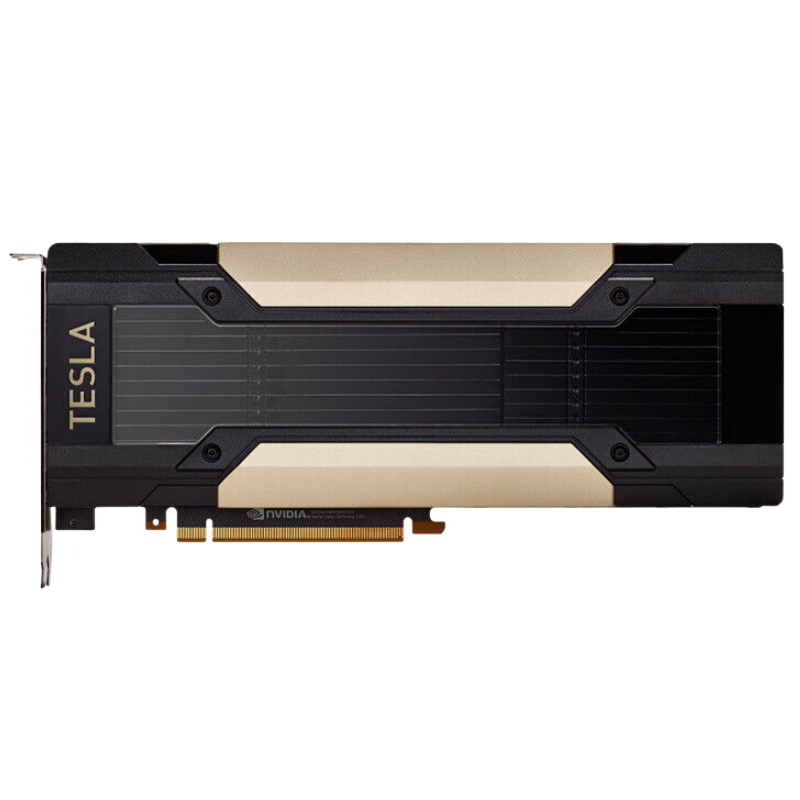


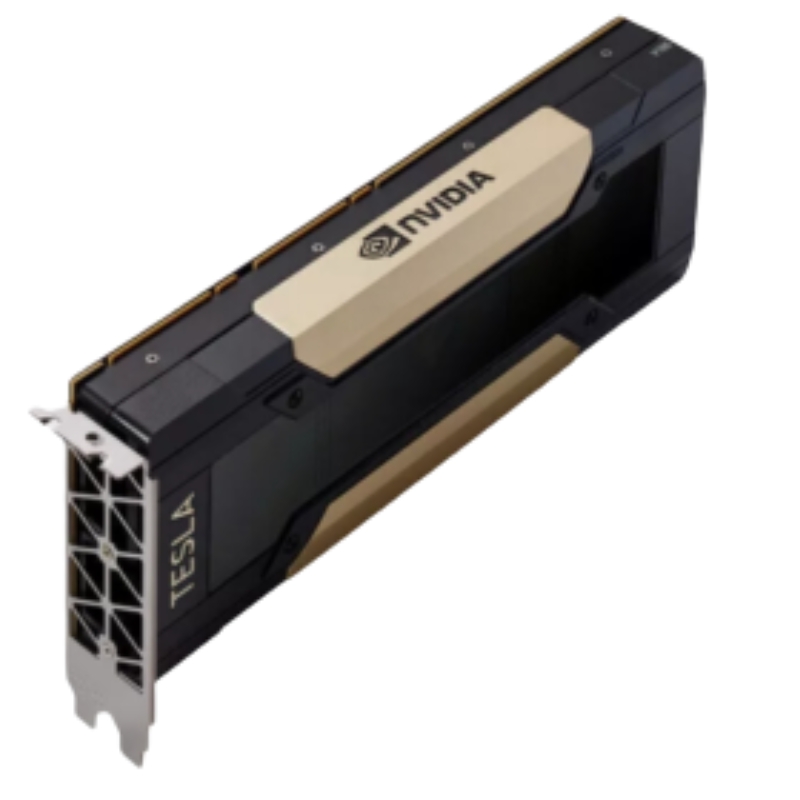
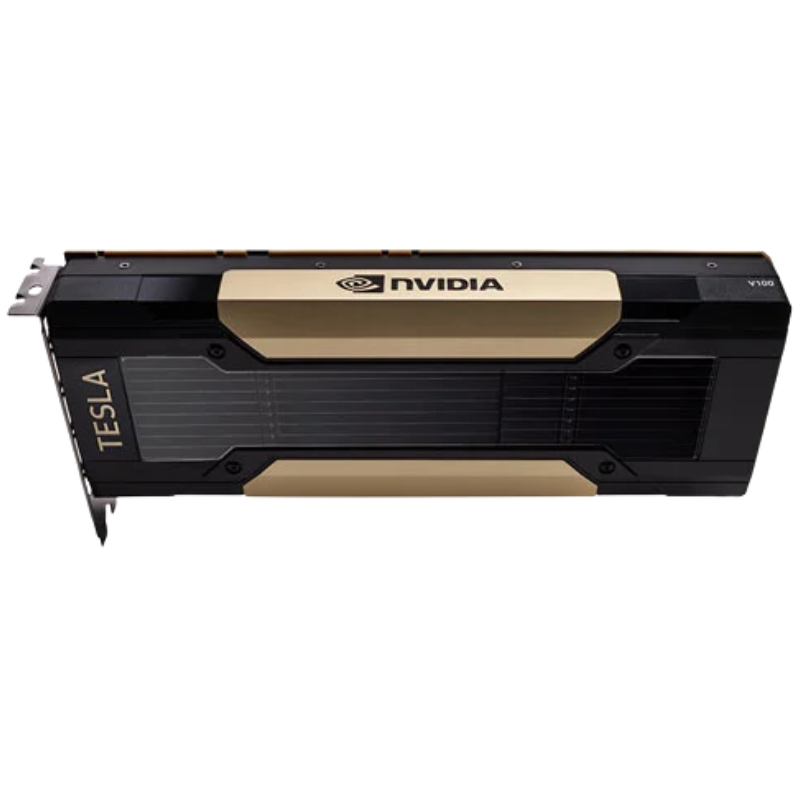
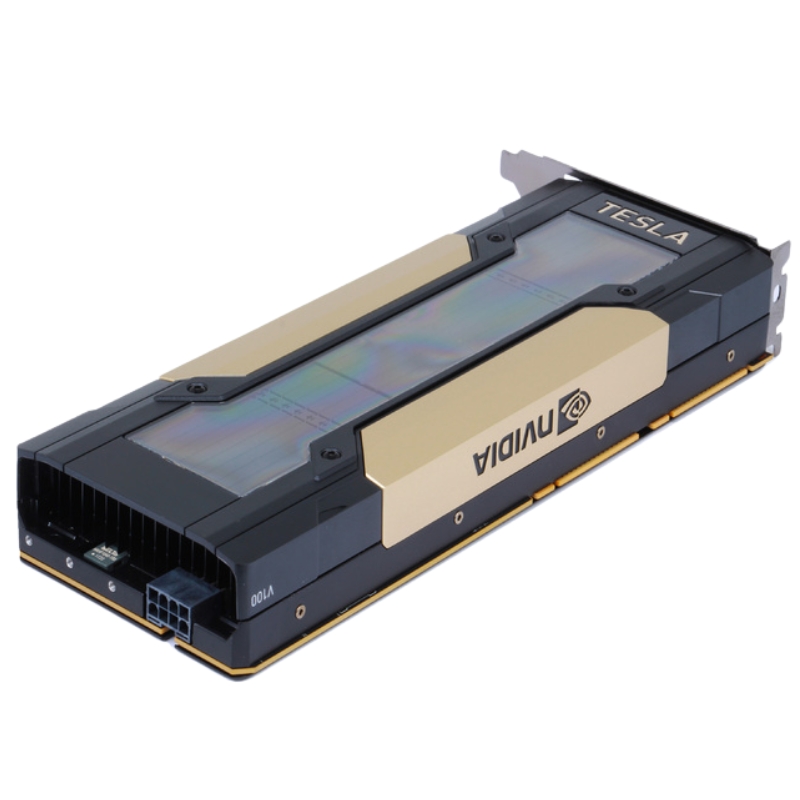
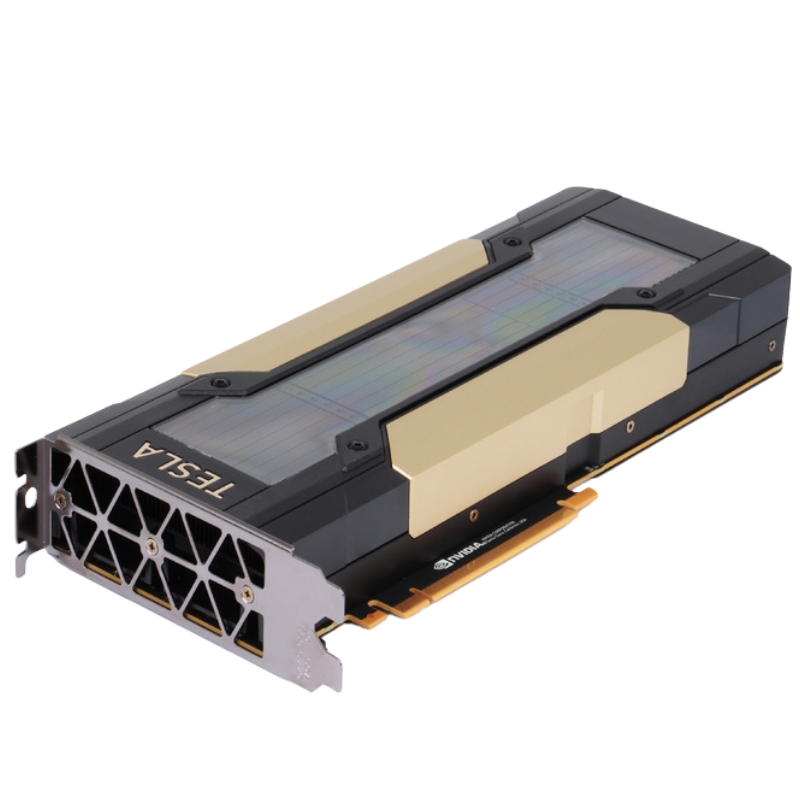
Nvidia 699-2G500-0200-300 Tesla V100 16GB HBM2 Cuda PCI-Express 3 Passive Graphics Processing Unit. Excellent Refurbished with 1 year replacement warranty
The Nvidia 699-2G500-0200-300 Tesla V100 16GB HBM2 CUDA PCI-Express 3 passive graphics processing unit is positioned in the category of high-performance compute accelerators designed for data center, deep learning, scientific simulation, and professional visualization deployments where reliability, thermal design, and compute density matter. This category centers around GPUs that are engineered for double-duty: delivering exceptional single- and mixed-precision compute performance for AI training and inference while also providing the robust memory bandwidth and ECC capabilities required for scientific workloads. The Tesla V100 family is representative of a generation that introduced stacked HBM2 memory to the compute space and emphasized NVLink and PCIe interconnect options; the specific 699-2G500-0200-300 denotes a particular manufacturer configuration intended for passive-cooled server chassis where airflow is managed by the system integrator rather than the card itself.
This category is defined primarily by its architectural identity: the Volta-based GPU core paired with 16GB of High Bandwidth Memory version 2. That architecture focuses on tensor operations, heavy floating point throughput, and an improved instruction set for mixed-precision training. In practical terms, products in this category are applied to neural network training for convolutional and transformer models, accelerated databases that exploit GPU compute for query offload, molecular dynamics simulations, finite element modeling, weather and climate modeling tasks, and any pipeline where parallel throughput and memory bandwidth reduce time-to-solution.
Compute characteristics are central to how this category is perceived. The combination of CUDA cores, Tensor Cores specific to the Volta generation, and the high-bandwidth interface to HBM2 memory means workloads with large matrix multiplies, sparse-dense operations, and large working sets benefit significantly. The category emphasizes strong single-node performance and the ability to scale across nodes through NVLink (in other V100 variants) or high-performance PCI-Express interconnects. When shopping or browsing within this category, buyers focus on raw TFLOPS numbers for FP32, FP16, and mixed precision as a shorthand for likely performance on modern deep learning frameworks, while also scrutinizing memory capacity and memory bandwidth for capacity-bound workloads.
The passive cooling variant implicates a particular segment of server and chassis design. Passive-cooled GPUs for this category are intended to be installed into blades, rack servers, or specialized enclosures where chassis-level airflow and directed cooling paths handle heat dissipation. This design removes onboard fans and reduces vibration and moving parts on the GPU itself, which is desirable for large-scale, high-density deployments and environments where centralized cooling and acoustic control are prioritized. Administrators looking at passive variants must ensure that the host system meets the required thermal design power (TDP) allowances and provides sufficient, regulated airflow across the GPU’s heatsink surfaces to prevent thermal throttling under sustained loads.
Compatibility in this category is not limited to mechanical fit; it extends to power delivery, BIOS support, driver and CUDA version compatibility, and firmware. The PCI-Express 3.0 interface defines the electrical and signaling layer for host communication, and while it remains backward and forward compatible in many systems, the effective throughput and latency characteristics should be validated, especially in mixed-generation server fleets. Power connectors, board dimensions, and bracket types are also critical checks when choosing a passive 699-2G500-0200-300. Enterprise customers routinely verify OEM validation lists and check that the server vendor supports the specific Tesla V100 passive configuration for warranty and lifecycle reasons.
Memory architecture is a defining feature for compute accelerators in this category. HBM2 provides very high bus widths and stacked dies that deliver significantly higher bandwidth per watt than traditional GDDR memory. With 16GB of HBM2, the Tesla V100 class devices deliver an optimal balance for many training and inference workloads that require both high throughput and moderate working set capacity. For models with extremely large parameter counts or for datasets that must be held entirely on-device, designers may evaluate multi-GPU configurations or consider GPUs with larger memory capacities. Nonetheless, the 16GB HBM2 configuration remains a reliable choice for many enterprise-grade models and HPC simulations where bandwidth-limited operations are the main bottleneck.
Enterprise and scientific customers expect features that increase reliability and correctness. ECC memory operation, error reporting capabilities, and firmware-level protections are typical for the Tesla V100 class, enabling long-running jobs to maintain data integrity. In addition, management interfaces and vendor-supplied utilities for monitoring temperature, power draw, and memory error rates form part of the package that defines this category. Buyers focused on fault-tolerant, reproducible computation will evaluate these capabilities closely, as the presence of ECC and enterprise-grade monitoring can be the difference between selecting a consumer-class GPU and a professional, server-oriented part such as the 699-2G500-0200-300 Tesla V100.
Beyond single-node performance, this category is frequently evaluated for integration into larger clusters and orchestration frameworks. Support for container runtimes, GPU scheduling via Kubernetes device plugins, and distributed training frameworks that utilize NCCL or other high-performance collectives are crucial. Passive Tesla V100 cards are commonly found in multi-GPU nodes used for distributed training, and system architects will validate that their orchestration and job scheduling layers can manage GPU resources effectively, schedule jobs with GPU affinity, and handle nodal failures gracefully.
Benchmarks for the Tesla V100 class vary by workload, but the category is associated with high throughput on matrix-heavy operations and strong performance in HPC kernels. Real-world workloads that exemplify this category’s strengths include training image classification models, large language model fine-tuning, inference at scale with batch processing, and physics simulations with dense linear algebra. When reviewing performance, it is important to look at metrics beyond raw TFLOPS: memory bandwidth utilization, power efficiency at sustained load, and multi-GPU scaling efficiency are critical indicators. For many enterprise buyers, performance per watt and the ability to maintain throughput over long training runs weigh as heavily as peak single-iteration metrics.
Common deployment scenarios for items in this category include multi-GPU training nodes for research labs, inference servers in cloud or on-prem environments that require passive cooling for noise or maintenance reduction, and dedicated compute blades in HPC centers. The passive 699-2G500-0200-300 SKU is especially suited for OEM server builds where cards are integrated into chilled air paths, and where redundant cooling and power supplies provide the enterprise-grade resilience expected in 24/7 operations. Use-case patterns frequently involve batch-scheduled training tasks, checkpointed model training to guard against job interruptions, and mixed workloads where GPUs handle both training and later-stage inference tasks in staged pipelines.
Scalability is often achieved via tightly-coupled multi-GPU nodes or loosely-coupled clusters. In tightly-coupled setups, high-bandwidth interconnects and careful placement of GPUs relative to CPU sockets and PCIe lanes minimize latency and maximize inter-GPU throughput. When evaluating the category, consider whether the target workloads scale linearly with more GPUs, or whether communication overheads start to dominate. For many ML training tasks, efficient use of all-reduce collectives and gradient compression techniques improves scaling efficiency. The Tesla V100 class, with its strong compute and interconnect features in various OEM configurations, remains a common building block for such architectures.
Within Nvidia’s product stack, the Tesla V100 class sits between earlier architectures (such as Pascal-based accelerators) and later architectures offering greater efficiency or new features. Comparisons to newer Ampere or Hopper-based GPUs are common when organizations weigh upgrade paths; these comparisons typically focus on improvements in tensor core performance, energy efficiency, and memory capacity. However, the Tesla V100 SKU remains relevant for organizations that already design around its thermal and electrical characteristics or that have software stacks validated specifically for Volta’s instruction set and tensor semantics.


 Contact Us
 Information
 Catalog
 Solid State Drives (SSD)
 Network Switches
 Hard Disk Drives
 HBA & Controllers
 PC & Servers
 PC & Server Memory
 CPU & Processors
 Network Routers
 Power Supplies
 Tape Drives & Libraries
 Network Devices
 Computer & Network Cables