(7% discount is applied at checkout)
Cart is empty
Your go-to destination for cutting-edge server products
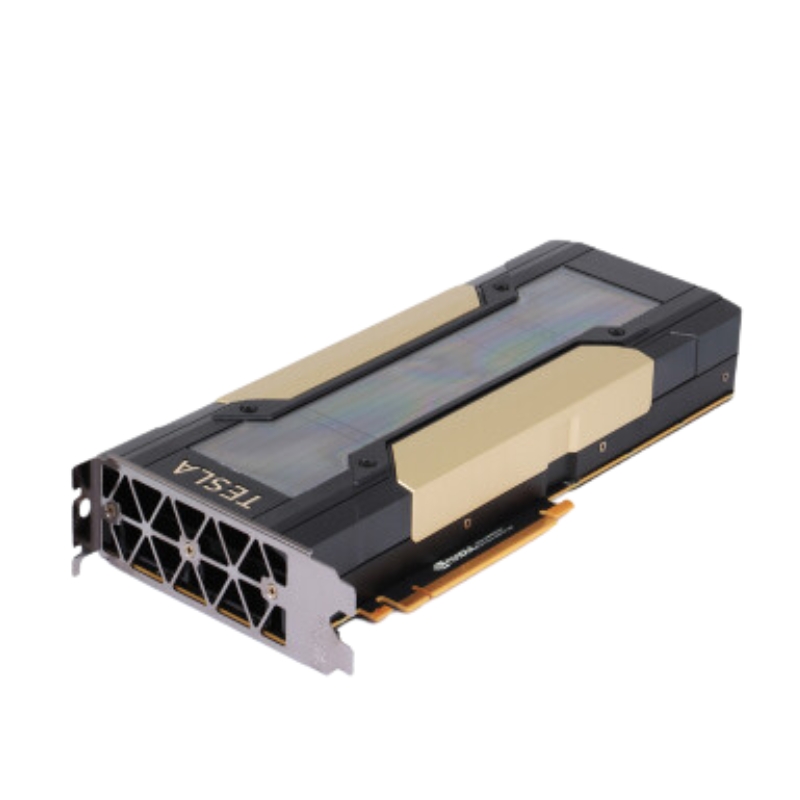


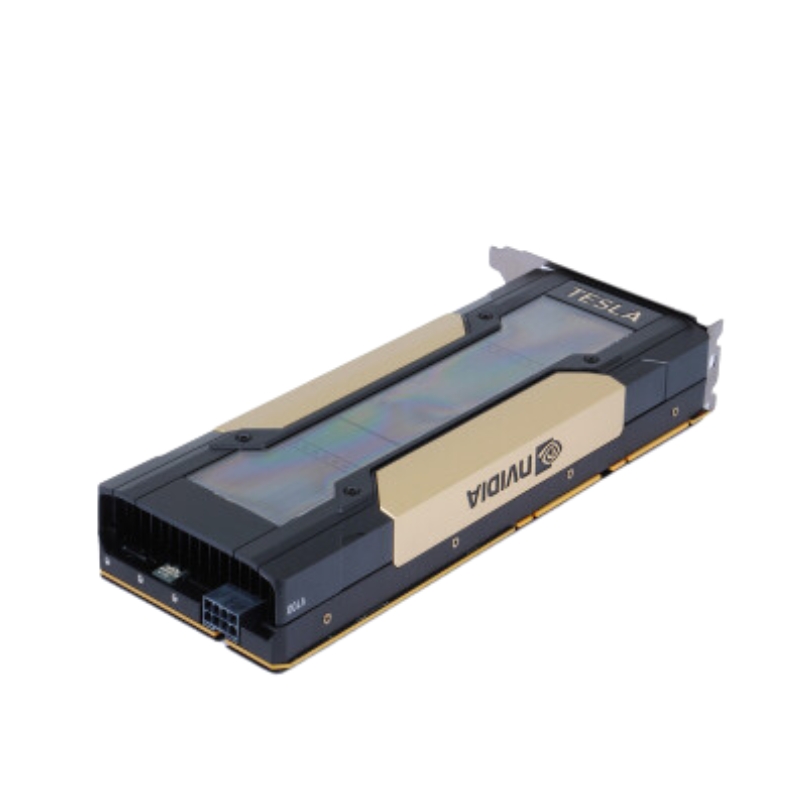
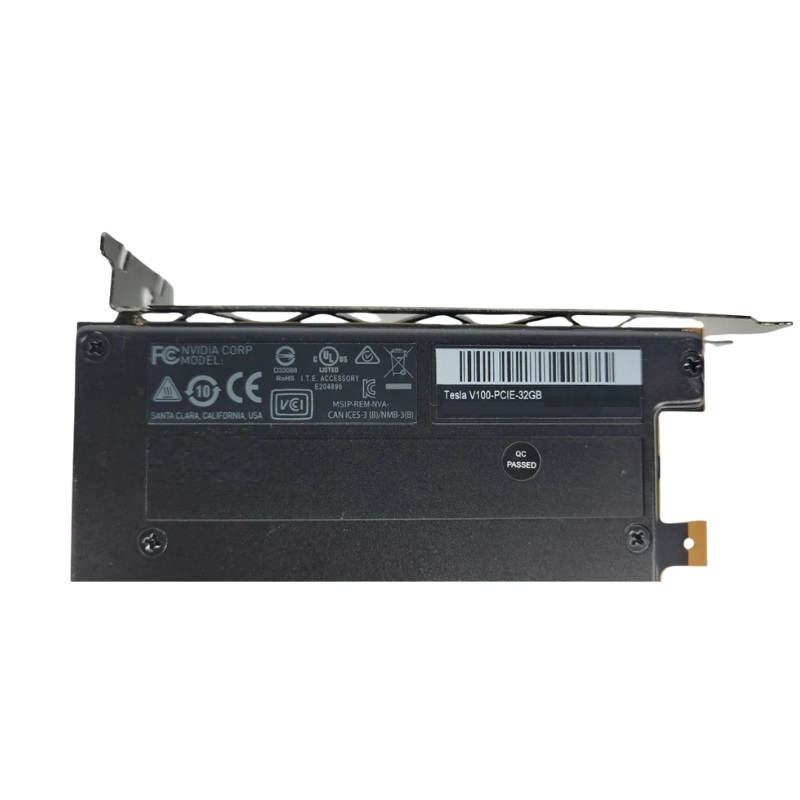
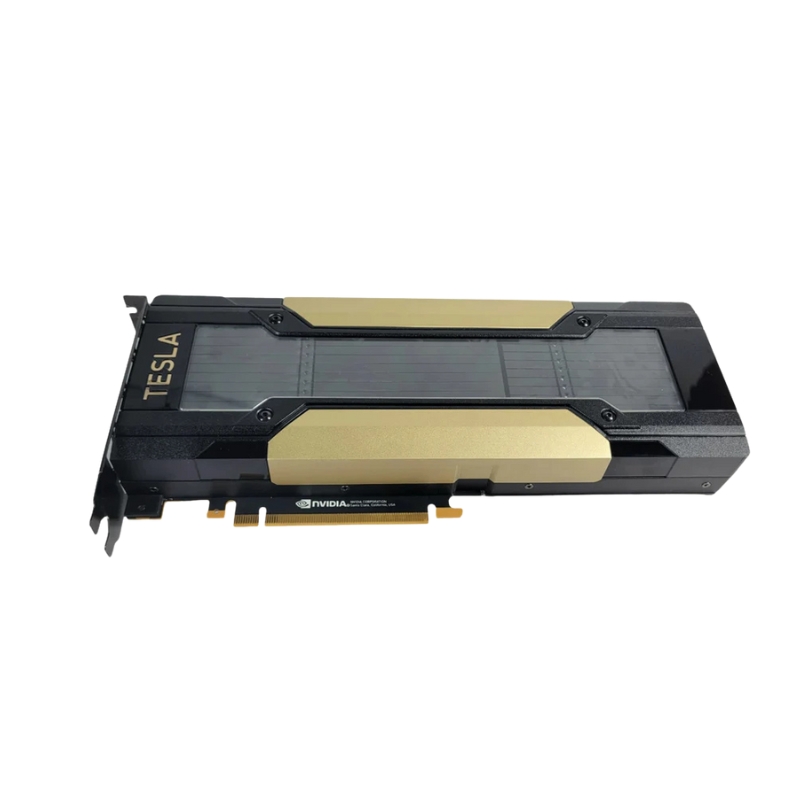
Nvidia 699-2G500-0202-400 32GB HBM2 TESLA V100 CUDA PCIE GPU Accelerator Card. Excellent Refurbished with 1 year replacement warranty
The Nvidia 699-2G500-0202-400 32GB HBM2 Tesla V100 CUDA PCIe GPU Accelerator Card stands as one of the most powerful data center-grade graphics processing units engineered for AI, deep learning, high-performance computing (HPC), and advanced scientific simulations. Built upon the revolutionary Volta architecture, the Tesla V100 delivers breakthrough performance with its integration of CUDA cores, Tensor Cores, and ultra-fast HBM2 memory. This accelerator card is designed to significantly boost computational workloads in server and workstation environments, providing exceptional scalability, precision, and energy efficiency.
Engineered for demanding workloads, the Nvidia Tesla V100 offers exceptional acceleration for applications that rely on massive parallel processing and large-scale data analytics. The model number 699-2G500-0202-400 specifically identifies a professional-grade variant optimized for PCIe-based deployment in compatible systems, ensuring stability and consistent throughput across varied computational infrastructures. Professionals in AI research, computational physics, deep neural networks, and large-scale enterprise data analytics find the V100 to be an indispensable tool in their workflow.
The Tesla V100 GPU is powered by Nvidia’s Volta GPU architecture, representing a significant leap over the previous Pascal generation. Featuring a massive 21.1 billion transistors and 5120 CUDA cores, the Volta design brings unmatched parallel computing efficiency. The integration of 640 Tensor Cores allows the V100 to achieve up to 120 TFLOPs of deep learning performance, making it one of the most capable AI accelerators ever created. Each Tensor Core can perform mixed-precision matrix multiply and accumulation, dramatically enhancing deep learning model training and inference speeds while maintaining exceptional numerical accuracy.
With advanced CUDA technology, developers can seamlessly optimize their code to harness the parallel power of the Tesla V100. CUDA 11 and subsequent versions are fully supported, enabling high-performance programming in C, C++, and Python through libraries like cuDNN, cuBLAS, and TensorRT. This compatibility ensures that workloads ranging from machine learning model optimization to 3D rendering can fully leverage the GPU’s computational might. Furthermore, the Volta architecture’s unified memory and NVLink interconnect technology provide increased bandwidth and reduce data transfer latency between the GPU and CPU.
The Nvidia 699-2G500-0202-400 Tesla V100 GPU Accelerator features 32GB of second-generation High Bandwidth Memory (HBM2), providing a memory bandwidth of up to 900 GB/s. This enormous throughput allows for seamless handling of massive datasets required in AI model training, scientific computing, and visualization workloads. The wide memory interface ensures that even the most complex simulations and data-intensive algorithms operate without bottlenecks, allowing researchers and engineers to process data in real time with outstanding reliability.
HBM2 memory technology also significantly enhances energy efficiency compared to traditional GDDR5 or GDDR6 memory. The stacked memory design and close proximity to the GPU die minimize latency and improve communication efficiency, which contributes to the V100’s ability to sustain high workloads over extended periods without thermal throttling. This combination of high capacity and exceptional speed enables professionals to run neural networks with billions of parameters, render high-resolution 3D graphics, and simulate physics models with near-instantaneous feedback.
The Nvidia Tesla V100 GPU uses the PCI Express (PCIe) Gen3 interface, ensuring broad compatibility with a wide range of server and workstation motherboards. This PCIe design offers a balance between performance, scalability, and integration flexibility, making the V100 suitable for both single-GPU setups and multi-GPU configurations. When deployed in a multi-GPU server, it can communicate efficiently through NVLink bridges, further increasing inter-GPU bandwidth to handle massive parallel operations with minimal latency.
The PCIe-based architecture allows easy installation in existing infrastructure without requiring proprietary configurations. This flexibility makes it ideal for enterprises seeking to upgrade their systems with advanced AI capabilities or for academic institutions deploying HPC clusters. The standardized form factor and professional-grade cooling solutions integrated into the Nvidia 699-2G500-0202-400 ensure stable performance even under intensive workloads, maintaining the optimal thermal environment for continuous computation.
The Tesla V100’s deep learning performance is powered by its Tensor Cores, which dramatically accelerate matrix multiplications crucial for neural network training and inference. These cores enable mixed-precision calculations that combine FP16 and FP32 operations, offering up to 12 times higher performance compared to conventional GPUs. AI frameworks such as TensorFlow, PyTorch, Caffe2, and MXNet are optimized for Nvidia’s architecture, enabling developers to achieve unprecedented training speeds and shorter iteration cycles.
In addition to neural networks, the V100 excels in reinforcement learning, generative adversarial networks (GANs), natural language processing (NLP), and autonomous systems. Its ability to handle massive data sets and compute multi-layered algorithms allows AI researchers to simulate complex models with accuracy and efficiency. The card’s scalability across data center clusters also supports distributed AI training, ensuring seamless communication and synchronization between GPUs to deliver optimal performance.
Beyond artificial intelligence, the Nvidia 699-2G500-0202-400 32GB Tesla V100 CUDA PCIe GPU Accelerator Card plays a pivotal role in advancing scientific and engineering research. Its computational capacity makes it suitable for applications like molecular dynamics, seismic analysis, weather prediction, fluid dynamics, and quantum chemistry simulations. Researchers benefit from the GPU’s parallel architecture, which allows simultaneous execution of multiple tasks, reducing computation times from weeks to hours.
HPC applications leverage the Tesla V100’s double-precision floating-point performance, providing accuracy and precision critical for simulations and modeling tasks. The GPU supports a wide range of APIs and software tools such as OpenACC, CUDA Fortran, and OpenCL, ensuring compatibility with leading scientific software frameworks. The result is an advanced solution that powers research breakthroughs, accelerates discovery, and enhances overall computational productivity.
Nvidia engineered the Tesla V100 to deliver outstanding performance per watt. Utilizing the 12nm FinFET manufacturing process, the GPU maintains an optimal balance between energy efficiency and processing capability. The card’s thermal management system ensures consistent cooling under heavy workloads, minimizing heat buildup and preventing performance throttling. By optimizing voltage and frequency dynamically, the Tesla V100 efficiently manages power consumption without sacrificing computational throughput.
This combination of efficiency and performance makes the 699-2G500-0202-400 a sustainable choice for enterprises operating large-scale data centers. The lower energy footprint translates into reduced operational costs, particularly when deploying multiple GPUs across cluster nodes. Moreover, Nvidia’s power management technologies allow system administrators to monitor and adjust performance levels according to workload requirements, ensuring maximum resource utilization.
The Tesla V100’s scalability is another hallmark feature, enabling integration into multi-GPU environments that dramatically increase overall performance. Using Nvidia NVLink, multiple V100 GPUs can communicate at speeds up to 300 GB/s, far exceeding traditional PCIe bandwidth limits. This technology ensures efficient data sharing between GPUs, reducing bottlenecks in large-scale deep learning or HPC workloads. Whether configured in a single workstation or a multi-node data center cluster, the Tesla V100 delivers linear scalability for parallel workloads.
In large deployments, Nvidia GPU Cloud (NGC) offers containerized software stacks that simplify scaling and workload distribution. This infrastructure ensures consistent performance across nodes, facilitating distributed deep learning and HPC workflows. Researchers and data scientists can rely on the Tesla V100 to deliver predictable, high-throughput results across hundreds or thousands of interconnected GPUs, providing the computational backbone for next-generation AI and scientific computing platforms.
The Nvidia 699-2G500-0202-400 GPU Accelerator Card is built for long-term reliability under continuous load. The robust PCB design, high-quality components, and advanced thermal regulation contribute to sustained performance stability. Designed for 24/7 operation in server environments, this GPU undergoes rigorous testing to ensure it meets enterprise-grade standards for durability and longevity. Its ECC (Error-Correcting Code) memory further enhances reliability by detecting and correcting data corruption, which is critical for mission-critical computations and scientific accuracy.
In enterprise or research environments where uptime is vital, the Tesla V100’s design guarantees dependable performance. The card’s compatibility with various server chassis and high-density configurations ensures that it can operate efficiently within space-constrained environments without compromising stability or reliability. The professional drivers and firmware updates provided by Nvidia continually optimize performance, maintain compatibility with the latest software frameworks, and ensure secure operation across different infrastructures.
In modern enterprises, data-driven insights are key to decision-making. The Tesla V100 is designed to process and analyze large datasets with exceptional efficiency. Its advanced CUDA cores and Tensor architecture accelerate data analytics tasks, allowing for faster data transformation, aggregation, and visualization. Machine learning algorithms, including clustering, regression, and classification models, execute significantly faster on the V100, reducing time-to-insight for critical business operations.
Organizations using the Tesla V100 for machine learning can achieve significant productivity gains by reducing model training times. This enables rapid experimentation with different model parameters and architectures, leading to more accurate outcomes. The GPU’s optimized support for RAPIDS—a suite of open-source libraries for data science—further enhances performance in ETL and analytics pipelines, making it an essential component in large-scale data platforms.
With the growing adoption of GPU virtualization, the Nvidia Tesla V100 supports advanced virtual GPU (vGPU) technology that enables multiple users or virtual machines to share a single GPU resource efficiently. This feature is critical in virtual desktop infrastructures (VDI), AI research labs, and cloud computing platforms. Virtualization maximizes GPU utilization and provides flexible allocation of resources across different workloads without compromising performance.
Cloud service providers often integrate Tesla V100 GPUs into their offerings to deliver high-performance instances capable of accelerating deep learning and HPC tasks. The flexibility of the PCIe design allows easy deployment in both private and public cloud infrastructures. Users can scale resources dynamically, making the Tesla V100 an ideal solution for organizations transitioning to hybrid or fully cloud-based environments.
The Nvidia 699-2G500-0202-400 Tesla V100 GPU is equipped with 5120 CUDA cores and 640 Tensor Cores, offering a peak single-precision performance of approximately 15.7 TFLOPs and double-precision performance of 7.8 TFLOPs. The GPU operates at a base clock frequency of 1245 MHz with a boost clock of 1380 MHz, optimized for both performance and efficiency. Its 32GB HBM2 memory runs on a 4096-bit memory interface, ensuring a bandwidth of up to 900 GB/s.
The card has a thermal design power (TDP) of 250W, making it suitable for high-density computing environments that require stable and efficient energy management. It supports ECC memory protection, ensuring reliability in data-critical applications. Physically, the GPU conforms to a dual-slot PCIe form factor, which is widely supported across enterprise-grade servers and workstations. This compatibility allows seamless integration into existing infrastructures for research institutions, universities, and large-scale enterprises.
The Tesla V100 serves as a fundamental tool in numerous professional and industrial fields. In healthcare, it powers AI algorithms that analyze medical imaging, accelerate genomics research, and improve diagnostic accuracy. In finance, it enables real-time risk modeling and fraud detection through machine learning. In the automotive sector, it supports the development of autonomous vehicles by training deep neural networks for object recognition and path planning. Aerospace, oil and gas, and defense industries utilize its computational power to simulate complex systems and predict real-world behaviors with high accuracy.
In higher education and research, the Tesla V100 forms the backbone of supercomputing clusters used for exploring scientific frontiers, from astrophysics to material science. The GPU’s parallel architecture ensures that massive computational models execute efficiently, allowing researchers to push the boundaries of discovery without hardware constraints. Its versatility across industries makes the V100 one of the most impactful GPU accelerators in the modern computing era.
The Nvidia Tesla V100 integrates multiple innovative technologies designed to optimize workflow and performance. Its Dynamic Parallelism feature allows GPU threads to generate new threads dynamically, optimizing nested parallelism without CPU intervention. GPU Boost technology automatically increases clock speeds during demanding tasks to deliver higher throughput while maintaining power limits. The inclusion of Multi-Process Service (MPS) enhances the ability of multiple applications to share the GPU simultaneously, improving resource efficiency and utilization.
The V100 also supports NVENC and NVDEC hardware encoding and decoding, accelerating video processing and data visualization. Combined with HBM2’s high capacity and low latency, these technologies contribute to superior overall responsiveness and performance across diverse workloads. With driver support for Linux and Windows operating systems, along with compatibility for major server vendors, the Tesla V100 offers flexibility across various enterprise-grade platforms.
As AI and data science continue to evolve, the Tesla V100 remains a cornerstone of modern data center infrastructure. Its robust performance and scalability enable enterprises to build GPU-powered clusters capable of handling billions of data points in real time. Data centers deploying the 699-2G500-0202-400 model benefit from reduced total cost of ownership (TCO) through energy efficiency, optimized cooling, and simplified management via Nvidia’s GPU management tools.
When paired with Nvidia’s DGX systems, the Tesla V100 forms a complete AI supercomputing platform that delivers end-to-end solutions for training, inference, and analytics. Enterprises and institutions deploying AI models can leverage these configurations to accelerate research cycles, optimize automation, and deliver insights faster than traditional CPU-based systems. The GPU’s ability to integrate seamlessly with existing infrastructure makes it a future-ready solution that continues to deliver exceptional return on investment.
The 699-2G500-0202-400 Tesla V100 employs an advanced passive cooling design optimized for server airflow environments. The robust heat sink and thermal interface materials ensure efficient heat dissipation during extended workloads. This thermal design supports continuous operation under high computational stress without overheating or degradation. The card’s mechanical structure is reinforced for stability, preventing flexing or damage in rack-mounted systems where vibration and temperature fluctuations are common.
The superior build quality of the Nvidia Tesla V100 aligns with enterprise-grade reliability standards, ensuring consistent operation across a variety of environmental conditions. Its compatibility with major server platforms, including HPE, Dell, and Supermicro, guarantees streamlined integration for both on-premise and cloud deployments.
The Nvidia Tesla V100 continues to be a benchmark in GPU computing, paving the way for advancements in AI and HPC workloads. Its architecture and performance capabilities remain relevant in an era where computational demands continue to expand. With continuous driver and framework support, the V100 ensures longevity in performance, stability, and compatibility with future AI and scientific software. It serves as a bridge between current and next-generation AI accelerators, providing a powerful foundation for organizations aiming to stay ahead in computational innovation.


 Contact Us
 Information
 Catalog
 Solid State Drives (SSD)
 Network Switches
 Hard Disk Drives
 HBA & Controllers
 PC & Servers
 PC & Server Memory
 CPU & Processors
 Network Routers
 Power Supplies
 Tape Drives & Libraries
 Network Devices
 Computer & Network Cables