(7% discount is applied at checkout)
Cart is empty
Your go-to destination for cutting-edge server products
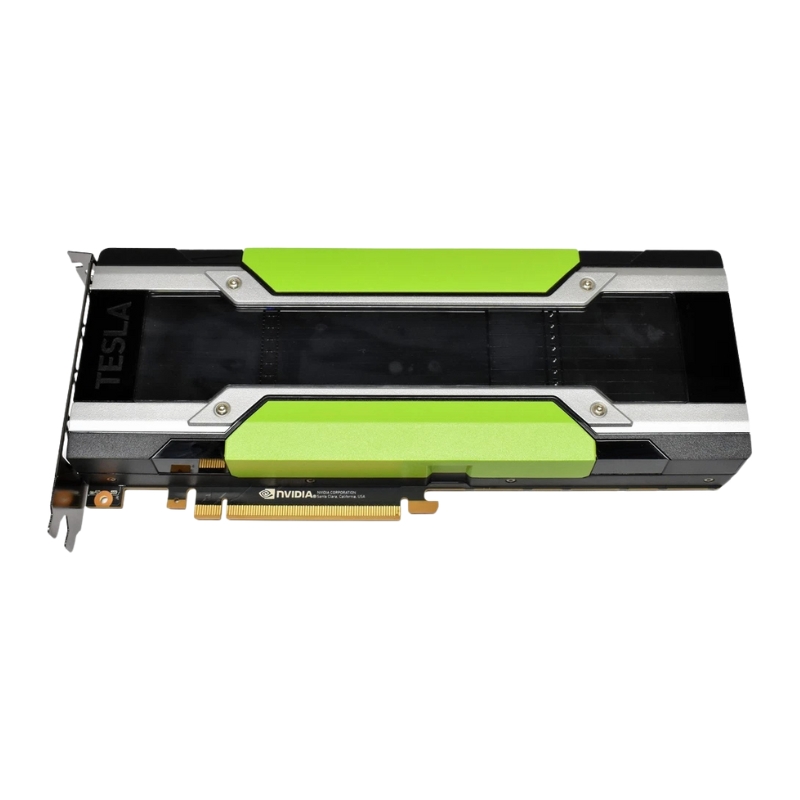


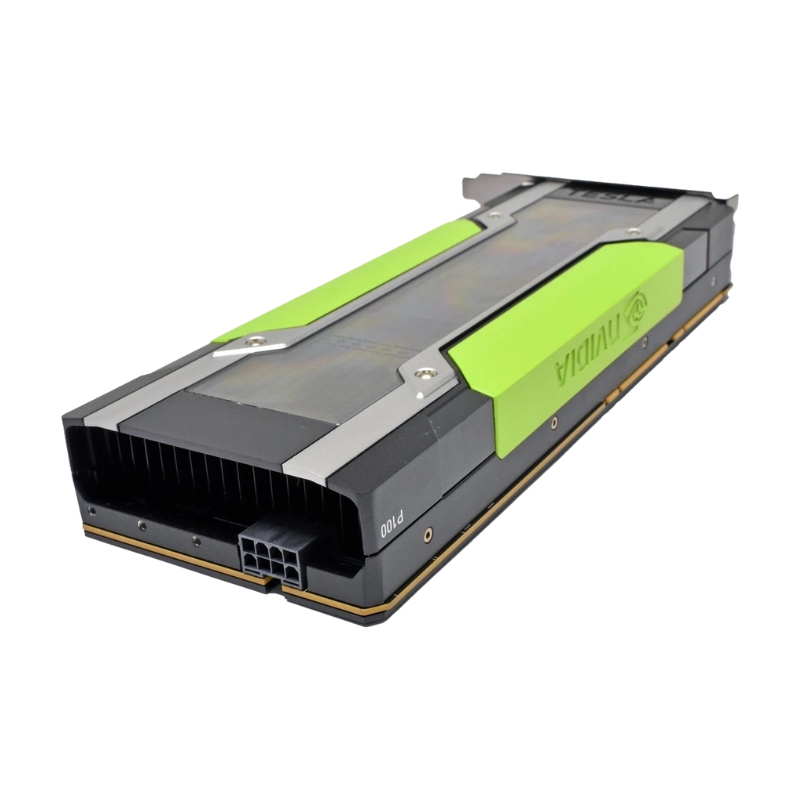
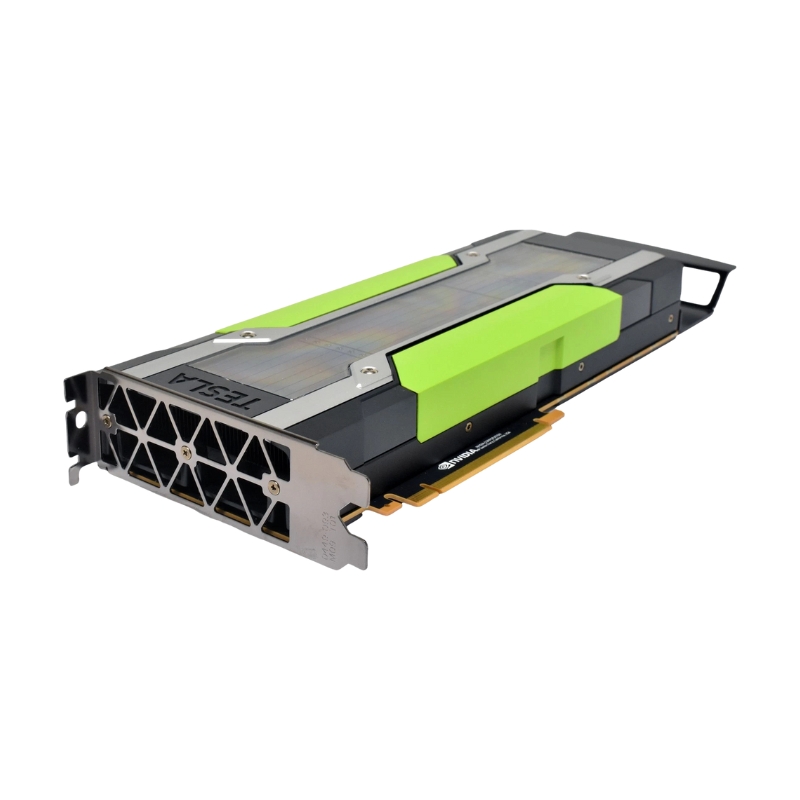
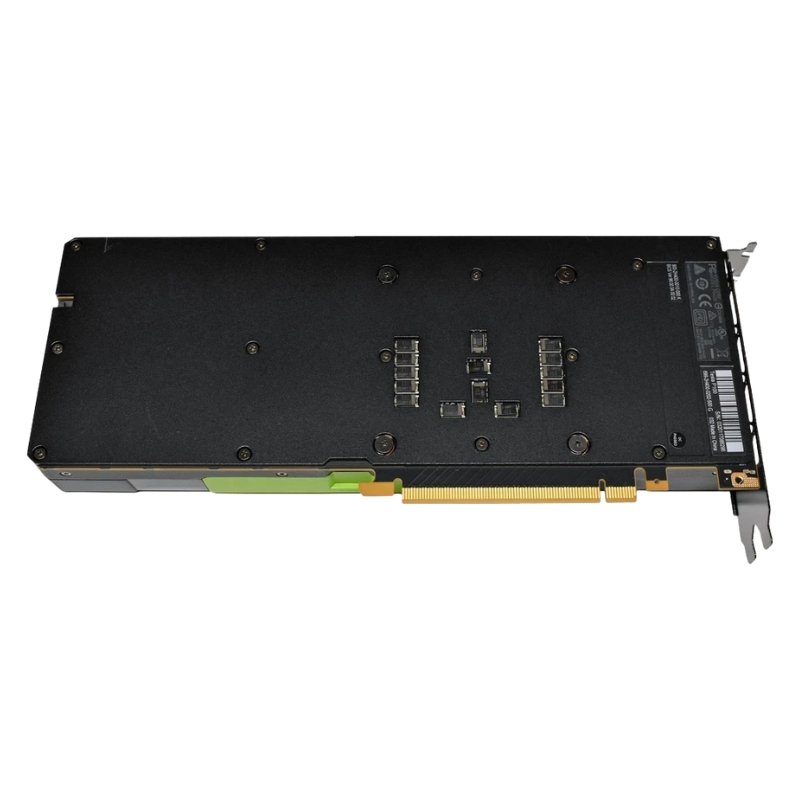
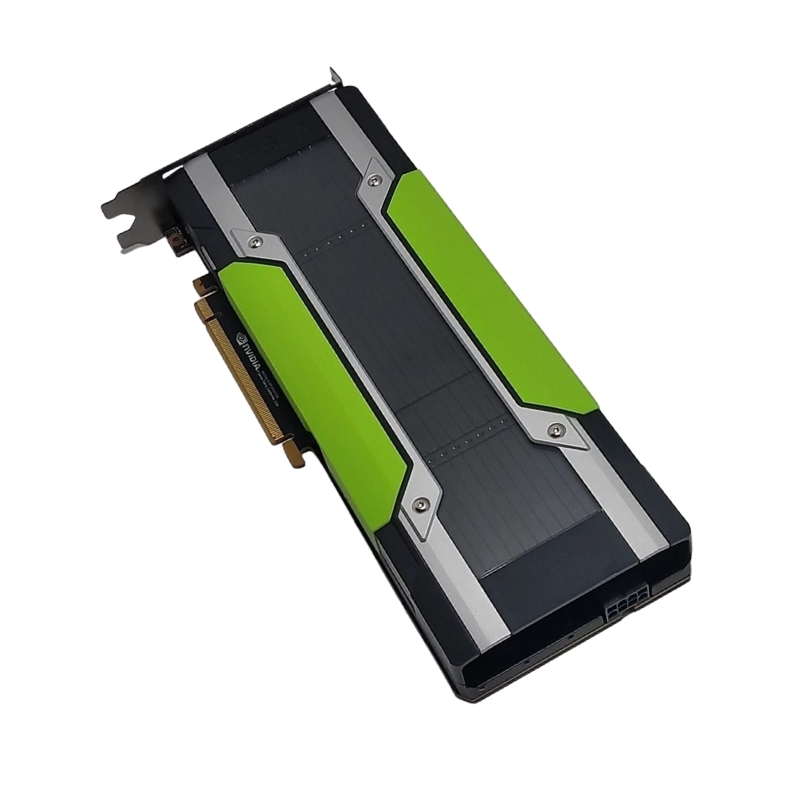
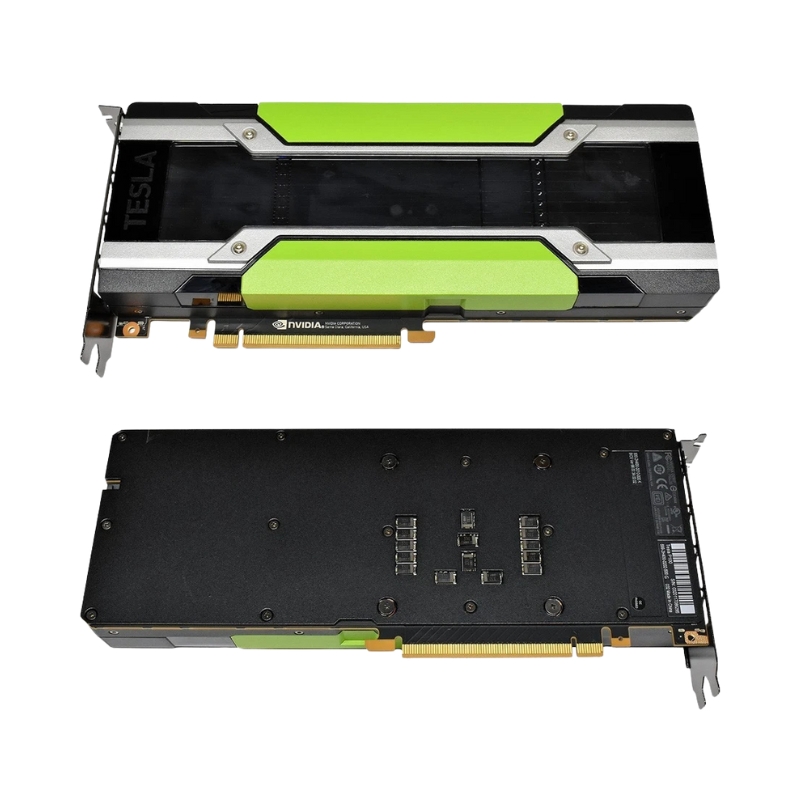
Nvidia 699-2H400-0201-500 16GB PCI Express Tesla P100 4096 Bit HBM2 X16 Accelerator Graphics Card. Excellent Refurbished with 1 Year Replacement Warranty
Built on the groundbreaking Pascal architecture, the NVIDIA 699-2H400-0201-500 Tesla P100 is a high-performance computing (HPC) and data center GPU accelerator. Featuring 16GB of ultra-fast CoWoS HBM2 memory on a massive 4096-bit bus, it delivers exceptional bandwidth for demanding scientific, AI, and analytical workloads.
Processing Power & Compute Cores
The Nvidia 699-2H400-0201-500 16GB PCI Express Tesla P100 4096 Bit HBM2 x16 Accelerator Graphics Card is part of a specialized category of data center–class GPU accelerators engineered for high performance computing, artificial intelligence, deep learning, and advanced scientific workloads. This category focuses on raw computational throughput, ultra-fast memory access, and enterprise-grade reliability rather than consumer-oriented graphics output. Products in this segment are designed to function as computational engines within servers, delivering parallel processing capabilities that dramatically accelerate workloads traditionally handled by CPUs.This accelerator-focused category plays a central role in modern data centers, research institutions, and enterprise IT infrastructures that rely on large-scale simulations, machine learning training, and data analytics. GPUs such as the Tesla P100 are optimized for sustained, deterministic performance under continuous operation, ensuring consistent results across long-running workloads. The emphasis on stability, scalability, and compatibility with industry-standard server platforms defines this category as a cornerstone of modern accelerated computing environments.
The Tesla P100 belongs to Nvidia’s Tesla accelerator family, a category specifically developed for compute-intensive workloads rather than visualization. This category is built around Nvidia’s advanced GPU architectures that prioritize floating-point performance, memory bandwidth, and parallel execution efficiency. Unlike graphics-focused GPUs, Tesla accelerators are optimized for headless operation, allowing them to be deployed in dense server configurations without display outputs or unnecessary consumer features.
Within the broader GPU computing ecosystem, this category occupies a critical position for organizations that require predictable performance and long-term platform stability. The Tesla P100 generation introduced significant architectural advancements that elevated GPU computing capabilities, making this category a preferred choice for enterprises transitioning from traditional CPU-based systems to heterogeneous computing models that combine CPUs and GPUs.
The design philosophy of this category centers on maximizing compute density and efficiency within data center environments. Accelerator graphics cards like the Tesla P100 are engineered to integrate seamlessly into server architectures, working in tandem with host CPUs to offload highly parallel workloads. This approach enables organizations to achieve substantial performance gains while optimizing power consumption and physical footprint.
By focusing exclusively on compute acceleration, this category eliminates features unnecessary for data center use, resulting in streamlined hardware optimized for throughput, reliability, and scalability. This design philosophy supports deployment in large clusters where uniformity and predictability are essential.
Headless operation is a defining characteristic of this category, allowing GPUs to function without direct user interaction or display connections. This enables efficient integration into rack-mounted servers and blade systems commonly used in enterprise data centers. The absence of display outputs reduces complexity and enhances compatibility with automated management and orchestration tools.
Enterprise integration is further supported through standardized firmware, driver support, and compatibility with major operating systems and hypervisors. This ensures that GPUs in this category can be deployed consistently across diverse infrastructures.
A defining feature of the Nvidia Tesla P100 category is the use of High Bandwidth Memory 2 with a 4096 bit memory interface. HBM2 represents a significant advancement over traditional GDDR memory by providing dramatically higher memory bandwidth while reducing power consumption. This architecture enables faster access to large datasets, which is critical for workloads such as deep learning training, scientific simulations, and large-scale data analytics.
The 16GB HBM2 configuration in this category strikes a balance between capacity and performance, allowing complex models and datasets to reside directly on the GPU. This minimizes data transfer overhead between system memory and the accelerator, resulting in improved efficiency and reduced latency for memory-intensive applications.
Memory bandwidth is a crucial factor in GPU performance, particularly for workloads that involve frequent data access and manipulation. The 4096 bit HBM2 interface provides exceptionally high throughput, enabling compute cores to operate at full efficiency without being constrained by memory bottlenecks. This advantage is especially evident in applications such as matrix multiplication, convolutional neural networks, and physics simulations.
By delivering consistent high-bandwidth memory access, this category ensures that compute resources are fully utilized, maximizing return on investment for organizations deploying GPU-accelerated infrastructure.
HBM2 memory architecture also contributes to reduced latency and improved power efficiency compared to traditional memory solutions. The close physical integration of memory stacks with the GPU die shortens signal paths, resulting in faster data access and lower energy consumption. This efficiency aligns with data center requirements for performance per watt optimization.
Power-efficient memory design supports higher compute density within racks, allowing organizations to scale workloads without proportionally increasing energy costs.
The PCI Express x16 interface is a fundamental component of this category, providing high-speed connectivity between the GPU accelerator and the host system. This interface enables rapid data transfers, which are essential for workloads that involve frequent communication between CPU and GPU. In data center environments, efficient interconnects directly influence application performance and scalability.
By leveraging PCI Express x16, GPUs in this category can be deployed across a wide range of server platforms, ensuring compatibility and flexibility in system design. This standardization simplifies integration and supports multi-GPU configurations for increased compute capacity.
Scalability is a core attribute of this category, enabling organizations to deploy multiple Tesla P100 accelerators within a single server or across clustered systems. Multi-GPU configurations support parallel processing at scale, allowing workloads to be distributed efficiently across accelerators. This is particularly valuable for deep learning training and high performance computing applications that benefit from parallel execution.
Cluster deployment capabilities allow data centers to build powerful GPU-accelerated environments that scale horizontally, meeting growing computational demands without sacrificing performance consistency.
Effective workload distribution between CPUs and GPUs is essential for maximizing system performance. This category supports balanced architectures where CPUs handle control and sequential tasks while GPUs accelerate parallel computations. The high-bandwidth PCI Express interface ensures that data movement between processors does not become a bottleneck.
This balanced approach enables efficient utilization of system resources, reducing idle time and improving overall throughput.
Artificial intelligence and deep learning are primary use cases for this category of accelerator graphics cards. The Tesla P100 was designed to handle the computational demands of training and inference workloads, offering high floating-point performance and efficient parallel execution. This makes it well-suited for neural network training, natural language processing, computer vision, and recommendation systems.
By accelerating AI workloads, this category enables organizations to shorten training times, deploy models faster, and process inference requests with low latency. This capability is essential for businesses seeking to leverage AI for competitive advantage.
Deep learning training involves processing massive datasets and performing complex mathematical operations. GPUs in this category excel at these tasks by executing thousands of operations in parallel. The combination of high compute throughput and HBM2 memory bandwidth ensures efficient handling of large models and datasets.
Model scalability is enhanced through support for multi-GPU training, allowing organizations to scale training jobs across multiple accelerators. This reduces time to insight and supports experimentation with larger, more complex models.
High performance computing applications are a cornerstone of this category, encompassing scientific simulations, engineering analysis, and computational research. GPUs like the Tesla P100 accelerate complex calculations, enabling researchers to solve problems that would be impractical using CPU-only systems. This category supports a wide range of HPC workloads, from climate modeling to molecular dynamics.
The precision and consistency offered by this category are critical for scientific accuracy and reproducibility. Support for double-precision and mixed-precision calculations ensures that applications can balance performance and accuracy as needed.
Simulation and modeling workloads often involve iterative calculations over large datasets. GPUs in this category accelerate these processes by parallelizing computations, significantly reducing execution times. This enables researchers and engineers to run more simulations in less time, improving productivity and innovation.The high memory bandwidth and compute throughput of the Tesla P100 category support complex simulations that require frequent data access and high numerical precision.
Academic and research institutions benefit from this category by gaining access to powerful compute resources that support advanced studies and experimentation. The scalability and reliability of Tesla accelerators make them suitable for shared computing environments where multiple users and projects coexist.Long-term support and stable software ecosystems ensure that research projects can be maintained and reproduced over extended periods.
This category is also well-suited for virtualization and cloud computing environments, where GPU resources are shared among multiple workloads. By enabling hardware-accelerated compute within virtual machines and containers, Tesla P100 accelerators support a wide range of enterprise applications, from data analytics to AI services.
Cloud service providers and enterprises leverage this category to deliver GPU-accelerated services with predictable performance and isolation. This capability is essential for multi-tenant environments where resource allocation and fairness are critical.
Virtualized infrastructure benefits from GPU acceleration by offloading compute-intensive tasks from CPUs. This category supports integration with virtualization platforms, enabling efficient sharing of GPU resources while maintaining performance isolation. This enhances the flexibility and utilization of data center resources.By supporting GPU acceleration in virtual environments, this category enables organizations to consolidate workloads and optimize infrastructure utilization.
Enterprise environments demand hardware that can operate continuously without failure. This category is engineered for reliability, with components selected and validated for long-term operation under sustained loads. Rigorous testing ensures that GPUs can handle demanding workloads without degradation.Reliability is further enhanced through enterprise-grade drivers, firmware updates, and support services that ensure stable operation throughout the product lifecycle.
Lifecycle management is a critical aspect of enterprise deployment, and this category benefits from extended product availability and long-term support. This allows organizations to standardize on a platform and plan upgrades strategically. Stable driver support and compatibility with evolving software ecosystems ensure that systems remain functional and secure over time.The Nvidia 699-2H400-0201-500 16GB PCI Express Tesla P100 4096 Bit HBM2 x16 Accelerator Graphics Card represents the core strengths of this category, delivering high performance, scalability, and reliability for advanced compute workloads across data center, enterprise, and research environments.


 Contact Us
 Information
 Catalog
 Solid State Drives (SSD)
 Network Switches
 Hard Disk Drives
 HBA & Controllers
 PC & Servers
 PC & Server Memory
 CPU & Processors
 Network Routers
 Power Supplies
 Tape Drives & Libraries
 Network Devices
 Computer & Network Cables