(7% discount is applied at checkout)
Cart is empty
Your go-to destination for cutting-edge server products
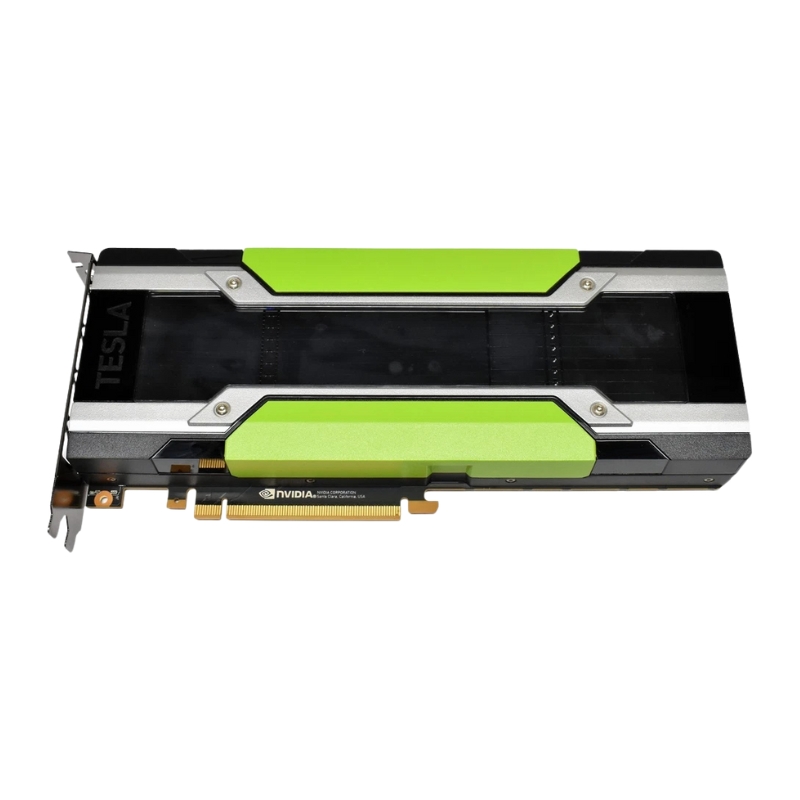


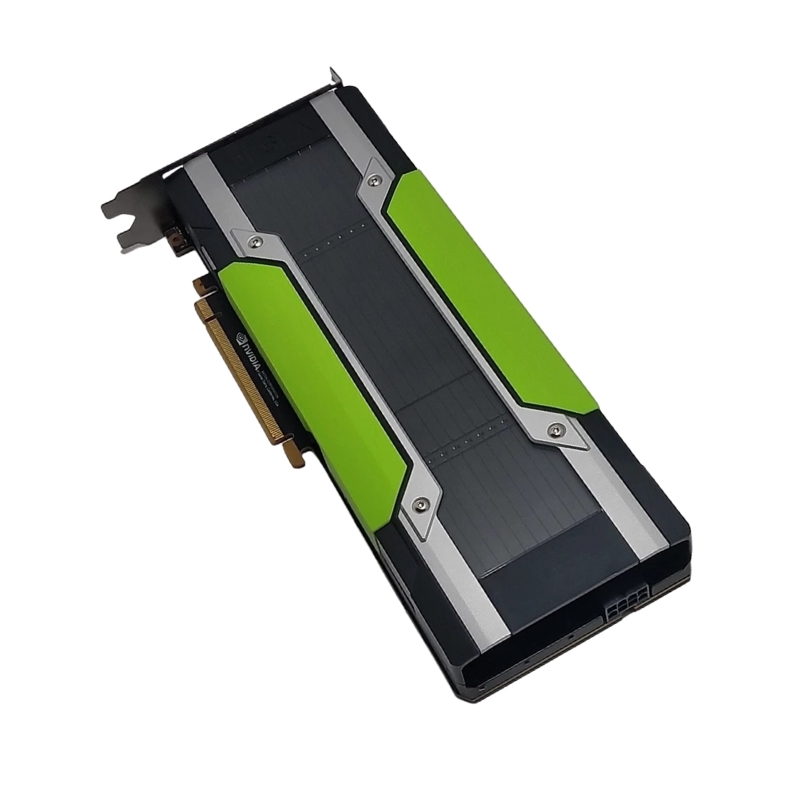
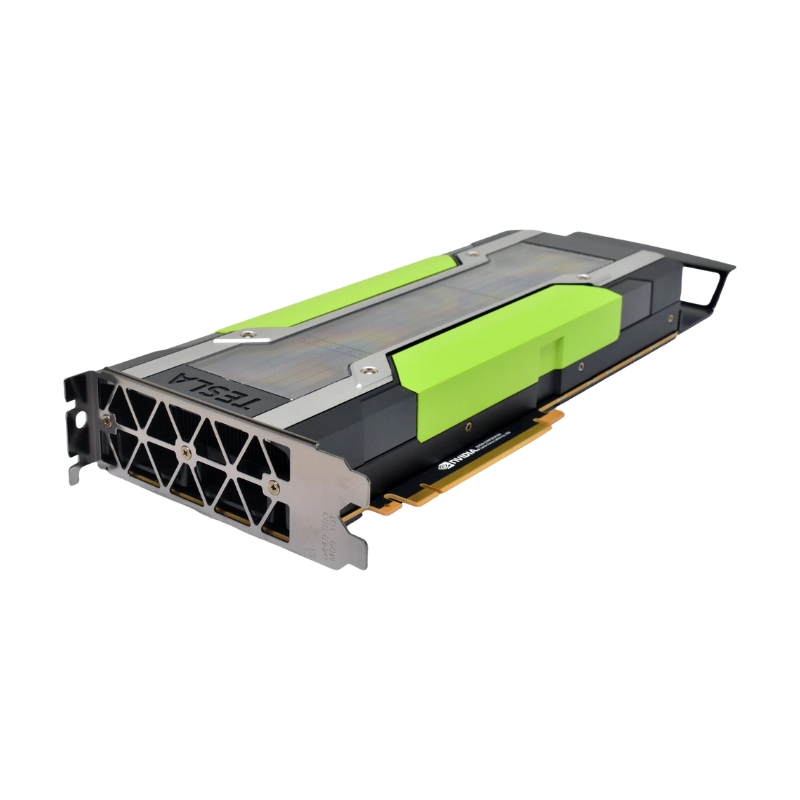
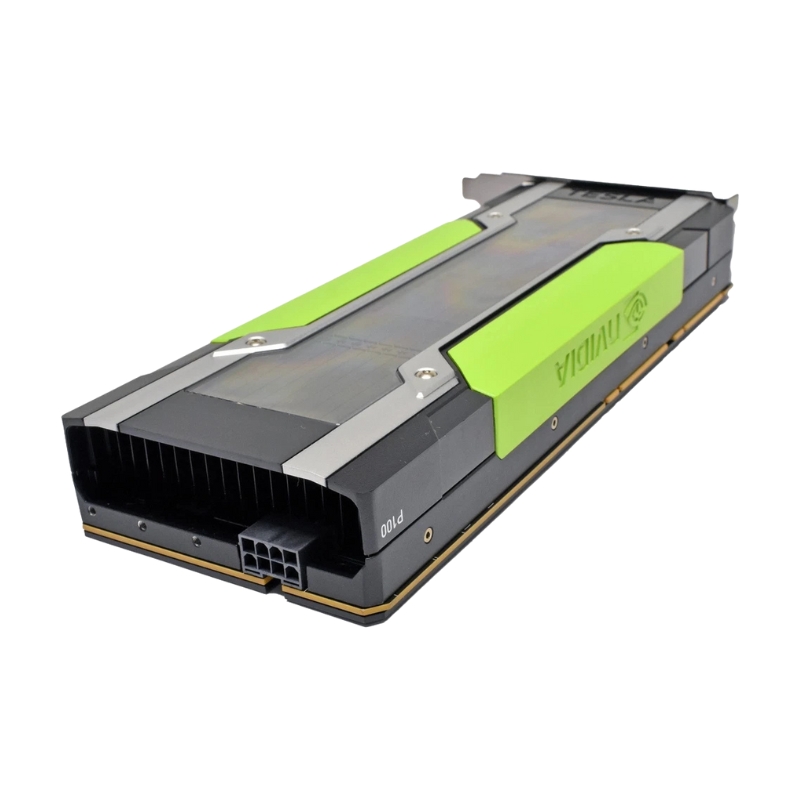
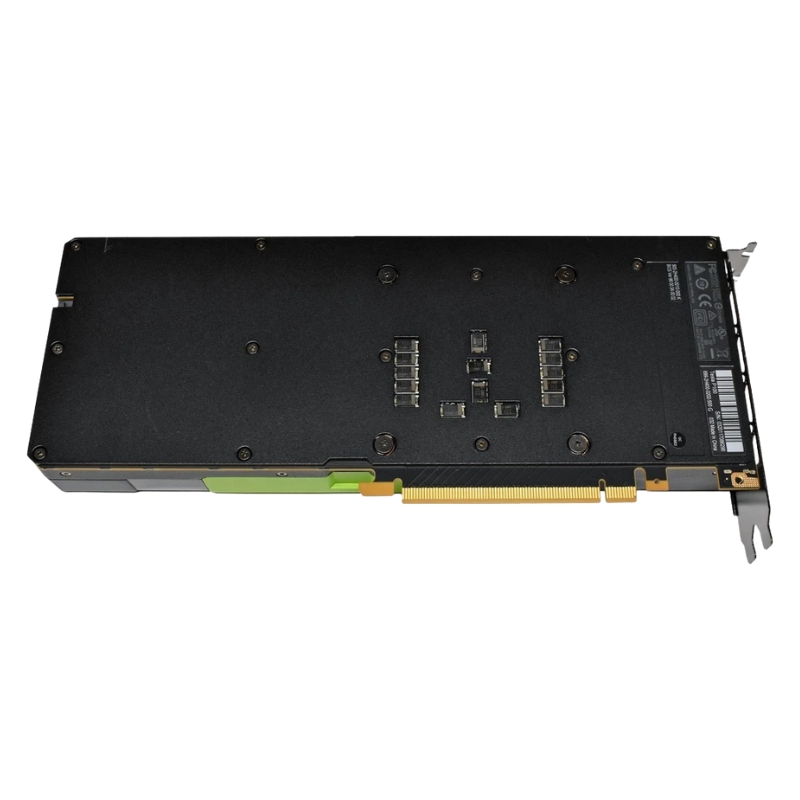
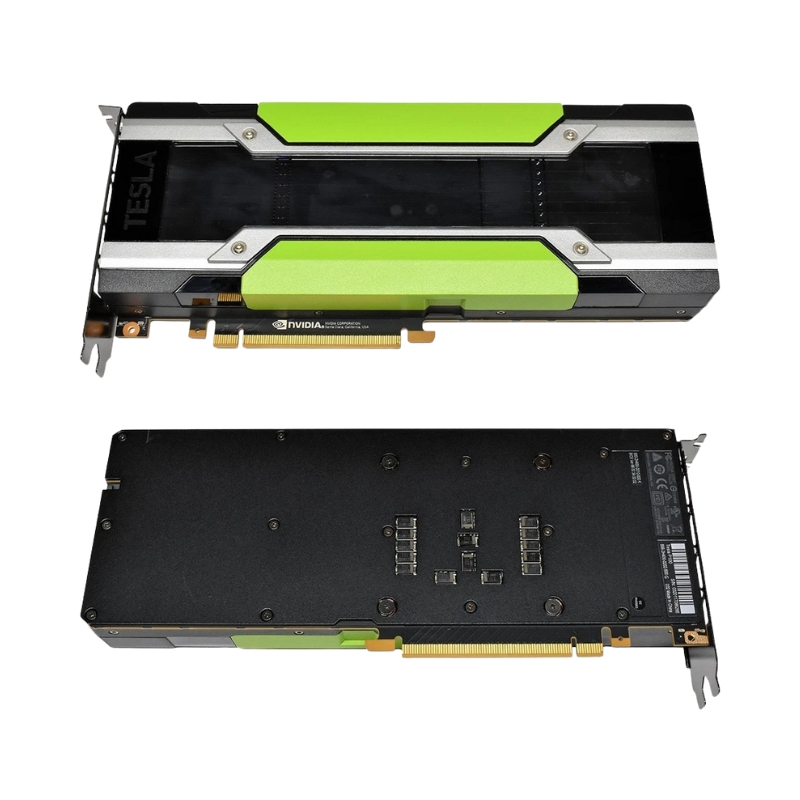
Nvidia 699-2H400-0201-520 16GB PCI Express Tesla P100 4096 Bit HBM2 X16 Accelerator Graphics Card. Excellent Refurbished with 1 Year Replacement Warranty.Call
Engineered for data center precision, the NVIDIA 699-2H400-0201-520 Tesla P100 computing card delivers exceptional parallel processing performance. Featuring 16GB of CoWoS HBM2 memory on a 4096-bit interface, this accelerator is built for demanding AI training, scientific simulations, and complex analytical tasks.
Interface & Power Requirements
The Nvidia 699-2H400-0201-520 16GB PCI Express Tesla P100 4096 Bit HBM2 X16 Accelerator Graphics Card belongs to a specialized enterprise-class GPU accelerator category developed for high-performance, data-intensive computing environments. This category is purpose-built for data centers, research facilities, and enterprise infrastructures that demand consistent computational throughput, extreme memory bandwidth, and predictable behavior under sustained workloads. Rather than focusing on graphical output or consumer visualization, this category is entirely oriented toward accelerating parallel compute operations that are fundamental to modern digital transformation initiatives.Within enterprise IT ecosystems, GPU accelerators in this category serve as foundational processing units for heterogeneous computing architectures. They complement traditional CPUs by offloading massively parallel tasks, thereby improving overall system efficiency and enabling organizations to tackle increasingly complex workloads. The Tesla P100 accelerator category represents a significant step in the evolution of data center computing, bridging the gap between general-purpose processors and specialized accelerators through a balanced combination of flexibility, performance, and reliability.
The Tesla P100 subcategory occupies a critical position within Nvidia’s accelerator portfolio, designed specifically for advanced compute workloads that require high floating-point performance and memory throughput. This subcategory emerged to address the growing need for acceleration in artificial intelligence, deep learning, scientific simulation, and data analytics. It reflects a design philosophy that prioritizes computational density, memory efficiency, and scalability over features associated with traditional graphics cards.Products in this subcategory are validated for enterprise deployment, ensuring compatibility with server platforms, operating systems, and software frameworks commonly used in data centers. The Nvidia 699-2H400-0201-520 variant aligns with this philosophy by offering consistent performance characteristics and robust integration capabilities. This makes the Tesla P100 subcategory particularly attractive to organizations seeking long-term infrastructure stability and predictable performance outcomes.
The Tesla P100 accelerator category is built around a compute-focused design that dedicates silicon resources to numerical processing rather than display or multimedia tasks. This orientation enables the GPU to deliver exceptional performance for workloads involving matrix operations, vector processing, and floating-point calculations. By optimizing for compute density, this category allows enterprises to extract maximum value from each deployed accelerator.This compute-centric approach supports a wide range of applications, from deep learning model training to large-scale simulations. It also enables workload consolidation, allowing multiple compute-intensive tasks to be executed efficiently within a single server environment.
Headless architecture is a defining characteristic of this accelerator category, enabling seamless deployment within rack-mounted servers and clustered systems. By eliminating display outputs and consumer-oriented features, the Tesla P100 category simplifies system integration and enhances reliability. Headless operation aligns with automated provisioning and orchestration practices commonly used in enterprise and cloud data centers.This architectural choice supports dense deployments, allowing organizations to maximize compute capacity within limited physical space while maintaining consistent thermal and power characteristics.
High Bandwidth Memory 2 is a cornerstone of the Tesla P100 accelerator category, providing exceptional memory throughput that is essential for data-intensive workloads. The 4096 bit memory interface enables a wide data path between memory and compute cores, dramatically increasing bandwidth compared to traditional memory technologies. This design ensures that compute units remain fully utilized, even under demanding workloads.The 16GB HBM2 memory capacity in this category is optimized for applications that require rapid access to large datasets. By keeping data resident on the GPU, the accelerator reduces reliance on system memory and minimizes data transfer overhead, resulting in improved performance and efficiency.
Parallel workloads such as deep learning training and scientific simulations depend heavily on memory bandwidth to sustain performance. The Tesla P100 category excels in this area by delivering consistent, high-speed memory access that prevents bottlenecks. This capability allows thousands of compute cores to operate concurrently without waiting for data.High memory bandwidth is particularly beneficial for applications involving large matrices, tensors, and multi-dimensional datasets. By accelerating these operations, the Tesla P100 category enables faster time to results and improved productivity.
HBM2 technology reduces memory access latency by placing memory stacks in close proximity to the GPU die. This architectural proximity shortens signal paths and enhances data transfer efficiency. Lower latency translates into faster execution of memory-bound operations, which is critical for performance-sensitive applications.In addition to latency improvements, HBM2 memory offers enhanced power efficiency. Reduced energy consumption per bit transferred supports data center sustainability goals and allows higher compute density within existing power and cooling constraints.
The PCI Express X16 interface defines the connectivity standard for this accelerator category, providing high-speed communication between the GPU and host CPU. This interface supports rapid data exchange, which is essential for workloads that require frequent interaction between processing units. Efficient interconnects are fundamental to maintaining balanced system performance in heterogeneous computing environments.Standardized PCI Express connectivity ensures broad compatibility with enterprise server platforms. This allows organizations to integrate Tesla P100 accelerators into existing infrastructures with minimal disruption, supporting incremental upgrades and scalable deployment strategies.
Scalability is a key attribute of the Tesla P100 accelerator category, enabling organizations to deploy multiple GPUs within a single server or across clustered systems. Multi-GPU configurations allow workloads to be distributed efficiently, reducing execution times and improving throughput. This scalability is particularly valuable for deep learning training and large-scale simulations.Cluster-level scaling further enhances performance by enabling horizontal expansion across multiple nodes. This approach supports growing computational demands while maintaining consistent performance characteristics.
Effective collaboration between CPUs and GPUs is essential for maximizing system efficiency. In this category, CPUs manage control logic and sequential tasks, while GPUs execute parallel computations. High-bandwidth PCI Express connectivity ensures that data movement between processors does not become a bottleneck.This balanced collaboration model enables applications to leverage the strengths of both processing architectures, resulting in improved overall performance and resource utilization.
Artificial intelligence and deep learning workloads are central to the Tesla P100 accelerator category. The architecture is optimized to handle the computational demands of neural network training and inference, offering high floating-point performance and efficient execution of common AI operations. This makes the category suitable for applications ranging from computer vision to natural language processing.By accelerating AI workloads, this category enables organizations to process larger datasets, train more sophisticated models, and deploy intelligent applications at scale. These capabilities are essential for enterprises seeking to integrate AI into their core operations.
Deep learning training involves iterative processing of large datasets and complex mathematical operations. GPUs in this category excel at these tasks by executing thousands of operations in parallel. The combination of high compute throughput and HBM2 memory bandwidth significantly reduces training times.Support for distributed training across multiple GPUs enables organizations to scale model development efforts and experiment with larger architectures, accelerating innovation and discovery.
Inference workloads require consistent performance and low latency, particularly in production environments. The Tesla P100 category provides deterministic execution characteristics that ensure reliable response times. This reliability is critical for real-time applications such as fraud detection, recommendation systems, and intelligent automation.Using the same accelerator platform for both training and inference simplifies infrastructure management and reduces operational complexity, enabling smoother transitions from development to deployment.
High performance computing is a foundational use case for the Tesla P100 accelerator category. Scientific simulations, engineering analysis, and computational research benefit significantly from the parallel processing capabilities of this GPU. By accelerating numerical computations, the category enables researchers to solve complex problems more efficiently.Support for double-precision and mixed-precision computation ensures that applications can balance performance and accuracy. This flexibility makes the Tesla P100 category suitable for a wide range of scientific and engineering workloads.
Simulation and modeling workloads often involve large datasets and repetitive calculations. GPUs in this category accelerate these processes by distributing computations across thousands of cores. This parallelism reduces execution times and enables more detailed and accurate simulations.Engineers and scientists can leverage this capability to explore more scenarios, optimize designs, and gain deeper insights from their models.
Academic institutions and research organizations deploy this accelerator category to support shared computing environments and high-performance clusters. The scalability and reliability of Tesla P100 accelerators make them well-suited for multi-user environments where consistent performance is essential.Long-term software support and stable driver ecosystems ensure that research projects remain reproducible and maintainable over extended periods.
The Tesla P100 accelerator category is also highly relevant in virtualization and cloud computing environments. By enabling GPU acceleration within virtual machines and containers, organizations can deliver high-performance services to multiple users and applications. This capability supports a wide range of enterprise workloads, including analytics, AI services, and compute-intensive applications.Cloud service providers leverage this category to offer GPU-accelerated instances with predictable performance and isolation. Enterprises benefit from the flexibility to allocate GPU resources dynamically based on workload demands.
Virtualized environments benefit from GPU acceleration by offloading compute-intensive tasks from CPUs. This category supports integration with virtualization platforms, enabling efficient sharing of GPU resources while maintaining performance isolation. This improves overall resource utilization and reduces infrastructure costs.By supporting GPU acceleration in virtualized settings, the Tesla P100 category enables organizations to consolidate workloads and optimize data center operations.
Enterprise and cloud environments demand hardware that can operate continuously under sustained workloads. The Tesla P100 accelerator category is engineered with enterprise-grade components and undergoes rigorous validation to ensure long-term reliability. Continuous operation capabilities minimize downtime and support mission-critical applications.Stable firmware and driver support further enhance operational stability, ensuring consistent performance throughout the product lifecycle.


 Contact Us
 Information
 Catalog
 Solid State Drives (SSD)
 Network Switches
 Hard Disk Drives
 HBA & Controllers
 PC & Servers
 PC & Server Memory
 CPU & Processors
 Network Routers
 Power Supplies
 Tape Drives & Libraries
 Network Devices
 Computer & Network Cables