(7% discount is applied at checkout)
Cart is empty
Your go-to destination for cutting-edge server products
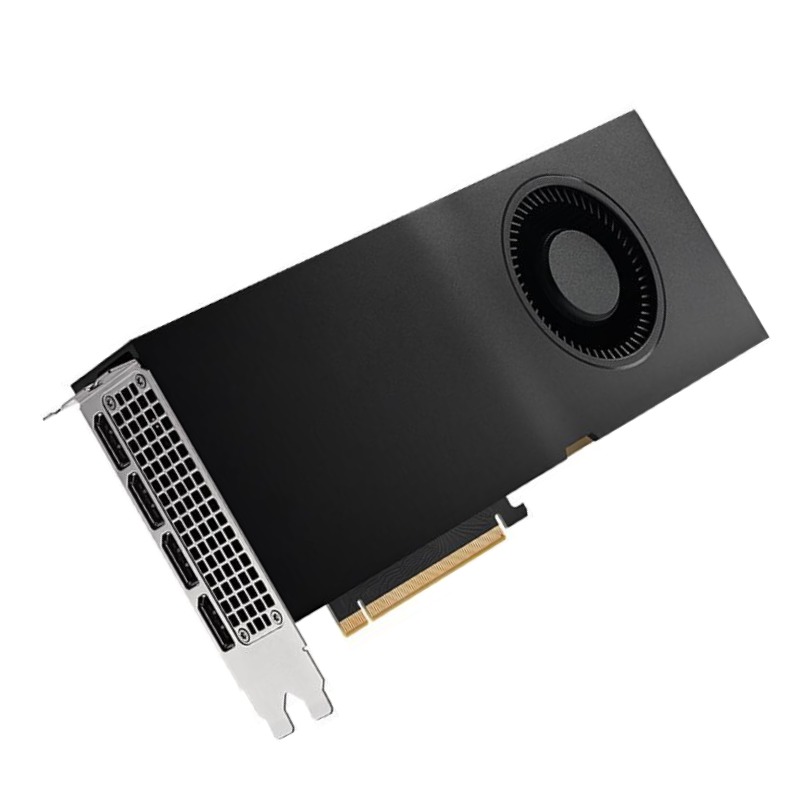


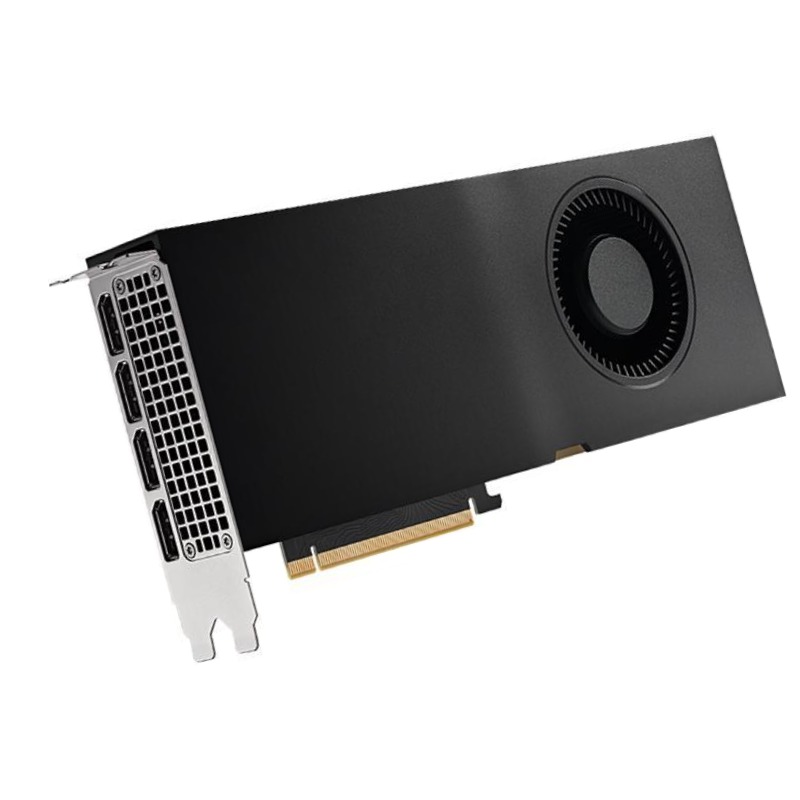
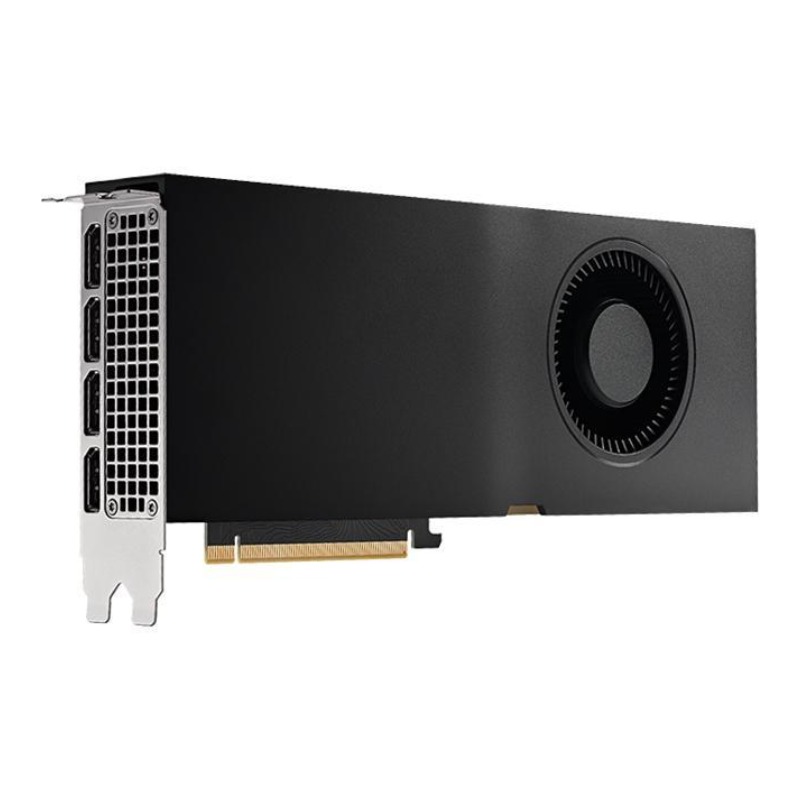
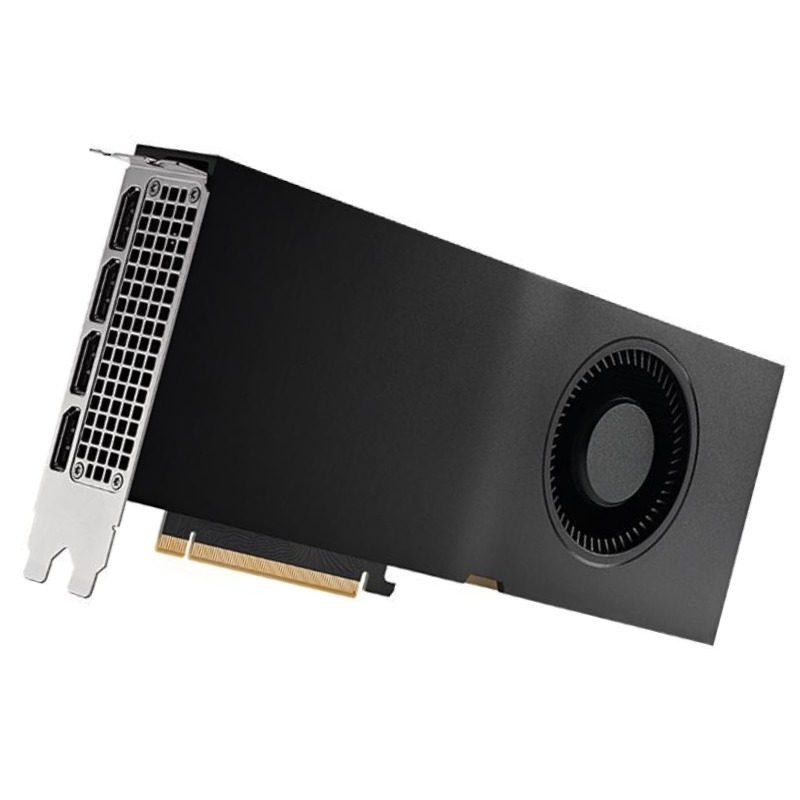
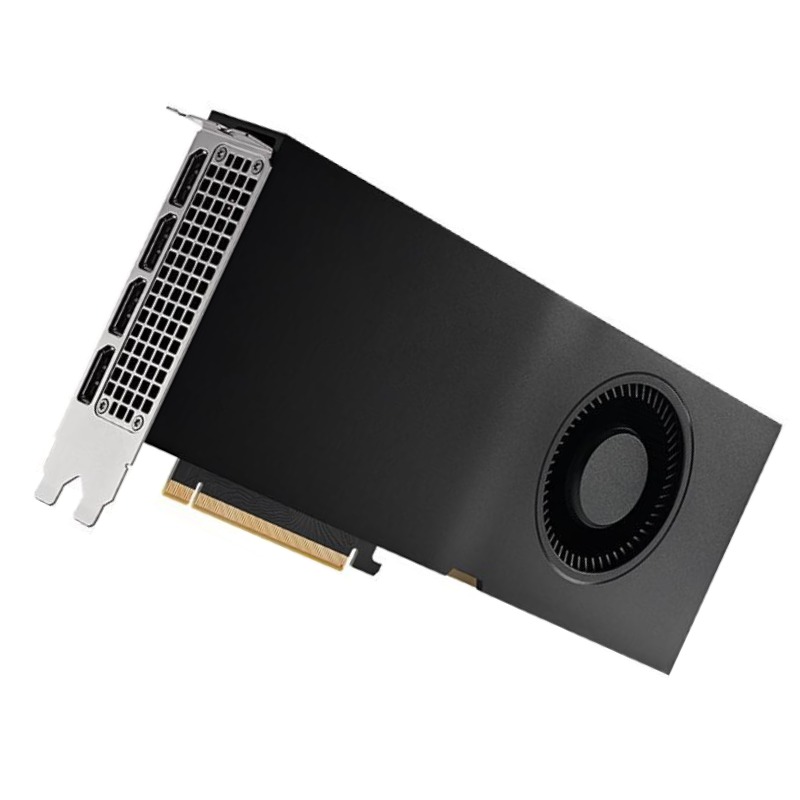
Nvidia 699-5G132-0550-F00 Quadro RTX 5000 RTX A5000 32GB GDDR6 PCIe Graphics card. New Sealed in Box (NIB) with 3 years Replacement Warranty
This category focuses on high-end professional workstation graphics cards designed for demanding workloads such as 3D rendering, simulation, AI inferencing, virtual production, and large-scale visualization. A key example in this class is the card identified as “699-5G132-0550-F00”, from the Nvidia Quadro/RTX lineage, supporting the premium 32GB GDDR6 buffer. These cards are not typical consumer gaming GPUs — they are engineered for reliability, precision, certification with professional software (ISVs), and extended memory capacity so that creative and engineering professionals can manage massive datasets, complex scenes, multiple high-resolution displays, and virtual-machine scenarios.
The 32GB of GDDR6 memory is critical for handling massive datasets and high-resolution textures in real-time applications. High memory bandwidth ensures data moves quickly between the GPU and system memory, allowing for smoother operation and faster computation. This feature is particularly beneficial in industries such as medical imaging, fluid dynamics simulations, and virtual production environments where high-resolution data must be processed quickly.
PCIe connectivity ensures that the card can communicate efficiently with modern workstations and servers, supporting multiple displays and high-speed data transfer rates. The PCIe 4.0 interface, when available, further enhances bandwidth capabilities, allowing for the utilization of the GPU to its full potential without system bottlenecks. This makes the RTX A5000 and Quadro RTX 5000 ideal for multi-GPU setups and high-performance computing environments.
The RTX A5000 and Quadro RTX 5000 cards are engineered with advanced Ampere architecture, delivering significant improvements in compute power, memory bandwidth, and ray tracing capabilities. The 32GB GDDR6 VRAM ensures large datasets and complex models can be handled with ease, reducing bottlenecks in rendering pipelines and simulation tasks. Professionals in CAD, 3D modeling, video production, and AI development can leverage this immense memory to process complex scenes without compromise.
Equipped with NVIDIA’s CUDA cores and Tensor cores, the RTX A5000 enhances parallel processing performance, making it an ideal choice for deep learning workflows. Real-time ray tracing capabilities powered by RT cores allow designers and engineers to visualize projects with photorealistic accuracy, ensuring that lighting, shadows, and reflections are rendered in real-time without sacrificing frame rates or quality.
These graphics cards are designed to integrate seamlessly with professional workstations, ensuring compatibility with both current and future generations of CPUs, motherboards, and memory configurations. The use of PCIe standards, certified drivers, and enterprise-grade hardware design allows users to easily upgrade or expand their systems without compatibility issues.
Whether used in a single workstation or as part of a server cluster, the Quadro RTX 5000 and RTX A5000 provide the flexibility and reliability needed to support demanding professional applications. IT administrators and engineers can confidently deploy these GPUs in diverse environments, from creative studios to scientific research facilities, knowing that performance and stability are guaranteed.
The key value of this category lies in bridging raw compute power with large memory capacity. The high core count (8,192 CUDA cores) and dedicated RT and Tensor cores mean that ray-traced rendering, AI accelerated tasks, and simulation workloads can be executed much faster than older generation professional GPUs. For example, the RTX A5000’s single-precision FP32 performance reaches 27.8 TFLOPS, RT core performance 54.2 TFLOPS, and Tensor core performance up to 222.2 TFLOPS.
Within this category, one subdivision is clearly based on graphics memory size: 16 GB vs 32GB vs higher (32 GB+). While 16 GB may suffice for many workflows, 32GB is selected when datasets, textures or models exceed memory limits and benefit from large buffer space. Memory bandwidth also becomes critical: a 384-bit interface plus high GDDR6 speeds (e.g., ~16 Gbps) yields upward of ~768 GB/s throughput. For large-scale rendering or simulation tasks this bandwidth helps ensure the GPU is not starved of data.
Another subdivision is the architecture generation. Cards built on the Ampere architecture (such as the one discussed) benefit from second-gen RT cores, third-gen Tensor cores, efficiency improvements, and support for newer standards (e.g., AV1 decode, PCIe Gen4, newer APIs). :contentReference[oaicite:11]{index=11} Users selecting a card in this category should ask whether the GPU architecture supports their target application version, GPU-accelerated libraries (CUDA, OptiX), virtual-GPU features, and extended feature-set (GPUDirect, RTX IO).
The category also subdivides by the physical form factor and cooling design. While many professional GPUs in this segment are dual-slot length cards around 10.5″ long and require an 8-pin auxiliary power connector, some variants may offer smaller or passive cooled designs for specialized workstations. Engineers must ensure that their chassis has adequate space, airflow, power supply capacity (230 W or more), and connector (8-pin). Additionally, dual-slot requirement means that adjacent PCIe slots may be unavailable when installing these cards.
Finally, selection depends on the specific application target. For CAD/CAE work (e.g., SolidWorks, Autodesk Inventor), certified drivers and memory head-room for large assemblies matter most. For media production and VFX work (e.g., 8 K editing in DaVinci Resolve, 3D animation in Maya or 3ds Max), the RT cores and memory bandwidth become keys. For AI/ML workloads, the Tensor cores, software ecosystem (CUDA, TensorRT, vGPU) and memory size/throughput determine suitability. Cards in the 32GB sector serve across all these use cases, offering flexibility to professionals working across disciplines.
Selecting a card from the 32GB GDDR6 professional workstation bracket translates directly into workflow gains. For creators and engineers, the uplift may manifest as faster render times, smoother interactive viewport performance, fewer out-of-memory errors, the ability to handle bigger assemblies or datasets, and fewer compromises on quality or resolution. That means less waiting, fewer re-works, and more time designing rather than debugging or optimizing memory constraints.
From a return-on-investment standpoint, while cards in this class carry a premium price compared to consumer graphics cards, the productivity gains and workflow stability often justify the investment for professional users. For instance, if a card reduces render time from 2 hours to 1 hour, a studio can complete twice as many sequences in the same time, or allocate resources elsewhere. The peace-of-mind that comes from ISV-certified drivers, ECC memory, and professional support adds value in mission-critical environments such as engineering firms, medical visualization, architectural studios or post-production houses.
When comparing ROI, also factor in the lifespan of these cards: professional graphics cards typically see longer service life in enterprise settings, with extended driver support and certifications. This category of 32GB workstation GPUs positions itself for multi-year use without needing premature replacement because memory becomes a bottleneck.


 Contact Us
 Information
 Catalog
 Solid State Drives (SSD)
 Network Switches
 Hard Disk Drives
 HBA & Controllers
 PC & Servers
 PC & Server Memory
 CPU & Processors
 Network Routers
 Power Supplies
 Tape Drives & Libraries
 Network Devices
 Computer & Network Cables