(7% discount is applied at checkout)
Cart is empty
Your go-to destination for cutting-edge server products
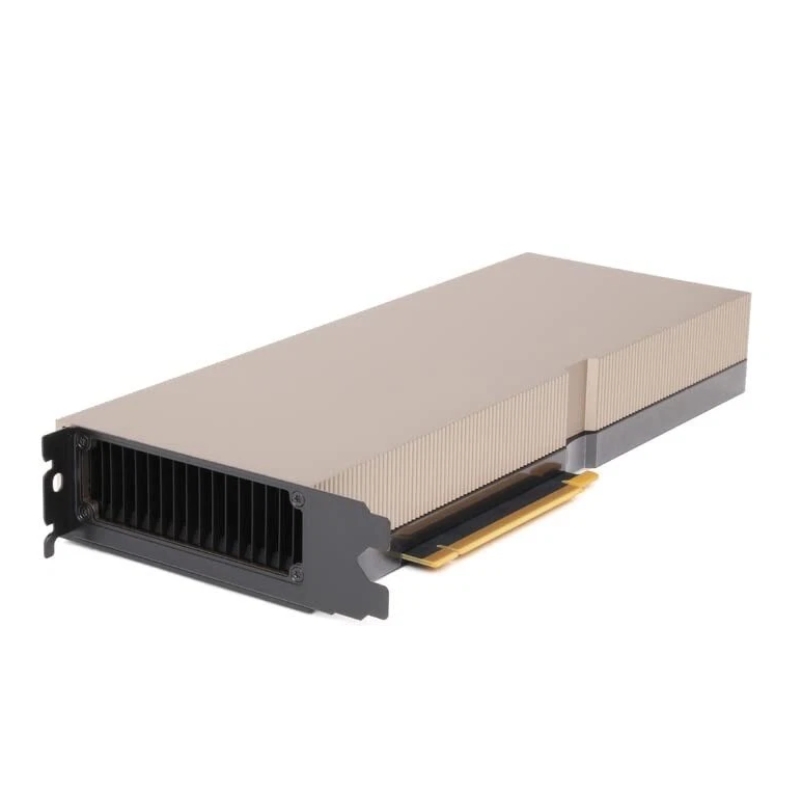


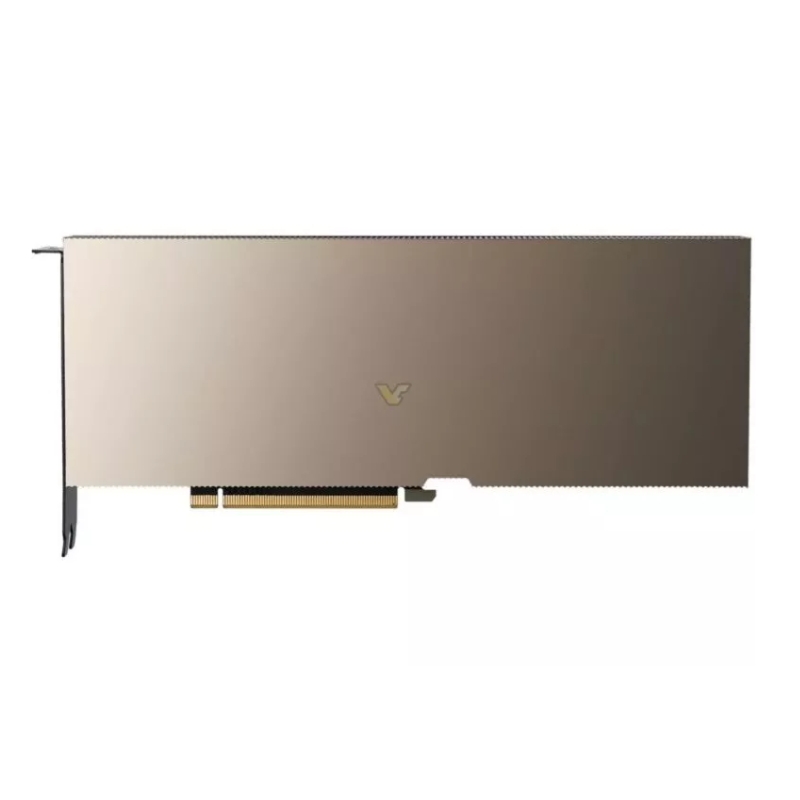
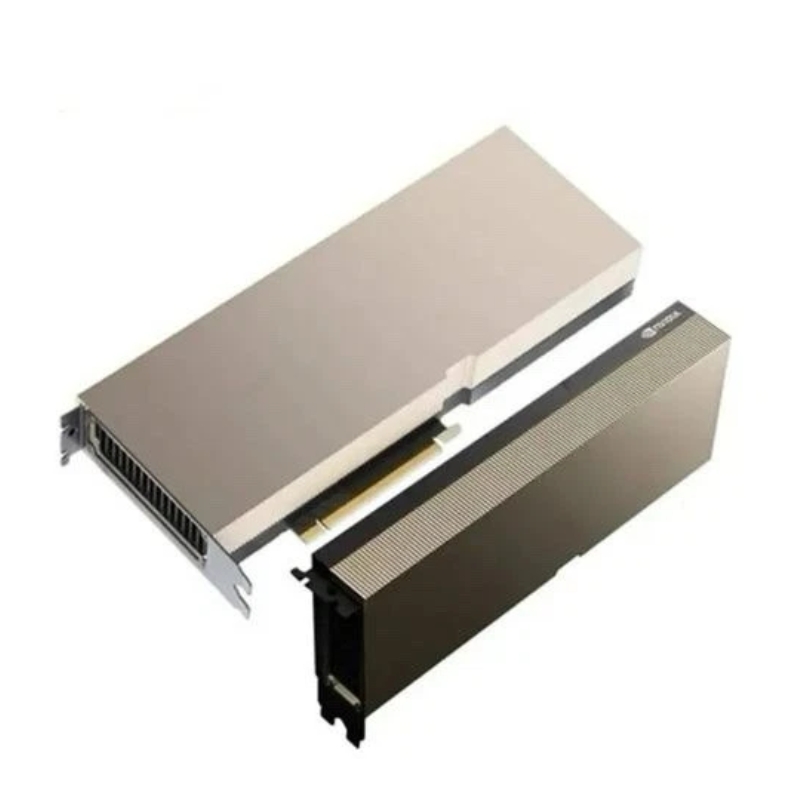
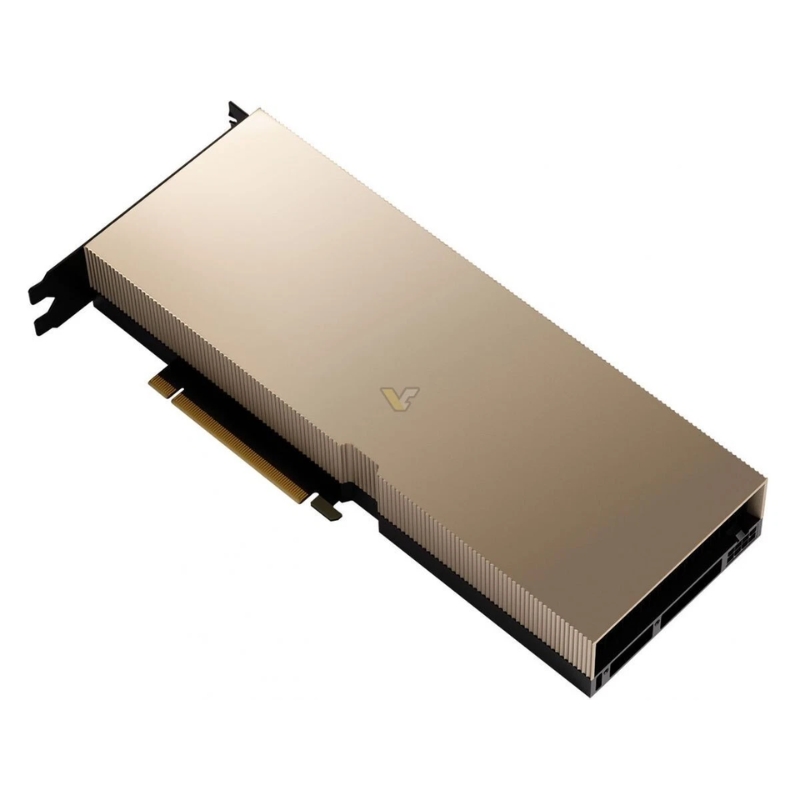
Nvidia 900-21001-0000-000 A100 40GB HBM2 PCIe Tensor Ampere GPU Accelerator. Excellent Refurbished with 1 Year Replacement Warranty
The NVIDIA 900-21001-0000-000 A100 40GB Tensor Core GPU is a cutting-edge PCIe accelerator designed for AI training, deep learning, virtualization, and scientific computing. Built with the powerful Ampere architecture, this GPU delivers exceptional throughput, advanced tensor capabilities, and unbeatable efficiency for enterprise workloads.
The Nvidia 900-21001-0000-000 A100 40GB HBM2 PCIe Tensor Ampere GPU Computing Accelerator Card represents a major step forward in high-performance computing, enterprise-level AI workloads, hyperscale infrastructures, and large-scale data-driven environments that rely on exceptional parallel compute capabilities. As part of the Nvidia Ampere architecture family, this accelerator card brings together next-generation Tensor Cores, high-bandwidth HBM2 memory, and robust compute performance that addresses the demands of machine learning training, deep learning inference, complex scientific simulations, data analytics pipelines, and mission-critical cloud workloads.
The Nvidia A100 40GB HBM2 PCIe accelerator leverages the full technological potential of the Ampere architecture, delivering breakthrough performance improvements over earlier generations such as the V100. Its capability to perform workload consolidation on a single GPU or to scale out efficiently through Multi-Instance GPU technology introduces unprecedented resource optimization across AI clusters and multi-tenant data center environments. Designed with a focus on compute density and low latency, the platform enables simultaneous workloads without performance bottlenecks. This makes it ideal for deep learning training environments where layer-by-layer model execution requires thousands of parallel operations and high memory bandwidth performance.
The Nvidia A100 40GB PCIe GPU is built on the Ampere architecture, incorporating massively parallel CUDA cores, AI-optimized Tensor Cores, and dedicated hardware elements that handle matrix operations with exceptional speed. This architecture expands the performance envelope of both AI training and HPC floating-point workloads. The increased Tensor Core versatility adds support for a wider range of data types, including TF32, FP64 Tensor Core operations, BFloat16, FP16, INT8, and INT4, enabling cross-domain workload flexibility that scales from training large-parameter neural networks to accelerating highly complex simulations.
The A100 40GB uses the PCIe Gen4 interface, offering high signal integrity and low latency bandwidth between host processors and GPU compute resources. This ensures rapid data exchange between CPUs and the accelerator card, which is essential for high-complexity AI algorithms and iterative HPC workloads. The PCIe form factor broadens integration opportunities compared to SXM modules, since it fits into a wide range of enterprise and commercial server builds without requiring specialized GPU trays or NVLink bridge assemblies. Despite lacking NVLink support in the PCIe form, the design remains exceptionally strong for organizations requiring dense GPU installations or flexible expansion within existing server ecosystems.
The Nvidia A100 40GB incorporates high-bandwidth HBM2 memory engineered to support parallel workloads requiring large datasets to be processed in real time. With its 40GB capacity and notable bandwidth performance metrics, the memory subsystem ensures high throughput for machine learning training sets, advanced simulations, high-resolution modeling, and graph-based computations. The memory bandwidth combined with low latency access patterns boosts the card’s overall computational throughput and directly impacts the efficiency of deep learning model training cycles.
The substantial memory bandwidth of the A100 40GB becomes indispensable when executing environmental simulations, geospatial modeling, astrophysics computations, or high-resolution neural network models. In AI-intensive environments, HBM2 ensures that the accelerator maintains a continuous flow of tensors across computational pipelines, reducing idle cycles and ensuring that Tensor Cores operate at peak efficiency. The expanded memory also enhances data preprocessing operations and allows support for larger datasets without sharding overhead.
The HBM2 memory system integrated in the A100 40GB PCIe includes ECC support to ensure data integrity during extended computational workloads. For enterprise and scientific research environments where computational accuracy is critical, ECC protects against memory corruption and ensures that results remain stable over long execution times. HPC cluster operators, government computing centers, and enterprise AI teams rely on ECC memory not only for error correction but also for compliance with mission-critical regulatory standards in industries such as healthcare, aerospace, defense, and financial analytics.
The Nvidia A100 40GB PCIe card enhances Tensor Core design to support a variety of data types and mixed-precision strategies. Tensor Float 32 precision allows significant training acceleration without sacrificing accuracy, offering a balance between speed and numerical stability. BFloat16 and FP16 modes accelerate deep learning training cycles while maintaining model convergence. For inference workloads, INT8 and INT4 modes yield performance efficiencies that support real-time AI deployment across cloud platforms and edge data centers.
The Nvidia A100 is engineered to operate as a unified accelerator capable of handling both training and inference operations. Organizations no longer require separate GPU infrastructures for each task, as the A100's Tensor Cores optimize computational pipelines dynamically. This consolidation lowers infrastructure cost, improves resource utilization, simplifies deployment, and supports rapid prototyping to production transitions. High-performance inference using TensorRT, combined with the card’s FP16 and INT8 optimizations, ensures low-latency AI deployments for autonomous systems, predictive analytics, surveillance systems, medical imaging diagnostics, and enterprise automation frameworks.
MIG technology remains one of the most important features of the A100 architecture. It enables predictable performance allocation across independent GPU partitions, making the Tesla A100 PCIe GPU an ideal solution for data center operators hosting multiple AI tenants. Each MIG instance functions like a separate GPU with its own compute and memory resources. This supports workload isolation, security partitioning, and improved multi-user efficiency. MIG is particularly beneficial for inference workloads where multiple lightweight models must run concurrently across thousands of users.
Beyond AI acceleration, the Nvidia A100 40GB PCIe GPU is extensively deployed across HPC research fields. Its FP64 and FP32 improvements support computational chemistry, physics simulations, weather prediction models, structural engineering calculations, and genomic analysis pipelines. By combining parallel compute capabilities with advanced memory bandwidth, the card accelerates numerical solvers, iterative algorithms, machine learning HPC hybrids, and other workloads that depend on consistent high-precision calculation.
Astronomical image processing, computational fluid dynamics, quantum chemistry studies, and high-resolution medical imaging reconstructions all require dense matrix operations and rapid vectorized calculations. The Nvidia A100 40GB provides enough throughput to handle these calculations in significantly less time than legacy GPUs. Its floating-point precision and memory subsystem stability ensure reproducibility of results, which is crucial in academic research and large-scale simulations that may run continuously for days or weeks.
The Nvidia 900-21001-0000-000 A100 GPU integrates seamlessly into virtualized and containerized infrastructures. Virtual GPU (vGPU) technology allows multiple virtual machines or containers to access GPU resources concurrently. This strengthens scalability and simplifies deployment across Kubernetes clusters, VMware environments, OpenStack cloud systems, and proprietary cloud orchestration frameworks. Organizations adopting GPU-powered microservices benefit from high elasticity and cost-optimized compute resource allocation.
The A100 40GB PCIe model incorporates engineered thermal solutions designed for enterprise server environments. Its cooling system maintains temperature stability under full load, ensuring long-term reliability and consistent throughput even within dense data center racks. Power efficiency improvements introduced with Ampere architecture reduce total energy consumption per computation cycle compared to previous generation GPUs. This energy advantage reduces operational costs, improves data center sustainability metrics, and lowers the overall TCO for GPU-accelerated expansions.
The accelerator card typically requires robust power connections supporting its high-performance profile. Data center architects must ensure that the host server chassis meets the recommended power envelope and allocates enough headroom for multi-GPU configurations. Consistent power delivery not only stabilizes performance but also helps prevent frequency throttling that may reduce computational throughput in performance-sensitive environments.
Enterprises deploy the Nvidia A100 PCIe 40GB card across a wide range of mission-critical applications, from autonomous driving model development to large-scale financial risk modeling. AI-driven analytics, video processing pipelines, cybersecurity detection frameworks, and next-generation search algorithms rely on GPU acceleration to handle massive data volumes efficiently. Enterprise cloud providers offer A100-backed instances that deliver variations in compute, storage, and memory allocations tailored to customer-specific workloads.
Medical institutions benefit from the Nvidia A100’s ability to accelerate computational pathology, MRI reconstruction, genomics sequencing pipelines, drug discovery simulations, and precision medical imaging applications. The combination of FP64 precision and Tensor Core acceleration supports a balanced approach to computational accuracy and speed. Clinical research teams rely on GPU-accelerated platforms to process multi-petabyte biomedical datasets and run predictive models used in patient outcome forecasting.
The financial sector uses A100 GPUs to execute fast quantitative models, complex Monte Carlo simulations, risk calculations, fraud detection AI models, and large-volume financial forecasting tools. With its precision scalability and stable results, the A100 helps financial institutions make faster, more reliable decisions across high-frequency trading environments, portfolio optimization frameworks, and enterprise-scale analytics systems. This transforms data-driven financial research into real-time insights powered by GPU-accelerated pipelines.
Manufacturers across automotive, aerospace, energy, and construction rely on GPU-accelerated computational workflows to model real-world mechanical behavior. The A100 supports finite element analysis, topology optimization, engineering visualization, stress simulation, and digital twin systems. Its Ampere architecture accelerates these workloads dramatically, delivering high-level accuracy and shorter development cycles for design refinement and safety validation processes.
Public cloud providers incorporate the A100 PCIe card into GPU-powered instances supporting scalable AI training and inference workloads. MIG technology is especially valuable here, enabling efficient multi-tenant GPU sharing across enterprise customers. Cloud-native workloads running in containerized environments such as Kubernetes benefit from the card’s flexibility, reliability, and scalable real-time performance characteristics.
The Nvidia A100 40GB GPU is supported by a comprehensive software ecosystem anchored by CUDA, cuDNN, NCCL, TensorRT, CUDA-X libraries, and Nvidia’s NGC catalog of AI-optimized containers. Developers gain access to performance-tuned frameworks optimized specifically for Ampere architecture, enabling ease of implementation and immediate acceleration across industry-standard machine learning tools. Researchers also rely on the GPU’s compatibility with scientific libraries that deliver GPU-accelerated solvers, math kernels, and specialized functions for computational science.
Tools such as Nsight Systems, Nsight Compute, and Nsight Graphics support low-level optimization and performance tuning. These toolkits allow developers to visualize bottlenecks, optimize kernel execution, and tailor GPU resources to maximize throughput for specific workloads. Whether running reinforcement learning models, dense matrix multiplications, graph neural network operations, or large-scale transformer inference, the Nvidia A100 provides a robust environment for specialized performance enhancements.
The Nvidia A100 40GB PCIe GPU is engineered for long-term operational value, supporting next-generation AI frameworks and future workloads without requiring frequent hardware refresh cycles. Its architectural enhancements, memory subsystem robustness, and ability to scale across multi-node deployments ensure that organizations remain competitive as industry demands grow. Large enterprises, HPC systems, government research centers, and deep learning labs choose the A100 for its predictable performance profile and forward compatibility with evolving machine learning architectures.
Data centers scaling to multi-GPU systems rely heavily on the A100 PCIe card’s ability to maintain consistent compute performance across multiple accelerators. When installed in servers supporting eight or more GPUs, A100 cards can deliver significant cluster-wide throughput. Enterprise HPC environments use these configurations to support large simulations, distributed AI training, and real-time data analytics pipelines requiring synchronized compute power. Combined with high-speed networking and optimized data exchange frameworks, multi-GPU scaling becomes a core advantage for long-term infrastructure growth.
The A100 40GB PCIe GPU is built for mission-critical applications where uptime, stability, and data integrity are essential. Its ECC-enabled HBM2 memory, advanced power regulation, durable thermal architecture, and software-level protections ensure long-term operational stability. Data center governance policies requiring performance isolation, multi-tenant control, predictable capacity planning, and strict compute compliance standards are well supported by MIG partitioning and NVIDIA enterprise-grade management tools.
Hardware-level security features built into the Nvidia A100 help protect data during runtime, ensure secure GPU virtualization, and maintain operational integrity in multi-tenant environments. Combined with MIG, partition isolation ensures that workloads cannot interfere with one another, preserving data privacy and preventing resource contention. These protections are crucial for industries handling sensitive data, including healthcare analytics, government computational workloads, and financial modeling systems.


 Contact Us
 Information
 Catalog
 Solid State Drives (SSD)
 Network Switches
 Hard Disk Drives
 HBA & Controllers
 PC & Servers
 PC & Server Memory
 CPU & Processors
 Network Routers
 Power Supplies
 Tape Drives & Libraries
 Network Devices
 Computer & Network Cables