(7% discount is applied at checkout)
Cart is empty
Your go-to destination for cutting-edge server products
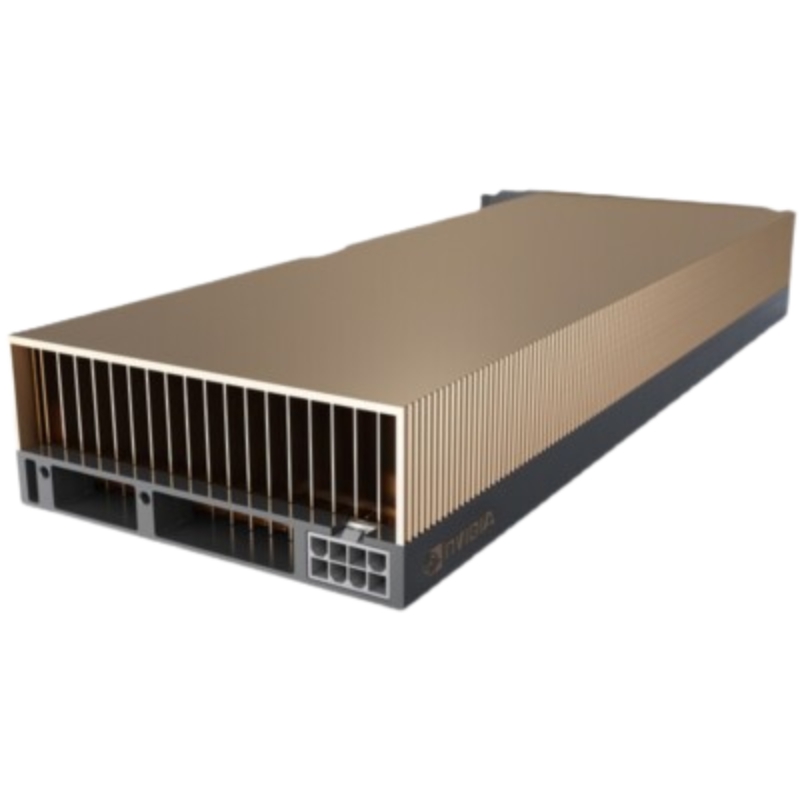


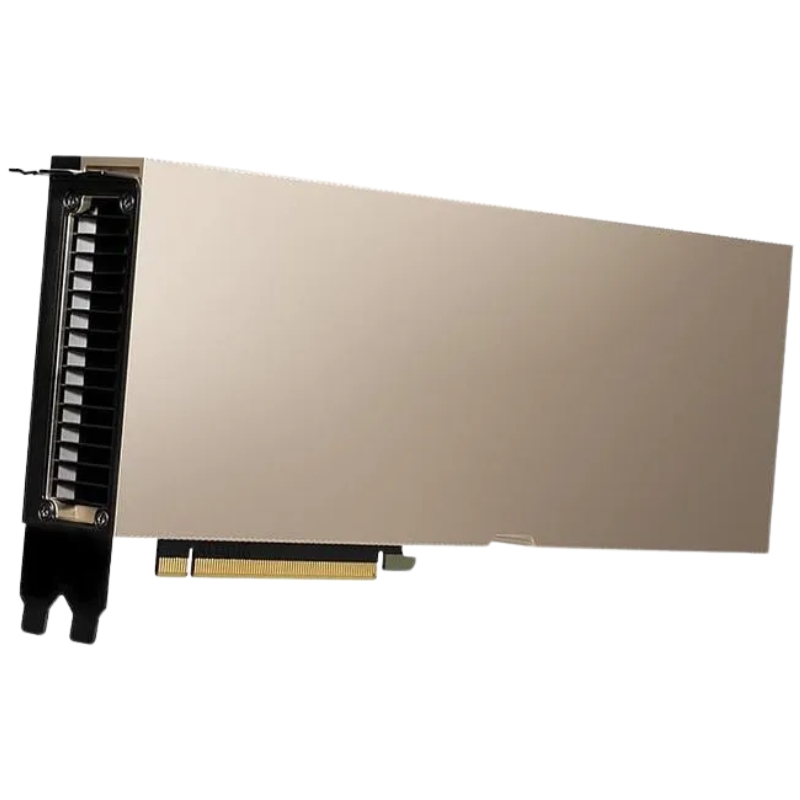
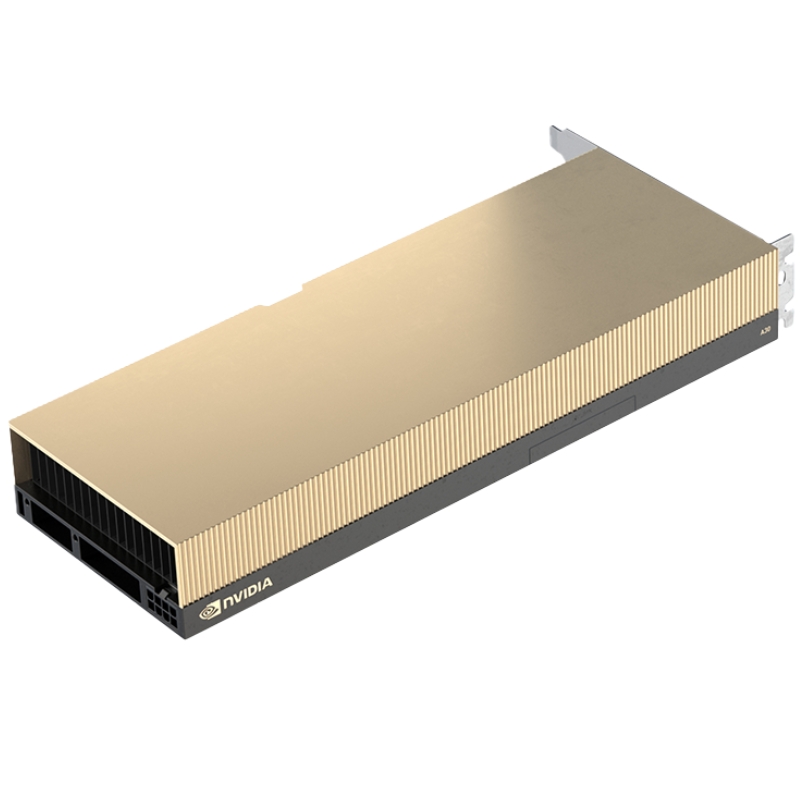
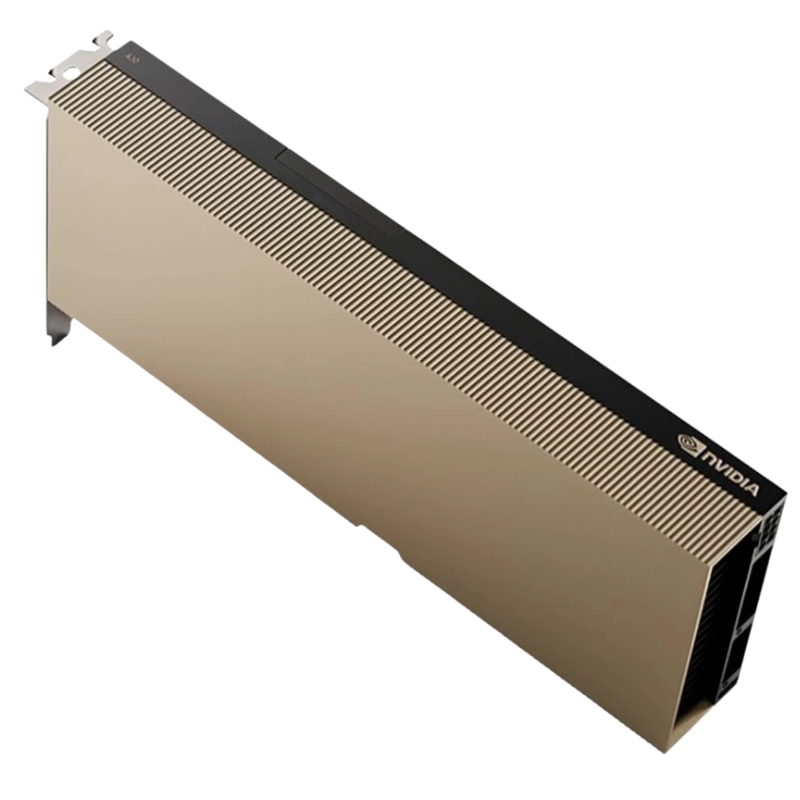
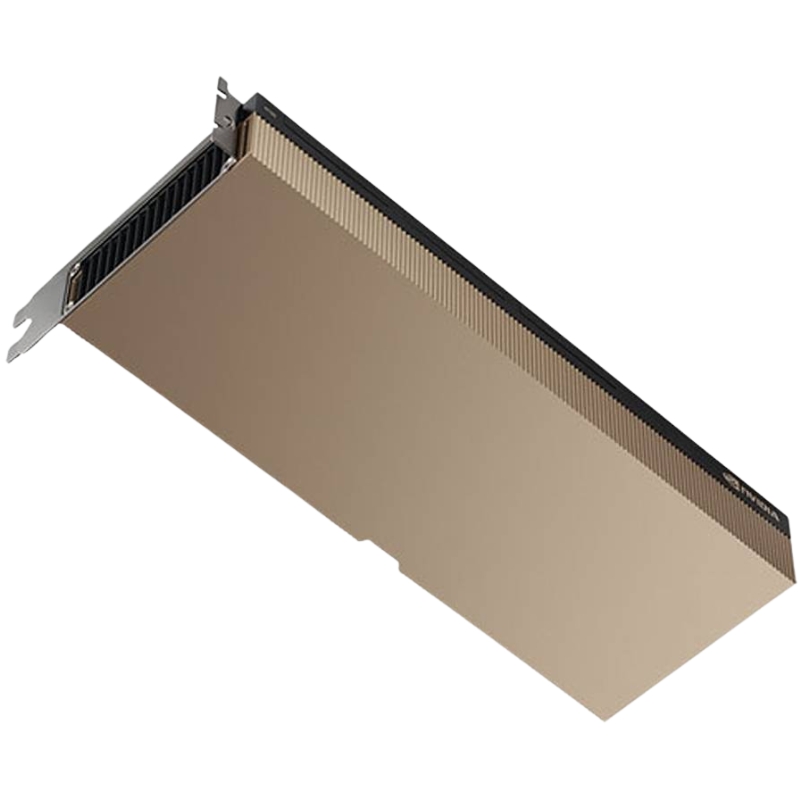
Nvidia 900-21001-0040-100 Tensor Core A30 24GB HBM2 2 Slot PCI-Express 4.0 Passive Cooling GPU. Excellent Refurbished with 1-Year Replacement Warranty
The NVIDIA Tensor Core A30 with 24GB HBM2 memory represents a focused balance of throughput, energy efficiency, and versatility for today’s AI, machine learning, and high-performance computing workloads. Engineered for density-optimized deployments and designed as a 2-slot PCI-Express 4.0 passive cooling accelerator, the A30 is targeted at inference, mixed-precision training, virtualization and streaming analytics use cases in enterprise and cloud infrastructure. This category centers on the NVIDIA 900-21001-0040-100 model designation and its role as a reliable building block in servers, blade systems, and accelerated compute nodes where PCI-E 4.0 bandwidth, HBM2 memory capacity, and passive thermal design are prioritized.
The A30’s 24GB of HBM2 provides a high-bandwidth memory subsystem that reduces data movement bottlenecks and delivers consistent throughput for matrix operations, large model parameter sets, and batch-heavy inference workloads. High Bandwidth Memory (HBM2) scales memory bandwidth far beyond traditional GDDR solutions, enabling larger on-chip working sets and lowering latency for memory-bound kernels. For data centers deploying modern transformer-based models and complex simulation pipelines, the increased effective memory bandwidth enables practitioners to run larger micro-batches and increase utilization for both inference and training without excessive host-to-device transfers. This translates to superior performance per watt, higher effective utilization of GPU Tensor Cores, and fewer expensive software-level memory optimizations.
Large language models, recommendation engines, and dense matrix workloads benefit from the A30’s memory architecture by accommodating model activations and weights within the device memory footprint. This reduces reliance on host memory and PCIe transfers, which is especially important in low-latency inference scenarios. The 24GB capacity positions the A30 between smaller inference-focused cards and larger training accelerators, making it an ideal choice for mixed workloads: developers can consolidate both inference services and select training tasks on the same hardware platform, maximizing return on infrastructure investment.
As a PCI-Express 4.0 compatible device, the NVIDIA A30 leverages doubled I/O bandwidth compared to PCIe 3.0, improving data movement between CPU and GPU and minimizing host-side transfer latency. PCIe 4.0 compatibility is particularly valuable in multi-GPU servers where NVLink may not be present or when the system architecture prioritizes I/O flexibility and compatibility with modern CPUs and motherboards. The 2-slot PCIe form factor balances compute density with airflow and thermal constraints in rack servers, allowing system integrators to pack GPUs in high-density configurations while maintaining compatibility with standard server chassis and passive heatsink designs.
System integrators and data center operators choosing A30 cards should account for passive cooling requirements and ensure sufficient chassis airflow, directed front-to-back ventilation, and server-level fan curves that sustain optimal device temperatures. Cable management for PCIe 4.0 and careful power distribution planning will help preserve signal integrity and provide stable operation under sustained loads. The A30’s 2-slot width simplifies rack planning versus wider accelerators, enabling denser compute-per-rack metrics and efficient use of power distribution units and cooling infrastructure.
The passive cooling configuration of the NVIDIA A30 suits data centers that rely on server chassis airflow or custom thermal solutions rather than card-level fans. Passive-cooled accelerators reduce moving parts and improve system-level reliability while enabling quieter operation in shared or sensitive environments. When deploying passive A30 cards, it’s essential to maintain strong directed airflow and ensure the host server provides adequate thermal headroom. Benefits of the passive approach include lower on-card acoustic noise, reduced component wear, and the ability to tailor server-level cooling to match rack-level thermal policies.
At the heart of the A30’s performance are NVIDIA Tensor Cores — specialized units designed to accelerate matrix multiplications and convolutions at mixed precision levels, dramatically speeding up deep learning operations relative to traditional FP32 execution. The A30’s capability to efficiently handle FP16, BFLOAT16, and INT8 computations makes it particularly effective for both training and inference paths. Mixed precision workflows allow developers to maintain model accuracy while obtaining significant speedups and reduced memory consumption. For organizations optimizing for throughput and cost-efficiency, the A30’s mixed-precision performance yields robust ROI across both proof-of-concept and production deployments.
When implementing large-scale inference services, teams must balance throughput, latency, and model precision. The A30 enables scalable batch processing for high-throughput scenarios while retaining the ability to deliver low-latency responses for interactive applications when paired with optimized inference runtimes. Software stacks like NVIDIA TensorRT and CUDA-X AI libraries are commonly used to squeeze maximum efficiency from Tensor Core operations, enabling model quantization, kernel fusion, and hardware-aware scheduling that reduce end-to-end latency and maximize GPU utilization.
Enterprises that require GPU sharing and secure multi-tenant deployment patterns must evaluate virtualization options compatible with the A30 platform. While specific MIG (Multi-Instance GPU) capabilities vary across NVIDIA architectures, the A30’s role in virtualized environments is often implemented through vendor-specific virtualization layers, NVIDIA GRID, or third-party orchestration that supports vGPU provisioning. Virtualization unlocks the ability to partition GPU resources among multiple users and workloads, improving hardware utilization and enabling flexible service delivery for development, testing, and production workloads.
The NVIDIA A30 is well suited to a variety of real-world use cases. Inference at scale — including recommender systems, conversational AI, and personalization services — benefits from the A30’s memory capacity and Tensor Core acceleration. In research and HPC contexts, numerical simulation, parameter sweeps, and mixed-precision training tasks can be mapped onto the A30 to achieve improved throughput per node. Edge data centers and cloud regions that prioritize density and efficiency find the passive-cooled, 2-slot A30 attractive for delivering consistent performance across heterogeneous workloads.
The A30 occupies a strategic position within NVIDIA’s data center product family, bridging the gap between compact, inference-optimized cards and the largest, training-optimized accelerators. Its 24GB HBM2 capacity and PCIe 4.0 interface make it attractive for organizations that need more memory bandwidth than smaller form-factor accelerators, but without the power envelope and system-level requirements of the largest multi-GPU NVLink-based solutions. This makes the A30 a pragmatic choice for scale-out architectures that emphasize throughput, predictable latency, and high GPU-density racks.


 Contact Us
 Information
 Catalog
 Solid State Drives (SSD)
 Network Switches
 Hard Disk Drives
 HBA & Controllers
 PC & Servers
 PC & Server Memory
 CPU & Processors
 Network Routers
 Power Supplies
 Tape Drives & Libraries
 Network Devices
 Computer & Network Cables